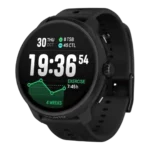
Suunto Race 2 Feature Scores
Explore all 52 feature scores for Suunto Race 2, organized into pros and cons.
Scores by Feature
Summary
52 reviewed features-
Very positive 4.5-5.020 (38%)
-
Positive 3.5-4.415 (29%)
-
Neutral 2.5-3.49 (17%)
-
Negative 1.5-2.48 (15%)
Pros
Sort
-
Battery life was one of the clearest strengths, with reviewers repeatedly praising endurance, long GPS runtime, and multi-day use.
-
Display quality was one of the strongest points, repeatedly described as bright, sharp, readable, stunning, and easy to use during training.
-
Outdoor visibility was consistently excellent, with reviewers reporting easy readability in bright sun and direct sunlight.
-
GPS accuracy was generally strong, especially for land workouts, but several reviewers saw small errors, worse open-water results, or a slight step back from past Suunto performance.
-
Charging convenience improved substantially, with reviewers praising the redesigned magnetic charger and more secure dock.
-
Software smoothness was widely praised as improved, with reviewers noting slicker widgets, smoother scrolling, and little delay.
-
Style and design were widely praised, with reviewers calling the Race 2 sleek, gorgeous, modern, robust, and premium-looking.
-
Comfort was mostly positive thanks to the thinner case, lighter feel and improved wrist fit, though size and strap choices still mattered.
-
Value was generally strong but price-sensitive: many reviewers found it competitive or worthwhile, while a few noted the price jump weakened the bargain angle.
-
Heart-rate accuracy was the most debated upgrade: many reviewers called it a major improvement or accurate enough for training, while several still found unreliable readings in hard efforts or certain workouts.
-
Pairing reliability was praised for easy external sensor connections and the ability to manage multiple sensors of the same type.
-
Workout variety was consistently praised, with reviewers highlighting broad sport-profile coverage and comprehensive tracking for mainstream and niche activities.
-
Mapping and navigation were a major strength once maps were loaded, but reviewers also noted non-routable maps, slow downloads, and missing labels or POIs.
-
Build quality was strongly praised, with reviewers calling the hardware premium, sturdy, and well matched to smooth software.
-
Charging speed was praised as fast enough for quick top-ups before long GPS days.
-
Durability was praised, with reviewers describing the watch as hard to kill and resistant to visible wear during testing.
-
Coaching features were seen as helpful for interpreting training and recovery, especially for runners, though the evidence favored practical context over advanced smartwatch coaching.
-
The companion app was mixed but often useful: some praised route playback, readable analysis, streamlining and polish, while others saw mismatched stats or a basic app.
-
Sleep tracking drew split feedback, with some reviewers praising sleep timing or nap detection while others reported missed awakenings, hit-or-miss nights, or overly ambitious deep-sleep estimates.
-
Brightness received explicit praise, with one reviewer calling the display brightness unusually strong.
-
The flashlight mode was strongly praised by one reviewer as unexpectedly handy and bright enough for real use.
-
The operating system experience was praised in one review as one of the best fitness-first watch systems.
-
Water resistance was viewed positively, with one review highlighting serious waterproof credentials.
-
Button controls were mostly praised as clicky and usable during activity, though one reviewer had a sticky-button problem.
-
The app ecosystem received positive evidence from SuuntoPlus, with one reviewer saying integrations made the watch feel less insular than rival fitness watches.
-
Bluetooth connectivity evidence was positive in one review, where phone pairing was described as simple.
-
Materials quality received positive evidence from the feel of the metal buttons and digital crown.
-
Reliability was positive in one review that reported no lag, freezes, unexplained shutdowns, or transfer issues.
-
Band quality was mixed: some liked the stock silicone strap, while others disliked the pin fastening, fiddly buckle, or overall band feel.
-
Third-party app support was mixed: SuuntoPlus integrations impressed one reviewer, while another found the two-app limit restrictive.
-
One reviewer tied the improved sensors to more meaningful health and training feedback, suggesting better fitness-tracking usefulness than the older model.
-
Cross-platform compatibility was supported by positive evidence for importing and sharing workout data through services such as Strava.
-
Fit was positive in one review because the large watch still did not feel too large on the wrist.
-
Wellness insights were useful but not universally trusted, with one reviewer valuing HRV and another finding resources too generous.
-
Music controls were considered acceptable for basic phone control, but not a deeper music experience.
Cons
Sort
-
Smartwatch features were consistently limited, with reviewers repeatedly noting that the Race 2 is training-first rather than a phone-like smartwatch.
-
Onboard music storage was a repeated shortcoming, with reviewers noting that offline playback is not available despite expectations for a premium sports watch.
-
Wi-Fi connectivity was a recurring map-download annoyance, with reviewers describing slow downloads, cumbersome syncing, or trouble on weak networks.
-
Step counting was a recurring weak spot in the evidence, with reviewers saying the Race 2 miscalculated steps or produced very low counts.
-
Safety features drew a serious concern from one reviewer about exposed public activity start and end positions.
-
Calorie tracking was criticized in one review for producing numbers that appeared much too high.
-
Contactless payments were called out as missing, contributing to the watch's limited smartwatch feature set.
-
One review raised broad tracking concerns, saying steps, calories and heart rate needed improvement rather than treating the watch as fully dependable for health metrics.
-
Recovery insights were mixed: reviewers liked the training context but criticized confusing TrainingPeaks terms, overly optimistic resources, and presentation that was hard to parse.
-
Stress-related HRV insight was viewed as underexplained, with one reviewer saying the daily average lacks enough context for new users.
-
Touchscreen responsiveness was criticized in one review for being too sensitive and prone to accidental inputs.
-
Menu navigation was mixed: some controls were manageable after learning, while the sports menu and many submenus frustrated reviewers.
-
Customization was uneven: reviewers liked some configurable widgets and screens but criticized limited watch-face options, sport-mode setup friction, and direct customization limits.
-
User interface feedback was split, ranging from easy and sensible on runs to clunky, unintuitive, or difficult to get used to.
-
Size options were a caveat because reviewers noted the 49mm case can feel big for smaller wrists.
-
Watch faces were generally seen as basic or lightly customizable, with limited options compared with Garmin or COROS.
-
Smartphone notifications were described as basic because the watch can display them but not respond from the wrist.