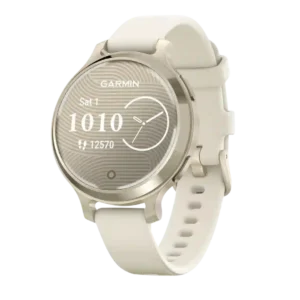
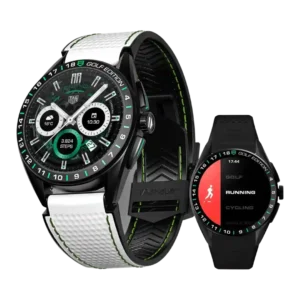
- Better: smart features and interface Tom’s Guide found the Race 2 cheaper and longer lasting but less capable for smart features and UI polish.
- More expensive: price and value Live Science framed the Race 2 as a cheaper Forerunner 970 alternative with strong specs.
Suunto Race 2 Review
Bottom Line
Choose the Suunto Race 2 for a bright AMOLED sports watch with excellent battery life, maps and improved heart-rate tracking. Skip it if you need rich smartwatch features, onboard music, payments or the most polished tracking interface.
Best for runners, trail users and endurance athletes who want long GPS battery life, bright maps, durable materials and training data without a phone-like smartwatch experience.
Not for users who want advanced smartwatch features, onboard music, contactless payments, cellular connectivity, voice tools, or the most polished sleep, step and app experience.
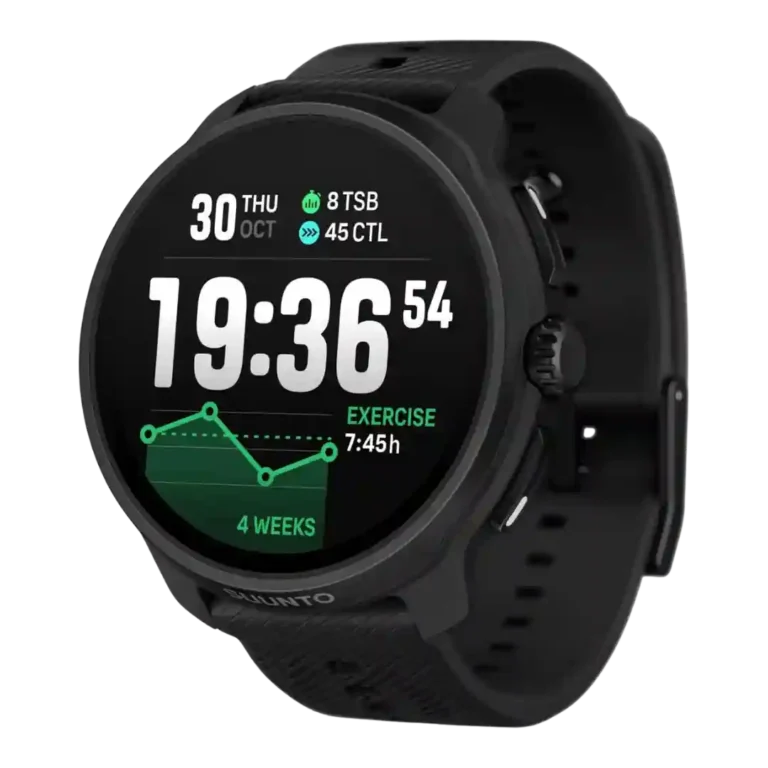
The Suunto Race 2 is reviewed as a serious endurance watch first and a smartwatch second. Its biggest wins are the large bright AMOLED display, excellent GPS battery life, durable materials, offline maps, and a heart-rate sensor that is clearly better than earlier Suunto models. The main tradeoff is that Suunto’s training-first focus leaves lifestyle features thin: reviewers repeatedly noted no onboard music, no payments, no native calling, no LTE, and limited notification interaction. Accuracy is also not uniformly perfect, with some reviewers seeing GPS quirks, step-count problems, sleep inconsistencies, or heart-rate misses in harder workouts. Overall, the review evidence points to a premium, long-lasting training watch with strong outdoor fundamentals and a simpler, less polished smart ecosystem than Garmin or Apple.
Compared in Reviews
Products reviewers directly compared with this model, grouped into quick takeaways.
- Worse: heart rate and battery life The reviewer found the Race 2 stronger than Apple Watch Ultra for heart rate under load and far longer battery life.
- Worse: battery, maps, water resistance and brightness Android Central said the Race 2 undercuts the Forerunner 570 while offering stronger core hardware specs.
Feature Scorecards
Pros
-
Workout tracking variety is excellent, with reviewers repeatedly citing over 115 sport modes and broad coverage for running, cycling, swimming and niche sports.
-
Charging speed was a standout in the Trail & Kale review, which reported a full charge in under an hour and useful quick top-ups.
-
Durability was praised through scratch resistance, rugged materials and real-world accounts of the watch surviving bumps or extended trail use.
-
Brightness was repeatedly praised, with the 2,000-nit AMOLED described as highly legible and unusually bright.
-
Battery life was one of the clearest strengths, with reviewers repeatedly reporting multi-week smartwatch use or roughly 50-plus hours of high-accuracy GPS tracking.
-
Outdoor visibility was excellent, with multiple reviewers saying the screen stayed readable in bright sunlight and direct sun.
-
Water resistance is strong, with 10ATM/100m support repeatedly mentioned for swimming and rugged use.
-
Display quality was one of the strongest areas, with reviewers praising the larger AMOLED screen, sharpness, clarity and map readability.
-
Materials quality was consistently strong, with sapphire glass, stainless steel or titanium options and premium-feeling metal elements cited repeatedly.
-
Pairing reliability was strong for sensors and routes, with reviewers praising simple pairing and new multiple-sensor saved pairings.
-
Style and design were widely praised, with reviewers calling the watch sleek, elegant, premium and good-looking.
-
Software smoothness improved notably thanks to faster processing, with reviewers describing snappy widgets, faster animations and reduced lag.
-
Charging convenience improved substantially thanks to a better magnetic connector and secure USB-C charging cable, though some reviewers still wanted charger standardization.
-
Build quality drew strong praise for the premium case, metal bezel/buttons, sapphire protection and overall robust construction.
-
Bluetooth-related pairing was generally reliable, especially for power meters and external sensors, with multiple reviewers praising simple pairing and saved multi-sensor support.
-
Comfort improved over earlier Suunto designs, helped by a thinner case, lighter feel and generally wearable strap.
-
The operating system experience improved with faster processing and smoother scrolling, though the overall OS remains training-first rather than smartwatch-rich.
-
Fitness tracking accuracy was generally positive in one triathlon-focused review, but broader health metric issues kept the overall picture from being flawless.
-
GPS accuracy was mostly strong, especially in normal running and trail contexts, but several technical reviews noticed small errors in difficult locations.
-
Value for money remained strong versus Garmin rivals, though the higher Race 2 price made older Suunto models appealing for bargain hunters.
-
Reliability was mostly good, including no lag or crashes in one review, but the sticky button report prevents a perfect score.
-
Button controls were usually praised for clickiness and responsiveness, though one reviewer had a temporary sticky power-button problem.
-
Fit was generally good despite the 49mm case, especially with the thinner body, though some reviewers warned it remains large for smaller wrists.
-
Cross-platform support is adequate because Suunto runs through iOS and Android apps, though no reviewer framed this as a standout advantage.
-
Heart rate accuracy improved sharply over older Suunto models, with many reviewers calling it good enough, but a few still saw errors during intense or early-workout segments.
-
Reviewers saw a useful but not unlimited app ecosystem, with SuuntoPlus and third-party integrations adding training tools while app-slot limits and simplicity kept it short of Garmin-like depth.
-
Blood oxygen tracking is present through the optical sensor and sleep metrics, but reviewers mostly mentioned availability rather than deeply validating SpO2 accuracy.
-
Band feedback was mixed: several reviewers liked the grippy stock silicone strap, while others disliked the pin/nub design or found the included band less refined.
-
Coaching features are useful for endurance training through Suunto Coach, ZoneSense and TrainingPeaks concepts, but several reviewers found the presentation less polished or beginner-friendly.
-
Companion app quality was mixed: reviewers liked route planning, workout detail and recent streamlining, but some found it basic or noticed sync/data mismatches.
-
Music controls are present for controlling phone playback, but they do not compensate for the lack of onboard music.
Cons
-
Sleep tracking accuracy was mixed, with some reviewers praising sleep timing or naps while others reported missed wake-ups or inconsistent sleep duration.
-
Third-party app support is useful through SuuntoPlus and integrations, but mapping app limitations such as no labels kept the support from feeling complete.
-
Menu navigation split reviewers: some found it easy once learned, while others called the sport menu and nested navigation clunky.
-
Watch face quality is acceptable but limited, with light customization and fewer third-party choices than rivals.
-
Wellness insights are useful for Resources, sleep, HRV and fitness progress, but several reviewers wanted clearer or less optimistic interpretations.
-
Recovery insights are present and sometimes useful, but reviewers disagreed on whether Suunto’s Resources and TrainingPeaks-style metrics are clear or accurate enough.
-
Size options are limited around the large 49mm Race 2 case, though reviewers pointed smaller-wrist users toward the Race S or other models.
-
Stress tracking is mainly via HRV/wellness metrics and was mentioned as useful, though not deeply validated.
-
Customization is mixed: training screens, zones and widgets can be tailored, but watch-face, sport-mode and quick-menu customization drew complaints.
-
The user interface split reviewers, with some finding it logical and others calling it clunky, basic or hard to learn.
-
Health tracking accuracy was mixed because GPS and some sleep metrics were acceptable, while steps, calories and high-intensity heart rate drew concerns.
-
Touchscreen responsiveness was mixed: the touch interface is modern, but one reviewer found it too sensitive to sleeves or rain.
-
Wi-Fi connectivity works for map downloads, but reviewers repeatedly found map transfer slow or dependent on network/charging conditions.
-
Smartphone notifications are basic: the watch can mirror notifications, but replies and interaction are limited.
-
Smartwatch features are intentionally basic, with repeated notes that music, payments, calls, voice tools and deeper integrations are absent.
-
Step counting accuracy was a weakness in the two reviews that discussed it, especially compared with Garmin and Oura/Whoop data.
-
Calorie tracking drew limited but negative evidence, with Live Science saying calorie estimates seemed too high.
-
Safety-related evidence centered on a weakness: the app lacks automatic hiding of start/end locations, which one reviewer described as a safety issue.
-
Call handling is limited: reviewers repeatedly noted the lack of mic/speaker, with only headset-related voice/call pairing mentioned rather than watch-native calling.
-
Onboard music storage is missing, repeatedly called out as a limitation and even contrasted with cheaper Suunto models.
-
Contactless payments are essentially absent, with multiple reviewers listing payments/NFC as missing smartwatch functionality.
-
Voice assistant quality is effectively nonexistent because reviewers listed smart assistants and mic/speaker tools as missing.
-
ECG functionality is absent, with reviewers explicitly listing ECGs among missing smartwatch/health features.
-
LTE connectivity is not available; reviewers explicitly listed cellular connectivity as absent.
Compared With Category Average
Compared with other Smart Watch, this product is below average in contactless payments, onboard music storage, call handling.
| Attribute | This product | Category average | Difference |
|---|---|---|---|
| contactless payments | 1.0 | 2.9 | -1.9 |
| onboard music storage | 1.1 | 2.9 | -1.8 |
| call handling | 1.3 | 3.1 | -1.9 |
| safety features | 2.0 | 3.9 | -1.9 |
| step counting accuracy | 2.0 | 3.7 | -1.7 |
| voice assistant quality | 1.0 | 2.7 | -1.7 |
| smartwatch features | 2.1 | 3.5 | -1.4 |
| calorie tracking usefulness | 2.0 | 3.5 | -1.5 |
FAQ
Is the Suunto Race 2 good for long runs and ultras?
Yes. Reviewers repeatedly praised its long GPS battery life, bright screen and mapping, making it well suited to long trail days, heavy training weeks and ultra-distance use.
How accurate is the heart-rate sensor?
The review evidence shows a clear improvement over older Suunto watches. Many reviewers trusted it for steady runs, but some still saw errors during intense efforts, early workout sections or high heart rates.
Does the Suunto Race 2 have offline maps?
Yes. Reviewers liked the offline maps for trail navigation and route context, but several noted that downloads can be slow and the maps are not fully routable like Garmin’s higher-end map watches.
Can it replace a full smartwatch?
Not really. It mirrors phone notifications and controls phone music, but reviewers repeatedly noted no onboard music, payments, mic, speaker, LTE or deep app-style smartwatch features.
Is the Suunto Race 2 comfortable?
Mostly yes. Reviewers praised the thinner body, lighter feel and improved lugs, though the 49mm case is still large and some disliked parts of the stock strap design.
Is it a good value compared with Garmin?
Generally yes for athletes focused on hardware, maps and battery life. The tradeoff is that Garmin alternatives usually offer richer smartwatch tools, a clearer ecosystem and sometimes more polished coaching features.
Consider This Instead
If you want better contactless payments
Choose Apple Watch SE 3. It scores 4.8 vs 1.0 for contactless payments, with a 4.1 overall score.
If you want better onboard music storage
Choose Huawei Watch Fit 4. It scores 4.7 vs 1.1 for onboard music storage, with a 4.1 overall score.
If you want better ECG functionality
Choose Apple Watch Series 11. It scores 4.5 vs 1.0 for ECG functionality, with a 4.2 overall score.
If you want better voice assistant quality
Choose Samsung Galaxy Watch 8. It scores 4.5 vs 1.0 for voice assistant quality, with a 4.0 overall score.
Overall Top Smart Watch Alternatives
Good if you want the most rugged Apple Watch, brighter outdoor screen, better battery, LTE, and top apps. Skip it if you need Garmin-like mapping, recovery analytics, smaller sizing, or...
Pros: display quality, heart rate accuracy
Cons: cross-platform compatibility, recovery insights
Choose the Galaxy Watch 6 for a polished Android smartwatch with a bright screen, strong apps, and broad health tracking. Skip it if battery life, iPhone support, or full non-Samsung...
Pros: outdoor visibility, workout tracking variety
Cons: cross-platform compatibility, battery life
Good if you need a rugged Garmin with deep outdoor, tactical, GPS, training, and battery features. Skip it if you want a cheaper lifestyle watch or do not need the...
Pros: materials quality, durability
Cons: LTE connectivity, value for money
Good if you want premium golf maps, virtual caddie tools, health metrics, music, notifications, and long battery life in one watch. Skip it if you only need basic yardages or...
Pros: pairing reliability, brightness
Cons: software smoothness, user interface