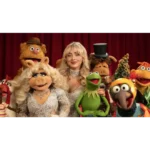
The Muppet Show (2026) Feature Scores
Explore all 45 feature scores for The Muppet Show (2026), organized into pros and cons.
Scores by Feature
Summary
45 reviewed features-
Very positive 4.5-5.014 (31%)
-
Positive 3.5-4.427 (60%)
-
Neutral 2.5-3.43 (7%)
-
Negative 1.5-2.41 (2%)
Pros
Sort
-
Sabrina Carpenter is repeatedly singled out as an unusually natural guest, while the human cameos generally support rather than overpower the Muppets.
-
Across the set, the special is repeatedly called fun, delightful and easy to enjoy; even several mixed reviews still find plenty to smile or laugh at.
-
Most reviewers laugh often and praise the character comedy, slapstick and wordplay, but several note flat sketches, uneven punchlines or jokes that need another pass.
-
The rebuilt theater, backstage spaces, props and stage presentation earn strong approval for making the special look convincingly rooted in the classic show.
-
Maya Rudolph and Seth Rogen are generally enjoyed as brief additions, with Rudolph in particular earning repeated laughs without pulling focus from the Muppets.
-
Demand for more is emphatic across the reviews: many explicitly ask for additional specials or a full series and describe the one-off format as the biggest limitation.
-
Beneath the silliness, reviewers pick up warmth, friendship, cooperation and sincerity; those themes work best when they emerge naturally rather than through overt sentiment.
-
The musical numbers are a major source of fun, especially Carpenter’s performances and the ensemble material, though the Rizzo number and compressed finale draw mixed reactions.
-
Nostalgia, warmth and the closing musical beat land strongly for many reviewers, although a minority find the sentimentality pushed too hard.
-
The classic mix of stage acts, musical numbers and backstage overbooking works well as a simple framework for the chaos, even when individual sketches vary.
-
This is the clearest point of agreement: reviewers say the revival faithfully restores the original theater, format, character dynamics and vaudeville spirit without overmodernizing them.
-
The characters mostly behave like their classic selves, which helps the special feel authentic even when some voices and newer bits differ from memory.
-
The widescreen, polished presentation updates the look while preserving the theatrical, practical feel that reviewers associate with classic Muppets.
-
Carpenter’s rapport with Miss Piggy is a standout, with reviewers praising how comfortably the guest performers play inside the Muppets’ chaotic ensemble.
-
The roughly half-hour runtime keeps the special brisk, but many reviewers think it leaves too little room for the huge character roster and makes them want more.
-
The old-fashioned sketch-and-music variety format is widely judged to be the right home for these characters, with only limited concern that it may feel dated to new audiences.
-
Most reviewers think the special balances classic silliness, modern references and light adult edge well, though a few feel individual bits drift away from the precise old-show tone.
-
The overall writing understands Muppet rhythms and delivers many strong jokes, but repeated criticism of flat sketches and first-draft punchlines keeps it from being uniformly sharp.
-
The revival is widely seen as capable of pleasing longtime fans while giving newer viewers an accessible entry point, though a few question whether the old-school format will hook younger audiences.
-
The puppetry is repeatedly praised as technically impressive, with practical character work and physical staging helping the revival feel handmade rather than overly polished.
-
Meta jokes about the show’s own revival, production and possible future fit naturally with the Muppets’ self-aware style and are frequently praised.
-
Adult material is mostly limited to quick innuendo and double entendre that reviewers say will often pass over kids’ heads, though a few dislike specific jokes.
-
The overbooking story is intentionally simple, but the sheer speed and oddity of the sketch transitions can make the episode feel confusing to viewers unfamiliar with the format.
-
The violence is mostly comic slapstick, but bottle hits, dangerous stunts and Beaker’s eye gag prompt some concern for the youngest viewers.
-
Modern camera movement and framing give the stage show a cleaner 2026 presentation without abandoning its television-variety-show feel.
-
Most reviewers see the special as broadly accessible to kids, but several flag moments that may puzzle or unsettle younger children.
-
The banter and heckling produce several sharp laughs, but some reviewers find individual lines, especially a few Statler-and-Waldorf or Piggy exchanges, underpolished.
-
The ending is divisive: many find the ensemble number joyous or touching, while others call the emotional buildup schmaltzy, compressed or insufficiently earned.
-
Busy backstage scenes, obscure returning characters and a mixed human-Muppet audience make the theater feel populated and alive beyond the central cast.
-
The special leans heavily into Muppet history and nostalgia, with reviewers generally feeling that the callbacks reconnect the characters to their strongest television identity.
-
The script captures the broad Muppet formula and character rhythm, but several reviewers think individual sketches and punchlines still need refinement.
-
Alex Timbers’ stage-comedy experience is credited with helping the special handle live-show energy, sketches and puppetry with confidence.
-
Reviewers respond warmly to the returning ensemble, often describing the Muppets as beloved friends whose familiar personalities remain easy to enjoy.
-
The special intentionally avoids reinvention, favoring a safe recreation of the classic formula; reviewers mostly accept that choice while hoping a full series would experiment more.
-
As a test for a possible full series, the special is widely seen as a successful and promising proof of concept, with room to refine the weaker sketches.
-
The core remains warm, silly family entertainment, but subtle adult jokes, slapstick and a few darker gags mean some reviewers recommend parental awareness for younger kids.
-
The variety-show momentum is energetic and often praised, though the rapid jumps between bits can feel rushed or overwhelming for newcomers.
-
The laugh track is sharply divisive: one review calls the canned laughter obnoxious, while another feels it helps recreate the original show’s atmosphere.
-
The simple overbooking storyline gives the sketches connective tissue and a clear payoff, but some reviewers find the emotional climax forced or underdeveloped.
-
A handful of reviewers mention watching the special multiple times or immediately wanting to revisit it, suggesting strong repeat appeal among enthusiastic fans.
-
The critic roundup is broadly positive, describing the special as silly and joyous while still noting reservations about Kermit’s voice and generational appeal.
Cons
Sort
-
One reviewer specifically criticizes the compressed final musical number, saying its cut-down form makes the cadence feel awkward.
-
The only explicit language concern is light profanity, treated as a minor part of an otherwise restrained family-oriented special.
-
The short runtime cannot fully serve such a large ensemble. Several reviewers specifically want more Fozzie, Gonzo, Animal, Electric Mayhem and other favorites.
-
Veteran Muppet performers draw strong praise for puppetry and character work, but Kermit’s changed voice is the most persistent performance complaint.
Cast & Creators
-
PerformerCarpenter is the clearest human standout: reviewers repeatedly call her a perfect or ideal fit, praising her comic timing, musical performances and chemistry with Miss Piggy.
-
ActorRudolph’s audience cameo becomes a recurring comic highlight, with reviewers calling her contribution delightful and especially funny.
-
RizzoFreeman’s Rizzo work earns direct praise, with reviewers calling his puppetry spectacular and saying he is doing an excellent job with the character.
-
ProducerRogen is credited with understanding the classic Muppet formula, and his brief on-screen presence is generally treated as a fun addition rather than a distraction.
-
RowlfBarretta’s brief Rowlf material is positively received as a fun early beat.
-
Miss PiggyJacobson’s Miss Piggy work is praised for making the character funny beyond her diva persona.
-
KermitVogel’s Kermit is the most divisive performance element. Some reviewers find his work commendable or improved, while several longtime fans still call the voice jarringly different.