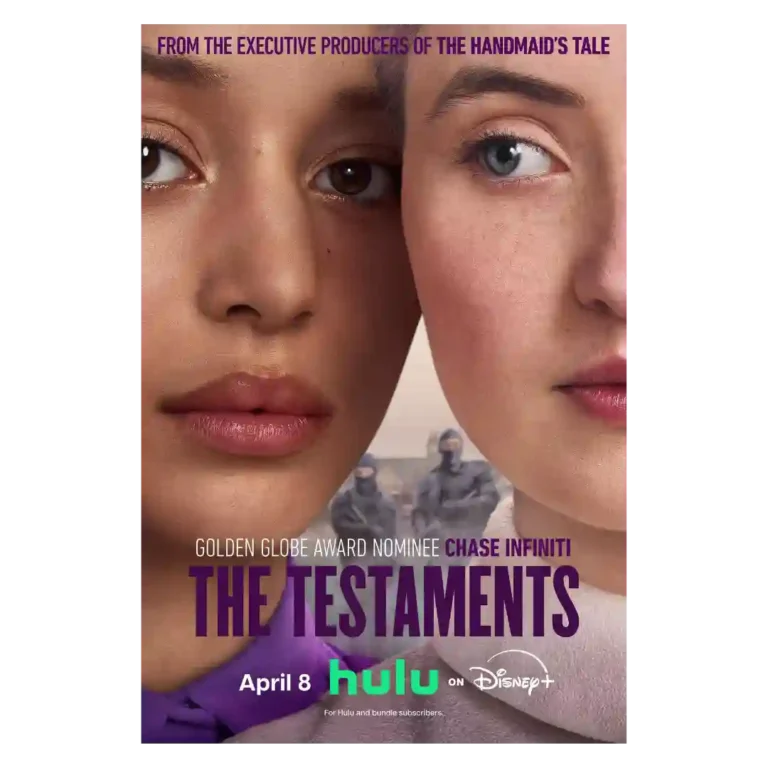
The Testaments, Season 1

The Testaments, Season 1 Review

Brand: Hulu
Released: April 8, 2026
Updated: 6 hours ago
3.8
Overall review score
296
Review evidence points
51
Scored features
37
Expert reviews

Bottom Line

Choose it for magnetic performances, vivid Gilead production, and a timely girlhood-centered rebellion. Skip it if slow setup, YA tonal shifts, graphic abuse, or heavy dependence on The Handmaid’s Tale outweigh its promise.

Best for

Best for Handmaid’s Tale viewers who want a younger, friendship-driven perspective on Gilead and can commit to a deliberate multi-season setup. The performances and political themes reward patient viewers.

Not for

Not ideal for viewers exhausted by Gilead, sensitive to grooming and violence against young women, or unwilling to tolerate slow pacing, blunt dialogue, and unresolved setup.

Verdict

The Testaments finds its strongest identity in the young ensemble, especially Chase Infiniti, Lucy Halliday, Mattea Conforti, and the ever-commanding Ann Dowd. Its purple-and-white production design, painterly imagery, and focus on friendship and indoctrination give familiar Gilead material a fresh emotional angle. The tradeoff is a first season that often behaves like an extended prologue: several critics found the pacing slow, the dialogue too blunt, and the YA tone difficult to reconcile with sexual abuse and authoritarian violence. Connections to The Handmaid’s Tale enrich the story for longtime viewers but can also make the sequel feel repetitive or dependent on prior knowledge. Still, the performances, political urgency, and unresolved rebellion leave substantial potential for Season 2.

Feature Scorecards

Summary

51 reviewed features
  • Very positive 4.5-5.0
    16 (31%)
  • Positive 3.5-4.4
    16 (31%)
  • Neutral 2.5-3.4
    9 (18%)
  • Negative 1.5-2.4
    8 (16%)
  • Very negative below 1.5
    2 (4%)

Pros

  • 5.0
    11 reviews strong consensus
    theme depth: 5.0, 11 reviews, strong consensus
    Girlhood, indoctrination, complicity, friendship, resistance, and patriarchal power give the season substantial thematic weight. This is one of the show’s most consistently praised qualities.
  • 5.0
    5 reviews strong consensus
    production design: 5.0, 5 reviews, strong consensus
    The finishing school, opulent homes, ritual spaces, and culturally suggestive details create a beautiful but threatening environment. Reviewers repeatedly see the design as one of the production’s strongest assets.
  • 5.0
    5 reviews strong consensus
    supporting cast performance: 5.0, 5 reviews, strong consensus
    The supporting ensemble is repeatedly singled out as a strength, with Becka, Shunammite, Hulda, the Aunts, and Gilead’s adults all receiving specific praise.
  • 5.0
    3 reviews strong consensus
    bingeability: 5.0, 3 reviews, strong consensus
    Positive reviewers describe the season as moreish, addictive, and difficult to stop watching despite its bleak subject matter.
  • 5.0
    2 reviews limited evidence
    realism: 5.0, 2 reviews, limited evidence
    Reviewers value how ordinary teenage behavior sits beside normalized authoritarian cruelty. That contrast makes indoctrination, privilege, and the mundanity of fascism feel disturbingly plausible.
  • 5.0
    1 review
    costume design: 5.0, 1 review
    The expanded color-coded wardrobe gives the younger generation a vivid identity while preserving Gilead’s social hierarchy and visual symbolism.
  • 5.0
    1 review
    educational value: 5.0, 1 review
    The series can prompt reflection on how democracies normalize authoritarian ideas and how indoctrinated people gradually recognize their loss of freedom.
  • 4.9
    10 reviews strong consensus
    acting quality: 4.9, 10 reviews, strong consensus
    Acting is one of the strongest areas of agreement. Even negative reviews usually praise the young ensemble, with only a few reservations about Daisy’s performance.
  • 4.9
    7 reviews strong consensus
    cast chemistry: 4.9, 7 reviews, strong consensus
    The friendships feel lived-in, believable, and essential to the story. Reviewers especially respond to Agnes and Becka’s bond, Agnes and Daisy’s developing trust, and the wider sisterhood.
  • 4.8
    16 reviews strong consensus
    modern political framing: 4.8, 16 reviews, strong consensus
    The contemporary parallels are among the strongest points of agreement, especially around reproductive control, authoritarianism, grooming, and complacency. For some viewers, that relevance is so close and repetitive that it becomes exhausting.
  • 4.7
    10 reviews strong consensus
    renewal interest: 4.7, 10 reviews, strong consensus
    Interest in another season is consistently high among favorable reviewers, who see abundant room for rebellion, character growth, and a larger payoff. Even several mixed reviews hope later seasons fix the pacing.
  • 4.6
    10 reviews strong consensus
    visual style: 4.6, 10 reviews, strong consensus
    Bright pastels, purple-and-white uniforms, and carefully composed iconography give the sequel a striking look. Even skeptical critics generally acknowledge the polish, though some find it too similar to its predecessor.
  • 4.6
    4 reviews strong consensus
    cinematography: 4.6, 4 reviews, strong consensus
    The cinematography is widely admired for smooth movement, painterly framing, and imagery that can feel exquisite and creepy at once.
  • 4.5
    2 reviews limited evidence
    cliffhanger effectiveness: 4.5, 2 reviews, limited evidence
    The finale leaves several character and rebellion threads hanging in a way that strongly increases interest in Season 2. A smaller episode-ending cliffhanger also keeps immediate questions alive.
  • 4.5
    1 review
    lore depth: 4.5, 1 review
    The sequel is considered understandable across different levels of Gilead familiarity, using recognizable lore without requiring every viewer to remember the full original series.
  • 4.5
    1 review
    main cast performance: 4.5, 1 review
    The central performances are a clear attraction, giving the younger perspective emotional credibility even for viewers unsure about the sequel itself.
  • 4.4
    14 reviews low consensus
    character development: 4.4, 14 reviews, low consensus
    The girls’ gradual awakening, friendships, and small acts of rebellion are among the season’s strongest elements. Daisy’s depth and Aunt Lydia’s shifting motives are less consistently convincing.
  • 4.2
    13 reviews low consensus
    emotional impact: 4.2, 13 reviews, low consensus
    The series is frequently described as gut-wrenching, disturbing, and deeply moving. For some viewers, its closeness to current politics makes it too exhausting or painful to enjoy.
  • 4.1
    9 reviews low consensus
    suspense: 4.1, 9 reviews, low consensus
    At its best, the season is an unnerving, slow-building thriller that keeps viewers alert. Its tension drops when the pacing stalls or Mayday’s easy movement through Gilead feels too convenient.
  • 4.0
    15 reviews low consensus
    spin-off quality: 4.0, 15 reviews, low consensus
    A large group calls the series a worthy, fresh, or exemplary follow-up. The opposing view sees franchise fatigue, creative dependence, and a story that should not have been extended.
  • 4.0
    11 reviews low consensus
    episode structure: 4.0, 11 reviews, low consensus
    Rotating viewpoints and character-focused episodes give the season useful depth, with Aunt Lydia’s material producing both a major highlight and some of the sharpest criticism. Exposition-heavy stretches and an underdeveloped standalone episode keep the structure uneven.
  • 4.0
    1 review
    episode pacing: 4.0, 1 review
    The middle of the season gains momentum and becomes more character-focused after a mechanical opening. That improvement helps, but the early episodes still spend too long explaining familiar territory.
  • 3.9
    9 reviews low consensus
    genre satisfaction: 3.9, 9 reviews, low consensus
    The YA dystopian approach is the season’s defining gamble. Many find the teen-drama blend fresh and effective, while others experience tonal whiplash or feel it trivializes the material.
  • 3.8
    3 reviews strong consensus
    humor: 3.8, 3 reviews, strong consensus
    Humor appears only in small doses, but the occasional jokes and Rowan Blanchard’s comic moments provide welcome relief from the oppressive setting.
  • 3.8
    2 reviews limited evidence
    drama quality: 3.8, 2 reviews, limited evidence
    The coming-of-age drama can be absorbing and emotionally forceful. Some stylistic choices, especially conspicuous music and YA flourishes, make the darkest material feel less serious than intended.
  • 3.7
    9 reviews moderate consensus
    faithfulness to source material: 3.7, 9 reviews, moderate consensus
    The adaptation takes substantial liberties with character ages, relationships, timelines, and plot order. Many reviewers accept those changes because the novel’s spirit remains intact, while others are less convinced.
  • 3.7
    7 reviews low consensus
    plot twists: 3.7, 7 reviews, low consensus
    The season delivers several effective surprises and a late shock for some reviewers. Others saw major developments coming well in advance or felt the twists were insufficiently earned.
  • 3.6
    7 reviews low consensus
    plot originality: 3.6, 7 reviews, low consensus
    The privileged teenage viewpoint gives Gilead a genuinely different angle, especially through its marriage-market setting. Several critics still feel the sequel repeats too many ideas and story beats from The Handmaid’s Tale.
  • 3.6
    6 reviews low consensus
    franchise connection: 3.6, 6 reviews, low consensus
    Callbacks and continuity with The Handmaid’s Tale can elevate the story and reward longtime fans. They can also make the sequel feel inaccessible to newcomers or trapped in the original’s shadow.
  • 3.5
    12 reviews low consensus
    story quality: 3.5, 12 reviews, low consensus
    The season’s coming-of-age story is often described as fresh, gripping, and politically urgent. Less enthusiastic critics find it emotionally hollow, repetitive, or too reliant on shock.
  • 3.5
    6 reviews low consensus
    world-building: 3.5, 6 reviews, low consensus
    The school, marriage market, and privileged girls make familiar Gilead feel fresh to many reviewers. Detractors think the show overexplains a world audiences already know and treats old information like revelation.
  • 3.5
    4 reviews low consensus
    pilot episode quality: 3.5, 4 reviews, low consensus
    The opening episodes impressed some viewers with their atmosphere, performances, and promise. Others found the pilot overloaded with exposition and too trapped in Gilead’s familiar formalities.

Cons

  • 3.3
    10 reviews low consensus
    season pacing: 3.3, 10 reviews, low consensus
    Slow-burn setup is the season’s most repeated drawback, with several reviewers calling it a prologue stretched across ten episodes. A smaller group appreciates the measured buildup or finds it faster than The Handmaid’s Tale.
  • 3.3
    3 reviews low consensus
    finale satisfaction: 3.3, 3 reviews, low consensus
    The ending offers hope and a strong appetite for more, especially through its unresolved character threads. Critics who disliked it found the central reveal obvious, confusing, or too dependent on franchise knowledge.
  • 3.2
    6 reviews low consensus
    soundtrack quality: 3.2, 6 reviews, low consensus
    The music is a major point of disagreement. Some call it unusual but effective and well suited to youthful daydreaming; others find the needle drops obvious, awkward, or damaging to the drama.
  • 3.2
    5 reviews low consensus
    plot clarity: 3.2, 5 reviews, low consensus
    Some reviewers found the story easy to follow without a rewatch. Others were distracted by plot holes, implausibly careless Mayday operations, and character decisions that weaken the internal logic.
  • 3.1
    7 reviews low consensus
    entertainment value: 3.1, 7 reviews, low consensus
    Enjoyment depends heavily on tolerance for Gilead’s cruelty and political parallels. Some had a great time and rated it highly; others found it tiring, exploitative, or impossible to recommend right now.
  • 3.0
    3 reviews low consensus
    season finale quality: 3.0, 3 reviews, low consensus
    One reviewer celebrated an explosive, unexpected finish, while others thought the finale reverted to predictable Handmaid’s Tale patterns or undercut its climax with weak writing.
  • 3.0
    2 reviews limited evidence
    directing quality: 3.0, 2 reviews, limited evidence
    The more intimate middle episodes allow characters to lead the story and draw praise. Elsewhere, emotional scenes and voiceover-heavy material are judged less effectively directed.
  • 2.8
    10 reviews low consensus
    violence level: 2.8, 10 reviews, low consensus
    The sequel is generally less graphically violent than The Handmaid’s Tale, but it still includes mutilation, executions, abuse, and deeply disturbing violence against women. Reviewers often found the level emotionally difficult.
  • 2.8
    7 reviews low consensus
    writing quality: 2.8, 7 reviews, low consensus
    The writing earns praise for its themes and some strong character work, but criticism is frequent. Reviewers repeatedly mention didactic voiceovers, blunt messaging, cringe-inducing lines, and missed dramatic potential.
  • 2.4
    7 reviews low consensus
    dialogue quality: 2.4, 7 reviews, low consensus
    Reactions to the dialogue are sharply divided. One reviewer found the teenage speech authentic, while many others called it trite, clunky, overly explanatory, or painfully on the nose.
  • 2.0
    5 reviews strong consensus
    cultural representation: 2.0, 5 reviews, strong consensus
    Diverse casting is visible, but critics repeatedly say the series avoids meaningful engagement with race and leaves its queer-coded elements underdeveloped.
  • 2.0
    1 review
    audience appeal: 2.0, 1 review
    One critic felt the series depends too heavily on prior Handmaid’s Tale knowledge to work as a truly standalone experience.
  • 2.0
    1 review
    episode length: 2.0, 1 review
    One critic found the sub-45-minute episodes oddly truncated yet still underfilled, reinforcing the sense that too little plot is being stretched across the season.
  • 1.8
    3 reviews strong consensus
    character consistency: 1.8, 3 reviews, strong consensus
    Aunt Lydia is the main point of friction: several reviewers feel her softening, redemption, and double-agent direction clash with the character established earlier.
  • 1.8
    2 reviews limited evidence
    continuity: 1.8, 2 reviews, limited evidence
    Differences among the novel, The Handmaid’s Tale, and this sequel create noticeable strain. Aunt Lydia’s history and the shortened timeline are the most frequently questioned points.
  • 1.7
    3 reviews strong consensus
    age appropriateness: 1.7, 3 reviews, strong consensus
    Despite the YA framing and teenage leads, the material is intensely adult and often harder to watch because the victims are young. One critic also found the actors’ ages distracting for the roles.
  • 1.5
    1 review
    season length: 1.5, 1 review
    The ten-episode season is criticized as far longer than its amount of story can support, with one reviewer comparing it to a pilot’s worth of plot.
  • 1.3
    2 reviews limited evidence
    sexual content level: 1.3, 2 reviews, limited evidence
    The marriage market, predatory older men, grooming, and molestation make the sexual material deeply unsettling rather than titillating.
  • 1.0
    1 review
    family friendliness: 1.0, 1 review
    The series is not family-friendly, with sexual abuse, coercion, executions, mutilation, grooming, and sustained political oppression driving the story.

Cast & Creators

  • Creator
    5.0
    1 review
    Bruce Miller: 5.0, 1 review
    Miller’s creative direction receives strong praise for establishing the dystopian coming-of-age tone and supporting the season’s best writing.
  • Director
    5.0
    1 review
    Jet Wilkinson: 5.0, 1 review
    Wilkinson’s work in the middle of the season is praised for creating intimacy and allowing the characters to dominate the storytelling.
  • Production Designer
    5.0
    1 review
    Martha Sparrow: 5.0, 1 review
    Sparrow’s production design is praised for drawing on classic girlhood imagery while turning Gilead’s privileged spaces into beautiful, unsettling cages.
  • Director
    5.0
    1 review
    Quyen Tran: 5.0, 1 review
    Tran’s middle-season direction is praised for a more intimate approach that puts character relationships ahead of franchise machinery.
  • Director
    5.0
    1 review
    Shana Stein: 5.0, 1 review
    Stein’s middle-season direction is praised for fostering intimacy and giving the characters more control over the narrative.
  • Aunt Lydia
    4.9
    9 reviews
    Ann Dowd: 4.9, 9 reviews
    Dowd remains one of the season’s most reliable strengths, described as blistering, magnetic, captivating, and brilliant. Reviewers often praise her even while criticizing Aunt Lydia’s inconsistent arc.
  • Becka
    4.8
    10 reviews
    Mattea Conforti: 4.8, 10 reviews
    Conforti is one of the season’s most acclaimed performers, frequently called a standout and sometimes the strongest young actor. Her natural, heartbreaking work makes Becka an emotional center.
  • Agnes
    4.7
    27 reviews
    Chase Infiniti: 4.7, 27 reviews
    Infiniti is the clearest acting consensus, praised as magnetic, devastating, subtle, and ideally cast. Her controlled expressions sell Agnes’s innocence and awakening even when scripts restrict the character.
  • Shunammite
    4.5
    7 reviews
    Rowan Blanchard: 4.5, 7 reviews
    Blanchard brings memorable mean-girl bite and welcome comic timing to Shunammite. Reviewers repeatedly cite her as an energetic supporting standout.
  • Paula
    4.5
    5 reviews
    Amy Seimetz: 4.5, 5 reviews
    Seimetz is repeatedly praised for turning Paula’s hostility into something memorable and unexpectedly nuanced. Even critics of the character writing find her icy presence effective.
  • Aunt Vidala
    4.5
    3 reviews
    Mabel Li: 4.5, 3 reviews
    Li is repeatedly highlighted within the strong supporting cast, giving Aunt Vidala a sharp, imposing presence that stands out in the school storylines.
  • Hulda
    4.5
    2 reviews
    Isolde Ardies: 4.5, 2 reviews
    Ardies helps give Hulda a distinct, idealistic personality and is repeatedly included among the young cast members who make the ensemble shine.
  • Aunt Estee
    4.5
    1 review
    Eva Foote: 4.5, 1 review
    Foote is included among a supporting ensemble with no weak links, bringing a gentler presence to the Aunts around Lydia.
  • Commander Westin
    4.5
    1 review
    Reed Diamond: 4.5, 1 review
    Diamond is singled out as a strong supporting player, making Commander Westin both charming and dangerous.
  • Daisy
    4.5
    19 reviews
    Lucy Halliday: 4.5, 19 reviews
    Halliday receives substantial praise as a breakout, ferocious co-lead who can match Infiniti’s energy. A minority of critics find the performance stiff or constrained by Daisy’s one-note writing.
  • Director
    3.0
    1 review
    Mike Barker: 3.0, 1 review
    Barker’s episodes are considered polished and competently produced, though one critic finds their visual sensibility too close to The Handmaid’s Tale to establish a distinct identity.

Compared With Category Average

Compared with other TV Shows, this product is above average in realism, modern political framing, theme depth, near average in faithfulness to source material, emotional impact, below average in sexual content level, audience appeal, cultural representation.

Summary

51 compared features
  • Above average 0.4+ pts higher
    19 (37%)
  • Same as average within 0.3 pts
    14 (27%)
  • Below average 0.4+ pts lower
    18 (35%)

Largest category differences

Attribute This product Category average Difference
sexual content level 1.3 3.1 -1.9
audience appeal 2.0 3.9 -1.9
cultural representation 2.0 3.8 -1.8
season length 1.5 3.2 -1.7
realism 5.0 3.4 +1.6
continuity 1.8 3.3 -1.5
modern political framing 4.8 3.6 +1.1
directing quality 3.0 4.4 -1.4

Consider This Instead

If you want better sexual content level

Choose Dark Winds, Season 4. It scores 4.8 vs 1.3 for sexual content level, with a 4.4 overall score.

Compare

If you want better character consistency

Choose Spider-Noir, Season 1. It scores 4.1 vs 1.8 for character consistency, with a 3.9 overall score.

Compare

Compared in Reviews

Products reviewers directly compared with this model, grouped into quick takeaways.

Beverly Hills: 90210

  • Compared: teen ensemble format One critic reduces the premise to Beverly Hills: 90210 inside a totalitarian state.

Bridgerton

  • Compared: young-adult marriage-market drama Its marriage-market story is compared to Bridgerton within a darker dystopian frame.

Gen V

  • Compared: younger franchise perspective The sequel is compared to Gen V as a younger lens on an established universe.

FAQ

Do I need to watch The Handmaid’s Tale first?

Not necessarily. Several reviewers found Season 1 accessible to newcomers, but others thought its stakes and callbacks depend heavily on prior knowledge.

Is it as graphic as The Handmaid’s Tale?

It is generally less graphically violent, but mutilation, executions, grooming, molestation, and violence against women still make it a disturbing watch.

Is the adaptation faithful to Margaret Atwood’s novel?

It keeps the novel’s core spirit but changes timelines, ages, relationships, plot order, and the amount of story covered in Season 1.

What is the strongest part of the season?

The acting receives the clearest praise, especially Chase Infiniti, Ann Dowd, Mattea Conforti, and much of the young ensemble. The production design and cinematography are also frequent highlights.

What is the biggest criticism?

The season often feels like extended setup. Reviewers also disagree over whether the YA tone refreshes Gilead or clashes with the darker subject matter.

Does Season 1 provide a complete ending?

No. It closes with unresolved character and rebellion threads, and many reviewers see the season as preparation for a larger second-season payoff.

Sample Expert Reviews We Analyzed

These are a few of the reviews included in our analysis.

Video Reviews

Article Reviews

pluggedin.com

‘The Testaments’ acts as a sequel to ‘The Handmaid’s Tale,’ and it brings back every horrific deed depicted in the process.

Review score
1.0

Top TV Shows to Consider

#1 The Pitt, Season 2
4.7

Choose The Pitt Season 2 for a gripping, realistic medical drama with superb acting and emotional depth. Skip it if graphic procedures, unresolved arcs, or slower character-driven pacing bother you.

Pros: episode structure, main cast performance

Cons: age appropriateness, plot clarity

#2 Kylie, Season 1
4.5

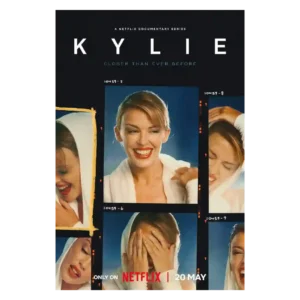
Choose Kylie for a heartfelt, candid music documentary with rich archives, sharp editing, and big emotional payoff. Skip it if you need a fully exhaustive career chronology or dislike authorized...

Pros: episode pacing, season finale quality

Cons: episode structure, season pacing

#3 It's Not Like That, Chapter 1
4.5

Best for heartfelt family drama, strong performances, natural faith themes, and an easy binge. Skip it if you need fast pacing, strict doctrinal portrayals, or a satisfying romantic resolution.

Pros: season finale quality, screenplay quality

Cons: character consistency, continuity

#4 Margo’s Got Money Troubles
4.4

Best for exceptional performances, heartfelt family chemistry, and a humane take on motherhood and sex work. Skip it if you need gritty realism, fast setup, or perfectly cohesive tone.

Pros: episode structure, dialogue quality

Cons: plot twists, season finale quality