Spider-Noir, Season 1 Review
Bottom Line
Choose Spider-Noir if you want a weird, stylish Cage-led Spider-Man noir with pulp energy. Skip it if thin mystery plotting, rough CGI, or mature content will sour the fun.
Best for Spider-Man or noir fans who want a self-contained, stylized alternate-universe story led by an eccentric Nicolas Cage performance. It also suits viewers curious enough to try both the black-and-white and color versions.
Not for viewers seeking a grounded detective mystery, a family-friendly Spider-Man adventure, or a faithful continuation of Spider-Verse. It may also frustrate anyone sensitive to visible CGI limits or broad Cage mannerisms.
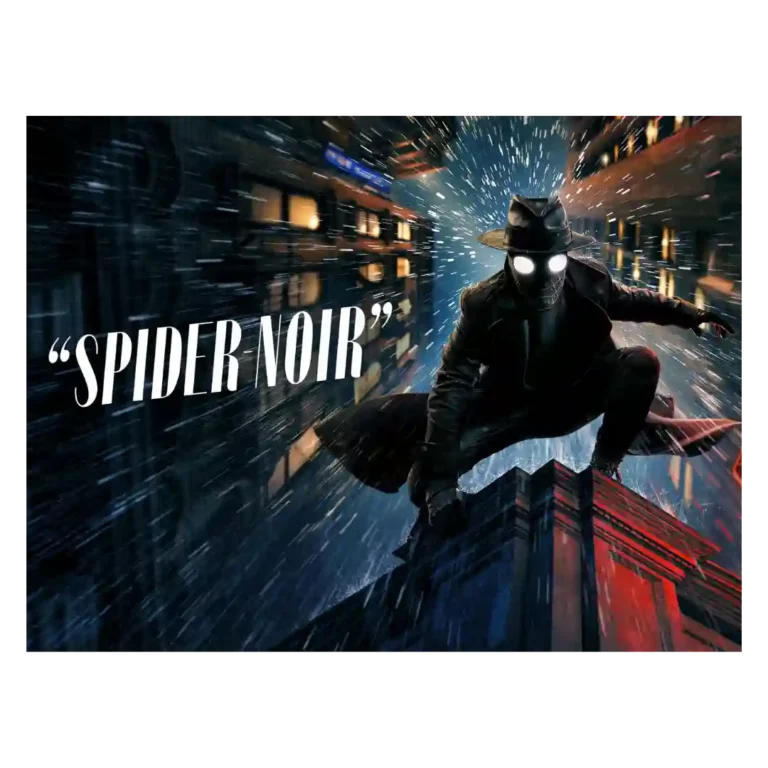
Spider-Noir Season 1 lands as a stylish, strange, mostly enjoyable Spider-Man offshoot powered by Nicolas Cage and a committed noir presentation. Reviewers repeatedly praise the black-and-white cinematography, period design, supporting cast, and the way the show turns familiar Spider-Man pieces into pulp detective material. The tradeoff is consistency: several critics find the plot thin, the middle stretch draggy, the CGI uneven, and Cage's performance either inspired or excessive. It works best for viewers who value mood, genre play, and oddball superhero energy over a tightly engineered mystery.
Feature Scorecards
Summary
59 reviewed features- Very positive 4.5-5.0 25% 15 features
- Positive 3.5-4.4 41% 24 features
- Neutral 2.5-3.4 22% 13 features
- Negative 1.5-2.4 7% 4 features
- Very negative below 1.5 5% 3 features
Pros
-
Costumes are praised for selling the period world and for working alongside sets, hair, makeup, and color choices. Reviewers especially like how the wardrobe supports both the black-and-white and full-color presentations.
-
The season's crime-noir rhythm gets credit for strong reveals, cut-to-black endings, and twisty chapter movement. This is clearest in reviews that enjoy the show as a serial detective adventure.
-
Makeup is rarely isolated, but when mentioned it supports the period illusion along with hair, costumes, and set design. It helps the show sell old-Hollywood style even when the artifice is visible.
-
The show gets credit for surprise, twists, and noir-style reveals from its most enthusiastic reviewers. These moments help the crime serial feel lively even when the mystery itself is not always considered complex.
-
Practical craft fares better than digital effects. One detailed review says the action, editing, costumes, practical effects, and sets look especially strong in black-and-white.
-
Rewatch value appears in the strongest fan-leaning reviews, especially from viewers who imagine revisiting the season or trying both visual formats. The rewatch appeal depends heavily on liking the show's style.
-
The black-and-white cinematography is one of the most consistently praised craft elements. Critics single out high-contrast lighting, shadow, low angles, and crisp noir compositions, though some prefer the color version for action or texture.
-
Renewal interest is high among positive reviewers, several of whom explicitly want more or would watch a second season. Even some mixed takes see room for a better follow-up if the story tightens.
-
The franchise connection is generally treated as a strength because the show stands alone. Reviewers like that it borrows Spider-Man DNA without requiring MCU homework or Spider-Verse continuity tracking.
-
Production design is widely admired for creating a lived-in 1930s New York full of clubs, offices, alleys, and period detail. Some critics still see soundstages or digital backdrops, but the overall craft response is positive.
-
Season finale quality is split. Some reviewers praise a rug-pulling finish that delivers, but others think the final episodes and climax are underwhelming or only standard superhero material.
-
World-building works best as a stylized alternate 1930s New York populated by familiar Spider-Man figures in new pulp forms. Some critics want deeper social texture, but many enjoy the lived-in comic-noir sandbox.
-
The supporting cast is frequently praised, especially Lamorne Morris, Li Jun Li, Karen Rodriguez, Brendan Gleeson, Jack Huston, and Abraham Popoola. Even mixed reviews often say the ensemble helps keep the show watchable.
-
The pilot and early episodes make a strong impression on several reviewers, especially for establishing the black-and-white look, Cat Hardy, and Ben's detective setup. A few later-season critiques suggest that promise is not always sustained.
-
The strongest notices praise Ben and the reworked supporting characters for gaining new dimensions in this alternate world. A few negative reviews argue the characters remain stock noir types, but the positive side finds them compelling enough to carry the season.
-
As a spin-off, Spider-Noir performs better than many reviewers expected. The strongest praise says it stands on its own as a stylish, entertaining alternate Spider-Man story, while skeptics still question whether the side character can sustain a full season.
-
Reviewers who connect with the series find real drama in Ben's grief, the war-scarred villains, and the tonal balance between comedy, horror, and sadness. Negative takes argue those emotions are too surface-level to fully sting.
-
The score and music are mostly liked when they lean into jazz, period songs, theremin touches, or the noir atmosphere. One review complains that the music wanders away from the represented period.
-
The direction earns praise where reviewers notice confident staging, long takes, stylized action, and a full commitment to noir form. Even mixed reviews often concede that the craft team knows the look it wants.
-
Several reviewers found the full-season drop easy to keep watching, calling it a sharp binge-show or noting that it held their interest across the run. Pacing complaints keep the binge appeal from being universal.
-
Cage's lead performance is the main attraction and the main fault line. Most reviews praise his Bogart-meets-Bugs-Bunny commitment, while a few argue the impression-heavy approach blocks the character's emotional center.
-
Entertainment value is the show's biggest strength for supporters: fun, weird, stylish, and energetic. The lower scores come from critics who find the same ingredients repetitive or snoozy despite Cage's presence.
-
Visual style is the most consistently praised craft area. Reviewers love the black-and-white noir look, shadowy lighting, period styling, and bold color option, though some find the color version more artificial.
-
Cage is the center of the conversation: many reviewers love his strange, committed noir-sleuth energy, while a few find the performance too mannered or distracting. The broader acting response ranges from electric to overindulgent, but rarely indifferent.
-
Suspense comes from the crime investigation, betrayals, dangerous mob world, and superpowered mystery. Reviewers who like the show describe danger and intrigue, while others say the detective side is too basic to become truly tense.
-
Critical response is mostly favorable but not unanimous. Many outlets call the series fun, stylish, or one of the better recent Marvel streaming efforts, while a smaller but sharp group finds it thin, repetitive, or disappointing.
-
Faithfulness is judged more by spirit than continuity. Many appreciate how the show honors noir, comics, and Spider-Man ideas in its own sandbox, though some comic-focused viewers say it softens or changes the original Spider-Noir atmosphere.
-
Reviewers who defend the show think Ben Reilly's odd, old-movie persona is built into the character rather than random affectation. That framing helps Cage's cartoonish and haunted sides feel more coherent for some viewers.
-
Most positive critics think the series has real pull for Spider-Man fans, noir fans, and viewers open to an oddball comic-book experiment. The dissenters question who the show is for when the pastiche overwhelms the storytelling.
-
Humor often works when Cage's dry delivery, screwball banter, and odd physicality mesh with the mystery. Some critics find the broad comedy too sweaty or ineffective, but most positive reviews see it as part of the show's charm.
-
Genre satisfaction drives much of the praise. Fans of the show enjoy the noir affect, detective tropes, pulp superhero energy, and old-Hollywood attitude; skeptics think the homage becomes shallow cosplay.
-
Finale reactions are mixed. Some reviewers say the ending or conclusion satisfies, but others call the final stretch underwhelming or more standard than the build-up deserves.
-
Special effects are mixed but not disastrous. Some reviewers like the action, web-swinging, and color-pop powers, while others notice cheapness, artificiality, or moments where effects look less polished.
-
Plot clarity is mixed. Some reviewers praise the clear motivations and grounded personal stakes, while others find the detective mystery basic, unfocused, or too convenient in the final stretch.
-
The season structure works best for critics who treat it as one long noir-superhero serial. Others think the eight-episode shape is loose enough that several middle installments could be skipped.
-
Originality is one of the sharpest divides. Supporters call the series a refreshing, unique remix of Spider-Man and noir; detractors see a familiar vigilante story dressed in period style.
-
Soundtrack response is generally positive for 1930s songs, jazzy atmosphere, and score choices that heighten the noir mood. The one notable complaint says the music sometimes strays from the period.
-
Writing quality is mixed-positive overall. Admirers like the sharp banter, humor, and genre control; harsher critics hear cliché, thinness, and imitation where the show wants hard-boiled snap.
-
Chemistry is one of the more divided areas. Some reviewers like the lived-in rapport between Cage and Morris or Cage and Li Jun Li, while others say the romantic sparks around Cat and Flint or Cat and Ben do not fully land.
Cons
-
Episode pacing varies by reviewer. Some say the mystery keeps moving or the pilot flows well, while others point to a slow start, a saggy middle, or episodes that drag despite the shorter runtime.
-
Lore depth is strongest when reviewers discuss the reimagined villains, alternate origins, and self-contained universe. The weakest reactions say the world-building is vague or not thoughtful enough beyond Cage and the visual hook.
-
Realism is not the show's goal, and reviews judge that choice differently. Supporters accept the heightened artificiality as comic-book noir; critics say the visible artifice keeps the world from feeling fully lived in.
-
Screenplay response ranges from sharp and genre-savvy to stale and failed. The more positive reviews like how the scripts honor heightened noir reality, while negative ones fault thin pastiche and weak emotional logic.
-
Theme depth is uneven. The show gestures toward grief, responsibility, duality, racism, gender, and war trauma, but critics split on whether those themes become meaningful or remain stylish decoration.
-
CGI is a recurring caveat even in otherwise glowing reviews. Reviewers often forgive it as TV-scale effects, but several call out unpolished web-slinging, green-screen work, or color-version effects that look rougher than the rest of the design.
-
The emotional response is split between critics who feel the show's sad spine and those who say it lacks a beating heart. The most favorable takes cite Ben's grief and the damaged villains as grounding the pulpier material.
-
Season pacing is uneven. Positive reviewers stay engaged through the serial mystery, but mixed and negative reviews point to a meandering middle, an unfocused setup, or too much stretch for the story.
-
Dialogue is highly polarized. Admirers enjoy the rat-a-tat banter and hard-boiled quips, while detractors hear clunky, phony noir imitation that cannot match the classics it references.
-
Episode length is not a major topic, but one review notes that the roughly 40-minute episodes still drag when the writing goes stale. That suggests the runtime is manageable, yet not enough to hide pacing problems.
-
Story quality is the broadest split: fans enjoy the personal stakes, detective frame, and pulp-superhero momentum, while detractors call it thin, predictable, dull, or too dependent on stock noir shapes.
-
Editing is not widely discussed, but one criticism lands on a comic-panel montage that feels out of step with the rest of the season. The concern fits broader complaints that the final stretch changes texture abruptly.
-
Continuity is a small but real sticking point for viewers trying to connect this version to Spider-Verse or comic-book versions. Reviews generally accept the standalone approach, but one calls the separation a noticeable hurdle.
-
The show receives limited, mixed credit for touching on racism and gender dynamics in its 1930s setting. Some reviewers appreciate the texture, while others feel those ideas are underexplored or too vague to add much depth.
-
Season length comes up mainly as a criticism from reviewers who feel the eight-episode run is padded. The harshest view says several middle episodes could be skipped entirely.
-
Violence is consistently described as stronger and bloodier than a family Spider-Man audience might expect. Reviews mention brutal gangster violence, torture, blood, and a TV-14 edge.
-
The show includes sexual winks, suggestive asides, and a darker adult edge that family-focused viewers may find off-putting. Its mature content pushes it away from a kid-friendly Spider-Man experience.
-
Language is called out as part of the show's adult edge. Reviews mention stronger curse words and harsh language, especially when warning that this is not a gentle Spider-Man story for families.
-
The show is repeatedly described as too harsh for younger superhero fans. Reviewers point to violence, adult material, and language that make it a poor fit for viewers expecting a family-friendly Spider-Man tone.
-
Family friendliness is low. Reviews that focus on content warn that the show betrays expectations set by animated Spider-Verse appearances, with bloody violence, language, and sexual material pushing it away from younger households.
Compared With Category Average
Compared with other TV Shows, this product is below average in sexual content level, violence level, continuity.
Summary
8 compared features- Above average 0.4+ pts higher 0% 0 features
- Same as average within 0.3 pts 0% 0 features
- Below average 0.4+ pts lower 100% 8 features
| Attribute | This product | Category average | Difference |
|---|---|---|---|
| sexual content level | 1.5 | 3.6 | -2.1 |
| violence level | 1.9 | 3.3 | -1.5 |
| continuity | 2.5 | 4.0 | -1.5 |
| cultural representation | 2.4 | 3.7 | -1.3 |
| story quality | 2.8 | 3.8 | -1.0 |
| season length | 2.0 | 3.2 | -1.2 |
| editing quality | 2.6 | 3.7 | -1.1 |
| emotional impact | 3.0 | 4.1 | -1.1 |
FAQ
Is Spider-Noir connected to the Spider-Verse movies?
Reviews repeatedly say it uses Cage and Spider-Man Noir DNA but stands on its own, with Ben Reilly rather than the animated Peter Parker variant. Prior Spider-Verse viewing is not treated as required.
Should I watch in black-and-white or color?
Most reviewers prefer black-and-white for the noir mood, shadows, and period feel. A few like the color version for vibrancy or action scenes, but color also exposes rougher effects for some viewers.
Is Nicolas Cage good in it?
Most critics say Cage is the main reason to watch, praising his strange Bogart-and-Bugs-Bunny energy. A smaller group finds the performance too much or more like impressions than a fully grounded character.
Is the show family-friendly?
No. Reviews call out stronger curse words, harsh language, bloody violence, sexual material, and mature themes that make it a poor match for younger Spider-Man fans.
How is the story?
The story works best as pulpy superhero noir with personal stakes and reimagined villains. Several critics still find the mystery basic, predictable, or stretched across the season.
Does Season 1 end well?
Finale response is divided. Some reviewers say it delivers or satisfies, while others think the final episodes are weaker than the build-up.
Sample Expert Reviews We Analyzed
These are a few of the reviews included in our analysis.
Video Reviews
Article Reviews
- Review score
- 4.8
- Review score
- 3.8
Consider This Instead
If you want better violence level
Choose Dutton Ranch, Season 1. It scores 4.0 vs 1.9 for violence level, with a 3.7 overall score.
If you want better story quality
Choose Human Vapor, Season 1. It scores 4.1 vs 2.8 for story quality, with a 3.9 overall score.
If you want better main cast performance
Choose The Pitt, Season 2. It scores 5.0 vs 4.3 for main cast performance, with a 4.6 overall score.
If you want better visual style
Choose Dark Winds, Season 4. It scores 4.9 vs 4.2 for visual style, with a 4.3 overall score.
Overall Top TV Shows Alternatives
Choose The Pitt Season 2 for a gripping, realistic medical drama with superb acting and emotional depth. Skip it if graphic procedures, unresolved arcs, or slower character-driven pacing bother you.
Pros: episode structure, main cast performance
Cons: age appropriateness, plot clarity
Choose Dark Winds Season 4 for moody noir suspense, excellent acting, and richer Native-centered themes. Skip it if uneven pacing, thin conspiracy plotting, or a stranger L.A. detour would frustrate...
Pros: costume design, directing quality
Cons: family friendliness, age appropriateness
Choose The Agency Season 2 for adult spy drama with superb acting, tense intrigue, and a stronger pace. Skip it if you want simple plotting, constant action, or a Fassbender-only...
Pros: directing quality, bingeability
Cons: none
Choose Silo Season 3 for revealing, ambitious sci-fi with strong performances and a rewarding finale. Skip it if slow-burn pacing, amnesia plots, or dense mystery-box storytelling test your patience.
Pros: drama quality, finale satisfaction
Cons: character development, season pacing