Turtle Beach Rematch Feature Scores
Explore all 80 feature scores for Turtle Beach Rematch, organized into pros and cons.
Scores by Feature
Summary
80 reviewed features-
Very positive 4.5-5.048 (60%)
-
Positive 3.5-4.415 (19%)
-
Neutral 2.5-3.410 (13%)
-
Negative 1.5-2.46 (8%)
-
Very negative below 1.51 (1%)
Pros
Sort
-
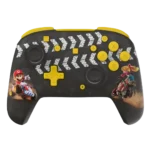
Visual design is the line’s standout strength. Reviewers repeatedly praise the Mario artwork, glow effects, translucent finishes, RGB, and bolder colorways over plain first-party pads.
-
The Rematch line is especially well suited to casual players, kids, families, and anyone who wants a capable spare without paying premium-controller prices.
-
The overall consensus is positive: reviewers see the Rematch as a dependable, attractive controller family with strong fundamentals, tempered by variant-specific omissions and cheaper-feeling details.
-
Battery life is one of the clearest strengths on wireless models, with roughly 30-40 hours repeatedly confirmed; RGB lighting can cut endurance substantially.
-
Ergonomics are consistently strong, with familiar shapes, comfortable grips, and good fit across long sessions and several hand sizes.
-
Value is generally strong, especially on the Core and Advanced wired models, but some Switch versions sit too close to first-party pricing or better-equipped rivals at full price.
-
Most Rematch variants feel solid and dependable for their price, though some Switch models still come across lighter or more plasticky than Nintendo’s premium controller.
-
Comfort is a consistent strength across the line, helped by familiar controller shapes, low weight, and well-sized grips.
-
TMR-equipped models are among the best-reviewed versions, combining smooth movement, precision, responsiveness, and lower drift risk.
-
Reviewers usually like the Rematch’s light weight and balance, though a few need time to adjust or associate the lightness with a cheaper feel.
-
PC support is consistently positive, ranging from seamless wired plug-and-play to strong Bluetooth/USB performance after manual mapping on Switch-oriented models.
-
Thumbstick tops are a major strength, with concave wells, raised lips, and textured surfaces repeatedly praised for control and security.
-
Stick movement is consistently praised, from silky-smooth TMR implementations to well-tuned analogue sticks with quick recentering.
-
Xbox-oriented Rematch models work seamlessly and are officially licensed, giving reviewers few compatibility concerns.
-
Input response is a strength wherever tested directly, from latency-free USB operation to ultra-low-latency wireless and no-lag casual testing.
-
The Xbox/PC Core models earn strong praise for quick volume, game/chat balance, and mic-mute adjustments without leaving the game.
-
Setup is usually quick and straightforward, especially on wired Xbox/PC models; a few wireless or PC configurations require extra pairing or mapping steps.
-
Triggers are usually a strong point, with responsive actuation and curved shapes that keep fingers planted during intense play.
-
Programmable rear controls are a meaningful extra across several variants, giving faster access to actions and more flexibility than basic first-party layouts.
-
Low-latency wired play, rear buttons, and trigger stops make the Advanced/Core variants credible entry-level competitive options.
-
Light weight and comfortable shaping make the Rematch easy to use for long sessions, with multiple reviewers specifically noting reduced fatigue.
-
The rear controls are broadly useful for remapping and competitive play, though several Switch reviewers found limited need for them in typical Nintendo games.
-
The Advanced model’s two-stage trigger stops are a standout feature, delivering very fast inputs and a real benefit in shooters and action games.
-
Buttons are usually crisp, firm, and satisfying, but a minority of reviews criticize excessive stiffness or sponginess on specific variants.
-
Fit is strong across reported hand sizes, from small hands to broad claims of comfort for nearly everyone, though large hands may hit rear buttons accidentally on some models.
-
Rear-button placement is often excellent and easy to find, but some reviewers with larger hands or less familiarity report accidental presses.
-
Rear buttons and fast trigger stops are especially useful in shooters, with reviewers calling them a genuine advantage for faster inputs.
-
Control Hub offers useful remapping, dead-zone, sensitivity, and trigger adjustments, giving budget wired models more tuning depth than their price suggests.
-
Control Hub is generally simple and useful for dead zones, vibration, diagnostics, and remapping, though it is not described as unusually deep.
-
Motion controls work well across Switch versions, with some reviewers finding them surprisingly accurate and others simply solid enough for regular play.
-
Reviewers who tested stick accuracy found the controls precise, with TMR-equipped versions singled out for strong responsiveness.
-
Stick resistance is well judged where discussed, with reviewers praising a taut, springy feel rather than loose movement.
-
Longer testing produced reliable performance, with reviewers reporting no stick issues and solid behavior across repeated play.
-
Switch-focused models work across the original Switch and Switch 2, but exact Switch 2 features vary by version and some omit newer functions.
-
Magnetic TMR/Hall-effect versions inspire strong confidence against drift, while a non-magnetic Rematch version is criticized for using older, wear-prone stick technology.
-
Responsiveness is generally good, but a few variants use buttons that are too firm or tall, making them feel slower than premium alternatives.
-
Remapping is flexible on models with rear controls, letting players assign alternate actions for different games.
-
Where durability is discussed, the controllers feel sturdy enough for everyday use, while magnetic stick technology is credited with reducing wear.
-
The Advanced wired model offers full trigger travel for controlled, precise metering before switching into its shorter hair-trigger mode.
-
Bluetooth stayed stable in testing even with several other wireless devices active in the same room.
-
Lettering on the Advanced wired model is clear and easy to read.
-
Wireless connection testing showed no dropouts or problems even in a room crowded with other Bluetooth devices.
-
A clearly defined, tactile D-pad earned specific praise for fighting games because each directional point is easy to feel.
-
On the Advanced wired model, Hall-effect stick technology is praised mainly for its expected resistance to stick drift.
-
On the Core wired model with impulse triggers and dual rumble, tactile feedback feels immersive and well judged.
-
The Advanced model can reliably store genre-specific profiles, making its software tuning useful beyond one session.
-
The lightweight Core wired model is considered a practical option for kids and on-the-go gaming.
-
USB-C charging is easy to live with because the controller can be plugged in and used while charging.
-
The Advanced wired model impressed with a latency-free USB connection suited to responsive competitive play.
-
Wireless latency is excellent in the direct test that measured it, with the controller described as ultra-low latency.
-
Bluetooth testing found stable wireless operation without connection problems.
-
The detachable 2.5 m cable is generally well made and secure, but several living-room setups needed something longer.
-
RGB can look subtle, classy, and highly customizable, but brighter animated effects distract some reviewers and noticeably reduce battery life.
-
Programmable rear buttons can simplify complicated inputs for players who want easier access to frequently used actions.
-
The Control Hub software is easy to navigate and adds useful configuration support on Xbox and Windows.
-
The Switch version preserves the core gyro-aiming experience, making motion-based aiming feel complete rather than compromised.
-
The Advanced wired model’s included detachable USB-C cable fits securely and feels flexible and well made.
-
One reviewer found the Switch model precise enough for platforming without accidental movement sending the character off course.
-
The Core wired model stayed responsive during Forza Horizon 5, supporting smooth use in racing as well as action games.
-
The wired Advanced model gets praise for clean, high-quality headset output, while some Switch versions lose points for omitting a 3.5mm jack entirely.
-
One reviewer found the shoulder buttons responsive across their full length, making them easy to activate from different finger positions.
-
The Core’s app provides a useful layer of control over dead zones, vibration, and remapping without turning the controller into an overly complex pro pad.
-
Trigger feel is acceptable but not uniformly premium; some reviewers notice extra resistance or weaker tactile refinement.
Cons
Sort
-
The inability of several Switch 2 versions to wake the console is one of the line’s most repeated complaints and a frequent convenience tradeoff versus Nintendo’s controller.
-
Several Switch-focused reviews flag missing NFC/Amiibo scanning as a limitation, especially for collectors and players who regularly use Amiibo features.
-
Vibration is the biggest cross-variant inconsistency: Xbox/PC models can have solid rumble and impulse feedback, while many Switch versions omit rumble entirely or lack Nintendo’s richer HD Rumble.
-
Noise is a recurring drawback: multiple reviewers describe clacky, loud inputs, with one calling the face-button racket especially distracting.
-
Rearranged Home, Capture, plus, and minus controls are a recurring annoyance on Switch models, causing repeated accidental presses until muscle memory adjusts.
-
Shoulder-button quality is a weak spot in the harsher reviews, with complaints about awkward shape or spongy feedback.
-
On one Switch 2 version, the relocated screenshot control contributes to muscle-memory mistakes because the system buttons are rearranged.
-
One reviewer prefers using a separate controller at home because carrying the Switch plus controller feels cumbersome on the go.
-
Materials are serviceable for the price but rarely luxurious; plasticky shells, slippery surfaces, and inconsistent top/bottom finishes are recurring criticisms.
-
D-pad accuracy varies sharply by model: some Switch versions handle diagonals cleanly, while Core wired reviews repeatedly report sponginess that hurts precise direction changes.
-
The Advanced model’s rear paddles work, but one reviewer found them a little rickety compared with premium controls.
-
Face-button travel splits reviewers: one likes the comfortable amount of throw, while another finds the buttons too tall and firm.
-
A dedicated C button is appreciated on newer Switch 2 versions for quick GameChat access, while older releases are criticized for launching without it.
-
D-pad feel is one of the most variant-dependent traits, ranging from tactile and well defined to soft, spongy, or less premium.
-
Premium feel is mixed. Some reviewers think the Rematch approaches first-party quality, while others notice plasticky materials, lightness, or noisy inputs that make the price feel harder to justify.
-
Most functions are easy to learn, but rear-button programming, unfamiliar system-button layouts, and some onboard controls can take adjustment.
-
Grip quality is inconsistent across the range: some textures and stick surfaces feel secure, while smooth or lightly textured handles can feel slippery or sweaty.