Access logs
P1
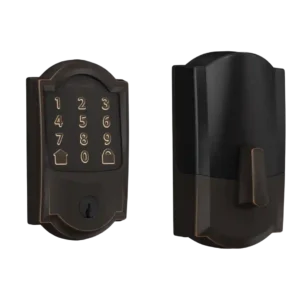
Product 1: Schlage Encode Smart Lock
4.6
Activity history, lock logs, and audit trails were repeatedly mentioned as useful for knowing who locked or unlocked the door and when.
P2
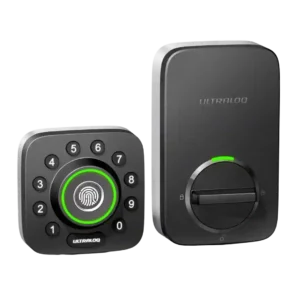
Product 2: ULTRALOQ U-Bolt Pro Smart Lock
4.5
Access logs were consistently available and useful, showing who entered, when, and by what method across app, fingerprint, code, manual, and auto events.
Alarm/siren loudness (if included)
P1
Product 1: Schlage Encode Smart Lock
3.8
The tamper/forced-entry alarm exists, but loudness opinions vary sharply from quiet to deafening or 90 dB.
P2Product 2: ULTRALOQ U-Bolt Pro Smart Lock
No score yetApp
P1
Product 1: Schlage Encode Smart Lock
4.3
The app was usually described as useful or easy for status, codes, locks, and history, but setup and third-party configuration were sometimes confusing.
P2
Product 2: ULTRALOQ U-Bolt Pro Smart Lock
4.2
The app enabled setup, locking, users, logs, notifications, and settings; reviews were mostly positive, but some criticized the UI, hiccups, or lost connections.
Auto-lock
P1
Product 1: Schlage Encode Smart Lock
4.2
Auto-lock is widely supported and often appreciated, though reviewers warned it can be risky without door-sense if the door is open.
P2
Product 2: ULTRALOQ U-Bolt Pro Smart Lock
4.4
Auto-lock was widely supported and configurable, but several reviewers warned that the default behavior can surprise or briefly lock users out during setup.
Auto-relock after failed attempts
P1
Product 1: Schlage Encode Smart Lock
4.0
One locksmith test found the keypad temporarily disabled after multiple invalid codes, although it did not send an active phone notification.
P2Product 2: ULTRALOQ U-Bolt Pro Smart Lock
No score yetBackset compatibility
P1
Product 1: Schlage Encode Smart Lock
4.5
Locksmith reviews confirmed the bolt can adjust between common 2-3/8-inch and 2-3/4-inch backsets.
P2
Product 2: ULTRALOQ U-Bolt Pro Smart Lock
4.2
Backset support was documented for 2-3/8-inch and 2-3/4-inch setups, though one reviewer hit confusing stamped markings during adjustment.
Battery
P1
Product 1: Schlage Encode Smart Lock
3.3
Battery evidence centered on four AA batteries, often around six months of life; Wi-Fi drain was a repeated caveat, though one reviewer reported 40 percent after five months.
P2
Product 2: ULTRALOQ U-Bolt Pro Smart Lock
4.2
Battery feedback was mostly positive thanks to AA cells, low-battery alerts, and emergency USB power, but several reviewers noted variable real-world life.
Bluetooth
P1
Product 1: Schlage Encode Smart Lock
4.5
Bluetooth evidence is limited but positive, with reviewers noting nearby communication and one locksmith emphasizing encrypted Bluetooth.
P2
Product 2: ULTRALOQ U-Bolt Pro Smart Lock
4.3
Bluetooth was consistently useful for pairing, local control, and bridge operation, with reviewers noting app pairing or onboard Bluetooth support.
Build quality and durability
P1
Product 1: Schlage Encode Smart Lock
4.3
Most evidence points to sturdy, heavy, secure hardware, although one reviewer criticized the bulky interior electronics housing.
P2
Product 2: ULTRALOQ U-Bolt Pro Smart Lock
4.4
Build impressions were mostly strong, with metal/heavy-duty comments and solid feel, but one reviewer described the unit as light plastic with a loud shaky action.
Camera and doorbell performance
P1
Product 1: Schlage Encode Smart Lock
4.3
Doorbell and camera integration was strongest with Ring and Amazon Key for live-view lock control, but Ring Alarm support and multi-app setup caused limitations.
P2Product 2: ULTRALOQ U-Bolt Pro Smart Lock
No score yetDoor-sense
P1
Product 1: Schlage Encode Smart Lock
1.0
Door-sense is a clear limitation: one review explicitly listed no door sense and described the auto-lock open-door risk.
P2
Product 2: ULTRALOQ U-Bolt Pro Smart Lock
4.6
Door-sense evidence was strong for the Wi-Fi version, with reviewers using the included sensor for open/closed status and to prevent locking while ajar.
Door compatibility (deadbolt fit)
P1
Product 1: Schlage Encode Smart Lock
4.0
Reviewers found the lock compatible with standard deadbolt holes and common door thicknesses, but one installation needed strike-plate alignment work.
P2
Product 2: ULTRALOQ U-Bolt Pro Smart Lock
4.4
The lock generally fit standard deadbolt doors and common left/right orientations, with reviewers citing standard door thickness or existing deadbolt prep as the main compatibility path.
Existing hardware reuse
P1
Product 1: Schlage Encode Smart Lock
2.0
The Encode is a full deadbolt replacement, so it generally replaces rather than reuses the existing lock body.
P2
Product 2: ULTRALOQ U-Bolt Pro Smart Lock
4.5
Reviewers were able to use existing deadbolt prep or old lock locations, with no wiring or drilling required in the cleanest installs.
Fingerprint
P1
Product 1: Schlage Encode Smart Lock
1.5
Fingerprint support is absent in the reviewed evidence; one reviewer specifically wished Schlage had added a fingerprint recognition sensor.
P2
Product 2: ULTRALOQ U-Bolt Pro Smart Lock
4.7
Fingerprint entry was the strongest consensus feature, with nearly every reviewer reporting fast, reliable, or flawless scans, except for angle sensitivity in one review.
Finish durability
P1
Product 1: Schlage Encode Smart Lock
5.0
Direct finish evidence is limited, but GearBrain cited the top ANSI/BHMA Grade AAA rating for security, durability, and finish.
P2Product 2: ULTRALOQ U-Bolt Pro Smart Lock
No score yetGeofencing
P1
Product 1: Schlage Encode Smart Lock
1.4
Geofencing and true auto-unlock were repeatedly called out as missing compared with some alternatives.
P2
Product 2: ULTRALOQ U-Bolt Pro Smart Lock
4.1
Geofencing and auto-unlock were split: several reviewers found it useful or improved, while others said it required distance thresholds, setup nuance, or failed outright.
Guest Codes and Access
P1
Product 1: Schlage Encode Smart Lock
4.8
Guest access was a major strength, especially the 100-code capacity plus temporary, recurring, scheduled, or app-based access options.
P2
Product 2: ULTRALOQ U-Bolt Pro Smart Lock
4.6
Guest and temporary access was a clear strength for cleaners, dog sitters, rentals, Airbnb, and visitors, often with time/date limits or eKeys.
Hub requirement
P1
Product 1: Schlage Encode Smart Lock
5.0
Reviewers strongly agreed that the lock avoids a separate hub, bridge, adapter, or Wi-Fi module, which simplifies ownership.
P2
Product 2: ULTRALOQ U-Bolt Pro Smart Lock
4.0
Hub requirements varied by version: built-in Wi-Fi models avoided an extra bridge, while older or bridge-bundle versions needed a nearby adapter.
Installation and Setup
P1
Product 1: Schlage Encode Smart Lock
4.4
Installation was usually described as screwdriver-simple and fast, often helped by app guides or snap-in hardware, though some reviewers found setup, programming, or alignment tricky.
P2
Product 2: ULTRALOQ U-Bolt Pro Smart Lock
4.4
Most reviewers found installation straightforward, often under 30 minutes, but the older bridge-era review reported a difficult tailpiece/screw-tightness process and one review had hub pairing restarts.
Key override reliability
P1
Product 1: Schlage Encode Smart Lock
4.3
Reviewers frequently valued the physical key backup for battery, app, or electronics failures, although some noted the package includes only one key.
P2
Product 2: ULTRALOQ U-Bolt Pro Smart Lock
4.5
Nearly every reviewer valued the physical key backup, especially for dead batteries, lockout mode, or emergency entry.
Keypad
P1
Product 1: Schlage Encode Smart Lock
4.4
The keypad was usually easy, backlit, accessible, or responsive, with minor complaints about night visibility and limited settings granularity.
P2
Product 2: ULTRALOQ U-Bolt Pro Smart Lock
4.5
The keypad was generally praised for anti-peep entry and tactile/physical buttons, although one reviewer found the circular layout slower than a normal keypad.
Keyway quality
P1
Product 1: Schlage Encode Smart Lock
4.0
Keyway evidence is limited to one locksmith review identifying the Schlage SC1/C keyway and straightforward rekeying.
P2
Product 2: ULTRALOQ U-Bolt Pro Smart Lock
4.4
The hidden keyway was appreciated as a concealed backup, and one locksmith-style review specifically identified the conventional keyway as Schlage-style.
Lock/unlock speed
P1
Product 1: Schlage Encode Smart Lock
4.2
Keypad and app unlocking were often described as instant or near-instant, while voice/app status updates sometimes showed lag.
P2
Product 2: ULTRALOQ U-Bolt Pro Smart Lock
4.8
Unlocking was repeatedly described as instant or quick, especially fingerprint entry, with several reviewers calling it one of the faster locks they tested.
Locking motor
P1
Product 1: Schlage Encode Smart Lock
3.5
Motor feedback was mixed: some reviewers found it quiet or strong, while others described it as loud, grinding, or bulky.
P2
Product 2: ULTRALOQ U-Bolt Pro Smart Lock
3.6
Motor feedback was mixed: PCMag and Brian Unbox found smooth or quiet operation, while others called the action loud, shaky, or sensitive to installation strain.
Locking reliability
P1
Product 1: Schlage Encode Smart Lock
4.6
Locking reliability was generally strong, with multiple reviewers reporting flawless, smooth, or reliably working lock/unlock behavior.
P2
Product 2: ULTRALOQ U-Bolt Pro Smart Lock
4.6
Reliability was a major strength in most hands-on tests, especially fingerprint/keyless operation, though older setup bugs and alignment-related concerns appeared in a minority of reviews.
Notifications
P1
Product 1: Schlage Encode Smart Lock
4.4
Notifications for lock state, code use, or battery were useful across many reviews, though invalid-code push alerts were not always available.
P2
Product 2: ULTRALOQ U-Bolt Pro Smart Lock
4.4
Notifications were useful for low battery, remote events, and entry alerts, though one reviewer disliked needing per-user notification rules.
Physical attack resistance
P1
Product 1: Schlage Encode Smart Lock
4.9
Physical security was a major strength, with repeated Grade 1/ANSI/BHMA praise and reinforcement hardware evidence.
P2
Product 2: ULTRALOQ U-Bolt Pro Smart Lock
4.2
Physical security evidence was mixed by version/source: some cited ANSI Grade 1 strength, while other reviews called it unrated or Grade 2/3-like.
Pick/drill resistance (if rated)
P1
Product 1: Schlage Encode Smart Lock
4.0
Pick and drill evidence is mixed: one review cites resistance to bumping and picking, while a locksmith called the stock cylinder good but not impossible to pick.
P2Product 2: ULTRALOQ U-Bolt Pro Smart Lock
No score yetRemote access
P1
Product 1: Schlage Encode Smart Lock
4.5
Remote access was consistently supported, letting users lock or unlock from the app or phone while away, with some app-flow caveats.
P2
Product 2: ULTRALOQ U-Bolt Pro Smart Lock
4.5
Remote access was widely valued for locking, unlocking, monitoring, and guest entry from away, but one review noted Bluetooth-only use loses smartphone control.
Security features (encryption)
P1
Product 1: Schlage Encode Smart Lock
5.0
Security encryption evidence is limited to one locksmith review explicitly praising encrypted Bluetooth.
P2
Product 2: ULTRALOQ U-Bolt Pro Smart Lock
4.5
Security features included AES/dynamic-key encryption, lockout mode, and anti-peep/randomized keypad entry, with one review highlighting dual-layer encryption.
Smart-home integration (Alexa, Google, Siri, HomeKit, Matter, Thread)
P1
Product 1: Schlage Encode Smart Lock
4.0
Smart-home integration is useful but uneven: Alexa, Google, Ring, Amazon Key, and Home Assistant appear in evidence, while HomeKit, IFTTT, SmartThings, and Ring Alarm limitations recur.
P2
Product 2: ULTRALOQ U-Bolt Pro Smart Lock
4.2
Smart-home support was broad for Alexa, Google Assistant, IFTTT, SmartThings, and routines, but lack of HomeKit and Amazon Key limited some ecosystems.
Tamper detection sensitivity
P1
Product 1: Schlage Encode Smart Lock
4.8
Tamper detection is supported through the built-in alarm, and one review specifically noted adjustable alarm sensitivity in the app.
P2Product 2: ULTRALOQ U-Bolt Pro Smart Lock
No score yetTwo-factor authentication availability
P1Product 1: Schlage Encode Smart Lock
No score yet
P2
Product 2: ULTRALOQ U-Bolt Pro Smart Lock
2.0
Two-factor authentication was a weakness because the Reviewed transcript explicitly says the Ultraloq app lacks two-factor authentication.
User access management
P1
Product 1: Schlage Encode Smart Lock
4.7
User management is flexible through access codes, schedules, time limits, virtual keys, and PIN changes, but one review noted no single-use code.
P2
Product 2: ULTRALOQ U-Bolt Pro Smart Lock
4.6
User management was broad and flexible, covering admins, normal users, temporary users, fingerprints, passcodes, app access, and schedules.
Value and Price
P1
Product 1: Schlage Encode Smart Lock
4.0
Value was context-dependent: reviewers called it expensive or not the best value, but many still found it worth the money for features and security.
P2
Product 2: ULTRALOQ U-Bolt Pro Smart Lock
4.4
Value was usually favorable because reviewers saw strong feature density for the price, although some noted it was expensive or dependent on sale/bridge configuration.
Voice control
P1
Product 1: Schlage Encode Smart Lock
4.2
Voice control works mainly through Alexa and Google, with unlock often requiring a PIN and Google unlock support limited or absent in several reviews.
P2
Product 2: ULTRALOQ U-Bolt Pro Smart Lock
4.5
Voice control worked through Alexa or Google in several reviews, usually with a voice code for unlocking, but HomeKit/Siri support was absent.
Warranty and support
P1
Product 1: Schlage Encode Smart Lock
5.0
Warranty evidence was positive where mentioned, including lifetime mechanical and 3-year electronics coverage or a three-year warranty.
P2
Product 2: ULTRALOQ U-Bolt Pro Smart Lock
4.2
Support evidence was limited to one review that summarized user feedback as generally responsive with replacement parts when needed.
Weather resistance
P1
Product 1: Schlage Encode Smart Lock
4.5
Weather-resistance evidence is limited to PCMag identifying the exterior keypad escutcheon as weatherproof.
P2
Product 2: ULTRALOQ U-Bolt Pro Smart Lock
4.5
Weather resistance was supported by IP65 or dust/water claims across reviews, with some reviewers expecting it to handle outdoor exposure and temperature swings.
Wi-Fi
P1
Product 1: Schlage Encode Smart Lock
4.4
Built-in 2.4GHz Wi-Fi is a core strength for remote access and hub-free setup, though reviewers noted connection and battery tradeoffs.
P2
Product 2: ULTRALOQ U-Bolt Pro Smart Lock
4.2
Wi-Fi was a major convenience when built in or paired through a bridge, but 2.4GHz-only setup and mesh/dual-band issues were the clearest repeated drawback.