Access logs
P1
Product 1: eufy Video Smart Lock S330
4.4
Reviewers who discussed logs found useful entry history, including how the lock opened and which fingerprint was used, with one transcript explicitly describing an activity log.
P2
Product 2: Yale Assure Lock 2 Smart...
4.5
Activity logging is one of the clearest strengths, tracking lock, unlock, manual, code, app, and DoorSense activity so owners can see who came and went.
Alarm/siren loudness (if included)
P1
Product 1: eufy Video Smart Lock S330
4.2
The included chime can get loud enough for household alerts across rooms or floors, though reviewers discussed chime volume rather than a separate siren.
P2Product 2: Yale Assure Lock 2 Smart...
No score yetApp
P1
Product 1: eufy Video Smart Lock S330
4.3
The app was generally praised as smooth, clean, user-friendly, and feature-rich, with live video, settings, and remote controls accessible from the phone.
P2
Product 2: Yale Assure Lock 2 Smart...
3.8
The Yale app is usually described as organized or easy enough for lock control and codes, but reviewers also reported slow loading, old design, and connection glitches.
Auto-lock
P1
Product 1: eufy Video Smart Lock S330
4.4
Auto-lock was repeatedly seen as a useful peace-of-mind feature, with timing and schedule controls, although one reviewer warned it may lock when the door is open.
P2
Product 2: Yale Assure Lock 2 Smart...
4.2
Auto-lock is widely supported and often useful with DoorSense or timers, but a few reviewers saw inconsistent behavior when the door was not detected correctly.
Auto-relock after failed attempts
P1
Product 1: eufy Video Smart Lock S330
4.2
Wrong-try protection and passcode lockout were clearly supported, giving the lock a configurable response after repeated failed attempts.
P2
Product 2: Yale Assure Lock 2 Smart...
4.4
Wrong-code protection appears in the keypad settings, with reviewers noting shutdown times, wrong-code limits, and temporary keypad lockout behavior.
Backset compatibility
P1
Product 1: eufy Video Smart Lock S330
4.6
Backset support is well documented for common 2 3/8-inch and 2 3/4-inch sizes.
P2
Product 2: Yale Assure Lock 2 Smart...
3.6
Backset support is standard for common 2-3/8-inch and 2-3/4-inch setups, but one Touch reviewer warned that longer-than-average backsets are unsupported.
Battery
P1
Product 1: eufy Video Smart Lock S330
4.2
Battery feedback was strongly positive overall, with multiple reviewers citing several months of use, USB-C charging, and only occasional recharges.
P2
Product 2: Yale Assure Lock 2 Smart...
3.0
Battery life is the most repeated weakness, especially with Wi-Fi, with reviewers citing short life, limited battery visibility, and late low-battery warnings.
Bluetooth
P1
Product 1: eufy Video Smart Lock S330
4.0
Bluetooth is present through the included bridge, which PCMag says contains both Wi-Fi and Bluetooth radios.
P2
Product 2: Yale Assure Lock 2 Smart...
4.3
Bluetooth is consistently supported and often useful for local setup and control, with some reviewers noting Bluetooth-only models trade remote features for longer battery life.
Build quality and durability
P1
Product 1: eufy Video Smart Lock S330
4.4
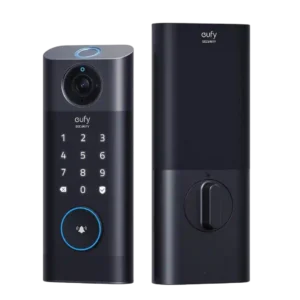
Build quality was consistently described as sturdy, metal, heavy-duty, or durable, although the hardware is also physically large.
P2
Product 2: Yale Assure Lock 2 Smart...
4.2
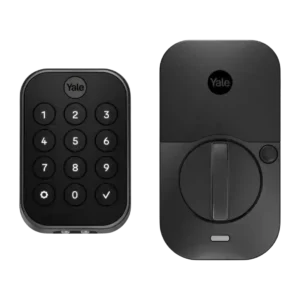
Build feedback was mostly positive, with reviewers praising the compact, sturdy, premium-feeling hardware, though a few noted hollow-feeling construction or a scuffed finish after a fall.
Camera and doorbell performance
P1
Product 1: eufy Video Smart Lock S330
4.2
Camera and doorbell performance were usually praised for 2K clarity and useful detection, but a few reviews reported missed, delayed, or weaker night events.
P2Product 2: Yale Assure Lock 2 Smart...
No score yetDoor-sense
P1
Product 1: eufy Video Smart Lock S330
3.1
Door-sense style features are mixed: one review praised leaving detection, while another said auto-lock did not know whether the door was open or closed.
P2
Product 2: Yale Assure Lock 2 Smart...
4.1
DoorSense is valuable for open, closed, and ajar awareness, though installation can require drilling and a few reviewers reported calibration or matching-design complaints.
Door compatibility (deadbolt fit)
P1
Product 1: eufy Video Smart Lock S330
3.3
Deadbolt fit is the biggest installation caveat: it replaces a standard deadbolt but can be sensitive to strike-plate depth, alignment, and size constraints.
P2
Product 2: Yale Assure Lock 2 Smart...
4.1
Door fit is generally broad for standard deadbolt doors, though reviewers repeatedly noted the need to measure thickness, bore holes, and hardware before installation.
Existing hardware reuse
P1
Product 1: eufy Video Smart Lock S330
4.2
SafeWise explicitly noted that the existing deadbolt can be reused if the Eufy deadbolt does not fit flush.
P2
Product 2: Yale Assure Lock 2 Smart...
2.0
The lock replaces rather than reuses the existing deadbolt hardware, which is a drawback for shoppers who want to keep their current lock body.
Feature additions via updates
P1
Product 1: eufy Video Smart Lock S330
4.0
At least one long-term reviewer observed a useful live-view unlocking feature added after the original review.
P2
Product 2: Yale Assure Lock 2 Smart...
4.2
Upgradeability is a strong theme: reviewers noted bug fixes, firmware updates, interchangeable wireless modules, and future Matter or Z-Wave paths.
Fingerprint
P1
Product 1: eufy Video Smart Lock S330
4.3
Fingerprint performance was split: several reviewers called it fast and accurate, while PCWorld had repeated recognition problems.
P2
Product 2: Yale Assure Lock 2 Smart...
3.9
Fingerprint performance is the most split attribute: several Touch reviewers found it very fast and accurate, while one long-term reviewer reported persistent failures.
Geofencing
P1
Product 1: eufy Video Smart Lock S330
2.0
Geofencing or phone-proximity unlock was not available in the reviewed app experience; one reviewer specifically wished for it.
P2
Product 2: Yale Assure Lock 2 Smart...
3.9
Geofenced auto-unlock is convenient when it works, but reviewers were split because it requires location permission, can fail, and has radius or multi-door limitations.
Guest Codes and Access
P1
Product 1: eufy Video Smart Lock S330
4.4
Guest access is a strength, with temporary passcodes, schedules, and easy programming mentioned across reviews.
P2
Product 2: Yale Assure Lock 2 Smart...
4.5
Guest-code support is a standout, with temporary, recurring, scheduled, and high-capacity PIN options repeatedly praised for families, dog walkers, cleaners, and rentals.
Hub requirement
P1
Product 1: eufy Video Smart Lock S330
3.9
The bridge/chime is central to the system: reviewers described it as included, useful for indoor chimes and storage, and in one case mandatory.
P2
Product 2: Yale Assure Lock 2 Smart...
4.0
Hub and module needs vary by configuration; some Wi-Fi setups avoid a separate bridge, while Alexa, Google, Matter, Z-Wave, or remote access can require the right module or hub.
Installation and Setup
P1
Product 1: eufy Video Smart Lock S330
4.2
Installation was mostly manageable and often easy, but several reviewers noted alignment, strike-plate depth, or two-handed handling challenges.
P2
Product 2: Yale Assure Lock 2 Smart...
4.1
Most reviewers found installation manageable on standard doors, with several calling it quick or app-guided, but others hit fit, DoorSense, calibration, or careful-alignment issues.
Key override reliability
P1
Product 1: eufy Video Smart Lock S330
4.2
Key backup is well covered: reviewers repeatedly noted the hidden or included physical key option for emergencies.
P2
Product 2: Yale Assure Lock 2 Smart...
4.0
Backup entry depends on the model: keyed versions provide a physical key, while keyless versions rely on a 9V battery contact as the fallback.
Keypad
P1
Product 1: eufy Video Smart Lock S330
4.0
The keypad generally worked well and supports PIN entry, though one review found the touchscreen sometimes needed extra wake-up taps.
P2
Product 2: Yale Assure Lock 2 Smart...
3.9
Keypad feedback is mostly positive for visibility at night and easy code entry, but several reviewers disliked needing to tap the Yale logo and one reported keypad failure.
Lock/unlock speed
P1
Product 1: eufy Video Smart Lock S330
4.7
Lock and unlock speed was strong in favorable tests, especially through fingerprint access, with instant or very quick operation reported.
P2
Product 2: Yale Assure Lock 2 Smart...
4.3
Locking and unlocking speed was usually praised, with reviewers describing responsive Bluetooth operation, quick keypad opening, and automatic unlocking at close range.
Locking motor
P1
Product 1: eufy Video Smart Lock S330
2.7
The motor can be sensitive to deadbolt alignment; one review warned it may fail to lock if the motor struggles.
P2
Product 2: Yale Assure Lock 2 Smart...
4.4
The motor and deadbolt action drew positive comments for smooth, solid movement and audible lock/unlock feedback.
Locking reliability
P1
Product 1: eufy Video Smart Lock S330
4.0
Locking reliability ranged from flawless or year-long solid use to sensitivity when alignment was imperfect or one-touch locking failed.
P2
Product 2: Yale Assure Lock 2 Smart...
4.0
Reliability is generally good for basic locking and unlocking, but app connection delays, Bluetooth setup hiccups, and one long-term fingerprint issue keep it from being flawless.
Notifications
P1
Product 1: eufy Video Smart Lock S330
4.3
Notifications were generally fast and useful for activity, motion, lock/unlock events, and thumbnails, though one review noted delayed motion recording.
P2
Product 2: Yale Assure Lock 2 Smart...
3.9
Notifications are useful for lock events, ajar warnings, and user activity, but reviewers also reported late low-battery warnings, missing alerts, and noisy Wi-Fi disconnect notifications.
Physical attack resistance
P1
Product 1: eufy Video Smart Lock S330
3.7
Physical resistance was not attack-tested, but the lock offers extra screws for added security and reviewers described sturdy hardware.
P2
Product 2: Yale Assure Lock 2 Smart...
4.4
Physical security evidence is positive but mostly specification-based, with reviewers citing Grade 2 certification, sturdy construction, and key-free resistance to forced picking.
Pick/drill resistance (if rated)
P1Product 1: eufy Video Smart Lock S330
No score yet
P2
Product 2: Yale Assure Lock 2 Smart...
4.2
Pick resistance is only directly supported for key-free versions, where one review says the absence of a keyway prevents picking or forced opening through that route.
Remote access
P1
Product 1: eufy Video Smart Lock S330
4.4
Remote access was a clear strength, with reviewers locking or unlocking from the app, even away from home.
P2
Product 2: Yale Assure Lock 2 Smart...
4.2
Remote access is a strong feature on Wi-Fi-enabled setups, letting owners lock, unlock, monitor, or share access away from home, though connectivity issues appeared in some tests.
Security features (encryption)
P1
Product 1: eufy Video Smart Lock S330
4.1
Security features include scramble passcodes, wrong-try protection, and an encryption message, while one review also mentioned broader Eufy privacy concerns.
P2
Product 2: Yale Assure Lock 2 Smart...
4.5
Security features include local fingerprint storage, AES encryption, code-hiding or PIN-lockout options, and account protections, but evidence focuses more on features than testing attacks.
Smart-home integration (Alexa, Google, Siri, HomeKit, Matter, Thread)
P1
Product 1: eufy Video Smart Lock S330
3.4
Alexa and Google support were consistently reported, while reviewers also consistently noted missing HomeKit, IFTTT, and Matter support.
P2
Product 2: Yale Assure Lock 2 Smart...
4.4
Smart-home support is broad across HomeKit, Alexa, Google, SmartThings, Z-Wave, Zigbee, Wi-Fi, and future Matter paths, though exact support depends on the model or module.
Touchscreen
P1
Product 1: eufy Video Smart Lock S330
3.8
Touchscreen and touchpad feedback was mixed, ranging from PCMag's responsive touchpad to PCWorld's wake-up issues.
P2
Product 2: Yale Assure Lock 2 Smart...
3.6
Touchscreen models look sleek and work well indoors or at night, but multiple reviewers found the screen or numeric keypad hard to read in direct sunlight.
Two-factor authentication availability
P1Product 1: eufy Video Smart Lock S330
No score yet
P2
Product 2: Yale Assure Lock 2 Smart...
4.7
Two-factor authentication is directly supported in one review, which says the app requires a strong password plus two-factor verification.
User access management
P1
Product 1: eufy Video Smart Lock S330
4.4
User access management is strong, with high user/fingerprint limits, individual codes, and easy additional-user enrollment.
P2
Product 2: Yale Assure Lock 2 Smart...
4.3
User access management is strong, with owner/guest roles, app access, entry-code access, fingerprint access, and scheduled permissions appearing across reviews.
Value and Price
P1
Product 1: eufy Video Smart Lock S330
4.1
Reviewers generally found the price reasonable for the all-in-one lock, doorbell, camera, local storage, and no-fee value, while still calling it pricey.
P2
Product 2: Yale Assure Lock 2 Smart...
3.9
Value is context-dependent: reviewers liked the feature set and midrange pricing, but several called higher Wi-Fi or Touch configurations expensive or harder to justify.
Voice control
P1
Product 1: eufy Video Smart Lock S330
4.2
Voice control works through Alexa and Google according to multiple reviews, but Apple ecosystem support is absent.
P2
Product 2: Yale Assure Lock 2 Smart...
4.1
Voice control works through supported ecosystems such as Siri, Alexa, and Google Assistant, but security PIN prompts and module requirements can make it less seamless.
Weather resistance
P1
Product 1: eufy Video Smart Lock S330
4.6
Weather resistance is supported by an IP65 waterproof rating and operating-temperature claims in the reviewed materials.
P2
Product 2: Yale Assure Lock 2 Smart...
4.3
Weather and temperature evidence is favorable, including operating-temperature claims, IPX5 coverage, and real use in very cold conditions.
Wi-Fi
P1
Product 1: eufy Video Smart Lock S330
3.9
Wi-Fi works through the bridge and supports remote use, but reviewers noted 2.4GHz-only setup and dependence on the bridge/chime connection.
P2
Product 2: Yale Assure Lock 2 Smart...
3.7
Wi-Fi enables remote access and broader integrations, but it also drives the main complaints: battery drain, setup issues, disconnections, and occasional app connection trouble.