Access logs
P1
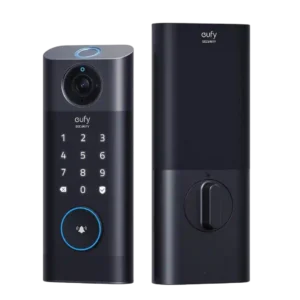
Product 1: eufy Video Smart Lock S330
4.4
Reviewers who discussed logs found useful entry history, including how the lock opened and which fingerprint was used, with one transcript explicitly describing an activity log.
P2
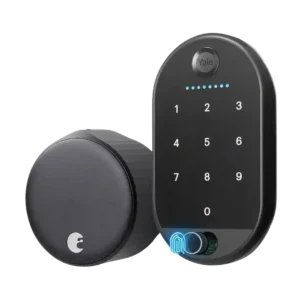
Product 2: Yale August Smart Lock
4.0
Activity timelines and logs are useful in most reviews, showing who used the lock and when, but one reviewer reported a serious missed log after an unexpected unlock.
Alarm/siren loudness (if included)
P1
Product 1: eufy Video Smart Lock S330
4.2
The included chime can get loud enough for household alerts across rooms or floors, though reviewers discussed chime volume rather than a separate siren.
P2Product 2: Yale August Smart Lock
No score yetApp
P1
Product 1: eufy Video Smart Lock S330
4.3
The app was generally praised as smooth, clean, user-friendly, and feature-rich, with live video, settings, and remote controls accessible from the phone.
P2
Product 2: Yale August Smart Lock
4.1
Most reviewers liked the August app's clear controls, alerts, access tools, and setup flow, though one found the shared Yale/August app experience confusing and another had freezes during setup.
Auto-lock
P1
Product 1: eufy Video Smart Lock S330
4.4
Auto-lock was repeatedly seen as a useful peace-of-mind feature, with timing and schedule controls, although one reviewer warned it may lock when the door is open.
P2
Product 2: Yale August Smart Lock
4.6
Auto-lock is broadly praised for flexible timers and convenience, with one reviewer turning it off because it could lock them out without keys or a phone.
Auto-relock after failed attempts
P1
Product 1: eufy Video Smart Lock S330
4.2
Wrong-try protection and passcode lockout were clearly supported, giving the lock a configurable response after repeated failed attempts.
P2Product 2: Yale August Smart Lock
No score yetBattery
P1
Product 1: eufy Video Smart Lock S330
4.2
Battery feedback was strongly positive overall, with multiple reviewers citing several months of use, USB-C charging, and only occasional recharges.
P2
Product 2: Yale August Smart Lock
2.8
Battery life is the most consistent drawback: reviewers cite three-month expectations, costly CR123 cells, and in one long-term test only six to eight weeks.
Bluetooth
P1
Product 1: eufy Video Smart Lock S330
4.0
Bluetooth is present through the included bridge, which PCMag says contains both Wi-Fi and Bluetooth radios.
P2
Product 2: Yale August Smart Lock
3.7
Bluetooth supports local detection and auto-unlock behavior, but it is also tied to range limits and mixed reliability in some owner experiences.
Build quality and durability
P1
Product 1: eufy Video Smart Lock S330
4.4
Build quality was consistently described as sturdy, metal, heavy-duty, or durable, although the hardware is also physically large.
P2
Product 2: Yale August Smart Lock
4.6
Reviewers generally liked the compact, solid-feeling design and high-quality materials, especially compared with earlier, bulkier August locks.
Camera and doorbell performance
P1
Product 1: eufy Video Smart Lock S330
4.2
Camera and doorbell performance were usually praised for 2K clarity and useful detection, but a few reviews reported missed, delayed, or weaker night events.
P2Product 2: Yale August Smart Lock
No score yetDoor-sense
P1
Product 1: eufy Video Smart Lock S330
3.1
Door-sense style features are mixed: one review praised leaving detection, while another said auto-lock did not know whether the door was open or closed.
P2
Product 2: Yale August Smart Lock
4.0
DoorSense is valued for door-open status and alerts, but reliability is mixed because one reviewer could not calibrate it accurately.
Door compatibility (deadbolt fit)
P1
Product 1: eufy Video Smart Lock S330
3.3
Deadbolt fit is the biggest installation caveat: it replaces a standard deadbolt but can be sensitive to strike-plate depth, alignment, and size constraints.
P2
Product 2: Yale August Smart Lock
5.0
The retrofit deadbolt design is a standout because it fits over existing interior hardware rather than replacing the exterior lock.
Existing hardware reuse
P1
Product 1: eufy Video Smart Lock S330
4.2
SafeWise explicitly noted that the existing deadbolt can be reused if the Eufy deadbolt does not fit flush.
P2
Product 2: Yale August Smart Lock
5.0
Existing exterior hardware and house keys remain usable, making the lock especially attractive for renters or shared-key situations.
Feature additions via updates
P1
Product 1: eufy Video Smart Lock S330
4.0
At least one long-term reviewer observed a useful live-view unlocking feature added after the original review.
P2Product 2: Yale August Smart Lock
No score yetFingerprint
P1
Product 1: eufy Video Smart Lock S330
4.3
Fingerprint performance was split: several reviewers called it fast and accurate, while PCWorld had repeated recognition problems.
P2
Product 2: Yale August Smart Lock
1.5
Fingerprint entry is not a strength because one review explicitly notes the lock has no fingerprint pad.
Geofencing
P1
Product 1: eufy Video Smart Lock S330
2.0
Geofencing or phone-proximity unlock was not available in the reviewed app experience; one reviewer specifically wished for it.
P2
Product 2: Yale August Smart Lock
3.9
Geofencing and auto-unlock are praised when they work, but long-term and negative reviews describe delays, failures, and stopped automation.
Guest Codes and Access
P1
Product 1: eufy Video Smart Lock S330
4.4
Guest access is a strength, with temporary passcodes, schedules, and easy programming mentioned across reviews.
P2
Product 2: Yale August Smart Lock
4.7
Guest access is a consistent strength, with virtual keys, temporary access, scheduled codes, and text or email invitations mentioned across reviews.
Hub requirement
P1
Product 1: eufy Video Smart Lock S330
3.9
The bridge/chime is central to the system: reviewers described it as included, useful for indoor chimes and storage, and in one case mandatory.
P2
Product 2: Yale August Smart Lock
4.8
Built-in Wi-Fi removes the old bridge requirement in most reviews, although reviewers note this convenience comes with battery tradeoffs.
Installation and Setup
P1
Product 1: eufy Video Smart Lock S330
4.2
Installation was mostly manageable and often easy, but several reviewers noted alignment, strike-plate depth, or two-handed handling challenges.
P2
Product 2: Yale August Smart Lock
4.3
Installation is usually described as quick and easy with app guidance, but one owner-review had setup freezes and calibration trouble.
Key override reliability
P1
Product 1: eufy Video Smart Lock S330
4.2
Key backup is well covered: reviewers repeatedly noted the hidden or included physical key option for emergencies.
P2
Product 2: Yale August Smart Lock
4.8
Because the exterior lock remains, physical keys still work reliably as a backup when batteries die or smart features disappoint.
Keypad
P1
Product 1: eufy Video Smart Lock S330
4.0
The keypad generally worked well and supports PIN entry, though one review found the touchscreen sometimes needed extra wake-up taps.
P2
Product 2: Yale August Smart Lock
3.3
A keypad exists as an add-on, but it is not included and reviewers mention extra cost, small size, or slight delay.
Lock/unlock speed
P1
Product 1: eufy Video Smart Lock S330
4.7
Lock and unlock speed was strong in favorable tests, especially through fingerprint access, with instant or very quick operation reported.
P2
Product 2: Yale August Smart Lock
4.3
App-based lock and unlock speed is excellent in lab-style reviews, while one long-term reviewer found phone, watch, and voice workflows slower than a key.
Locking motor
P1
Product 1: eufy Video Smart Lock S330
2.7
The motor can be sensitive to deadbolt alignment; one review warned it may fail to lock if the motor struggles.
P2
Product 2: Yale August Smart Lock
4.7
The locking motor is viewed positively for smooth, quiet operation, though one negative owner-review reported state confusion.
Locking reliability
P1
Product 1: eufy Video Smart Lock S330
4.0
Locking reliability ranged from flawless or year-long solid use to sensitivity when alignment was imperfect or one-touch locking failed.
P2
Product 2: Yale August Smart Lock
3.9
Locking reliability is strong in most tests, but one rant-style review reported serious confusion and unexpected unlock behavior.
Notifications
P1
Product 1: eufy Video Smart Lock S330
4.3
Notifications were generally fast and useful for activity, motion, lock/unlock events, and thumbnails, though one review noted delayed motion recording.
P2
Product 2: Yale August Smart Lock
4.7
Notifications and smart alerts are widely appreciated for lock status, door-ajar events, and user activity, with one review raising concern over missing logs.
Physical attack resistance
P1
Product 1: eufy Video Smart Lock S330
3.7
Physical resistance was not attack-tested, but the lock offers extra screws for added security and reviewers described sturdy hardware.
P2
Product 2: Yale August Smart Lock
5.0
Physical security evidence is limited but positive, with one review citing an ANSI grade 1 rating.
Remote access
P1
Product 1: eufy Video Smart Lock S330
4.4
Remote access was a clear strength, with reviewers locking or unlocking from the app, even away from home.
P2
Product 2: Yale August Smart Lock
4.7
Remote access is a major benefit of the built-in Wi-Fi, with reviewers repeatedly noting control from anywhere through the app.
Security features (encryption)
P1
Product 1: eufy Video Smart Lock S330
4.1
Security features include scramble passcodes, wrong-try protection, and an encryption message, while one review also mentioned broader Eufy privacy concerns.
P2
Product 2: Yale August Smart Lock
4.7
Security features are positively supported by mobile-app encryption in one review and optional biometric app authentication in another.
Smart-home integration (Alexa, Google, Siri, HomeKit, Matter, Thread)
P1
Product 1: eufy Video Smart Lock S330
3.4
Alexa and Google support were consistently reported, while reviewers also consistently noted missing HomeKit, IFTTT, and Matter support.
P2
Product 2: Yale August Smart Lock
4.0
Smart-home integration is a major strength across Alexa, Google, Siri, HomeKit, IFTTT, and other platforms, though a few reviewers hit HomeKit or assistant issues.
Touchscreen
P1
Product 1: eufy Video Smart Lock S330
3.8
Touchscreen and touchpad feedback was mixed, ranging from PCMag's responsive touchpad to PCWorld's wake-up issues.
P2
Product 2: Yale August Smart Lock
2.0
Touchscreen support is weak because the lock itself does not include a native outside touch panel.
Two-factor authentication availability
P1Product 1: eufy Video Smart Lock S330
No score yet
P2
Product 2: Yale August Smart Lock
5.0
Two-factor authentication is directly supported in one review for account login and setup.
User access management
P1
Product 1: eufy Video Smart Lock S330
4.4
User access management is strong, with high user/fingerprint limits, individual codes, and easy additional-user enrollment.
P2
Product 2: Yale August Smart Lock
4.6
User management is strong, with permanent, recurring, temporary, household, and PIN-code access controls mentioned.
Value and Price
P1
Product 1: eufy Video Smart Lock S330
4.1
Reviewers generally found the price reasonable for the all-in-one lock, doorbell, camera, local storage, and no-fee value, while still calling it pricey.
P2
Product 2: Yale August Smart Lock
3.7
Value is mixed: reviewers often call it pricey, but some still justify the cost because Wi-Fi is built in and retrofit installation is strong.
Voice control
P1
Product 1: eufy Video Smart Lock S330
4.2
Voice control works through Alexa and Google according to multiple reviews, but Apple ecosystem support is absent.
P2
Product 2: Yale August Smart Lock
4.1
Voice control works across major assistants in positive reviews, but some reviewers disliked spoken-password security or found Siri and Google too slow.
Wi-Fi
P1
Product 1: eufy Video Smart Lock S330
3.9
Wi-Fi works through the bridge and supports remote use, but reviewers noted 2.4GHz-only setup and dependence on the bridge/chime connection.
P2
Product 2: Yale August Smart Lock
4.3
Built-in Wi-Fi is one of the lock's defining advantages for remote control, but it contributes to battery-life complaints and setup issues in one review.