Access logs
P1
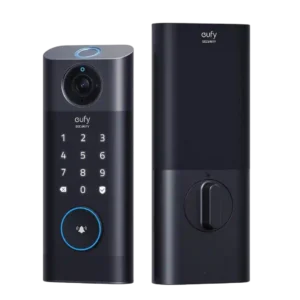
Product 1: eufy Video Smart Lock S330
4.4
Reviewers who discussed logs found useful entry history, including how the lock opened and which fingerprint was used, with one transcript explicitly describing an activity log.
P2
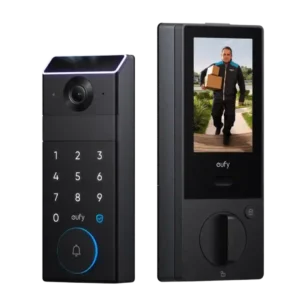
Product 2: eufy FamiLock S3 Max Smart...
4.4
Reviews describe useful event histories for lock/unlock actions, motion, and doorbell activity, with recorded events accessible in the app.
Alarm/siren loudness (if included)
P1
Product 1: eufy Video Smart Lock S330
4.2
The included chime can get loud enough for household alerts across rooms or floors, though reviewers discussed chime volume rather than a separate siren.
P2Product 2: eufy FamiLock S3 Max Smart...
No score yetApp
P1
Product 1: eufy Video Smart Lock S330
4.3
The app was generally praised as smooth, clean, user-friendly, and feature-rich, with live video, settings, and remote controls accessible from the phone.
P2
Product 2: eufy FamiLock S3 Max Smart...
4.0
The Eufy app is central to setup, live view, controls, and customization; reviewers found it capable, though one noted it takes time to master.
Auto-lock
P1
Product 1: eufy Video Smart Lock S330
4.4
Auto-lock was repeatedly seen as a useful peace-of-mind feature, with timing and schedule controls, although one reviewer warned it may lock when the door is open.
P2
Product 2: eufy FamiLock S3 Max Smart...
4.5
Auto-lock is a recurring strength, with configurable timing, schedules, and door-closed behavior highlighted across several reviews.
Auto-relock after failed attempts
P1
Product 1: eufy Video Smart Lock S330
4.2
Wrong-try protection and passcode lockout were clearly supported, giving the lock a configurable response after repeated failed attempts.
P2
Product 2: eufy FamiLock S3 Max Smart...
4.5
Wrong-try protection is repeatedly described as a lockout or lockdown feature after incorrect passcodes or unregistered palm attempts.
Battery
P1
Product 1: eufy Video Smart Lock S330
4.2
Battery feedback was strongly positive overall, with multiple reviewers citing several months of use, USB-C charging, and only occasional recharges.
P2
Product 2: eufy FamiLock S3 Max Smart...
4.4
Battery coverage is strong overall thanks to the large rechargeable pack plus AAA backup, though one reviewer found the five-month estimate optimistic.
Bluetooth
P1
Product 1: eufy Video Smart Lock S330
4.0
Bluetooth is present through the included bridge, which PCMag says contains both Wi-Fi and Bluetooth radios.
P2
Product 2: eufy FamiLock S3 Max Smart...
4.4
Bluetooth is directly confirmed alongside 2.4GHz Wi-Fi radios in one review.
Build quality and durability
P1
Product 1: eufy Video Smart Lock S330
4.4
Build quality was consistently described as sturdy, metal, heavy-duty, or durable, although the hardware is also physically large.
P2
Product 2: eufy FamiLock S3 Max Smart...
4.4
Build quality is viewed positively, with reviewers citing robust construction, metal casing, BHMA durability, and tamper/weather toughness.
Camera and doorbell performance
P1
Product 1: eufy Video Smart Lock S330
4.2
Camera and doorbell performance were usually praised for 2K clarity and useful detection, but a few reviews reported missed, delayed, or weaker night events.
P2
Product 2: eufy FamiLock S3 Max Smart...
4.3
Camera and doorbell performance is useful and often sharp in good light, but low-light quality and face detail drew mixed comments.
Door-sense
P1
Product 1: eufy Video Smart Lock S330
3.1
Door-sense style features are mixed: one review praised leaving detection, while another said auto-lock did not know whether the door was open or closed.
P2
Product 2: eufy FamiLock S3 Max Smart...
4.3
Door-sense and door-state behavior are supported by reports that the lock can detect open or closed states for auto-lock behavior.
Door compatibility (deadbolt fit)
P1
Product 1: eufy Video Smart Lock S330
3.3
Deadbolt fit is the biggest installation caveat: it replaces a standard deadbolt but can be sensitive to strike-plate depth, alignment, and size constraints.
P2
Product 2: eufy FamiLock S3 Max Smart...
3.7
Deadbolt and door fit are mostly standard, but screen or storm doors can obstruct the camera view and reduce the all-in-one benefit.
Existing hardware reuse
P1
Product 1: eufy Video Smart Lock S330
4.2
SafeWise explicitly noted that the existing deadbolt can be reused if the Eufy deadbolt does not fit flush.
P2
Product 2: eufy FamiLock S3 Max Smart...
3.8
Existing hardware reuse appears limited; one installer reused the existing strike plate, but the lock otherwise replaces the deadbolt assembly.
Feature additions via updates
P1
Product 1: eufy Video Smart Lock S330
4.0
At least one long-term reviewer observed a useful live-view unlocking feature added after the original review.
P2Product 2: eufy FamiLock S3 Max Smart...
No score yetFingerprint
P1
Product 1: eufy Video Smart Lock S330
4.3
Fingerprint performance was split: several reviewers called it fast and accurate, while PCWorld had repeated recognition problems.
P2
Product 2: eufy FamiLock S3 Max Smart...
1.5
The product does not use a fingerprint reader; reviewers instead frame palm vein recognition as the biometric method.
Finish durability
P1Product 1: eufy Video Smart Lock S330
No score yet
P2
Product 2: eufy FamiLock S3 Max Smart...
4.2
Finish durability evidence is limited but positive, with comments about hiding fingerprints, smudges, and looking good after use.
Guest Codes and Access
P1
Product 1: eufy Video Smart Lock S330
4.4
Guest access is a strength, with temporary passcodes, schedules, and easy programming mentioned across reviews.
P2
Product 2: eufy FamiLock S3 Max Smart...
4.5
Guest access is robust, with reviewers repeatedly mentioning scheduled, one-time, recurring, PIN, and palm-based access options.
Hub requirement
P1
Product 1: eufy Video Smart Lock S330
3.9
The bridge/chime is central to the system: reviewers described it as included, useful for indoor chimes and storage, and in one case mandatory.
P2
Product 2: eufy FamiLock S3 Max Smart...
3.9
A hub is optional for basic use, but HomeBase or Matter controllers are needed for some storage, chime, AI, or platform features.
Installation and Setup
P1
Product 1: eufy Video Smart Lock S330
4.2
Installation was mostly manageable and often easy, but several reviewers noted alignment, strike-plate depth, or two-handed handling challenges.
P2
Product 2: eufy FamiLock S3 Max Smart...
4.4
Installation is generally rated easy, with app guidance and 15-20 minute setup reported, though one reviewer had a pre-release connection issue.
Jam detection
P1
Product 1: eufy Video Smart Lock S330
2.6
Jam detection can be frustrating when calibration or strike-plate depth is off, with one reviewer saying the app kept showing jammed despite a secure bolt.
P2
Product 2: eufy FamiLock S3 Max Smart...
3.1
Jam detection evidence is thin and tied to one calibration-related stuck/unlock issue rather than a clearly praised feature.
Key override reliability
P1
Product 1: eufy Video Smart Lock S330
4.2
Key backup is well covered: reviewers repeatedly noted the hidden or included physical key option for emergencies.
P2
Product 2: eufy FamiLock S3 Max Smart...
4.2
Key override is present and useful as a fallback, hidden behind the doorbell button or key slot.
Keypad
P1
Product 1: eufy Video Smart Lock S330
4.0
The keypad generally worked well and supports PIN entry, though one review found the touchscreen sometimes needed extra wake-up taps.
P2
Product 2: eufy FamiLock S3 Max Smart...
4.5
The keypad is consistently described as responsive, easy to press, backlit, and able to support many PINs.
Lock/unlock speed
P1
Product 1: eufy Video Smart Lock S330
4.7
Lock and unlock speed was strong in favorable tests, especially through fingerprint access, with instant or very quick operation reported.
P2
Product 2: eufy FamiLock S3 Max Smart...
4.8
Unlock speed is strong, especially for palm recognition, with reviewers describing quick or instant responses.
Locking motor
P1
Product 1: eufy Video Smart Lock S330
2.7
The motor can be sensitive to deadbolt alignment; one review warned it may fail to lock if the motor struggles.
P2
Product 2: eufy FamiLock S3 Max Smart...
4.6
The motorized lock/unlock controls are praised through interior buttons and automatic operation.
Locking reliability
P1
Product 1: eufy Video Smart Lock S330
4.0
Locking reliability ranged from flawless or year-long solid use to sensitivity when alignment was imperfect or one-touch locking failed.
P2
Product 2: eufy FamiLock S3 Max Smart...
4.7
Locking reliability is strong across testing, with reviewers reporting responsive operation and no major lock/unlock failures.
Notifications
P1
Product 1: eufy Video Smart Lock S330
4.3
Notifications were generally fast and useful for activity, motion, lock/unlock events, and thumbnails, though one review noted delayed motion recording.
P2
Product 2: eufy FamiLock S3 Max Smart...
4.4
Notifications are generally fast and useful for motion, people, doorbell, loitering, and departure alerts, though one review saw slight delay.
Palm vein recognition
P1Product 1: eufy Video Smart Lock S330
No score yet
P2
Product 2: eufy FamiLock S3 Max Smart...
4.5
Palm vein recognition is the strongest consensus feature, usually described as fast, reliable, and easier than fingerprint access, with minor angle or learning-curve caveats.
Physical attack resistance
P1
Product 1: eufy Video Smart Lock S330
3.7
Physical resistance was not attack-tested, but the lock offers extra screws for added security and reviewers described sturdy hardware.
P2
Product 2: eufy FamiLock S3 Max Smart...
4.6
Physical attack resistance is supported by ANSI/BHMA Grade 1 references and comments about tamper resistance, durability, and tough construction.
Pick/drill resistance (if rated)
P1Product 1: eufy Video Smart Lock S330
No score yet
P2
Product 2: eufy FamiLock S3 Max Smart...
4.5
Pick resistance is supported by anti-pick and encrypted-cylinder claims, but drill resistance is not directly discussed.
Remote access
P1
Product 1: eufy Video Smart Lock S330
4.4
Remote access was a clear strength, with reviewers locking or unlocking from the app, even away from home.
P2
Product 2: eufy FamiLock S3 Max Smart...
4.6
Remote access is available through the Eufy app and related controls, with several reviews noting away-from-home or remote control.
Security features (encryption)
P1
Product 1: eufy Video Smart Lock S330
4.1
Security features include scramble passcodes, wrong-try protection, and an encryption message, while one review also mentioned broader Eufy privacy concerns.
P2
Product 2: eufy FamiLock S3 Max Smart...
4.5
Security features include scramble passcodes, code masking, encrypted communications, and encrypted lock-cylinder claims.
Smart-home integration (Alexa, Google, Siri, HomeKit, Matter, Thread)
P1
Product 1: eufy Video Smart Lock S330
3.4
Alexa and Google support were consistently reported, while reviewers also consistently noted missing HomeKit, IFTTT, and Matter support.
P2
Product 2: eufy FamiLock S3 Max Smart...
3.7
Smart-home integration is broad on paper through Matter, Alexa, Google, Apple Home/HomeKit, and SmartThings, but advanced video and palm features are limited outside Eufy.
Tamper detection sensitivity
P1Product 1: eufy Video Smart Lock S330
No score yet
P2
Product 2: eufy FamiLock S3 Max Smart...
4.4
Tamper detection is only directly supported by one review noting alarms if someone forcibly removes the lock.
Touchscreen
P1
Product 1: eufy Video Smart Lock S330
3.8
Touchscreen and touchpad feedback was mixed, ranging from PCMag's responsive touchpad to PCWorld's wake-up issues.
P2
Product 2: eufy FamiLock S3 Max Smart...
4.7
The interior screen is a major differentiator, praised as a useful digital peephole with strong viewing convenience.
User access management
P1
Product 1: eufy Video Smart Lock S330
4.4
User access management is strong, with high user/fingerprint limits, individual codes, and easy additional-user enrollment.
P2
Product 2: eufy FamiLock S3 Max Smart...
4.6
User management supports individual profiles, adding/deleting users, PINs, hands, and access schedules.
Value and Price
P1
Product 1: eufy Video Smart Lock S330
4.1
Reviewers generally found the price reasonable for the all-in-one lock, doorbell, camera, local storage, and no-fee value, while still calling it pricey.
P2
Product 2: eufy FamiLock S3 Max Smart...
3.4
Value is mixed: reviewers see value in combining a lock, doorbell, and camera, but repeatedly call the S3 Max expensive.
Voice control
P1
Product 1: eufy Video Smart Lock S330
4.2
Voice control works through Alexa and Google according to multiple reviews, but Apple ecosystem support is absent.
P2
Product 2: eufy FamiLock S3 Max Smart...
4.6
Voice control works well in the reviews that tested it, including Alexa, Siri, and Google-style command use.
Weather resistance
P1
Product 1: eufy Video Smart Lock S330
4.6
Weather resistance is supported by an IP65 waterproof rating and operating-temperature claims in the reviewed materials.
P2
Product 2: eufy FamiLock S3 Max Smart...
4.6
Weather resistance is supported by IP65 mentions and claims of reliable climate operation.
Wi-Fi
P1
Product 1: eufy Video Smart Lock S330
3.9
Wi-Fi works through the bridge and supports remote use, but reviewers noted 2.4GHz-only setup and dependence on the bridge/chime connection.
P2
Product 2: eufy FamiLock S3 Max Smart...
4.4
Wi-Fi is well covered, including built-in Wi-Fi, 2.4GHz support, and Wi-Fi 6 references across reviews.