Access logs
P1
Product 1: Aqara U50 Smart Lock
5.0
The log feature earned praise because it lets reviewers see when people lock and unlock the door and helps track comings and goings.
P2
Product 2: Aqara Smart Lock U100
3.9
Activity logs were useful for seeing who used the lock, but HomeKit-sourced events were less detailed about the exact unlock method.
Alarm/siren loudness (if included)
P1
Product 1: Aqara U50 Smart Lock
3.0
Alarm and sound controls are useful and adjustable, but one reviewer found the default voice volume very loud and hub-dependent to change.
P2
Product 2: Aqara Smart Lock U100
4.0
The built-in speaker/alarm was viewed as useful rather than extremely loud, with reviewers appreciating open-door and warning alerts.
App
P1
Product 1: Aqara U50 Smart Lock
4.5
The Aqara app is viewed as powerful, especially for automations, status checks, and advanced settings, with repeated praise for its breadth of options.
P2
Product 2: Aqara Smart Lock U100
3.6
The Aqara app offered deep control and setup help, but reviewers also criticized slow status updates, long-press controls, and a frustrating firmware process.
Auto-lock
P1
Product 1: Aqara U50 Smart Lock
4.8
Auto-lock is one of the U50's clearest strengths, with reviewers praising improved behavior, passage-style controls, and dependable nighttime locking.
P2
Product 2: Aqara Smart Lock U100
3.7
Auto-lock evidence was mixed, ranging from flawless or cool performance to beta-feature delays and at least one lockout caused by latch behavior.
Auto-relock after failed attempts
P1Product 1: Aqara U50 Smart Lock
No score yet
P2
Product 2: Aqara Smart Lock U100
4.5
Failed-attempt lockout was consistently viewed positively, with reviewers saying it worked as intended and helped deter brute-force attempts.
Battery
P1
Product 1: Aqara U50 Smart Lock
4.3
Battery feedback was positive overall, with reviewers calling the life a thumbs up, appreciating ordinary AA batteries, and noting useful low-battery warnings.
P2
Product 2: Aqara Smart Lock U100
3.4
Battery impressions were mixed: some reported excellent life or no early drain, while others saw quick drain or disliked the lack of clear low-battery awareness.
Bluetooth
P1
Product 1: Aqara U50 Smart Lock
3.1
Bluetooth is a backup and low-power option, but reviewers consistently preferred Zigbee or hub-based connections for faster, steadier response.
P2
Product 2: Aqara Smart Lock U100
4.0
Bluetooth performance was acceptable to strong in short-range use, with minimal latency and stable connections reported despite general reservations about Bluetooth smart-home devices.
Build quality and durability
P1
Product 1: Aqara U50 Smart Lock
4.5
Build quality generally impressed reviewers through sturdy materials and solid feel, though one noted some cheaper-feeling plastic elements.
P2
Product 2: Aqara Smart Lock U100
4.3
Reviewers consistently described the lock as solid, heavy, sturdy, or well-built, with only cosmetic design or material caveats in a few cases.
Door-sense
P1
Product 1: Aqara U50 Smart Lock
3.6
Door-sense split reviewers: one was impressed by the built-in sensor, while another liked the idea but found it not reliable enough for exact door position.
P2
Product 2: Aqara Smart Lock U100
4.1
Door-sense was useful and often praised, though one reviewer estimated it at about 80% accuracy and used an extra contact sensor for certainty.
Door compatibility (deadbolt fit)
P1
Product 1: Aqara U50 Smart Lock
4.0
Door fit received positive but limited evidence: one reviewer said it worked in many doors and was not hard to install.
P2
Product 2: Aqara Smart Lock U100
3.4
Fit was strongest on standard deadbolt doors; reviewers praised a perfect fit in one install but warned that other lock types or unusual deadbolts can complicate replacement.
Feature additions via updates
P1
Product 1: Aqara U50 Smart Lock
4.5
Aqara's updated periodic passcode controls were praised as a meaningful improvement that brought the lock in line with other manufacturers.
P2
Product 2: Aqara Smart Lock U100
3.0
Firmware updates were a tradeoff: one long-term reviewer said they improved performance, while another found the update process frustrating.
Fingerprint
P1
Product 1: Aqara U50 Smart Lock
2.6
The missing fingerprint reader was the biggest tradeoff versus the U100; some reviewers missed it, while others accepted it as part of the lower price.
P2
Product 2: Aqara Smart Lock U100
4.8
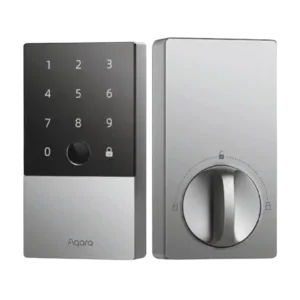
Fingerprint unlocking was the strongest area of agreement, with reviewers repeatedly calling it fast, accurate, reliable, and often their preferred method.
Guest Codes and Access
P1
Product 1: Aqara U50 Smart Lock
4.7
Guest access is a major strength, with praise for multiple codes, temporary or periodic access, NFC access, and practical use for family, visitors, dog walkers, and Airbnb hosts.
P2
Product 2: Aqara Smart Lock U100
3.8
Guest access was useful for one-time, temporary, and shared passcodes, but several reviewers wanted more flexible schedules or noted user/password limits.
Hub requirement
P1
Product 1: Aqara U50 Smart Lock
2.8
Hub feedback was mixed: some Apple Home users can avoid an Aqara hub, but several reviewers disliked needing one for full features, volume controls, or broader integrations.
P2
Product 2: Aqara Smart Lock U100
3.3
Hub requirements were the biggest ecosystem tradeoff: some saw the bundled hub as a no-brainer, while others disliked needing extra hardware for remote and Matter features.
Industrial design
P1
Product 1: Aqara U50 Smart Lock
3.4
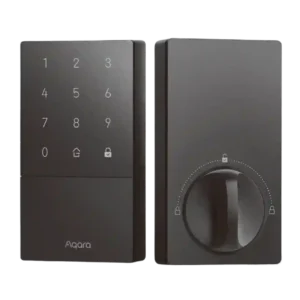
Design opinions were mixed: reviewers liked the modern black look and sleek layout, but several called it bulky, plain, hard to read from a distance, or limited in color options.
P2Product 2: Aqara Smart Lock U100
No score yetInstallation and Setup
P1
Product 1: Aqara U50 Smart Lock
4.7
Installation and setup were consistently praised as easy, fast, and approachable, though there were isolated caveats about door fit and instructions.
P2
Product 2: Aqara Smart Lock U100
4.4
Most reviewers found installation straightforward or easy, though one noted older or unusual deadbolt doors may require extra measuring or creative fitting.
Key override reliability
P1
Product 1: Aqara U50 Smart Lock
4.5
Physical key backup and rekeying were praised, especially the hidden keyhole and the convenience of matching existing keys.
P2
Product 2: Aqara Smart Lock U100
3.7
The physical key remained a useful backup, but reviewers framed it more as emergency insurance than a primary access method.
Keypad
P1
Product 1: Aqara U50 Smart Lock
4.5
The keypad earned strong marks for lighting, large numbers, easy code entry, and fast response, despite a few wake-up quirks.
P2
Product 2: Aqara Smart Lock U100
4.3
The keypad was generally well liked for responsiveness, readability, and satisfying operation, with minor complaints about extra confirmation steps or fingerprint wear concerns.
Lock/unlock speed
P1
Product 1: Aqara U50 Smart Lock
4.6
Unlocking was consistently described as quick, especially with HomeKey, keypad, and improved hub/Matter response paths.
P2
Product 2: Aqara Smart Lock U100
4.8
Locking and unlocking were repeatedly described as quick, especially through Siri, Home Key, and the fast motorized action.
Locking reliability
P1
Product 1: Aqara U50 Smart Lock
4.7
Reliability feedback was strong: the lock kept working without the hub, worked smoothly with Apple devices, and automatically locked as expected.
P2
Product 2: Aqara Smart Lock U100
3.5
Reliability was split: early testing was flawless for some reviewers, while longer-term users reported offline states, wrong status, and unresponsive behavior.
Notifications
P1
Product 1: Aqara U50 Smart Lock
4.5
Notifications were useful to reviewers for lock activity, people coming home, low battery, and related automation triggers.
P2
Product 2: Aqara Smart Lock U100
4.3
Notifications and alerts were considered useful for knowing who unlocked the door, whether it was left open, or whether automations fired.
Physical attack resistance
P1
Product 1: Aqara U50 Smart Lock
4.0
Residential security was treated as adequate rather than premium, with one reviewer saying the lock was good enough for most homes.
P2
Product 2: Aqara Smart Lock U100
3.5
Physical attack evidence was limited, but one reviewer framed the lock’s lowest BHMA grade as still providing meaningful durability.
Pick/drill resistance (if rated)
P1
Product 1: Aqara U50 Smart Lock
4.0
The hidden keyhole cover was praised as an extra security measure against casual lock-picking visibility.
P2
Product 2: Aqara Smart Lock U100
2.5
Pick-resistance evidence was limited and skeptical, with one reviewer assuming the U100 could still be defeated like many smart locks.
Remote access
P1
Product 1: Aqara U50 Smart Lock
3.3
Remote access was mixed: it gave peace of mind when working, but some reviewers disliked Bluetooth limitations or slower Home app control.
P2
Product 2: Aqara Smart Lock U100
2.9
Remote access worked best with an Aqara hub or Apple home hub, but reviewers noted important limitations when controlling settings away from the lock.
Security features (encryption)
P1Product 1: Aqara U50 Smart Lock
No score yet
P2
Product 2: Aqara Smart Lock U100
4.5
Security features drew positive comments around AES encryption and local fingerprint storage.
Smart-home integration (Alexa, Google, Siri, HomeKit, Matter, Thread)
P1
Product 1: Aqara U50 Smart Lock
4.2
Smart-home support is a major selling point, with praise for HomeKey, HomeKit, Matter, Alexa, Google, and broad ecosystem flexibility, tempered by hub/Bluetooth tradeoffs.
P2
Product 2: Aqara Smart Lock U100
4.4
Smart-home integration was a major strength, especially HomeKit/Home Key and Matter potential, but Alexa setup and Home Key lock limitations created caveats.
Touchscreen
P1
Product 1: Aqara U50 Smart Lock
3.7
Touch input is mostly good, especially swipe-to-lock, but reviewers noted that waking the panel before entry can be mildly confusing.
P2
Product 2: Aqara Smart Lock U100
4.3
The touch surface was praised for feel, visibility, and brightness in both direct sunlight and hands-on use.
User access management
P1
Product 1: Aqara U50 Smart Lock
4.2
User management is useful for household and guest codes, though Apple Home controls were described as bare-bones compared with Aqara's app.
P2
Product 2: Aqara Smart Lock U100
4.3
User access management was usually praised for clear controls, remote management, and multiple user types, despite app and code-management caveats.
Value and Price
P1
Product 1: Aqara U50 Smart Lock
4.8
Reviewers strongly agreed that the U50 is excellent value, repeatedly calling it affordable, a great deal, and one of the best budget HomeKey smart locks.
P2
Product 2: Aqara Smart Lock U100
4.4
Value was broadly praised because the U100 packs Home Key, fingerprint, keypad, and smart integrations at a lower price than several named alternatives, though hub costs can raise the total.
Voice control
P1
Product 1: Aqara U50 Smart Lock
4.0
Voice control had limited but positive outcome evidence, with a reviewer showing a voice-assisted unlock working after PIN confirmation.
P2
Product 2: Aqara Smart Lock U100
4.3
Voice control worked well in the cited tests, including Siri and Alexa examples, with voice access framed as one of several convenient unlock or lock methods.
Weather resistance
P1
Product 1: Aqara U50 Smart Lock
4.2
Weather resistance was viewed as sufficient for outdoor use, though one review noted the lower dust rating as a cost-cutting compromise.
P2
Product 2: Aqara Smart Lock U100
4.5
Weather resistance drew positive comments, including confidence in outdoor exposure and one reviewer reporting no issue during freezing conditions.
Wi-Fi
P1
Product 1: Aqara U50 Smart Lock
2.5
Wi-Fi was a recurring limitation because the U50 lacks built-in Wi-Fi and needs a hub for remote access and fuller smart-home features.
P2
Product 2: Aqara Smart Lock U100
2.3
The lack of built-in Wi-Fi was a recurring limitation because remote control and long-distance features require a hub or router workaround.