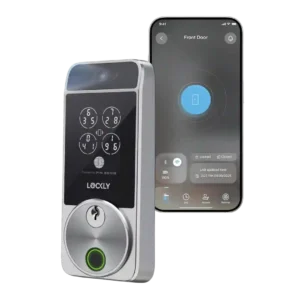
Reviews highlight detailed event history in the app, with lock/unlock entries tied to user and method; one reviewer notes being able to review long windows of history for shared spaces.
Access logs and history views are available in-app, though one reviewer noted multiple log views can be confusing rather than helpful.
The Lockly app is generally described as clean and responsive for basic lock/unlock, logs, and settings, but some reviewers found PIN and guest workflows overly complicated compared with rivals.
Lockly Home offers a cleaner interface than older Lockly apps, but setup and navigation still feel uneven, with some settings hard to find and occasional crashes or quirks reported.
Auto-locking is widely praised and configurable (often cited in the 5–300 second range), helping the door re-secure itself without relying on habits.
Auto-lock is configurable and works well when the door and strike are well-aligned, but some reports suggest it can fail or beep if the deadbolt does not slide smoothly. Facial recognition auto-unlock is the headline feature and is widely described as fast, reliable, and hard to spoof, working in bright sun, low light, and with sunglasses in most tests.
A lockout style safeguard is described that disables keypad input after too many failed attempts, reducing brute-force code guessing.
Backset appears adjustable for common 2 3/8-inch and 2 3/4-inch configurations, as shown in installation guidance.
Battery life is described as strong on four AA cells, and the external 9V jump option reduces the risk of lockouts when batteries die.
Rechargeable battery packs (often with a spare included) reduce downtime, but real-world longevity varies by settings like always-on face scanning and Wi-Fi usage, ranging from weeks in max scanning mode to months with power saving.
Bluetooth performance is usually fast and stable for in-range control, though at least one review reports occasional trouble discovering the lock on some phones during setup.
Bluetooth is required for initial setup and enrolling faces/fingerprints; it usually works, though some reviewers reported short connection windows or limited range (and noted the use of older Bluetooth versions).
Multiple reviews describe the hardware as sturdy and premium, but also noticeably large and heavy compared with sleeker competitors.
Build quality is often described as sturdy and premium (zinc alloy and a substantial feel), even when reviewers disagree about the aesthetics or bulk.
A door sensor is mentioned as an optional add-on to report open/closed state, but it is not consistently tested across reviews.
The included wired door-sense/contact sensor is accurate but often criticized for looking inelegant and adding extra wiring; some users wish it were built-in or removable.
Most reviewers report compatibility with standard doors, but at least one install required extra door prep (strike/side bracket work) and the weight can make alignment more sensitive.
Door compatibility is typical for a full deadbolt swap, but the lock performs best when the door closes cleanly and the bolt slides smoothly into the strike.
It installs as a standard deadbolt replacement, and some reviewers noted they could reuse existing cutouts or sensor placements from prior locks, reducing additional door work.
Several reviewers referenced firmware/app updates (or promised updates) aimed at improving setup reliability and usability, suggesting the experience can change over time.
The 3D fingerprint reader is repeatedly called fast and accurate; enrollment takes multiple scans but day-to-day unlocking is a standout convenience.
Fingerprint unlock is typically quick and accurate, though at least one reviewer found it hit-or-miss depending on finger angle and the scanner’s placement.
One review cites strong finish coverage, including a lifetime warranty on exterior finishes, supporting long-term cosmetic durability expectations.
Access sharing is a strength: reviews mention temporary, scheduled, one-time, offline codes, and app-based sharing options; however, some find the onboarding and messaging flow confusing for casual guests.
Guest access is robust, including multiple user PINs, time-restricted or one-time codes, and in some cases offline codes or shared digital keys depending on platform.
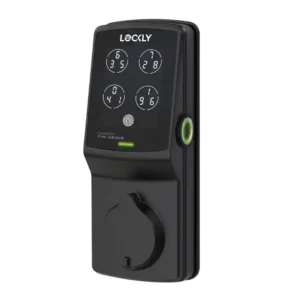
Out of the box the lock is Bluetooth-first, and multiple reviews note that a separate Wi-Fi hub is needed for remote control and voice assistants.
The Visage’s built-in Wi-Fi means no separate hub is required, a clear upgrade over older hub-dependent smart locks.
Installation experiences vary from quick (around 15 minutes) to frustrating; the app guidance helps, but the heavy hardware and documentation can make assembly and alignment harder than average.
Installation is generally DIY-friendly with good templates and guides, but several reviewers said the process can be lengthy and cable management inside the housing can be frustrating.
Jam detection/alerts are mentioned as part of the notification set, allowing you to be warned if the lock reports a jam or locking issue.
Backup entry options are well covered, with a traditional key cylinder and an exterior 9V jump-power method noted for dead batteries.
Backup entry options include a physical key and a USB-C emergency power port, which reviewers view as important failsafes.
The PIN Genie keypad that shuffles digit positions is consistently praised for improving code privacy, though a reviewer notes it can feel disorienting for people who remember codes by shape.
The PIN Genie keypad improves security by shuffling digits, but it can slow entry and increase mistakes compared with a normal keypad.
The key cylinder is rekeyable (noted as a 5-pin style in some videos), though rekeying may take extra time due to seals and screws.
Lock/unlock actions are commonly described as quick, including near-instant app commands within Bluetooth range and a few-second mechanical cycle.
Unlock speed is frequently described as near-instant for face and fingerprint (around 1–2 seconds), while keypad entry is slower due to the shuffled layout.
Motor operation is described as relatively quiet compared with typical smart deadbolts.
Motor noise is still present, but at least one reviewer noted it is noticeably quieter than older Lockly models.
Most reviews describe solid day-to-day operation, but one outlet reports calibration/status mismatches that made locked vs unlocked reporting unreliable in their testing.
Day-to-day locking reliability is mostly strong, especially for face unlock, though a minority of reviewers mention occasional Wi-Fi/app reliability issues or mechanical smoothness sensitivities.
Push notifications are specifically called out as missing versus competing smart locks.
Notifications are flexible (lock/unlock, auto-lock, and sometimes jam alerts), but they can be noisy, leading some users to dial them back or disable duplicates across apps.
Physical security is described as solid, with references to ANSI Level 2 requirements, though at least one review noted the lock may not be formally certified, making it harder to validate beyond manufacturer claims.
Remote locking/unlocking is not available without the optional Wi-Fi hub; with the hub, reviews describe convenient anywhere access through the app.
Remote access via Wi-Fi/app is generally quick for lock/unlock and status checks, but some reviewers experienced occasional remote unavailability during testing.
Security is a core theme: reviewers cite AES256/BLE security claims, the PIN-shuffling keypad, biometric anti-spoofing, lockout behavior, and privacy mode style controls.
Security is reinforced by 3D facial scanning that resists photo spoofing, encrypted data handling claims, and the PIN Genie keypad design that reduces shoulder-surfing risk.
Smart-home integration is limited without accessories; Alexa and Google support is tied to the Wi-Fi hub, while HomeKit, Matter, Thread, and IFTTT-style automation are repeatedly noted as absent or limited.
Integration is a major strength, with support for Apple Home/Home Key plus Alexa and Google; reviewers generally found commands and automations responsive once set up.
The touchscreen is generally responsive and easy to read, but its glossy surface can show fingerprints; its main value is supporting the dynamic PIN layout.
The touchscreen is used for PIN entry and Home Key tapping; reviewers generally describe it as responsive and easy to read.
At least one review describes multi-step account or device activation verification (codes via SMS and email), indicating stronger account protection than many simple Bluetooth locks.
User and guest management is feature-rich, offering multiple access types and schedules, but the depth can feel like overkill and harder to administer for short-term visitors.
User management is a strong point, with support for multiple users and methods (faces, fingerprints, PINs), though some reviewers found the workflow confusing at first until updates improved it.
Value is the most common knock: reviewers call it expensive for a Bluetooth-first lock, especially once the Wi-Fi hub accessory is added.
At roughly $349, it sits at the premium end; many reviewers feel the feature set earns the price, while others think it is hard to justify without built-in video doorbell functionality.
Voice control is not native; Alexa and Google voice commands are described as available only when paired with the Wi-Fi hub.
Voice control works with Alexa, Google, and Siri (via Apple Home), and reviewers commonly reported responsive lock/unlock commands and routine support.
Warranty coverage is described as strong (including finish and electronics coverage), but reviewers also flag usability and setup complexity as an area needing improvement.
One review explicitly praises weather toughness across extreme temperatures, suggesting good outdoor suitability when installed correctly.
Weather protection is positioned as strong, with an IPX5 rating cited and settings like Rain mode intended to prevent false keypad triggers.
There is no built-in Wi-Fi in the base lock; Wi-Fi connectivity is achieved through an add-on hub or bundled variant, which affects total cost and complexity.
Built-in 2.4GHz Wi-Fi enables remote control without a hub, but a few reviewers saw intermittent connectivity or early firmware hiccups; power-saving modes can reduce Wi-Fi use to extend battery life.