App
P1
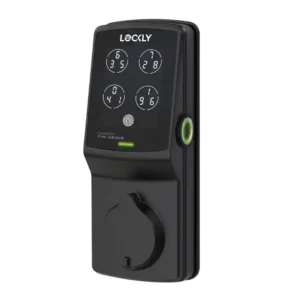
Product 1: Lockly Secure Plus Smart Lock
4.2
The app was generally considered easy, clear, and responsive, though one review separated that from a difficult guest-code workflow.
P2
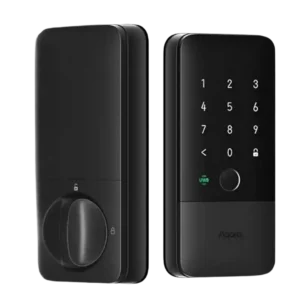
Product 2: Aqara UWB Smart Lock U400
4.0
The Aqara app was seen as useful and feature-rich, but reviewers also flagged setup complexity, a Matter-code issue, and a learning curve for customization.
Auto-lock
P1
Product 1: Lockly Secure Plus Smart Lock
5.0
Auto-lock has limited but strong evidence, with PCMag reporting that the feature worked very well in testing.
P2
Product 2: Aqara UWB Smart Lock U400
4.6
Auto-lock was broadly praised and often described as reliable or well implemented, though one reviewer found Aqara app close-detection sometimes delayed.
Battery
P1
Product 1: Lockly Secure Plus Smart Lock
4.5
Battery evidence is limited to one long-term review, but that reviewer called performance stellar after about a year of use.
P2
Product 2: Aqara UWB Smart Lock U400
4.3
Battery feedback was mostly positive for USB-C charging, removable/rechargeable design, and long runtime, tempered by concerns about spare or replacement batteries.
Bluetooth
P1
Product 1: Lockly Secure Plus Smart Lock
4.5
Bluetooth evidence is positive, with stable connectivity and unusually quick app response over Bluetooth range.
P2
Product 2: Aqara UWB Smart Lock U400
2.5
Bluetooth-only use was judged weak for this lock because reviewers saw the U400's main value in Thread/UWB rather than basic Bluetooth operation.
Build quality and durability
P1
Product 1: Lockly Secure Plus Smart Lock
4.4
Build quality was repeatedly praised as sturdy, well-built, strong, and rock solid.
P2
Product 2: Aqara UWB Smart Lock U400
4.7
Build quality was viewed positively, with reviewers describing a step up from earlier Aqara locks and solid, well-made hardware.
Camera and doorbell performance
P1Product 1: Lockly Secure Plus Smart Lock
No score yet
P2
Product 2: Aqara UWB Smart Lock U400
4.5
Camera and doorbell integration was described as practical when paired with Aqara or Apple Home video devices, letting users see visitors and unlock from one screen.
Door compatibility (deadbolt fit)
P1
Product 1: Lockly Secure Plus Smart Lock
4.0
Compatibility evidence is positive but limited, with reviewers noting standard-door fit and successful single-doorknob replacement.
P2
Product 2: Aqara UWB Smart Lock U400
4.3
Door fit flexibility was helped by adapters/cross-bore support, with reviewers calling the physical fit detail useful for nonstandard openings.
Feature additions via updates
P1Product 1: Lockly Secure Plus Smart Lock
No score yet
P2
Product 2: Aqara UWB Smart Lock U400
4.5
Feature-update evidence was limited but positive, with one reviewer saying Aqara is good about firmware updates.
Fingerprint
P1
Product 1: Lockly Secure Plus Smart Lock
4.7
Fingerprint access is the strongest feature across reviews, described as fast, accurate, responsive, effective, and unusually good.
P2
Product 2: Aqara UWB Smart Lock U400
4.7
Fingerprint access was consistently praised as quick, accurate, consistent, or convenient, especially as a backup when UWB is unavailable.
Guest Codes and Access
P1
Product 1: Lockly Secure Plus Smart Lock
3.7
Guest access is mixed: several reviewers liked the flexible access options, while one found temporary-code delivery convoluted and buggy.
P2
Product 2: Aqara UWB Smart Lock U400
4.4
Guest access was praised through Home app PIN management and temporary/neighbor-style access options.
Hub requirement
P1
Product 1: Lockly Secure Plus Smart Lock
2.3
The hub requirement is a drawback because remote and voice features require added hardware and cost.
P2
Product 2: Aqara UWB Smart Lock U400
4.0
Hub requirements were mixed: reviewers liked avoiding an Aqara hub in Apple Home, but still emphasized the need for a Thread border router for full functionality.
Industrial design
P1
Product 1: Lockly Secure Plus Smart Lock
3.6
Design opinions are mixed: reviewers liked the attractive, premium look, but several also called the lock large, bulky, or obvious.
P2
Product 2: Aqara UWB Smart Lock U400
3.9
Industrial design was the most mixed area: reviewers liked the sleeker, more mature, minimal look, but others called it bulky, plain, or plastic-looking.
Installation and Setup
P1
Product 1: Lockly Secure Plus Smart Lock
3.8
Installation is sharply mixed, ranging from simple, app-guided, and quick to unusually complicated and frustrating.
P2
Product 2: Aqara UWB Smart Lock U400
4.2
Installation was usually described as straightforward and fast, with several reviewers finishing quickly, though a few noted tight wiring, small screw holes, or a latch-area snag.
Key override reliability
P1
Product 1: Lockly Secure Plus Smart Lock
4.3
Key backup evidence is positive, with reviewers valuing physical-key and backup access as a practical fallback.
P2
Product 2: Aqara UWB Smart Lock U400
4.3
Reviewers liked retaining a physical-key fallback, framing it as a useful mechanical backup rather than a compromised smart-only design.
Keypad
P1
Product 1: Lockly Secure Plus Smart Lock
4.4
The keypad and PIN Genie concept were widely praised for security and usability, although one reviewer found the shifting layout disorienting.
P2
Product 2: Aqara UWB Smart Lock U400
4.1
The keypad was generally usable and responsive, but reviewers also found that it could take extra taps or touches to wake in some cases.
Lock/unlock speed
P1
Product 1: Lockly Secure Plus Smart Lock
4.6
Lock and unlock speed was consistently positive, with instant app response or unlocks taking only a couple of seconds.
P2
Product 2: Aqara UWB Smart Lock U400
4.8
Lock/unlock speed was one of the strongest themes, especially with UWB; reviewers described fast reactions, instant Home app response, and few delay caveats.
Locking reliability
P1
Product 1: Lockly Secure Plus Smart Lock
3.8
Locking reliability is mixed: some testing found smooth, great performance, while Digital Trends encountered unresolved calibration errors.
P2
Product 2: Aqara UWB Smart Lock U400
5.0
Locking reliability was strongly praised, with reviewers repeatedly reporting flawless, rock-solid, or consistently smooth hands-free unlocking.
Notifications
P1
Product 1: Lockly Secure Plus Smart Lock
1.5
Notifications are a weakness in the limited evidence, with PCMag specifically missing push notification support.
P2
Product 2: Aqara UWB Smart Lock U400
4.6
Notifications earned praise for adding Apple Watch/iPhone confirmation and a quick relock option after UWB unlocks.
Physical attack resistance
P1Product 1: Lockly Secure Plus Smart Lock
No score yet
P2
Product 2: Aqara UWB Smart Lock U400
2.8
Physical attack resistance drew a caveat: the reviewer appreciated certification but clearly wished the U400 had a stronger Grade 2 rating instead of Grade 3.
Remote access
P1
Product 1: Lockly Secure Plus Smart Lock
2.0
Remote access is a repeated limitation because the lock lacks built-in internet control and needs extra Wi-Fi hardware.
P2
Product 2: Aqara UWB Smart Lock U400
3.8
Remote access was useful when configured, with one reviewer praising fast remote unlock and another noting Aqara-app remote control needs an Aqara hub.
Security features (encryption)
P1
Product 1: Lockly Secure Plus Smart Lock
4.3
Security evidence is positive, with praise for hack resistance and unusually comprehensive account-security setup.
P2
Product 2: Aqara UWB Smart Lock U400
4.8
Security features were praised around UWB precision, encryption-related safeguards, and prevention of unintended inside unlocks or relay-style weaknesses.
Smart-home integration (Alexa, Google, Siri, HomeKit, Matter, Thread)
P1
Product 1: Lockly Secure Plus Smart Lock
1.9
Smart-home integration is one of the clearest weaknesses, with repeated criticism of missing or limited platform support.
P2
Product 2: Aqara UWB Smart Lock U400
4.8
Smart-home integration was a major strength, with reviewers praising Apple Home, Matter over Thread, responsiveness, major ecosystem support, and future-looking compatibility.
Touchscreen
P1
Product 1: Lockly Secure Plus Smart Lock
5.0
The touchscreen evidence is positive, with reviewers praising seamless operation and responsive keypad behavior.
P2
Product 2: Aqara UWB Smart Lock U400
3.2
Touchscreen evidence was mixed, with one reviewer naming wake-up attempts as the main complaint.
User access management
P1
Product 1: Lockly Secure Plus Smart Lock
3.5
User access management is mixed, combining flexible access options with one strong complaint about difficult PIN assignment.
P2
Product 2: Aqara UWB Smart Lock U400
4.3
User access management was positively reviewed for adequate household limits, more granular Aqara controls, and approachable local fingerprint setup.
Value and Price
P1
Product 1: Lockly Secure Plus Smart Lock
2.4
Value is a common concern because reviewers repeatedly describe the lock, hub path, or overall package as expensive.
P2
Product 2: Aqara UWB Smart Lock U400
4.3
Value sentiment was favorable but conditional: reviewers called it worth the upgrade or routine-changing, while also noting the price can feel high.
Voice control
P1
Product 1: Lockly Secure Plus Smart Lock
2.0
Voice control is limited because it is not built in and depends on extra Wi-Fi hardware that reviewers criticized.
P2
Product 2: Aqara UWB Smart Lock U400
4.2
Voice control received limited but positive evidence, with a reviewer saying they wished they had the supported voice-control lock routine at home.
Weather resistance
P1
Product 1: Lockly Secure Plus Smart Lock
4.5
Weather resistance evidence is positive but limited to one review that judged the casing able to handle harsh conditions.
P2
Product 2: Aqara UWB Smart Lock U400
4.8
Weather resistance came across well: reviewers said it could face the elements, and one real-world test cited rain, snow, ice, and no missed performance.