Access history is available in some setups (and was highlighted in early coverage), but in practice it can depend on the hub and platform, and not every controller app exposes detailed logs.
Activity logs are a strong feature, showing who unlocked the door and by which method in many cases. One limitation noted is that HomeKit-related unlocks can appear as a generic HomeKit event rather than the exact method used.
Reviews note no built-in alarm/siren, so there is no siren loudness benefit to rely on.
The lock provides audible chirps/voice prompts and a door-not-locked alarm, with adjustable volume levels and do-not-disturb options. Loudness is generally adequate for awareness rather than a full security siren.
App support is inconsistent: some versions rely on a smart-home hub app rather than a dedicated Kwikset app, which can limit advanced controls like remote code creation on certain platforms.
The Aqara app provides deeper control than HomeKit (logs, codes, users, alerts, automations), and the UI is generally considered capable. Some reviewers dislike the firmware update flow, Bluetooth connection wait time, or needing to be near the lock for certain settings.
Auto-relock/auto-lock features are commonly praised for convenience and worked consistently in testing, but toggling settings may require opening the interior panel and using small switches.
Auto-lock is feature-rich (door-close sensing, timers, schedules, passage mode), and many find it convenient. However, some reviews label it beta and report occasional misfires or latch problems if calibration or door alignment is off. Auto-unlock behaviors are mainly achieved through automations (for example, location-based routines or ecosystem rules) rather than a pure hands-free proximity unlock. These can work well but may depend on hubs and platform security prompts.
Failed-attempt lockout is widely described as effective: after multiple incorrect entries, the lock disables certain methods for up to about 30 minutes. This helps deter brute-force attempts and is often configurable.
Supports common backset sizing (2-3/8 and 2-3/4) and is generally compatible with typical North American deadbolt spacing when installed to spec.
Powered by four AA batteries with low-battery warnings and external 9V jump terminals for emergencies; battery life reports vary (some cite roughly 5 to 6 months), and battery access can require partial disassembly.
Battery life is often rated around 8 months on four AA cells and many users report strong endurance, while a few long-term accounts cite faster drain. USB-C emergency power and a physical key mitigate low-battery scenarios.
Multiple reviews explicitly note there is no Bluetooth, so there is no phone-proximity unlock or key fob option.
Bluetooth is the default direct connection and usually works reliably within range, though initial connections can take a few seconds. Binding to an Aqara hub can shift more traffic to Zigbee and feel snappier for remote tasks.
The exterior build is described as sturdy and the mechanism proved reliable in use, but at least one reviewer reported sloppy bolt machining that made installation harder.
The exterior housing is frequently described as heavy, sturdy, and premium-feeling (zinc-alloy/metal), while the interior side is more plastic. Overall durability impressions are strong, with some long-term cosmetic wear noted.
Reviews note no full door-open/closed alerting, but some describe auto-lock behavior that only triggers when the door is closed and may beep when it is not fully shut.
Door-sense relies on a gyroscope/accelerometer to infer open/closed/ajar status and trigger alerts or auto-lock. Accuracy is generally good after calibration, but a few reviewers report occasional false readings or less-than-perfect precision.
Fits many standard single-cylinder deadbolt doors, but door prep matters: small misalignment can cause friction or latch issues. Measure carefully and expect occasional hole/strike adjustments on older hardware.
If you are replacing another Kwikset deadbolt, the footprint and standard door prep can make swaps easier, with minimal changes to the door.
Z-Wave Plus versions cite over-the-air firmware update capability, but overall functionality remains intentionally minimalist and still depends on the hub ecosystem.
Firmware updates can add features and improve stability over time, and several reviewers cite meaningful improvements after updates. The update process can be more manual than expected (download to phone, transfer over Bluetooth).
Fingerprint unlocking is consistently a standout: fast (often cited under 0.5s) and accurate, with storage kept on-device. Wet fingers or cuts can cause retries, but overall performance is excellent.
Some owners report the finish can scratch or show wear over months, especially on darker colors, even though it does not affect operation. The keypad coating is often praised for resisting smudges.
Geofencing and location-based automation options are available primarily through app automations and platform routines. They can be powerful but may be labeled beta and require always-on location permissions.
Obsidian stores up to 16 codes on the standalone model and up to 30 codes on connected versions, with 4 to 8 digits per code; code limits and scheduling features vary by model and ecosystem.
Guest access is flexible with one-time and temporary codes and shareable passes, and HomeKit can also generate guest codes. A recurring day-of-week/time window schedule is a noted limitation in several reviews.
Most smart features require a compatible Z-Wave hub; without it, Obsidian behaves like a standalone keypad deadbolt.
Hubs are optional for basic local use but commonly required for the best experience: Apple Home remote access needs a Home hub, and Matter/Alexa/Google/IFTTT and many remote features need an Aqara hub. This adds cost and setup complexity.
Many reviewers found setup straightforward with good hardware options, but others ran into alignment issues, confusing instructions, or a tricky handing/calibration step that required rework.
Most reviewers found installation straightforward for standard deadbolts, with clear in-app tutorials and a required calibration step. Older doors sometimes need drilling or chiseling for a smooth bolt throw.
Obsidian is keywayless, so there is no physical key override if electronics fail; the emergency fallback is the external 9V jump terminals plus your PIN.
A hidden physical keyway plus included keys provide a dependable backup, and multiple reviewers recommend carrying a key in case of connectivity or power issues. Manual operation from inside remains simple via the thumbturn.
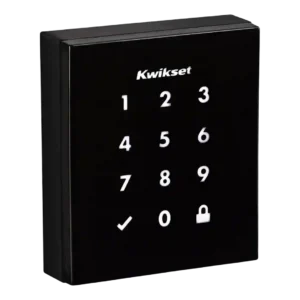
The illuminated touchscreen keypad is central to the design and is generally responsive and easy to use, though a few reviewers note it can take multiple touches to wake.
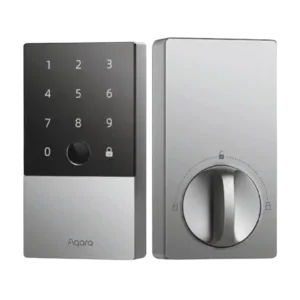
The touchscreen keypad is widely praised for being backlit, responsive, and easy to use for 6-10 digit codes. Minor nitpicks include needing to wake it first and, in some workflows, pressing a confirm/lock button.
Re-keying is a common pain point: several reviewers say the cylinder and pins are nonstandard or hard to swap, making matching existing house keys difficult without a locksmith-level workaround.
Unlocking is generally quick once the keypad wakes, but some reviewers reported slower wake behavior and slightly slower operation in hot, sunny conditions.
Lock and unlock actions are generally quick, especially via fingerprint and Home Key, with responsive bolt movement. App and auto-lock actions can show small delays depending on connectivity and settings.
Motor noise is noticeable to some reviewers, who describe the mechanism as loud during operation.
The motor is often described as powerful with high torque and fast actuation, helping the deadbolt throw confidently. Proper alignment is still important to avoid binding on the strike.
Across reviews, the lock generally operated consistently without jamming, and the auto-relock feature performed reliably when enabled.
Day-to-day locking is usually reliable, but a minority of long-term reports mention occasional offline freezes or auto-lock calibration mishaps. Firmware updates and a reset often improve stability, and a physical backup is advised.
The lock provides audio/LED indicators (including low-battery alerts) and hub apps can show lock state, but native, lock-specific push notifications are limited and platform-dependent.
Notifications cover unlock events, door-not-locked warnings, and various alerts, with do-not-disturb controls available. Some long-term feedback mentions missed alerts or occasional incorrect status reporting in the app, often improving after updates.
Removing the keyway reduces exposure to key-based attacks, but otherwise Obsidian is a standard deadbolt without advanced intrusion sensing or active defense features.
Some reviews cite BHMA/ANSI compliance and sturdy construction for basic physical resilience, but it is not positioned as the highest-grade security hardware. The practical security story is the combination of durability, alerts, and logs.
Keywayless entry reduces the risk of traditional picking and bump-key attacks; reviews do not provide an explicit drill-resistance rating.
Pick/drill resistance is not emphasized with a top-tier rating in these reviews, and several discussions imply it is similar to typical consumer smart lock cylinders. If high-security cylinder performance is a priority, this may not be the best match.
When paired to a Z-Wave hub, reviewers were able to lock/unlock and check status remotely, but code management and other functions can be restricted by the chosen platform.
Remote access is achievable through a HomeKit hub and/or an Aqara hub, enabling remote lock control, status checks, and code management. Without a hub, control is typically limited to Bluetooth range.
SecureScreen (decoy/random digits) helps prevent fingerprint-based code guessing, and Z-Wave versions mention encryption; the keywayless design also removes common key-based attack vectors like bump keys.
Security is reinforced with AES-128 style encryption claims and on-device fingerprint storage, which reviewers view positively for privacy. The feature set focuses on secure access methods and auditability rather than ultra-high-security cylinders.
Integration centers on Z-Wave hubs (such as SmartThings, Wink, and Control4) with Alexa/Google voice control typically routed through that hub; multiple reviews call out missing native HomeKit support.
Integration is a major strength: Apple Home/Home Key and Siri work well, and with an Aqara hub the lock can expand to Matter, Alexa, Google Home, and IFTTT. A few ecosystem-specific quirks and hub dependencies are the main downsides.
Brute-force mitigation is solid, with alarms, visual warnings, and a lockout after repeated failed attempts that disables keypad/fingerprint temporarily. Sensitivity and lockout timing are typically adjustable.
The glossy, minimalist touch surface looks premium on modern doors but can smudge; SecureScreen and anti-fingerprint coatings help reduce obvious fingerprint trails.
The touch interface is generally sensitive and satisfying, with a matte finish that helps readability and reduces fingerprint marks. Night visibility is typically strong thanks to the backlight.
You can add/remove PINs and use an optional master code, but advanced guest access controls (expiring or scheduled codes) are limited or unavailable on some models and hubs.
User management supports multiple users, fingerprints, passcodes, and (Aqara) NFC credentials with per-user limits. Apple Home's access management is simpler and may not expose the same scheduling and log detail.
Pricing is mid-to-premium for a touchscreen deadbolt; value is better if you already own a Z-Wave hub, but paying extra for a hub and living with limited code controls can reduce perceived value.
Value is frequently rated high, especially when discounted and compared with other Home Key locks. The main price caveat is that adding hubs can push the total closer to premium competitors.
Voice control generally works for locking and status checks through Alexa/Google when paired with a hub, but unlocking by voice is often restricted for security.
Voice control is strong via Siri/HomeKit, while Alexa and Google typically require an Aqara hub and may need extra setup steps. Voice unlocking commonly uses a PIN or platform security gating.
The black exterior can absorb heat in direct sun; at least one reviewer noted it can get hot to the touch and may slow slightly under high heat.
The exterior portion is IP65-rated and reviewers report it tolerates heat, cold, and rain well. The interior unit is not weather-rated but is protected indoors.
There is no built-in Wi-Fi; remote access typically depends on Z-Wave plus a hub rather than direct Wi-Fi connectivity.
There is no built-in Wi-Fi radio, so the lock itself cannot connect directly to a router. Remote control and broader integrations rely on an Apple Home hub and/or an Aqara Zigbee hub acting as the bridge.