Access logs
P1
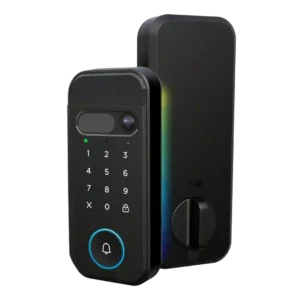
Product 1: myQ Secure View 3-in-1 Smart...
4.1
The app can associate access with individual PINs or users, giving at least basic visibility into who opened the door.
P2
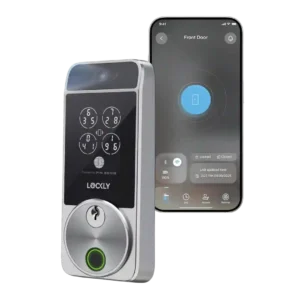
Product 2: Lockly Visage Zeno Series Smart...
4.2
The app exposes activity history and lock logs, and reviewers also mention real-time activity monitoring for seeing who used the door.
App
P1
Product 1: myQ Secure View 3-in-1 Smart...
4.4
Reviewers consistently describe the myQ app as central to setup, settings, unlocking, device management, and camera/lock control.
P2
Product 2: Lockly Visage Zeno Series Smart...
3.8
The redesigned Lockly Home app is feature-rich and improved through updates, but reviewers also report beta-like polish issues, hidden settings, and occasional reliability annoyances.
Auto-lock
P1
Product 1: myQ Secure View 3-in-1 Smart...
4.6
Auto-lock evidence is strong, including unknown-person locking, face-based lock/unlock automation, and a configurable 90-second autolock delay.
P2
Product 2: Lockly Visage Zeno Series Smart...
3.9
Auto-lock is configurable and can work well, but one reviewer warns it depends on a very smooth deadbolt path and may fail or beep if the door binds.
Backset compatibility
P1
Product 1: myQ Secure View 3-in-1 Smart...
4.5
The hands-on install shows adjustable backset handling, including the common 2-3/8 and 2-3/4 inch style positions.
P2
Product 2: Lockly Visage Zeno Series Smart...
4.5
The installation walkthrough shows support for the common 2-3/8-inch and 2-3/4-inch backset positions.
Battery
P1
Product 1: myQ Secure View 3-in-1 Smart...
4.2
Battery feedback is mostly positive around six-month claims and rechargeable design, with one caveat that the initial charge took several hours.
P2
Product 2: Lockly Visage Zeno Series Smart...
3.9
Reviewers liked the rechargeable battery packs and spare battery, but battery life varied widely with always-on face scanning and default settings.
Bluetooth
P1
Product 1: myQ Secure View 3-in-1 Smart...
3.8
Bluetooth appears during setup or internal hardware discussion, but the review evidence is limited and not performance-focused.
P2
Product 2: Lockly Visage Zeno Series Smart...
3.5
Bluetooth is built in and can be responsive for Apple Home, though setup timing and Bluetooth 4.2 range drew criticism.
Build quality and durability
P1
Product 1: myQ Secure View 3-in-1 Smart...
4.5
Hands-on reviewers describe the exterior as dense, secure, and well built, with general quality impressions that are strongly positive.
P2
Product 2: Lockly Visage Zeno Series Smart...
4.5
Build quality is strong overall, with reviewers citing zinc alloy construction, sturdy metal, and a premium-feeling exterior.
Camera and doorbell performance
P1
Product 1: myQ Secure View 3-in-1 Smart...
4.4
Camera and doorbell evidence is broad: reviewers cite 2K HDR video, wide-angle viewing, color night vision, two-way audio, and doorbell/camera consolidation.
P2
Product 2: Lockly Visage Zeno Series Smart...
2.5
The Visage is not a true camera doorbell; reviewers liked avoiding video management but repeatedly noted the lack of video surveillance or package/doorbell functionality.
Door-sense
P1
Product 1: myQ Secure View 3-in-1 Smart...
4.5
Door-sense is supported by the included magnetic open/closed sensor and app feedback that distinguishes a door being ajar from closed.
P2
Product 2: Lockly Visage Zeno Series Smart...
3.1
Door-sense works and can be accurate, but reviewers disliked the visible wired external sensor and called the implementation awkward or unattractive.
Door compatibility (deadbolt fit)
P1
Product 1: myQ Secure View 3-in-1 Smart...
3.8
Door fit is workable for deadbolt-style installs, though one reviewer needed to drill and prep a door that did not already have a deadbolt.
P2
Product 2: Lockly Visage Zeno Series Smart...
3.3
Door fit is mixed: the lock can install like a standard deadbolt, but it fully replaces the deadbolt and needs smooth alignment to motorize reliably.
Existing hardware reuse
P1
Product 1: myQ Secure View 3-in-1 Smart...
2.5
Existing hardware reuse is limited because the lock replaces the deadbolt and may require new drilling if the door is not already prepared.
P2
Product 2: Lockly Visage Zeno Series Smart...
2.4
The Visage is not a retrofit lock; reviewers describe it as a full lock replacement rather than a device that reuses the existing deadbolt.
Facial recognition
P1Product 1: myQ Secure View 3-in-1 Smart...
No score yet
P2
Product 2: Lockly Visage Zeno Series Smart...
4.7
Facial recognition is the standout: reviewers repeatedly found it fast, accurate, and resistant to photo-style spoofing, including in darkness or with sunglasses.
Feature additions via updates
P1Product 1: myQ Secure View 3-in-1 Smart...
No score yet
P2
Product 2: Lockly Visage Zeno Series Smart...
3.5
Review evidence mentions app updates, including a promised Bluetooth fix, but feature-addition evidence is limited to software polish rather than major new capabilities.
Fingerprint
P1
Product 1: myQ Secure View 3-in-1 Smart...
4.4
Fingerprint support is repeatedly mentioned and tested, with reviewers treating it as one of the main everyday unlock methods.
P2
Product 2: Lockly Visage Zeno Series Smart...
4.2
Fingerprint access is generally fast and accurate, though a few reviewers found the scanner placement awkward or hit-and-miss.
Guest Codes and Access
P1
Product 1: myQ Secure View 3-in-1 Smart...
4.4
Guest and temporary access are supported through PIN codes, user-specific pins, and quick passes for short-term access.
P2
Product 2: Lockly Visage Zeno Series Smart...
4.4
Guest access is strong, with support for custom PINs, eKeys, one-time codes, time-based codes, and temporary or expiring access.
Hub requirement
P1
Product 1: myQ Secure View 3-in-1 Smart...
4.2
Review evidence points to direct Wi-Fi setup and optional accessories rather than a clearly required hub, though no review gives a formal no-hub statement.
P2
Product 2: Lockly Visage Zeno Series Smart...
4.7
Reviewers appreciated that built-in Wi-Fi and Apple Home support eliminate a separate hub, with Apple-focused power-saving options available.
Installation and Setup
P1
Product 1: myQ Secure View 3-in-1 Smart...
4.4
Setup is usually described as clear or easy, but the most detailed install shows extra work for drilling, strike prep, calibration, and alignment.
P2
Product 2: Lockly Visage Zeno Series Smart...
3.9
Installation is mostly manageable, but reviewers repeatedly mention setup friction from cabling, sensors, app timing, or door alignment.
Key override reliability
P1
Product 1: myQ Secure View 3-in-1 Smart...
4.2
A physical key remains available as a backup, with reviewers noting included keys and a concealed keyhole under the doorbell cover.
P2
Product 2: Lockly Visage Zeno Series Smart...
4.4
Physical key backup is reliable in the reviews, with users describing the included keys as easy or smooth to use.
Keypad
P1
Product 1: myQ Secure View 3-in-1 Smart...
4.2
The keypad supports PIN entry and is described as visible during setup, with one reviewer noting the touch-sensitive design instead of physical buttons.
P2
Product 2: Lockly Visage Zeno Series Smart...
4.4
PIN Genie keypad security is well liked because it shuffles digits, but reviewers note it can slow code entry.
Lock/unlock speed
P1
Product 1: myQ Secure View 3-in-1 Smart...
4.8
Speed evidence is strong, including two-second unlock claims and hands-on praise for fast facial recognition.
P2
Product 2: Lockly Visage Zeno Series Smart...
4.8
Unlocking is consistently described as fast, with face, fingerprint, touchpad, and app/Apple actions often completing instantly or within seconds.
Locking motor
P1
Product 1: myQ Secure View 3-in-1 Smart...
4.3
Motor operation is described positively overall, with smooth inside locking and working app lock/unlock, though one install needed strike cleanup.
P2
Product 2: Lockly Visage Zeno Series Smart...
4.2
The motor is quieter than an older Lockly in one review, though it is still audible during locking and unlocking.
Locking reliability
P1
Product 1: myQ Secure View 3-in-1 Smart...
4.4
Hands-on testing found the unlock methods working after setup, with reliability depending partly on correct strike alignment.
P2
Product 2: Lockly Visage Zeno Series Smart...
4.7
Locking reliability is a strength across reviews, with repeated reports of flawless or trouble-free daily use, aside from separate Wi-Fi-access caveats.
Notifications
P1
Product 1: myQ Secure View 3-in-1 Smart...
3.9
Notifications include context-aware alerts, motion alerts, access alerts, and paid detection labels that identify what triggered an alert.
P2
Product 2: Lockly Visage Zeno Series Smart...
4.0
Notifications are robust for lock status, jammed states, and activity, though at least one reviewer found duplicate notifications excessive.
Physical attack resistance
P1
Product 1: myQ Secure View 3-in-1 Smart...
3.0
Physical resistance evidence is limited: one review says no BHMA/ANSI grade is disclosed, while another notes a stronger strike component.
P2
Product 2: Lockly Visage Zeno Series Smart...
3.5
Physical attack resistance is only lightly supported: one reviewer says it meets ANSI Level 2 requirements but is not formally ANSI/BHMA certified.
Pick/drill resistance (if rated)
P1
Product 1: myQ Secure View 3-in-1 Smart...
2.3
Pick or drill resistance is not independently tested; the only related evidence is the lack of a disclosed BHMA/ANSI grade.
P2Product 2: Lockly Visage Zeno Series Smart...
No score yetRemote access
P1
Product 1: myQ Secure View 3-in-1 Smart...
4.5
Remote access is well supported, with app-based lock/unlock control described for letting someone in when the owner is away.
P2
Product 2: Lockly Visage Zeno Series Smart...
3.9
Remote access is useful through Wi-Fi and the app, but one reviewer had several occasions where Wi-Fi access was unavailable.
Security features (encryption)
P1
Product 1: myQ Secure View 3-in-1 Smart...
4.5
Security evidence is strongest for biometric privacy because one reviewer says face scans stay on the device rather than the cloud.
P2
Product 2: Lockly Visage Zeno Series Smart...
4.4
Security evidence is strong for PIN Genie, encrypted facial data, anti-photo spoofing, and reviewer-cited encryption protections.
Smart-home integration (Alexa, Google, Siri, HomeKit, Matter, Thread)
P1
Product 1: myQ Secure View 3-in-1 Smart...
2.7
Integration is mixed: myQ ecosystem integration is presented as a strength, but popular third-party platforms are described as unsupported or previously restricted.
P2
Product 2: Lockly Visage Zeno Series Smart...
4.4
Smart-home support is broad for Apple Home/Home Key, Alexa, Google, and Siri, but reviewers disagree or note gaps around IFTTT, Matter, and Thread.
Touchscreen
P1
Product 1: myQ Secure View 3-in-1 Smart...
3.7
The front keypad is touch-sensitive, though one reviewer notes physical buttons may be a personal preference for some users.
P2
Product 2: Lockly Visage Zeno Series Smart...
4.2
The touchscreen/keypad is central to PIN Genie and Apple Home Key use, with reviewers describing it as sharp and multifunctional.
User access management
P1
Product 1: myQ Secure View 3-in-1 Smart...
4.5
User management is strong, with evidence for managing users, assigning PINs, adding fingerprints, adding another user, and short-term access.
P2
Product 2: Lockly Visage Zeno Series Smart...
4.5
User management is robust, covering users, PINs, fingerprints, facial scans, digital keys, and access rules.
Value and Price
P1
Product 1: myQ Secure View 3-in-1 Smart...
3.3
Value is mixed: reviewers like the all-in-one design, but price, overkill for simple needs, and subscription-gated features create clear caveats.
P2
Product 2: Lockly Visage Zeno Series Smart...
3.7
Value is context-dependent: reviewers call it expensive, but several still find the feature set worth the high price.
Voice control
P1
Product 1: myQ Secure View 3-in-1 Smart...
1.5
Voice-control evidence is negative because reviewers cite removed Google Assistant support and lack of Amazon Alexa or Google Home integration.
P2
Product 2: Lockly Visage Zeno Series Smart...
4.5
Voice control is well supported through Alexa, Google, and Siri, with reviewers reporting snappy or prompt command response.
Warranty and support
P1
Product 1: myQ Secure View 3-in-1 Smart...
2.0
Support evidence is a concern because one review highlights disabled third-party support and broader consumer skepticism about Chamberlain’s practices.
P2
Product 2: Lockly Visage Zeno Series Smart...
4.5
Warranty and support evidence includes two years on electronics, lifetime tech support, and installation support references.
Weather resistance
P1
Product 1: myQ Secure View 3-in-1 Smart...
4.5
Weather evidence is positive, including the stated -4°F to 140°F range and hands-on praise for a moisture-sealing rubber gasket.
P2
Product 2: Lockly Visage Zeno Series Smart...
4.5
Weather resistance is supported by IPX5 waterproofing and a rain mode that disables the keypad to avoid bad-weather false triggers.
Wi-Fi
P1
Product 1: myQ Secure View 3-in-1 Smart...
4.2
Wi-Fi support is directly shown in review evidence, including connection to a 2.4 GHz Wi-Fi network during setup.
P2
Product 2: Lockly Visage Zeno Series Smart...
3.7
Wi-Fi is built in and removes hub friction, but it is 2.4GHz-only and at least one reviewer experienced spotty Wi-Fi access.