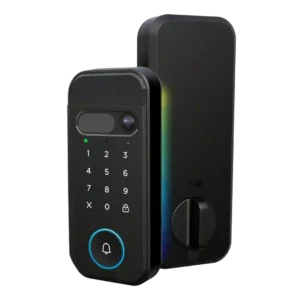
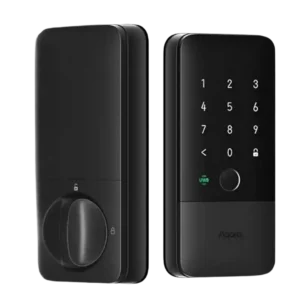
Access logs
P1
Product 1: myQ Secure View 3-in-1 Smart...
4.1
The app can associate access with individual PINs or users, giving at least basic visibility into who opened the door.
P2
Product 2: Aqara UWB Smart Lock U400
4.5
Access logs were directly supported by Aqara app evidence showing lock/unlock events and alerts.
App
P1
Product 1: myQ Secure View 3-in-1 Smart...
4.4
Reviewers consistently describe the myQ app as central to setup, settings, unlocking, device management, and camera/lock control.
P2
Product 2: Aqara UWB Smart Lock U400
4.3
App support was generally positive, with Aqara exposing advanced settings and Apple Home covering daily controls, though Aqara customization can take learning.
Auto-lock
P1
Product 1: myQ Secure View 3-in-1 Smart...
4.6
Auto-lock evidence is strong, including unknown-person locking, face-based lock/unlock automation, and a configurable 90-second autolock delay.
P2
Product 2: Aqara UWB Smart Lock U400
4.6
Auto-lock received broad support through Apple Home timing options, Aqara lock-on-close behavior, and reviewers reporting reliable day-to-day operation.
Backset compatibility
P1
Product 1: myQ Secure View 3-in-1 Smart...
4.5
The hands-on install shows adjustable backset handling, including the common 2-3/8 and 2-3/4 inch style positions.
P2
Product 2: Aqara UWB Smart Lock U400
4.4
Backset and bore compatibility received direct support through adjustable backset comments and cross-bore adapter coverage.
Battery
P1
Product 1: myQ Secure View 3-in-1 Smart...
4.2
Battery feedback is mostly positive around six-month claims and rechargeable design, with one caveat that the initial charge took several hours.
P2
Product 2: Aqara UWB Smart Lock U400
4.4
Battery feedback was strong: reviewers liked the removable rechargeable pack, USB-C charging, outside emergency power, and roughly six-month estimates.
Bluetooth
P1
Product 1: myQ Secure View 3-in-1 Smart...
3.8
Bluetooth appears during setup or internal hardware discussion, but the review evidence is limited and not performance-focused.
P2
Product 2: Aqara UWB Smart Lock U400
4.3
Bluetooth was usually discussed as inferior to UWB or as a fallback/local setup path; reviewers favored Thread/UWB for precision and responsiveness.
Build quality and durability
P1
Product 1: myQ Secure View 3-in-1 Smart...
4.5
Hands-on reviewers describe the exterior as dense, secure, and well built, with general quality impressions that are strongly positive.
P2
Product 2: Aqara UWB Smart Lock U400
4.1
Build quality was mostly positive, with solid construction and improved design, though some reviewers still called out bulk, plastic feel, or ordinary styling.
Camera and doorbell performance
P1
Product 1: myQ Secure View 3-in-1 Smart...
4.4
Camera and doorbell evidence is broad: reviewers cite 2K HDR video, wide-angle viewing, color night vision, two-way audio, and doorbell/camera consolidation.
P2
Product 2: Aqara UWB Smart Lock U400
4.2
Camera and doorbell integration was practical but secondary, with Aqara cameras, doorbells, and live-video unlock workflows mentioned in several reviews.
Door-sense
P1
Product 1: myQ Secure View 3-in-1 Smart...
4.5
Door-sense is supported by the included magnetic open/closed sensor and app feedback that distinguishes a door being ajar from closed.
P2
Product 2: Aqara UWB Smart Lock U400
4.6
Door-sense evidence came from the lock detecting open/closed state, using a gyroscope or built-in close detection, and enabling lock-on-close behavior.
Door compatibility (deadbolt fit)
P1
Product 1: myQ Secure View 3-in-1 Smart...
3.8
Door fit is workable for deadbolt-style installs, though one reviewer needed to drill and prep a door that did not already have a deadbolt.
P2
Product 2: Aqara UWB Smart Lock U400
4.2
Reviewers found standard deadbolt and door fit generally workable, with useful adapters, but full-replacement hardware and some door layouts can matter.
Existing hardware reuse
P1
Product 1: myQ Secure View 3-in-1 Smart...
2.5
Existing hardware reuse is limited because the lock replaces the deadbolt and may require new drilling if the door is not already prepared.
P2
Product 2: Aqara UWB Smart Lock U400
3.8
Existing-hardware reuse is mixed: the lock replaces the whole deadbolt assembly, but some reviewers noted no extra drilling or strike-plate reuse in their installs.
Feature additions via updates
P1Product 1: myQ Secure View 3-in-1 Smart...
No score yet
P2
Product 2: Aqara UWB Smart Lock U400
4.1
Feature-update evidence included firmware updates, Apple Home updates, Matter/Aliro readiness, and futureproofing claims.
Fingerprint
P1
Product 1: myQ Secure View 3-in-1 Smart...
4.4
Fingerprint support is repeatedly mentioned and tested, with reviewers treating it as one of the main everyday unlock methods.
P2
Product 2: Aqara UWB Smart Lock U400
4.4
Fingerprint performance was consistently praised as fast, accurate, convenient, and a strong fallback when UWB or Home Key was not used.
Guest Codes and Access
P1
Product 1: myQ Secure View 3-in-1 Smart...
4.4
Guest and temporary access are supported through PIN codes, user-specific pins, and quick passes for short-term access.
P2
Product 2: Aqara UWB Smart Lock U400
4.3
Guest codes and access were widely supported through PINs, one-time passwords, Apple Home access sharing, NFC fobs, and temporary-user options.
Hub requirement
P1
Product 1: myQ Secure View 3-in-1 Smart...
4.2
Review evidence points to direct Wi-Fi setup and optional accessories rather than a clearly required hub, though no review gives a formal no-hub statement.
P2
Product 2: Aqara UWB Smart Lock U400
3.4
Hub requirements are a recurring caveat: most smart functionality needs a Thread border router, and Aqara-app remote control may require an Aqara hub.
Installation and Setup
P1
Product 1: myQ Secure View 3-in-1 Smart...
4.4
Setup is usually described as clear or easy, but the most detailed install shows extra work for drilling, strike prep, calibration, and alignment.
P2
Product 2: Aqara UWB Smart Lock U400
4.3
Installation was repeatedly described as straightforward for a standard deadbolt, though a few reviewers noted tight wiring, small screws, or door-prep caveats.
Key override reliability
P1
Product 1: myQ Secure View 3-in-1 Smart...
4.2
A physical key remains available as a backup, with reviewers noting included keys and a concealed keyhole under the doorbell cover.
P2
Product 2: Aqara UWB Smart Lock U400
4.3
Physical key backup was consistently confirmed as a reliable fallback alongside UWB, NFC, fingerprint, keypad, and app access.
Keypad
P1
Product 1: myQ Secure View 3-in-1 Smart...
4.2
The keypad supports PIN entry and is described as visible during setup, with one reviewer noting the touch-sensitive design instead of physical buttons.
P2
Product 2: Aqara UWB Smart Lock U400
4.2
The keypad was broadly functional and often hidden for a cleaner look, though several reviewers noted occasional wake or touch responsiveness quirks.
Keyway quality
P1Product 1: myQ Secure View 3-in-1 Smart...
No score yet
P2
Product 2: Aqara UWB Smart Lock U400
4.1
Keyway quality evidence centered on rekeyability, a usable physical cylinder, and hidden keyhole access rather than high-security keyway claims.
Lock/unlock speed
P1
Product 1: myQ Secure View 3-in-1 Smart...
4.8
Speed evidence is strong, including two-second unlock claims and hands-on praise for fast facial recognition.
P2
Product 2: Aqara UWB Smart Lock U400
4.9
Unlock speed was one of the strongest themes: reviewers repeatedly described UWB and fingerprint unlocking as fast, seamless, or ready before reaching the door.
Locking motor
P1
Product 1: myQ Secure View 3-in-1 Smart...
4.3
Motor operation is described positively overall, with smooth inside locking and working app lock/unlock, though one install needed strike cleanup.
P2
Product 2: Aqara UWB Smart Lock U400
3.5
Locking motor evidence was minimal, limited to a reviewer observing the motor actuating during hands-on setup.
Locking reliability
P1
Product 1: myQ Secure View 3-in-1 Smart...
4.4
Hands-on testing found the unlock methods working after setup, with reliability depending partly on correct strike alignment.
P2
Product 2: Aqara UWB Smart Lock U400
4.7
Locking reliability was strongly supported across reviews, especially for UWB unlock-on-approach and Thread responsiveness, with only isolated caveats.
Notifications
P1
Product 1: myQ Secure View 3-in-1 Smart...
3.9
Notifications include context-aware alerts, motion alerts, access alerts, and paid detection labels that identify what triggered an alert.
P2
Product 2: Aqara UWB Smart Lock U400
4.2
Notifications and alerts were supported through Apple Home unlock alerts, Apple Watch/iPhone notifications, and Aqara low-battery or lock-state alerts.
Physical attack resistance
P1
Product 1: myQ Secure View 3-in-1 Smart...
3.0
Physical resistance evidence is limited: one review says no BHMA/ANSI grade is disclosed, while another notes a stronger strike component.
P2
Product 2: Aqara UWB Smart Lock U400
3.0
Physical attack resistance is only moderate: reviewers confirmed BHMA Grade 3 certification and noted it is the lowest BHMA level.
Pick/drill resistance (if rated)
P1
Product 1: myQ Secure View 3-in-1 Smart...
2.3
Pick or drill resistance is not independently tested; the only related evidence is the lack of a disclosed BHMA/ANSI grade.
P2Product 2: Aqara UWB Smart Lock U400
No score yetRemote access
P1
Product 1: myQ Secure View 3-in-1 Smart...
4.5
Remote access is well supported, with app-based lock/unlock control described for letting someone in when the owner is away.
P2
Product 2: Aqara UWB Smart Lock U400
4.2
Remote access was supported through Apple Home, Aqara hub/app workflows, and reviewer tests showing reliable remote unlocking where configured.
Security features (encryption)
P1
Product 1: myQ Secure View 3-in-1 Smart...
4.5
Security evidence is strongest for biometric privacy because one reviewer says face scans stay on the device rather than the cloud.
P2
Product 2: Aqara UWB Smart Lock U400
4.6
Security-feature evidence focused on UWB's precise distance/direction awareness, reduced Bluetooth-style risks, and encryption-related comments.
Smart-home integration (Alexa, Google, Siri, HomeKit, Matter, Thread)
P1
Product 1: myQ Secure View 3-in-1 Smart...
2.7
Integration is mixed: myQ ecosystem integration is presented as a strength, but popular third-party platforms are described as unsupported or previously restricted.
P2
Product 2: Aqara UWB Smart Lock U400
4.8
Smart-home integration was a core strength, with Matter over Thread plus Apple Home, Alexa, Google Home, SmartThings, Home Assistant, and Siri support.
Touchscreen
P1
Product 1: myQ Secure View 3-in-1 Smart...
3.7
The front keypad is touch-sensitive, though one reviewer notes physical buttons may be a personal preference for some users.
P2
Product 2: Aqara UWB Smart Lock U400
3.9
Touchscreen feedback was mostly positive for hidden keypad usability, but some reviewers reported that it sometimes needed extra taps to wake.
User access management
P1
Product 1: myQ Secure View 3-in-1 Smart...
4.5
User management is strong, with evidence for managing users, assigning PINs, adding fingerprints, adding another user, and short-term access.
P2
Product 2: Aqara UWB Smart Lock U400
4.4
User access management was strong, with evidence for multiple users, roles, fingerprints, passwords, NFC devices, and time-limited access.
Value and Price
P1
Product 1: myQ Secure View 3-in-1 Smart...
3.3
Value is mixed: reviewers like the all-in-one design, but price, overkill for simple needs, and subscription-gated features create clear caveats.
P2
Product 2: Aqara UWB Smart Lock U400
4.2
Value and price were favorable but not universal: reviewers praised the UWB convenience and overall capability while noting price increases and battery-sourcing concerns.
Voice control
P1
Product 1: myQ Secure View 3-in-1 Smart...
1.5
Voice-control evidence is negative because reviewers cite removed Google Assistant support and lack of Amazon Alexa or Google Home integration.
P2
Product 2: Aqara UWB Smart Lock U400
4.2
Voice control was supported through Siri, Alexa or Echo mentions, and Apple Home integration for lock commands.
Weather resistance
P1
Product 1: myQ Secure View 3-in-1 Smart...
4.5
Weather evidence is positive, including the stated -4°F to 140°F range and hands-on praise for a moisture-sealing rubber gasket.
P2
Product 2: Aqara UWB Smart Lock U400
4.6
Weather resistance was consistently supported by IP65 outdoor ratings and real-world exposure to rain, snow, ice, and temperature swings.
Wi-Fi
P1
Product 1: myQ Secure View 3-in-1 Smart...
4.2
Wi-Fi support is directly shown in review evidence, including connection to a 2.4 GHz Wi-Fi network during setup.
P2
Product 2: Aqara UWB Smart Lock U400
4.2
Wi-Fi was mostly relevant by absence: reviewers highlighted Thread as avoiding Wi-Fi load or Wi-Fi power draw rather than praising built-in Wi-Fi.