Average score
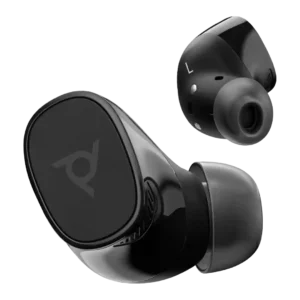
Poly Voyager Free 20 Earbuds
3.7
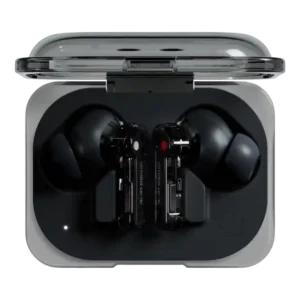
Nothing Ear (a) Earbuds
4.1
Hinge durability
Poly Voyager Free 20 Earbuds
2.0
Hinge durability was a concern because multiple reviewers described loose or fragile-feeling case hinges.
Nothing Ear (a) Earbuds
4.4
Case hinge confidence was positive in the limited evidence, with reviewers noting a wider hinge and solid metal hinge feel.
Maximum volume clarity
Poly Voyager Free 20 Earbuds
2.5
Maximum-volume clarity had a caveat: one reviewer heard peaking and high-frequency distortion at max volume.
Nothing Ear (a) Earbuds
4.5
Maximum-volume clarity looked strong in the evidence, with reviewers reporting no clipping and plenty of detail at low listening levels.
Voice assistant integration
Poly Voyager Free 20 Earbuds
4.0
Voice assistant integration was lightly praised through a versatile custom button, but it was not a major differentiator.
Nothing Ear (a) Earbuds
2.0
Voice assistant integration had weak evidence: the available test showed the assistant failing to understand the product context.
Button control usability
Poly Voyager Free 20 Earbuds
2.8
Controls were divisive: one reviewer liked reliable push buttons, but several found the physical buttons uncomfortable because pressing them pushed the buds into the ear.
Nothing Ear (a) Earbuds
4.2
The squeeze/pinch control system was generally praised as intuitive and effective, though a few reviewers found some combinations tricky.
Equalizer customization
Poly Voyager Free 20 Earbuds
2.4
EQ customization was one of the most repeated criticisms, with reviewers wanting a multi-band or custom EQ instead of limited presets.
Nothing Ear (a) Earbuds
3.8
Equalizer customization was useful and often praised, but reviewers also noted it is limited compared with the flagship Nothing Ear or competing 10-band EQs.
Carry case quality
Poly Voyager Free 20 Earbuds
2.6
Case feedback was mixed to negative, with praise for style or magnet strength offset by complaints about plastic feel, loose hinges, fingerprints, and scratches.
Nothing Ear (a) Earbuds
4.0
The case was one of the most mixed areas: many liked the smaller pocketable form, while others found it fiddly, unintuitive, or less refined.
Software/setup simplicity
Poly Voyager Free 20 Earbuds
3.5
Setup was often straightforward or app-guided, but firmware updates and confusing ANC choices created friction in some reviews.
Nothing Ear (a) Earbuds
4.6
Setup and everyday software use were praised as easy, fast, responsive, and intuitive.
Multi-platform compatibility
Poly Voyager Free 20 Earbuds
3.7
Multi-platform use was strong for phone/laptop switching in one review but less reliable for computer use in another.
Nothing Ear (a) Earbuds
4.5
Multi-platform compatibility was positive, with reviewers saying the earbuds work well across devices and check broad feature boxes.
Sensors
Poly Voyager Free 20 Earbuds
4.3
Sensors were treated as useful convenience features, especially wear detection pausing and resuming media.
Nothing Ear (a) Earbuds
3.4
Sensor-related evidence was mixed: wearer recognition impressed in one review but ear detection misfired in another.
App
Poly Voyager Free 20 Earbuds
3.8
The Poly Lens app was often useful for settings, battery checks, updates, fit testing, and customization, but desktop limitations and EQ restrictions kept it from being universally praised.
Nothing Ear (a) Earbuds
4.6
The Nothing X app was a major strength, repeatedly praised for intuitive design, customization, responsiveness, and clean organization.
Smudge resistance
Poly Voyager Free 20 Earbuds
1.7
Smudge resistance was a recurring weakness because the glossy case attracted fingerprints and scratched quickly.
Nothing Ear (a) Earbuds
2.4
Smudge/scratch resistance was a weakness, with reviewers warning the clear case can scratch easily over time.
Charging
Poly Voyager Free 20 Earbuds
4.6
Charging was a clear strength, with reviewers appreciating quick top-ups and wireless charging where mentioned.
Nothing Ear (a) Earbuds
4.0
Charging was mixed: fast charging was praised repeatedly, but the lack of wireless charging was a recurring tradeoff.
Ear tip size options
Poly Voyager Free 20 Earbuds
4.0
Ear tip sizing was supported by a reviewer who found the large tips gave a secure fit, but broader praise was limited.
Nothing Ear (a) Earbuds
3.4
Ear tip size options were mixed: one reviewer appreciated the extra sizes, while another cited complaints about not enough assortment.
Preset EQ profile quality
Poly Voyager Free 20 Earbuds
2.7
Preset EQ quality was generally weak; reviewers liked Bass mode in some cases, but many found the presets limited or too similar.
Nothing Ear (a) Earbuds
3.3
Preset EQ evidence was mixed, with one reviewer disliking extreme presets and another valuing the available preset/custom choices.
Bass performance
Poly Voyager Free 20 Earbuds
3.5
Bass impressions varied sharply: some reviewers heard thumping or well-controlled low end, while others found it timid, compressed, or lacking energy for music.
Nothing Ear (a) Earbuds
4.0
Bass was usually praised as strong, fun, and adjustable, but a few reviewers found the default tuning bass-heavy or said it was not the strongest.
Android compatibility
Poly Voyager Free 20 Earbuds
4.5
Android use was supported by real-world Samsung pairing in one review, where switching among devices was described as seamless.
Nothing Ear (a) Earbuds
4.0
Android compatibility evidence centered on LDAC delivering high-quality streaming to supported Android devices.
Find My
Poly Voyager Free 20 Earbuds
4.0
Find My-style location support was viewed positively when the app could locate the earbuds’ last known location.
Nothing Ear (a) Earbuds
4.5
Find My was liked where evaluated, with one reviewer specifically appreciating that the feature was included.
Spatial audio
Poly Voyager Free 20 Earbuds
1.5
Spatial audio was a clear missing feature and was called out as a reason some buyers may prefer another model.
Nothing Ear (a) Earbuds
2.0
Spatial audio was a clear omission in the available evidence, with one review listing no head-tracking spatial audio as a con.
Volume output
Poly Voyager Free 20 Earbuds
4.5
Volume output received a positive remark in one video review, though detailed volume testing was limited.
Nothing Ear (a) Earbuds
4.0
Volume output was mostly sufficient, with one reviewer noting loud output and another calling peak volume only average.
Battery
Poly Voyager Free 20 Earbuds
4.4
Battery life was one of the more consistent strengths, with reviewers confirming long runtimes that fit workdays and extended listening sessions.
Nothing Ear (a) Earbuds
4.0
Battery life was generally solid to impressive, especially with ANC off, but ANC use and newer competition made it only midrange in some reviews.
Design and Aesthetics
Poly Voyager Free 20 Earbuds
4.1
The design was generally viewed as sleek, professional, and more stylish than expected, with a restrained black-and-gold look.
Nothing Ear (a) Earbuds
4.6
Design was a standout strength, with reviewers consistently praising the transparent look, yellow option, and distinctive Nothing styling.
Multipoint connectivity reliability
Poly Voyager Free 20 Earbuds
4.0
Multipoint was praised when seamless, simple, or handy, but one reviewer found switching delays and imperfect handoff behavior.
Nothing Ear (a) Earbuds
4.4
Multipoint was widely valued and usually smooth, with app-based device management praised; one reviewer still noted occasional priority confusion.
Value for money
Poly Voyager Free 20 Earbuds
4.0
Value depended heavily on price: reviewers called sale pricing excellent, while full price invited stronger competition.
Nothing Ear (a) Earbuds
4.4
Value was a major strength, with many reviewers calling the Ear (a) unusually competitive or hard to beat, though one later review argued cheaper rivals now close the gap.
Microphone quality for calls
Poly Voyager Free 20 Earbuds
4.3
Call microphone quality was one of the product’s most consistent strengths, with reviewers describing clear, understandable, or great call performance.
Nothing Ear (a) Earbuds
3.9
Call quality was generally usable to good, with several reviewers reporting clear voices, though others heard compression, artificial tone, or obvious earbud processing.
Active noise cancellation
Poly Voyager Free 20 Earbuds
4.2
Reviewers generally praised ANC as effective for office chatter, engines, hums, and daily commuting, though one reviewer found it less impressive with sudden or higher-pitched disruptions.
Nothing Ear (a) Earbuds
3.9
ANC earned broad praise for the price, often described as effective or impressive, but it was not consistently top-tier and struggled more with mid/high frequencies.
Comfort during long use
Poly Voyager Free 20 Earbuds
4.2
Comfort was mostly a standout strength across reviews, including all-day wear praise, though one reviewer reported soreness after a couple of hours.
Nothing Ear (a) Earbuds
4.5
Long-use comfort was one of the strongest consensus points, with reviewers repeatedly saying the earbuds stayed comfortable for commutes, work, and hours of wear.
Portability/foldability
Poly Voyager Free 20 Earbuds
4.3
Portability was praised for the compact case and pocket-friendly form.
Nothing Ear (a) Earbuds
4.5
Portability was positive, with reviewers highlighting the smaller, lighter, pocket-friendly case design.
Sound quality
Poly Voyager Free 20 Earbuds
4.0
Overall sound quality was broadly good to excellent for many reviewers, especially for calls and general listening, but music-focused reviewers found it less dynamic.
Nothing Ear (a) Earbuds
4.2
Reviewers generally found the Ear (a) sound strong for the price, with several calling it excellent or impressive, though one lab-style review described it as only mediocre and a 2025 comparison found newer rivals can match or beat it.
Treble clarity
Poly Voyager Free 20 Earbuds
4.4
Treble clarity was praised in music listening, though one review noted high-frequency distortion at maximum volume under a separate attribute.
Nothing Ear (a) Earbuds
4.1
Treble was usually described as clear, detailed, or expressive, though one reviewer connected the pronounced upper treble with an analytical sound.
Soundstage width
Poly Voyager Free 20 Earbuds
3.8
Soundstage impressions ranged from merely solid to spacious and immersive, depending on the reviewer.
Nothing Ear (a) Earbuds
4.0
Several reviewers heard a wide or expansive presentation, but one later comparison found the soundstage less wide than stronger budget rivals.
Integrated microphone
Poly Voyager Free 20 Earbuds
4.2
The integrated microphones generally supported clear, understandable calls and were praised by callers in multiple reviews.
Nothing Ear (a) Earbuds
4.4
Integrated microphones were viewed positively where directly discussed, especially with multiple microphones supporting call performance.
Build quality
Poly Voyager Free 20 Earbuds
4.3
Reviewers tended to separate the earbuds from the case: the buds themselves felt solid or premium, while the case drew more criticism.
Nothing Ear (a) Earbuds
4.4
Build quality was mostly positive, with strong fit-and-finish and hinge/material comments, though the plastic case raised scratch concerns elsewhere.
Microphone noise reduction
Poly Voyager Free 20 Earbuds
4.3
Microphone noise reduction was praised for minimizing background noise and keeping voices clear in calls.
Nothing Ear (a) Earbuds
4.5
Microphone noise reduction was a strength in the direct evidence, with reviewers praising background voice isolation and environmental filtering.
Transparency mode quality
Poly Voyager Free 20 Earbuds
3.2
Transparency mode was mixed: some found it useful for conversation, while others said switching was limited or the mode simply amplified noise.
Nothing Ear (a) Earbuds
3.3
Transparency mode drew split reactions: some found it useful or above average, while others said it was merely acceptable or too weak for conversation.
Water/sweat resistance rating
Poly Voyager Free 20 Earbuds
3.8
Water and sweat resistance was useful for workouts and rain, but one reviewer warned against treating the rating as sink-proof.
Nothing Ear (a) Earbuds
4.0
Water and sweat resistance was viewed as sufficient for gym or running use, even if not the highest possible protection.
Instrument separation
Poly Voyager Free 20 Earbuds
4.5
Instrument separation was praised in one detailed music test where the earbuds balanced vocals and bassline clearly.
Nothing Ear (a) Earbuds
4.4
Instrument separation was praised for placement and vocal/instrument isolation, though one comparison framed its advantage as only slight.
Eartips fit
Poly Voyager Free 20 Earbuds
4.3
Fit was usually praised as snug, secure, and supported by app-based fit testing.
Nothing Ear (a) Earbuds
4.3
Ear tip fit was positive overall, with a tight seal and size changes resolving a fit issue for one reviewer.
Bluetooth
Poly Voyager Free 20 Earbuds
4.0
Bluetooth was usually reliable with good range and seamless connection behavior, but one reviewer reported range falling short of the stated claim and another noted occasional dropouts.
Nothing Ear (a) Earbuds
3.9
Bluetooth reliability was mixed: some reviewers reported sturdy connections and no interruptions, while one experienced stutters in busy downtown conditions.
Stability
Poly Voyager Free 20 Earbuds
4.3
Physical stability was generally positive, with reviewers saying the buds did not slip and stayed in place securely.
Nothing Ear (a) Earbuds
4.2
Stability was usually strong, with repeated reports of secure fit, though one reviewer’s left earbud worked loose.
Midrange clarity
Poly Voyager Free 20 Earbuds
4.2
Midrange clarity was a consistent bright spot, with reviewers praising clear vocals and well-represented mids.
Nothing Ear (a) Earbuds
4.2
Midrange comments were positive overall, with reviewers hearing open mids, clean dynamics, and pronounced upper-mid detail.
Weight comfort
Poly Voyager Free 20 Earbuds
4.5
Weight comfort was a strength where mentioned, with lightweight earbuds contributing to extended-wear comfort.
Nothing Ear (a) Earbuds
4.5
Weight comfort was praised where discussed, with reviewers emphasizing the lightweight feel and how easy they are to forget in the ear.
Noise isolation (passive)
Poly Voyager Free 20 Earbuds
3.5
Passive isolation was described as decent by one reviewer, helped by the sealed earbud fit.
Nothing Ear (a) Earbuds
3.5
Passive isolation was mixed: some reviewers said the tips block outside noise well, while others still heard leakage or pressure from the remaining earbud.
Audio-video sync accuracy
Poly Voyager Free 20 EarbudsNo score yet
Nothing Ear (a) Earbuds
3.6
Low-latency support was useful for casual gaming, but one reviewer cautioned that Bluetooth latency still was not fully solved.
Auracast support
Poly Voyager Free 20 EarbudsNo score yet
Nothing Ear (a) Earbuds
2.0
Auracast support was a negative omission in the evidence, appearing as part of a broader future-proofing complaint.
Cable quality
Poly Voyager Free 20 Earbuds
2.0
The included USB-C cable drew a negative comment for being very short.
Nothing Ear (a) EarbudsNo score yet
Codec support
Poly Voyager Free 20 EarbudsNo score yet
Nothing Ear (a) Earbuds
4.3
Codec support was praised mainly because LDAC and hi-res support are unusual and valuable at this price.
Dongle
Poly Voyager Free 20 Earbuds
2.0
The lack of a dongle hurt computer and softphone convenience for reviewers who wanted stronger PC reliability or business-call controls.
Nothing Ear (a) EarbudsNo score yet
Frequency response accuracy
Poly Voyager Free 20 EarbudsNo score yet
Nothing Ear (a) Earbuds
2.8
Frequency-response accuracy was the weakest sound-related measurement, with one review saying the default tuning misses the preferred curve.
Included accessories
Poly Voyager Free 20 Earbuds
4.0
Accessories and packaging received light praise for sturdy presentation and included tips, though this was not a major review focus.
Nothing Ear (a) EarbudsNo score yet
LDAC
Poly Voyager Free 20 EarbudsNo score yet
Nothing Ear (a) Earbuds
4.2
LDAC was a clear positive for Android and hi-res playback, although one later reviewer avoided it because of the battery-life penalty.
Sidetone adjustment quality
Poly Voyager Free 20 Earbuds
1.5
Sidetone adjustment was criticized because one reviewer said the Free 20 lacked that ability, making plugged-ear calls feel unnatural.
Nothing Ear (a) EarbudsNo score yet
Soundstage depth
Poly Voyager Free 20 EarbudsNo score yet
Nothing Ear (a) Earbuds
4.5
Soundstage depth had limited but positive evidence, with one reviewer hearing space and texture around vocals.
Sustainability materials
Poly Voyager Free 20 EarbudsNo score yet
Nothing Ear (a) Earbuds
2.4
Sustainability evidence was negative overall: recycled content was mentioned, but reviewers criticized disposability and non-replaceable batteries.
Touch control responsiveness
Poly Voyager Free 20 EarbudsNo score yet
Nothing Ear (a) Earbuds
4.2
Touch and pinch responsiveness was mostly positive, but advanced gestures could be finicky or create annoying feedback in some use.
USB-C
Poly Voyager Free 20 Earbuds
4.0
USB-C was viewed positively as a modern, convenient charging choice.
Nothing Ear (a) EarbudsNo score yet