AirPlay 2 support is consistently treated as reliable and easy to live with, with no meaningful complaints in the standard LSX II reviews.
Most sources call the LS50 Meta moderately demanding: 85dB sensitivity and low-impedance dips benefit from an amp with good current and quality. They can play well on modest power at moderate levels, but stronger electronics unlock better dynamics, clarity, and control.
KEF Connect is generally praised for clean setup, responsive control, and useful tuning options. The app is a major usability strength, even if a few reviewers still leaned on it more than they wanted.
Format support is a clear strong point, with repeated praise for broad hi-res handling, streaming service coverage, and flexible digital playback paths.
Chromecast support is widely viewed as a welcome part of the platform, helping the LSX II fit neatly into mixed-device households and app ecosystems.
Reviews repeatedly describe the LSX II as coherent, organized, and musically integrated, especially when handling dense mixes or nearfield listening.
Uni-Q coherence is a repeated theme: the speakers are often described as seamless, integrated, and single-driver-like in how they blend bass, mids, and treble once properly set up and broken in.
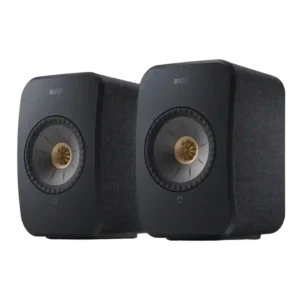
Design is one of the system's clearest selling points. Reviewers consistently call the LSX II stylish, premium-looking, and easy to place in modern living spaces.
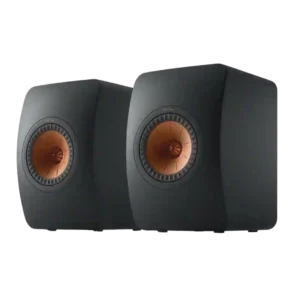
The LS50 Meta’s futuristic Uni-Q look and matte finish options (including newer colorways) are widely liked, with frequent praise for fit, finish, and visual appeal on matching stands.
Detail retrieval is strong for the class, with reviewers regularly noting clean separation, intelligibility, and the ability to expose textures without sounding vague or blurred.
Detail retrieval is consistently highlighted as a key strength, with reviewers citing strong micro-detail, separation in complex mixes, and the ability to reveal upstream gear differences and recording quality.
For TV use, dialogue is widely reported as clear and forward, making the LSX II a credible stereo upgrade over basic television audio.
When used with TV or films, spoken-word intelligibility is described as excellent, with clear articulation and strong image focus that helps dialogue lock to the screen.
The LSX II stays composed at sensible levels, but several reviews note that treble can harden and control can loosen when pushed very hard.
At sane volumes, the presentation stays clean and composed, with MAT frequently credited for reducing treble distortion and harshness. When driven beyond comfort zones, some listeners report treble peakiness, flattening, or compression rather than graceful scaling.
Dynamic expression is a recurring highlight. The speakers sound punchy and lively for their size, though headroom still tapers off before true big-room output.
Dynamic headroom is strong for a compact standmount but not unlimited; multiple sources note the speakers are most comfortable at moderate listening levels and can feel restrained or compressed when pushed hard, depending on amplification.
EQ and placement tuning are among the best parts of the package. Reviewers frequently mention that the app-based adjustments are useful, audible, and easy to tailor to desks, stands, walls, and subwoofers.
Tonal balance is usually described as refined, accurate, and well judged, with the main caveat being a slightly forward or bright upper range on some material or at higher volumes.
Tonality is generally described as smooth, balanced, and neutral-to-slightly-warm, with the Meta revision reducing treble glare and sibilance versus earlier LS50 versions. Bass reaches impressively low for size but does not deliver true sub-bass extension.
HDMI ARC is a meaningful upgrade for convenience and TV integration. Reviews consistently say it works well and makes the LSX II much easier to slot into everyday media setups.
As a compact 2.0 TV and music system, the LSX II integrates very well into home setups. Its limitation is scale, not convenience, so larger rooms and blockbuster bass still benefit from adding a subwoofer.
Several reviews find the LS50 Meta compelling in home-theater roles (2.0/2.1 or as part of 5.1), but also note that a subwoofer is the easiest way to add the low-end weight and impact movies demand.
The inter-speaker link works well, and several reviewers preferred the slightly weightier, more stable sound when the speakers were connected by cable rather than run wirelessly.
TV sync performance is a strength. Reviews that tested video sources through HDMI ARC reported little to no lip-sync trouble.
The LSX II plays surprisingly loud for its size and can comfortably fill small to mid-size rooms. It still is not the right tool for very large spaces or constant high-SPL listening.
Maximum loudness is respectable for the size, but several reviews caution that these are not the right choice for sustained very high SPL or 100dB+ peaks, especially in larger rooms.
Low-volume performance is commonly praised, with many noting that imaging, vocal focus, and fine detail remain convincing even at quiet listening levels.
Physical on-speaker control is a weak spot. At least one review specifically criticized the lack of direct controls, reinforcing how app-dependent the system feels.
The included remote is usable but not a highlight. Some reviewers found it small, plasticky, or less satisfying than simply controlling the speakers through the app.
Setup is widely described as simple and low-friction, with multiple reviewers calling the LSX II easy to get playing from TV, phone, laptop, or network sources.
Setup is not difficult but is placement-sensitive: stands, some distance from walls, and careful toe-in/positioning are repeatedly recommended. Port plugs and room placement tweaks can help if space is tight.
While width and depth are often excellent, at least one review notes soundstage height is less spectacular, describing a lower perceived ceiling compared with some alternatives.
Spotify Connect is treated as a dependable part of the platform, helping make the LSX II approachable for non-audiophile household use.
Stereo imaging is the standout sonic trait. Across the reviews, the LSX II is repeatedly praised for pinpoint placement, broad staging, and a soundfield that feels larger than the cabinets suggest.
Stereo imaging accuracy is one of the most praised attributes, with a stable center image, precise placement, and strong off-axis behavior contributing to a wide, convincing soundstage.
No summary yet.
Value for money lands on the positive side as long as you want an all-in-one premium compact system. Reviewers mostly argue that the combination of sound, design, and connectivity justifies the price.
Value for money is usually rated highly because the LS50 Meta competes with pricier designs on imaging and resolution, but there is a minority view that the current price is too high given bass and dynamics limitations versus cheaper rivals.
Vocals are generally rendered with very good clarity and presence, which helps both music listening and casual TV use.
Voice clarity is a standout strength, with repeated praise for natural, centered vocals and reduced sibilance compared with earlier LS50 models. A few listeners still hear a hint of metallic character or a slightly recessed/veiled vocal range depending on gear and preferences.
Wi-Fi streaming reliability is broadly strong, with repeated mentions of stable everyday use across services and home-network playback.
Wired connectivity is a major strength. HDMI ARC, USB-C, optical, Ethernet, and aux on the standard LSX II give it more flexibility than many compact wireless rivals.