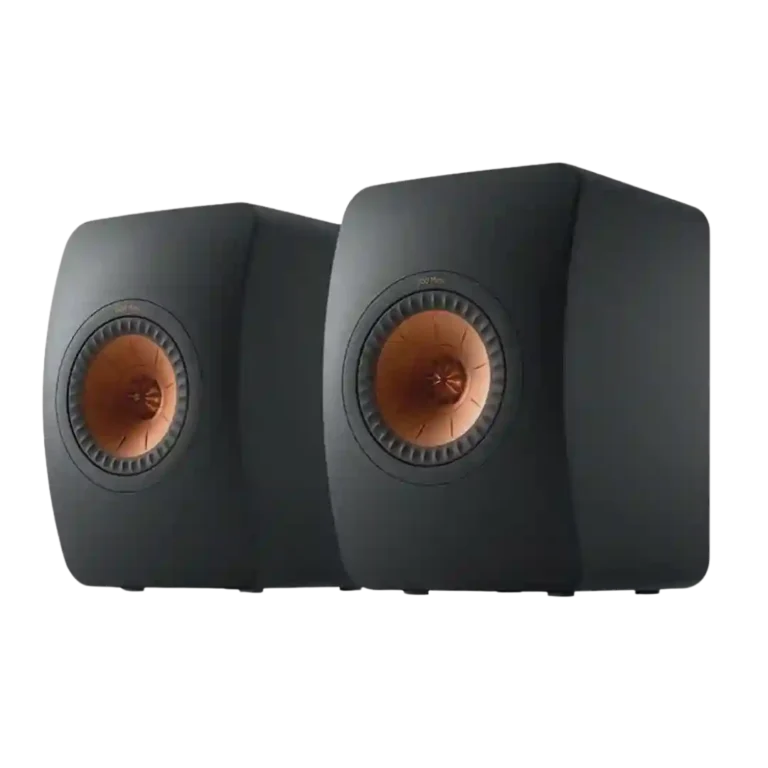
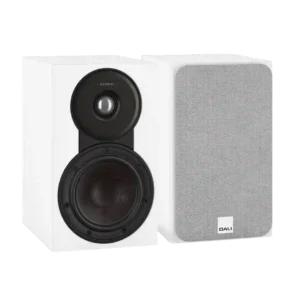
KEF LS50 Meta Passive Bookshelf Speakers

KEF LS50 Meta Passive Bookshelf Speakers Review

Brand: KEF
Updated: 2 days ago
4.1
Consolidated expert score
147
Review insights
22
Scored features
12
Expert reviews

Bottom Line

Choose the KEF LS50 Meta if you want compact passive speakers with precise imaging, clarity and premium design. Skip them if you need deep bass, huge volume or plug-and-play wireless features.

Best for

Best for listeners who want a compact passive bookshelf speaker with precise imaging, clear vocals, refined treble and a premium-looking cabinet. It suits small to medium rooms, stand placement and systems with capable amplification.

Not for

Not for buyers who want wireless streaming, HDMI, smart features or a speaker that plays very loud with deep bass on its own. It is also less ideal for casual plug-and-play setups or listeners who dislike revealing speakers.

Verdict

Across the reviews, the KEF LS50 Meta earns its reputation through precise stereo imaging, unusually strong detail retrieval, a coherent presentation and a rigid, attractive cabinet. Reviewers repeatedly describe cleaner treble, clearer vocals and a more refined sound than the original LS50, with enough bass to impress for the cabinet size. The tradeoff is scale: this is still a compact passive monitor with modest sensitivity, limited deep bass and dynamic limits when pushed hard. It rewards good amplification, stand placement and some breathing room, and several reviewers suggest adding a subwoofer for movies, bigger rooms or full-range impact. The overall evidence supports it as a high-performing audiophile bookshelf speaker rather than a simple all-in-one or party-volume solution.

Reviewer Consensus

Strong agreement: Reviewers most consistently agree that the LS50 Meta delivers exceptional imaging, detail and vocal focus for a compact passive speaker.

Mixed opinions: Opinions are more context-dependent on bass quantity, dynamics, value and whether the speaker sounds exciting or restrained.

Common concern: The most repeated caveat is that it needs careful amplification, placement and often a subwoofer for deep bass or home-theater scale.

Evidence coverage
  • 12 expert reviews
  • 14 of 22 scored features show reviewer agreement
  • 8 scored features have limited or less conclusive evidence
  • no scored features show reviewer disagreement or mixed evidence
  1. Limited review data
  2. Mixed evidence
  3. Moderate consensus
  4. Strong consensus

Compared in Reviews

Products reviewers directly compared with this model, grouped into quick takeaways.

BRX

  • Worse: detail, clarity and imaging precision The reviewer respected the BRX but ultimately preferred the LS50 Meta for immediacy, detail and focus.

concept 300s

  • Worse: drive ease, loudness and overall preference The reviewer says the Concept 300s are easier and louder, but still prefers the LS50 Meta overall.

Feature Scorecards

Pros

  • 5.0
    based on 1 review
    Low-volume performance: 5.0, based on 1 review
    Low-volume performance has narrow but strong evidence, with one reviewer specifically praising how easily subtle detail remained audible at very low volume.
  • 4.8
    based on 10 reviews
    Stereo imaging accuracy: 4.8, based on 10 reviews
    Stereo imaging is a standout consensus strength, with reviewers praising precise center focus, wide/deep staging, image stability and three-dimensional placement.
  • 4.8
    based on 1 review
    Dialogue clarity (for TV/soundbar use): 4.8, based on 1 review
    Dialogue clarity has limited but positive support from one home-theater-oriented review, which praised how the speaker handles actor dialogue.
  • 4.7
    based on 9 reviews
    Cohesive presentation: 4.7, based on 9 reviews
    Most positive reviews heard the LS50 Meta as coherent, integrated and box-free, though that presentation depends on setup and supporting gear.
  • 4.7
    based on 5 reviews
    Aesthetic design / Finish options: 4.7, based on 5 reviews
    Reviewers liked the finish choices, including newer colors and matte options, and treated appearance customization as a meaningful part of the LS50 Meta appeal.
  • 4.7
    based on 7 reviews
    Cabinet construction / bracing: 4.7, based on 7 reviews
    Cabinet quality drew strong praise: reviewers cited MDF construction, bracing, damping, rigidity and resonance control as key strengths.
  • 4.6
    based on 8 reviews
    Design and aesthetics: 4.6, based on 8 reviews
    Design reactions were strongly positive, with reviewers calling the speaker gorgeous, modern, compact and better finished than its price might suggest.
  • 4.4
    based on 10 reviews
    Detail retrieval: 4.4, based on 10 reviews
    Detail retrieval was one of the clearest strengths, especially low-level textures, microdetails, imaging cues and midrange information.
  • 4.4
    based on 9 reviews
    Voice clarity: 4.4, based on 9 reviews
    Voice clarity is broadly praised, especially female vocals, midrange clarity and center focus, but a few reviewers heard vocals as recessed or subdued.
  • 4.3
    based on 11 reviews
    Value for money: 4.3, based on 11 reviews
    Value is generally strong because reviewers compare the LS50 Meta favorably against pricier speakers, though dissenters argue cheaper rivals can satisfy similar needs.
  • 4.3
    based on 11 reviews
    Frequency response balance: 4.3, based on 11 reviews
    Frequency balance is generally praised as smooth, neutral, refined or slightly warm, with some dissent around metallic or recessed midrange traits.
  • 4.2
    based on 7 reviews
    Weight convenience: 4.2, based on 7 reviews
    The compact size is a practical advantage, though the speaker is still a dense passive monitor rather than a lightweight portable product.
  • 4.0
    based on 6 reviews
    Distortion at high volume: 4.0, based on 6 reviews
    High-volume distortion evidence is mostly positive because reviewers heard clean, refined treble and low coloration, but a few noted stress or peaky treble at higher levels.
  • 4.0
    based on 7 reviews
    Setup simplicity: 4.0, based on 7 reviews
    Setup is moderately straightforward but not careless; reviewers favored stands, breathing room and careful dialing-in, even while noting the speakers are not overly fussy.
  • 3.9
    based on 2 reviews
    Home theater integration: 3.9, based on 2 reviews
    Home theater use is plausible and even compelling for some reviewers, but the evidence points toward adding a subwoofer and managing passive-system requirements.
  • 3.8
    based on 10 reviews
    Amplifier power requirements: 3.8, based on 10 reviews
    The LS50 Meta is repeatedly described as a passive speaker that benefits from careful amplifier matching, with several reviewers saying capable power unlocks its best sound.
  • 3.8
    based on 9 reviews
    Price: 3.8, based on 9 reviews
    Price reactions are mixed but mostly favorable: many reviewers saw the speaker as strong for roughly $1,500-$1,600, while some wanted better parts or lower pricing.
  • 3.7
    based on 3 reviews
    Wired input: 3.7, based on 3 reviews
    Wired connection evidence is limited to passive-speaker binding posts; reviewers generally found them adequate, with one wishing for higher-quality posts.
  • 3.6
    based on 7 reviews
    Loudness / maximum volume: 3.6, based on 7 reviews
    Maximum volume is good for a compact monitor, but reviewers consistently frame it as happiest at moderate levels rather than extreme playback.
  • 3.5
    based on 9 reviews
    Dynamic headroom: 3.5, based on 9 reviews
    Dynamic headroom is mixed: reviewers praised scale for the size but repeatedly noted limits with very loud playback, big rooms or demanding music.

Cons

  • 3.1
    based on 4 reviews
    Subwoofer: 3.1, based on 4 reviews
    Subwoofer evidence is mixed: some reviewers did not need one for music, while others strongly recommended a sub for deep bass, movies or full-range use.
  • 2.5
    based on 1 review
    Soundstage height: 2.5, based on 1 review
    Soundstage height is the one soundstage dimension with negative evidence, as one reviewer found height replication unremarkable.

Compared With Category Average

Compared with other Bookshelf Speakers, this product is above average in Low-volume performance, Cabinet construction / bracing, below average in Soundstage height, Subwoofer, Dynamic headroom.

Attribute This product Category average Difference
Soundstage height 2.5 4.2 -1.7
Subwoofer 3.1 4.2 -1.2
Low-volume performance 5.0 3.9 +1.1
Dynamic headroom 3.5 4.3 -0.7
Amplifier power requirements 3.8 4.4 -0.5
Loudness / maximum volume 3.6 4.2 -0.5
Wired input 3.7 4.3 -0.6
Cabinet construction / bracing 4.7 4.2 +0.5

FAQ

Do the KEF LS50 Meta speakers need a powerful amplifier?

They do not require exotic power, but the reviews repeatedly say they benefit from capable amplification and good matching. Several reviewers mention the 85 dB sensitivity and impedance dips as reasons to avoid weak or thin-sounding pairings.

Do they have enough bass without a subwoofer?

For music in smaller rooms, several reviewers found the bass impressive for the size. For deep bass, movies, bigger rooms or full-range impact, multiple reviews recommend adding a subwoofer.

Are the LS50 Meta good for vocals?

Yes. Reviewers repeatedly praised vocal focus, midrange clarity and female vocals, although a few found vocals slightly recessed or softened with certain setups.

Can they be placed on a bookshelf or near a wall?

The reviews favor stands and some breathing room from the rear wall. They can be adjusted with port plugs or placement, but they are not at their best stuffed into a shelf or tight against boundaries.

How do they compare with the original LS50?

The review evidence consistently says the Meta version is cleaner, clearer and more refined, especially in the midrange and treble. The improvement is meaningful, but some reviewers call it incremental rather than a complete personality change.

Are they good for home theater?

One reviewer found them compelling as home-theater speakers, and another would use a subwoofer for movies. The evidence supports them as strong passive speakers in a theater setup, not as a soundbar-style all-in-one.

Consider This Instead

If you want better Loudness / maximum volume

Choose Focal Theva N.1 Speakers. It scores 4.6 vs 3.6 for Loudness / maximum volume, with a 4.1 overall score.

Compare

If you want better Wired input

Choose Kanto REN Speakers. It scores 4.8 vs 3.7 for Wired input, with a 4.1 overall score.

Compare

Overall Top Bookshelf Speakers Alternatives

#1 KEF LSX II Wireless HiFi Speakers
4.2
15 reviews

Choose the KEF LSX II for compact, stylish streaming speakers with precise imaging and broad inputs. Skip it if you need big-room bass, true surround, or full on-speaker controls.

Pros: Google, Chromecast compatibility

Cons: On-device controls, HDMI 2.1 gaming

#2 KEF LS50 Wireless II Powered Bookshelf Speakers
4.2
17 reviews

Best for audiophile-grade imaging, detail, smart streaming, and flexible TV/music inputs. Skip it if price, possible app/Wi-Fi headaches, or needing room-shaking bass without a subwoofer would bother you.

Pros: Dialogue clarity (for TV/soundbar use), Latency with TV (lip sync)

Cons: Smart assistant integration (Alexa, Multi-speaker pairing reliability

#3 Focal Theva N.1 Speakers
4.1
8 reviews

Choose the Focal Theva No.1 for spacious, balanced bookshelf sound, strong imaging, and easy amplifier matching. Skip them if you need deep bass without a subwoofer, premium cabinet heft, or...

Pros: Dialogue clarity (for TV/soundbar use), Loudness / maximum volume

Cons: Low-volume performance

#4 Current product KEF LS50 Meta Passive Bookshelf Speakers
KEF LS50 Meta Passive Bookshelf Speakers
4.1
12 reviews

Choose the KEF LS50 Meta if you want compact passive speakers with precise imaging, clarity and premium design. Skip them if you need deep bass, huge volume or plug-and-play wireless...

Pros: Low-volume performance, Stereo imaging accuracy

Cons: Soundstage height, Subwoofer