Aesthetic design / Finish options
P1
Product 1: Sony SS-CS5M2 Bookshelf Speakers
4.1
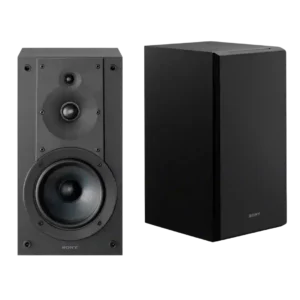
Styling is simple and understated, with a matte-black look and a more refined front waveguide treatment than the older version. It is generally seen as plain but more polished than before.
P2Product 2: KEF LS50 Meta Passive Bookshelf...
No score yetAmplifier power requirements
P1
Product 1: Sony SS-CS5M2 Bookshelf Speakers
4.5
The speaker appears easy enough to drive for ordinary AVRs and mainstream amps. Reviews cite a benign 6-ohm presentation and explicitly say expensive high-power amplification is unnecessary.
P2
Product 2: KEF LS50 Meta Passive Bookshelf...
3.7
Most sources call the LS50 Meta moderately demanding: 85dB sensitivity and low-impedance dips benefit from an amp with good current and quality. They can play well on modest power at moderate levels, but stronger electronics unlock better dynamics, clarity, and control.
Cabinet construction / bracing
P1
Product 1: Sony SS-CS5M2 Bookshelf Speakers
4.3
Build quality is repeatedly described as strong for the class, with decent cabinet feel, useful bracing updates, and a more thoughtfully executed budget crossover than many cheap rivals.
P2Product 2: KEF LS50 Meta Passive Bookshelf...
No score yetCohesive presentation
P1
Product 1: Sony SS-CS5M2 Bookshelf Speakers
4.3
The M2 is generally described as more mature, smoother, and more coherent than the original, with fewer tonal distractions, though budget limits still show up in scale and dynamics.
P2
Product 2: KEF LS50 Meta Passive Bookshelf...
4.5
Uni-Q coherence is a repeated theme: the speakers are often described as seamless, integrated, and single-driver-like in how they blend bass, mids, and treble once properly set up and broken in.
Design and aesthetics
P1
Product 1: Sony SS-CS5M2 Bookshelf Speakers
4.1
The cabinet is slim, visually easy to place, and more modern-looking than the prior version, though the overall presentation remains budget-minded and not luxurious.
P2
Product 2: KEF LS50 Meta Passive Bookshelf...
4.6
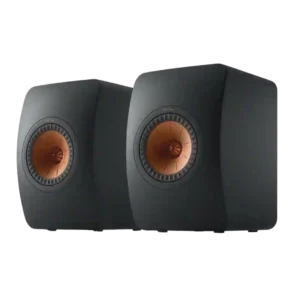
The LS50 Meta’s futuristic Uni-Q look and matte finish options (including newer colorways) are widely liked, with frequent praise for fit, finish, and visual appeal on matching stands.
Detail retrieval
P1
Product 1: Sony SS-CS5M2 Bookshelf Speakers
4.1
Detail is good for the class rather than elite, with solid transient information and improved midrange clarity when the speaker is high-passed or paired with a subwoofer.
P2
Product 2: KEF LS50 Meta Passive Bookshelf...
4.6
Detail retrieval is consistently highlighted as a key strength, with reviewers citing strong micro-detail, separation in complex mixes, and the ability to reveal upstream gear differences and recording quality.
Dialogue clarity (for TV/soundbar use)
P1Product 1: Sony SS-CS5M2 Bookshelf Speakers
No score yet
P2
Product 2: KEF LS50 Meta Passive Bookshelf...
4.7
When used with TV or films, spoken-word intelligibility is described as excellent, with clear articulation and strong image focus that helps dialogue lock to the screen.
Distortion at high volume
P1
Product 1: Sony SS-CS5M2 Bookshelf Speakers
3.9
Reviewers found it surprisingly clean for its size, with some tests showing little obvious distress, but compression and grain can emerge near its limits or when it is run full range without a subwoofer.
P2
Product 2: KEF LS50 Meta Passive Bookshelf...
4.2
At sane volumes, the presentation stays clean and composed, with MAT frequently credited for reducing treble distortion and harshness. When driven beyond comfort zones, some listeners report treble peakiness, flattening, or compression rather than graceful scaling.
Dynamic headroom
P1
Product 1: Sony SS-CS5M2 Bookshelf Speakers
3.7
Dynamic headroom is acceptable for moderate rooms and casual theater use, but the speaker shows its size limits with compression and reduced bass authority as playback levels climb.
P2
Product 2: KEF LS50 Meta Passive Bookshelf...
3.9
Dynamic headroom is strong for a compact standmount but not unlimited; multiple sources note the speakers are most comfortable at moderate listening levels and can feel restrained or compressed when pushed hard, depending on amplification.
Frequency response balance
P1
Product 1: Sony SS-CS5M2 Bookshelf Speakers
4.2
The general consensus is that the M2 is smoother and more neutral than the original SS-CS5, with tamer upper treble and respectable midrange balance, though bass remains limited and minor treble or upper-mid quirks persist.
P2
Product 2: KEF LS50 Meta Passive Bookshelf...
4.3
Tonality is generally described as smooth, balanced, and neutral-to-slightly-warm, with the Meta revision reducing treble glare and sibilance versus earlier LS50 versions. Bass reaches impressively low for size but does not deliver true sub-bass extension.
Home theater integration
P1
Product 1: Sony SS-CS5M2 Bookshelf Speakers
4.6
These speakers fit budget home theater use well, whether as mains, surrounds, or even height channels, especially when paired with an AVR and crossed to a capable subwoofer.
P2
Product 2: KEF LS50 Meta Passive Bookshelf...
4.0
Several reviews find the LS50 Meta compelling in home-theater roles (2.0/2.1 or as part of 5.1), but also note that a subwoofer is the easiest way to add the low-end weight and impact movies demand.
Loudness / maximum volume
P1
Product 1: Sony SS-CS5M2 Bookshelf Speakers
4.0
The SS-CS5M2 plays louder than many expect from a small budget bookshelf, but it is not an output monster and loses authority when asked to deliver big full-range bass at higher levels.
P2
Product 2: KEF LS50 Meta Passive Bookshelf...
4.0
Maximum loudness is respectable for the size, but several reviews caution that these are not the right choice for sustained very high SPL or 100dB+ peaks, especially in larger rooms.
Low-volume performance
P1Product 1: Sony SS-CS5M2 Bookshelf Speakers
No score yet
P2
Product 2: KEF LS50 Meta Passive Bookshelf...
4.5
Low-volume performance is commonly praised, with many noting that imaging, vocal focus, and fine detail remain convincing even at quiet listening levels.
Setup simplicity
P1
Product 1: Sony SS-CS5M2 Bookshelf Speakers
4.6
Setup is straightforward by passive-speaker standards: reviewers describe easy integration with common AVRs and small amps, especially in budget stereo or theater systems.
P2
Product 2: KEF LS50 Meta Passive Bookshelf...
3.9
Setup is not difficult but is placement-sensitive: stands, some distance from walls, and careful toe-in/positioning are repeatedly recommended. Port plugs and room placement tweaks can help if space is tight.
Soundstage height
P1
Product 1: Sony SS-CS5M2 Bookshelf Speakers
4.4
One review specifically called out surprisingly convincing apparent height along with width and depth when the speaker was positioned properly near tweeter level.
P2
Product 2: KEF LS50 Meta Passive Bookshelf...
3.6
While width and depth are often excellent, at least one review notes soundstage height is less spectacular, describing a lower perceived ceiling compared with some alternatives.
Stereo imaging accuracy
P1
Product 1: Sony SS-CS5M2 Bookshelf Speakers
3.9
Imaging is a genuine strength for the price, with reports of precise placement, good center focus, and speakers that disappear well, even if they do not match the depth or holography of pricier models.
P2
Product 2: KEF LS50 Meta Passive Bookshelf...
4.8
Stereo imaging accuracy is one of the most praised attributes, with a stable center image, precise placement, and strong off-axis behavior contributing to a wide, convincing soundstage.
Subwoofer
P1
Product 1: Sony SS-CS5M2 Bookshelf Speakers
4.6
A subwoofer is strongly recommended. Multiple reviews say the speaker works much better when crossed around 80 to 120 Hz, which improves bass weight, detail retention, and dynamic composure.
P2Product 2: KEF LS50 Meta Passive Bookshelf...
No score yetValue for money
P1
Product 1: Sony SS-CS5M2 Bookshelf Speakers
4.4
Value for money is one of the strongest themes in the reviews, especially when the speaker is on sale. At full MSRP the value is still decent, but no longer obviously class-leading.
P2
Product 2: KEF LS50 Meta Passive Bookshelf...
4.2
Value for money is usually rated highly because the LS50 Meta competes with pricier designs on imaging and resolution, but there is a minority view that the current price is too high given bass and dynamics limitations versus cheaper rivals.
Voice clarity
P1
Product 1: Sony SS-CS5M2 Bookshelf Speakers
4.0
Vocals are generally clear and centered, with better tonal behavior than the older model, but a few reviewers still heard mild sibilance or forwardness on certain voices and recordings.
P2
Product 2: KEF LS50 Meta Passive Bookshelf...
4.4
Voice clarity is a standout strength, with repeated praise for natural, centered vocals and reduced sibilance compared with earlier LS50 models. A few listeners still hear a hint of metallic character or a slightly recessed/veiled vocal range depending on gear and preferences.
Wired input
P1
Product 1: Sony SS-CS5M2 Bookshelf Speakers
4.0
As a conventional passive speaker, it offers standard rear binding posts that reviewers considered decent for the price, though one review noted banana-plug insertion depth could be better.
P2Product 2: KEF LS50 Meta Passive Bookshelf...
No score yet