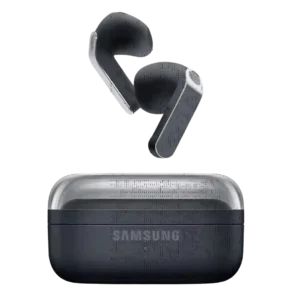
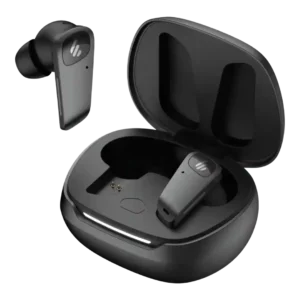
Average score
P1
Product 1: Samsung Galaxy Buds 4
3.8
P2
Product 2: Edifier NeoBuds Planar Earbuds
4.0
Active noise cancellation
P1
Product 1: Samsung Galaxy Buds 4
2.5
Reviewers agreed ANC is the weakest major feature: two hands-on reviews found it modest or not serious, while the specs-focused comparison expected improvement over Buds 3.
P2
Product 2: Edifier NeoBuds Planar Earbuds
4.1
ANC is broadly seen as good to impressive for everyday noise, though several reviewers note it is not the strongest at this price or for deep low-frequency rumble.
Android compatibility
P1
Product 1: Samsung Galaxy Buds 4
4.5
Android and especially Samsung users get the strongest experience, with one reviewer explicitly saying the buds were made for Android/Samsung users.
P2
Product 2: Edifier NeoBuds Planar Earbuds
4.5
Android compatibility is positive, with easy Android pairing and Android-only hi-res codec benefits noted.
App
P1
Product 1: Samsung Galaxy Buds 4
4.5
The app and phone settings offer a broad control surface, with reviewers highlighting a huge range of adjustable settings.
P2
Product 2: Edifier NeoBuds Planar Earbuds
4.2
The app is mostly praised as useful, stable, and customizable, although one reviewer found its look ugly and another noted missing device-list convenience.
aptX
P1Product 1: Samsung Galaxy Buds 4
No score yet
P2
Product 2: Edifier NeoBuds Planar Earbuds
5.0
aptX support is treated as part of the product’s unusually broad high-resolution codec package, including aptX Adaptive and lossless-related support.
Audio-video sync accuracy
P1Product 1: Samsung Galaxy Buds 4
No score yet
P2
Product 2: Edifier NeoBuds Planar Earbuds
4.5
Latency and gaming support are viewed positively, with reviewers noting strong gaming performance and premium audio use beyond music.
Bass performance
P1
Product 1: Samsung Galaxy Buds 4
4.3
Bass was consistently praised as punchy, wide, warm, and stronger than expected for open-fit entry-level earbuds.
P2
Product 2: Edifier NeoBuds Planar Earbuds
3.8
Bass is the most divisive sound attribute: some reviewers heard deep or strong bass with the right fit or preset, while others found it light, thin, or lacking punch.
Battery
P1
Product 1: Samsung Galaxy Buds 4
2.5
Battery life was treated as adequate but unimpressive, with one reviewer calling 5-6 hours poor beside longer-lasting rivals.
P2
Product 2: Edifier NeoBuds Planar Earbuds
3.1
Battery life is average to mediocre overall; some reviewers found it acceptable, but many expected more from a premium-priced earbud.
Bluetooth
P1
Product 1: Samsung Galaxy Buds 4
4.4
Bluetooth was viewed positively, with reviewers citing longer range, future-proofing, and Bluetooth 6.1 as a meaningful upgrade.
P2
Product 2: Edifier NeoBuds Planar Earbuds
4.5
Bluetooth performance has limited but positive evidence, with one reviewer praising range after staying connected across an office.
Build quality
P1
Product 1: Samsung Galaxy Buds 4
4.3
Build quality drew positive comments for a premium feel and a more refined look than the prior generation.
P2
Product 2: Edifier NeoBuds Planar Earbuds
3.9
Build quality is mostly positive, with reviewers praising finish and construction, though one noted cheap-looking plastic.
Built-in DAC and hi-res playback
P1
Product 1: Samsung Galaxy Buds 4
4.3
Hi-res/UHQ playback was praised when paired with compatible Galaxy hardware and high-resolution sources, adding perceived expansiveness and cleaner sound.
P2
Product 2: Edifier NeoBuds Planar Earbuds
5.0
Hi-res playback and audiophile-grade sound receive strong praise in the available evidence.
Button control usability
P1
Product 1: Samsung Galaxy Buds 4
4.5
The stem controls were praised as easy, precise, and straightforward, especially after Samsung refined the blade shape.
P2
Product 2: Edifier NeoBuds Planar Earbuds
4.1
The squeeze or pinch controls are usually considered reliable and customizable, though a few reviewers found them delayed or weaker than top competitors.
Carry case quality
P1
Product 1: Samsung Galaxy Buds 4
4.0
The case was reviewed favorably for practical design touches, including visibility through the lid and useful physical controls.
P2
Product 2: Edifier NeoBuds Planar Earbuds
3.4
Carry case impressions are mixed: reviewers liked its secure magnets or compact/pocketable feel, but others criticized its size, looks, or chunkiness.
Charging
P1Product 1: Samsung Galaxy Buds 4
No score yet
P2
Product 2: Edifier NeoBuds Planar Earbuds
4.3
Charging is a positive convenience point, especially wireless charging and quick top-ups.
Codec support
P1Product 1: Samsung Galaxy Buds 4
No score yet
P2
Product 2: Edifier NeoBuds Planar Earbuds
5.0
Codec support is a major strength, repeatedly praised as exhaustive or unusually complete for high-resolution listening.
Comfort during long use
P1
Product 1: Samsung Galaxy Buds 4
4.8
Comfort was a major strength in the Tom's Guide review, including for smaller ears and everyday listening.
P2
Product 2: Edifier NeoBuds Planar Earbuds
4.3
Long-use comfort is generally strong, with several reviewers wearing them for hours or all day, though one review found comfort only medium over time.
Design and Aesthetics
P1
Product 1: Samsung Galaxy Buds 4
4.1
Design impressions were positive overall, with reviewers calling the Buds 4 more polished, premium, and refined despite the familiar AirPods-like shape.
P2
Product 2: Edifier NeoBuds Planar Earbuds
3.5
Design is subjective and split, with reviewers admiring its distinctive modern look while others called it unattractive, retro, or an acquired taste.
Eartips fit
P1
Product 1: Samsung Galaxy Buds 4
2.6
Fit evidence was mixed: reviewers liked the comfort of the open form, but the lack of a seal and repeated fit adjustments hurt stability and ANC.
P2
Product 2: Edifier NeoBuds Planar Earbuds
4.6
Fit is highly important and mostly positive; reviewers found better bass and stability once the right tips or seal were achieved.
Ear tip size options
P1Product 1: Samsung Galaxy Buds 4
No score yet
P2
Product 2: Edifier NeoBuds Planar Earbuds
4.5
Ear tip size options are praised for helping users find the right fit and bass seal.
Equalizer customization
P1
Product 1: Samsung Galaxy Buds 4
4.5
EQ customization was described as a premium feature, with access to adjustment options and presets inside Samsung's software experience.
P2
Product 2: Edifier NeoBuds Planar Earbuds
3.4
EQ customization is polarizing: reviewers like the depth and flexibility, but many criticize limited bands, poor bass impact, or weak responsiveness.
Frequency response accuracy
P1
Product 1: Samsung Galaxy Buds 4
4.0
One comparison review credited the Buds 4 tuning with better clarity and balance than the prior generation.
P2
Product 2: Edifier NeoBuds Planar Earbuds
4.4
Reviewers describe the frequency balance as generally accurate and controlled, with strong detail and tonality, though the bass region is less consistently weighted.
Head gestures
P1
Product 1: Samsung Galaxy Buds 4
4.1
Head gestures were treated as a useful modern addition that adds hands-free control and helps Samsung keep pace with rivals.
P2Product 2: Edifier NeoBuds Planar Earbuds
No score yetIncluded accessories
P1Product 1: Samsung Galaxy Buds 4
No score yet
P2
Product 2: Edifier NeoBuds Planar Earbuds
4.0
Included accessories get positive limited evidence, especially the multiple tips and protective pouch/case cover.
Instrument separation
P1
Product 1: Samsung Galaxy Buds 4
4.2
Instrument separation was praised in track testing, where synths, bass, vocals, and percussion stayed layered rather than smeared together.
P2
Product 2: Edifier NeoBuds Planar Earbuds
5.0
Instrument separation is one of the clearest consensus wins, with reviewers repeatedly praising clean layering, precise reproduction, and strong detail retrieval.
Integrated microphone
P1
Product 1: Samsung Galaxy Buds 4
4.0
The integrated microphone system was described as upgraded and designed for clearer calls and better voice recognition.
P2
Product 2: Edifier NeoBuds Planar Earbuds
3.0
The integrated microphone setup is adequate in limited evidence, but not a leading strength.
LDAC
P1Product 1: Samsung Galaxy Buds 4
No score yet
P2
Product 2: Edifier NeoBuds Planar Earbuds
5.0
LDAC support is repeatedly included in reviewers’ praise for the broad high-resolution codec package.
Lossless audio support
P1Product 1: Samsung Galaxy Buds 4
No score yet
P2
Product 2: Edifier NeoBuds Planar Earbuds
5.0
Lossless audio support is a strength within the broader codec package, with reviewers treating the support as unusually complete.
Microphone noise reduction
P1
Product 1: Samsung Galaxy Buds 4
4.2
Microphone noise reduction was a strength, with reviewers saying background roar, white noise, wind, and background noise were reduced or blocked.
P2
Product 2: Edifier NeoBuds Planar Earbuds
3.1
Microphone noise reduction is mixed: some reviewers heard good wind or background reduction, while others found ambient noise pickup and noisy conditions problematic.
Microphone quality for calls
P1
Product 1: Samsung Galaxy Buds 4
3.6
Call quality was usable but not flawless: one review heard crisp clarity, another reported a muffled voice, and the comparison piece expected clearer calls.
P2
Product 2: Edifier NeoBuds Planar Earbuds
3.8
Call quality ranges from excellent to merely okay, with most reviewers finding voices intelligible but not always natural, loud, or class-leading.
Midrange clarity
P1
Product 1: Samsung Galaxy Buds 4
4.2
Midrange clarity was praised, especially for vocals, though Engadget described the non-Pro model's mids as merely filling the gaps adequately.
P2
Product 2: Edifier NeoBuds Planar Earbuds
4.4
Midrange and vocals are usually praised as clear, detailed, and natural, with one reviewer noting vocal volume could dip in the mix.
Multi-platform compatibility
P1
Product 1: Samsung Galaxy Buds 4
2.5
Multi-platform compatibility was a clear limitation because the richest features and smoothest device switching stay tied to Samsung or Galaxy devices.
P2
Product 2: Edifier NeoBuds Planar Earbuds
4.5
Multi-platform compatibility is positive in limited evidence, with codec support framed as useful across Qualcomm, MediaTek, and Google Tensor phones.
Multipoint connectivity reliability
P1
Product 1: Samsung Galaxy Buds 4
3.3
Multipoint and device switching were mixed: Tom's Guide criticized non-Galaxy limitations, while the specs comparison expected smoother Galaxy ecosystem switching.
P2
Product 2: Edifier NeoBuds Planar Earbuds
3.9
Multipoint is useful and sometimes seamless, but not consistently reliable; one reviewer had to switch manually while others reported smooth pause-and-play behavior.
Noise isolation (passive)
P1
Product 1: Samsung Galaxy Buds 4
2.0
Passive isolation was weak because the open-fit body lacks a sealing silicone tip, letting outside noise seep in.
P2
Product 2: Edifier NeoBuds Planar Earbuds
3.5
Passive isolation was described as decent with a proper fit, but the review evidence mainly focuses on ANC rather than unpowered isolation.
Portability/foldability
P1Product 1: Samsung Galaxy Buds 4
No score yet
P2
Product 2: Edifier NeoBuds Planar Earbuds
4.0
Portability has limited positive evidence, with one reviewer calling the charging case compact.
Preset EQ profile quality
P1Product 1: Samsung Galaxy Buds 4
No score yet
P2
Product 2: Edifier NeoBuds Planar Earbuds
4.0
Preset EQ profiles are generally useful, especially Dynamic, which reviewers said improved balance or impact.
RGB lighting customization
P1Product 1: Samsung Galaxy Buds 4
No score yet
P2
Product 2: Edifier NeoBuds Planar Earbuds
4.5
RGB/light customization has limited but positive evidence, with the case light colors treated as fun customization.
Sensors
P1Product 1: Samsung Galaxy Buds 4
No score yet
P2
Product 2: Edifier NeoBuds Planar Earbuds
2.8
Sensors are mixed: one reviewer found wear detection unreliable, while another said it worked well.
Smudge resistance
P1Product 1: Samsung Galaxy Buds 4
No score yet
P2
Product 2: Edifier NeoBuds Planar Earbuds
4.5
Smudge resistance has limited positive evidence, with the matte case finish praised for helping prevent fingerprints.
Software/setup simplicity
P1
Product 1: Samsung Galaxy Buds 4
4.1
Setup and software were strongest for Galaxy users, with settings baked into the phone and a broad range of options available.
P2
Product 2: Edifier NeoBuds Planar Earbuds
3.3
Setup and software simplicity are mixed: pairing can be simple, but mode switching and Edifier-style configuration can feel sluggish or finicky.
Sound quality
P1
Product 1: Samsung Galaxy Buds 4
4.3
Sound quality was the clearest strength across all three reviews, with praise for richness, refinement, and overall listening enjoyment.
P2
Product 2: Edifier NeoBuds Planar Earbuds
4.5
Reviewers strongly agree the NeoBuds Planar are detail-first earbuds with unusually precise, clean sound, though a few found the tuning inconsistent or easier to admire than love.
Soundstage depth
P1
Product 1: Samsung Galaxy Buds 4
4.2
Soundstage depth received positive evidence through UHQ listening, where acoustics were described as reverberating around the listener.
P2
Product 2: Edifier NeoBuds Planar Earbuds
3.5
Soundstage depth is mixed: one reviewer heard no depth, another praised immersion, and another felt the presentation was pushed forward.
Soundstage width
P1
Product 1: Samsung Galaxy Buds 4
4.5
Soundstage width was praised in UHQ mode, with Tom's Guide calling the presentation surprisingly expansive.
P2
Product 2: Edifier NeoBuds Planar Earbuds
4.4
Several reviewers heard an open, airy, expansive soundstage, with soundstage width treated as one of the planar driver strengths.
Spatial audio
P1
Product 1: Samsung Galaxy Buds 4
2.5
Spatial audio was not a selling point for one reviewer, who said upmixed spatial audio could warp music.
P2
Product 2: Edifier NeoBuds Planar Earbuds
1.0
Spatial audio is a clear missing-feature complaint from the available evidence.
Stability
P1
Product 1: Samsung Galaxy Buds 4
2.2
Physical stability was a weakness in the Engadget review because the open design required repeated fit adjustments.
P2
Product 2: Edifier NeoBuds Planar Earbuds
4.2
Stability is mostly good for regular use and exercise, though some reviewers experienced shifting during runs or workouts.
Touch control responsiveness
P1
Product 1: Samsung Galaxy Buds 4
4.4
Touch control responsiveness was praised, with reviewers finding the touch area easy to locate and the gestures precise or straightforward.
P2
Product 2: Edifier NeoBuds Planar Earbuds
3.7
Touch/tap responsiveness is mixed: one reviewer found the controls pretty good, while others said the tap system needs adjustment or works only most of the time.
Transparency mode quality
P1
Product 1: Samsung Galaxy Buds 4
4.0
Transparency mode earned positive evidence from the comparison review because Ambient Sound made daily use more practical than Buds 3.
P2
Product 2: Edifier NeoBuds Planar Earbuds
3.1
Transparency mode is functional but not a standout; reviewers praised voice-focused tools in one case but often found it muffled, unnatural, or merely adequate.
Treble clarity
P1
Product 1: Samsung Galaxy Buds 4
4.3
Treble performance was praised for crunchy highs and strong mids/treble performance, without the tinniness criticized in AirPods comparisons.
P2
Product 2: Edifier NeoBuds Planar Earbuds
4.3
Treble detail is a major strength, often described as crisp, clean, or precise, but some reviewers found the highs bright, toasty, or potentially fatiguing.
Value for money
P1
Product 1: Samsung Galaxy Buds 4
4.3
Value was favorable for Galaxy owners and price-conscious buyers, with reviewers calling the performance strong for the $179 tier.
P2
Product 2: Edifier NeoBuds Planar Earbuds
3.1
Value for money is heavily split by region and priorities: sound-focused reviewers can justify it, but many think the price is too high versus competitors.
Voice assistant integration
P1
Product 1: Samsung Galaxy Buds 4
4.0
Voice assistant integration was considered useful for hands-free tasks, though one reviewer personally had little interest in AI assistants.
P2
Product 2: Edifier NeoBuds Planar Earbuds
4.5
Voice assistant use has limited but positive evidence, with voice commands described as swift.
Volume output
P1Product 1: Samsung Galaxy Buds 4
No score yet
P2
Product 2: Edifier NeoBuds Planar Earbuds
2.7
Volume output drew mild criticism: reviewers generally found it usable, but noted it was on the lower side and not ideal for listeners who want maximum loudness.
Water/sweat resistance rating
P1
Product 1: Samsung Galaxy Buds 4
2.5
Water and sweat resistance were a concern because the Buds 4 dropped from Buds 3's IP57 rating to IP54 and were described as less rugged.
P2
Product 2: Edifier NeoBuds Planar Earbuds
4.1
The water and dust rating is viewed as practical for rain, sweat, dust, and realistic everyday conditions.
Weight comfort
P1Product 1: Samsung Galaxy Buds 4
No score yet
P2
Product 2: Edifier NeoBuds Planar Earbuds
4.5
Weight comfort is positive in the limited evidence, with reviewers describing the buds as lightweight or far from heavy.