
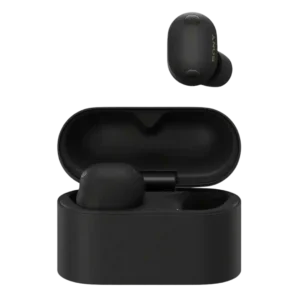
Most reviewers describe the noise canceling as top-tier and often class-leading, especially for low-frequency rumble, but a few still prefer Apple or Bose in some real-world situations. Performance is very dependent on getting a tight seal with the tips. Sound Connect adds adaptive NC optimization plus auto ambient and voice passthrough options. Some reviewers still note the core ANC toggle feels more like on or off than truly granular, but the ambient controls are highly adjustable.
Wired playback on Android phones works well with the right USB-C adapter or DAC, according to the reviews that tested it.
Sony’s Sound Connect app is central to the experience, offering seal tests, device priority, EQ, and many feature toggles. It enables deep customization, but some users want a cleaner, more straightforward layout.
Latency and sync are generally reported as good for video and casual gaming, especially with LE Audio features on compatible devices. Some modes are described as beta or device-dependent, so results can vary by source device.
Bass is generally controlled, punchy, and well-balanced rather than bloated, but seal sensitivity can thin it out and bassheads may want more weight or texture.
Bass is described as deep, rich, and punchy with better control than prior generations, though some call it intentionally boosted. EQ tools make it easy to rein in low-end weight or add more slam.
Battery life is commonly reported around the quoted 8 hours with ANC and roughly 24 hours including the case, with some testing exceeding the claim and other heavy-use tests landing closer to 7 hours. Overall longevity is considered solid but not a generational leap.
Connectivity is usually rock-solid and improved over prior models, helped by an updated antenna and device-priority settings. A few testers report occasional drops in crowded areas when prioritizing sound quality, with stability mode reducing issues.
Build quality is usually viewed as solid and functional for the price, but the plastic shells feel less premium than higher IE models.
Build quality is typically described as premium, with better grip textures and durability touches like improved hinges. Reviewers rarely report concerns beyond case magnet confidence in a few impressions.
The IE 200 has no inline remote or physical controls, so playback and volume changes must be handled on the source device.
The cable is the most divisive part: some like the light braided design, but many criticize tangling, microphonics, cheap feel, or proprietary fit frustrations.
The included pouch is serviceable for storage, but reviewers often describe it as basic, soft, and not especially protective or premium.
The case redesign draws mixed reactions: many like the matte texture and flat surfaces, while others dislike the taller, blockier shape. Magnet strength and wireless-pad fit are occasional complaints, but pocketability remains good.
Charging options are praised for USB-C and Qi wireless, plus quick-charge top-ups that deliver about an hour from a few minutes. A few reviewers note the case shape can sit awkwardly on some wireless pads, so charger compatibility can matter.
Codec support is broad for the class, commonly listed as SBC and AAC plus LDAC and LC3/LE Audio with Auracast readiness. iPhone users are typically limited to AAC, while Android users get the most benefit.
Comfort is a major strength, with many reviewers calling the small shells easy to wear for hours, even in bed or during long sessions.
Many reviewers can wear the XM6 for hours or a full workday, but comfort is more variable than some rivals. Protrusion, sleeping discomfort, and foam-tip feel are the most common complaints.
Reviewers like the compact, understated black design and discreet fit, even if it lacks the luxury feel of metal-bodied siblings.
Design shifts to a more minimalist, matte look with improved grip and fewer flashy accents. Some find the buds and case plain or bulky, but most agree the finish is practical and modern.
Removable MMCX cables improve repairability, but the recessed connector design limits easy aftermarket replacements and reduces convenience.
The package includes both silicone and foam tips in multiple sizes, but several reviews say seal quality is highly tip-dependent and stock silicone tips can be finicky.
Tip options usually include four sizes and foam-style material that boosts isolation, but comfort is polarizing. Multiple reviewers suggest third-party silicone tips to improve comfort or seal, and a few still want a larger size option.
The 10-band EQ is widely praised for giving meaningful control over the sound, including taming bright treble or tuning bass. Find My EQ-style tools and presets make it approachable for non-tweakers.
The tuning is commonly described as balanced, mildly V-shaped, or reference-leaning, with strong overall coherence even if it is not perfectly neutral.
Accessory coverage is good for the class with multiple ear tips and a pouch, though the case and cable quality keep it from feeling especially generous.
Included accessories are adequate but basic, usually focused on multiple foam tip sizes and a short charging cable. Several reviews wish for more tip materials or more generous extras at the price.
Instrument separation and imaging are standout traits, making individual lines easy to place, though a few reviews find layering flatter than top competitors.
Layering and instrument separation are repeatedly noted as strong, especially on busy tracks where many earbuds smear details. Imaging and placement remain stable with a good seal.
These earbuds do not include an integrated microphone.
LDAC is repeatedly called a major advantage for Android listeners who want higher-resolution wireless audio. Reviewers also note it is not available to iPhone users.
Limited evidence says the IE 200 stays composed at higher playback levels without turning muddy or congested.
Noise rejection is a standout: beamforming and sensors help suppress background noise and wind so callers hear less of the environment. Even when voice tone is only average, most reports agree background suppression is strong.
Because there is no mic, the IE 200 is a poor fit for calls unless you use another microphone.
Call quality is often described as excellent for earbuds, with clear articulation indoors and solid performance on the go. A minority of reviewers still report merely average or slightly muffled voice capture compared with top competitors.
Mids and vocals are usually clear, natural, and well-positioned, though some reviewers hear slightly lean lower mids or a cooler tone on guitars.
Midrange and vocals are frequently called clearer and more forward than older Sony generations, with good texture and layering. Some listeners may want to slightly tame upper-mids via EQ depending on preference.
The 3.5mm connection works broadly across laptops, music players, and phones with appropriate adapters, making the IE 200 flexible across devices.
Compatibility across iOS and Android is solid, but the feature balance favors Android for LDAC and some spatial features. Apple users may miss tighter ecosystem integrations and may prefer AirPods for convenience.
Multipoint is widely reported as reliable for switching between a phone and laptop with minimal lag. It is frequently highlighted as a key work-and-travel convenience feature.
Passive isolation is generally good with a proper seal and improves with foam tips, though silicone tips can leak more and it is not close to ANC silence.
The stock foam-style tips deliver strong passive isolation and help the buds feel like a quiet-zone switch. Fit and comfort vary, and multiple reviewers report better results after swapping to third-party tips for a tighter seal or softer feel.
Portability is generally strong for a flagship: the case stays pocketable, and many reviewers find it easy to carry daily. The tradeoff is a taller case and buds that can protrude more than some competitors.
Preset profiles and EQ wizards are described as useful starting points, with soft/clear/heavy-style options commonly referenced. Most power users still prefer manual tuning, but the presets are considered above average.
Sensors like ear detection, head gestures, and adaptive features are commonly described as reliable and easy to toggle in the app. These features add convenience for calls and auto playback behavior.
Sidetone is mentioned as available for calls so you can hear yourself, but the control is basic compared with the best implementations. It is helpful, though not a headline feature.
The matte finishes are frequently praised for resisting fingerprints and being easier to grip than glossy prior models.
Setup is generally easy, but the overall software experience is a frequent weak spot due to dense menus and many tap/gesture options. Several reviewers call the UI or feature automation unintuitive, while others find it improved compared with older Sony apps.
Reviewers consistently praise clear, balanced, high-fidelity sound with strong detail and musicality, though a few say it lacks some technical finesse or excitement versus stronger rivals. Across laptops, phones with adapters, DACs, and desktop gear, the IE 200 sounds notably clean and revealing, and several reviews say it scales up with better sources.
Sound is consistently praised as refined and engaging, with strong detail retrieval for a mainstream-tuned true wireless. A few listeners prefer the last bit of precision from rivals, but the overall tuning quality is a highlight across reviews.
The stage is unusually spacious for the price, often described as wide and sometimes tall, though depth and layering are less impressive than on pricier IEMs.
Multiple reviews highlight a wide, layered soundstage with strong imaging that feels natural rather than artificial. Separation and left-right placement are commonly cited strengths.
Spatial audio support exists via Sony formats and platform-specific options, but availability and streaming-service support are inconsistent. Several reviewers call spatial features secondary to the core strengths of ANC and sound.
Once fitted correctly, the over-ear design and secure seal keep the earbuds stable for long listening or light movement.
Stability is generally strong for commuting and gym use when fit is correct, with foam tips helping seal retention. Some reviewers still hesitate to recommend them for running or high-impact movement due to the lack of stabilizing wings and fit variability.
Touch controls are usually described as responsive and highly customizable, with reliable tap registration. The main criticism is usability: some gestures require many taps or can be triggered accidentally during adjustment.
Transparency/ambient mode is widely improved with less hiss and more natural volume, and features like Quick Attention and voice passthrough help for quick chats. Several comparisons still call Apple’s transparency more natural, and some users hear their own voice as slightly occluded.
Treble is widely seen as crisp and detailed without being brutally harsh, but it can sound bright, spicy, or a touch sibilant on some material.
Treble is more energetic and airy than previous models, adding detail and space, but it can read as bright or slightly metallic for sensitive listeners. The 10-band EQ and softer presets help smooth it out.
USB-C charging is standard and consistently mentioned as the primary wired charging method for the case.
Voice assistant features are present, but reviewer impressions are mixed, with some noting inconsistent announcements or limited app support. Most reviews treat it as a nice-to-have rather than a primary reason to buy.
Power demand is mixed: some find it easy enough to drive, while others report limited headroom from weaker phone outputs and better dynamics from DACs or amps.
One review explicitly says there is no water resistance, and no review presents it as a workout-focused model.
The IPX4 rating is routinely cited as suitable for sweat and light rain. Reviewers consistently warn it is not intended for submersion or heavy water exposure.
The tiny 4-gram earpieces are repeatedly praised for disappearing in the ear and reducing fatigue.
Weight is generally described as light with improved distribution, though a few testers still call the buds slightly top-heavy. Most find fatigue minimal during long sessions once fit is dialed in.