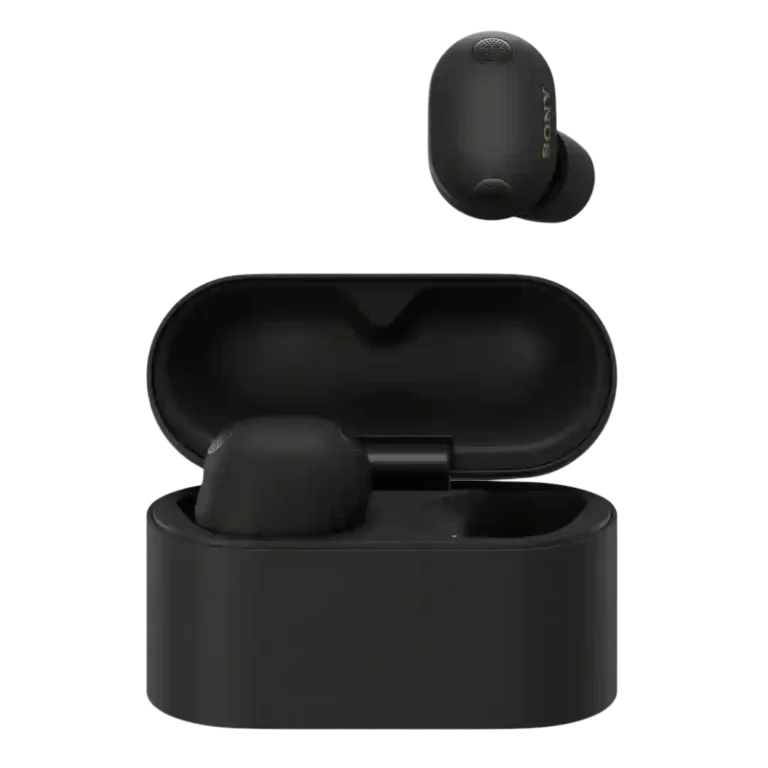
- Better: call quality and fit TechRadar considered Technics a stronger alternative for clearer calls and fit.
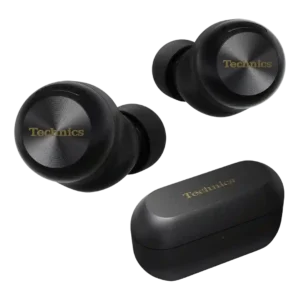
- Better: eartip comfort Technics EAH-AZ100 tips were described as easier on the reviewer’s ears than Sony’s tips.
Sony WF-1000XM6 Earbuds Review
Bottom Line
Choose the Sony WF-1000XM6 for premium sound, powerful ANC, strong calls, and deep EQ control. Skip them if firm foam tips, bulky fit, app complexity, or a high price are dealbreakers.
Best for listeners who want flagship earbuds with detailed sound, strong ANC, call clarity, multipoint, and extensive EQ/app control, especially Android users who can use LDAC. They also suit commuters and travelers who prioritize noise reduction and long sessions.
Not for shoppers who need the easiest Apple ecosystem experience, the softest most universal fit, the smallest case, or the strongest water resistance. They may also frustrate users who dislike feature-dense apps or firm foam eartips.
Across the reviews, the WF-1000XM6 stands out most for its rare combination of detailed, natural sound and top-tier noise cancellation. Call quality, microphone noise reduction, multipoint, EQ depth, and battery life also draw repeated praise. The main tradeoff is fit: some reviewers found the redesigned body secure and comfortable for hours, while others struggled with Sony’s firm foam tips, seal consistency, or the taller case. The software is similarly split, offering unusually deep control but sometimes feeling unintuitive or inconsistent. These are premium earbuds with premium performance, but the experience depends heavily on whether the ear tips and app workflow suit the listener.
Compared in Reviews
Products reviewers directly compared with this model, grouped into quick takeaways.
AirPods Pro 3
- Worse: seal retention The XM6 held a seal better than AirPods Pro 3 while chewing.
- Alternative: Apple ecosystem convenience Tom's Guide described AirPods Pro 3 as a well-rounded Apple-ecosystem alternative.
- Worse: sound quality The reviewer said the XM6 sound better than AirPods Pro 3.
AirPod Pro 3
- Better: ANC lab measurement SoundGuys measured the XM6 below AirPod Pro 3 in average ANC reduction.
Feature Scorecards
Summary
51 reviewed features- Very positive 4.5-5.0 39% 20 features
- Positive 3.5-4.4 47% 24 features
- Neutral 2.5-3.4 10% 5 features
- Negative 1.5-2.4 4% 2 features
- Very negative below 1.5 0% 0 features
Pros
-
Maximum-volume clarity was praised by reviewers who reported full-blast listening without harshness and no distortion on bass-heavy tracks.
-
Only one reviewer directly judged video/gaming latency, reporting no noticeable lag in casual use.
-
Build impressions were positive where discussed, especially the grippier matte finish and case construction.
-
Portability was praised when mentioned, especially the earbuds and case being pocketable travel companions despite some case-shape complaints.
-
Sustainability evidence was limited to packaging, which one reviewer explicitly liked.
-
Instrument separation was a clear strength, with reviewers hearing dense mixes, individual elements, and well-placed instruments more clearly.
-
Microphone noise reduction was repeatedly praised for suppressing background noise, fans, traffic, and wind, though not every call test was perfect.
-
Depth was praised in reviews that described a dimensional, layered, or 3D stereo image.
-
Sound quality was the strongest consensus point: reviewers repeatedly called the XM6 excellent, natural, detailed, balanced, or among Sony’s best earbuds.
-
Multipoint was consistently useful and reliable in most testing, with reviewers highlighting seamless switching and simultaneous two-device use.
-
Soundstage width was praised as wide, spacious, and unusually expansive for true wireless earbuds.
-
Call microphone quality was widely considered much improved and often excellent, though one TechRadar reviewer heard muffled call audio.
-
Reviewers broadly rated the ANC as elite or near-elite, with several calling it the best they had used, though a few found Bose or Apple stronger in certain tests or seal conditions.
-
Midrange and vocals were a major strength, with repeated praise for clear, detailed, natural, and present voices and instruments.
-
EQ customization was a major strength, with reviewers praising the 10-band EQ, presets, and Sony’s guided EQ wizard for personalizing sound.
-
Smudge resistance and grip were positives, with several reviewers praising the matte texture for resisting fingerprints and being easier to handle.
-
Android support is a clear strength because LDAC and Android-only spatial features can matter, though several reviewers noted iPhone users miss those benefits.
-
Multi-platform compatibility was praised where discussed, especially Sony supporting both iOS and Android rather than locking features to one ecosystem.
-
Weight comfort was praised where discussed, with reviewers describing the earbuds as lightweight, well-shaped, or better distributed despite the larger body.
-
Transparency and ambient modes were usually praised as natural, clear, or useful, though Apple was still favored by some and auto ambient could be hit-or-miss.
-
Stability was generally strong in ears during activity, but reviewers who wanted ear wings or had seal issues were less confident.
-
Bass was consistently praised for depth, punch, and control, though a few reviewers found it forward or slightly too loud with ANC enabled.
-
Touch controls were mostly responsive and customizable, though some reviewers disliked accidental triggers or multi-tap volume controls.
-
Bluetooth performance was usually stable and strong, including long range in one review, but a few reviewers reported occasional dropouts unless stability mode was prioritized.
-
Battery life was generally viewed as good and competitive, with some strong real-world results, but several reviewers noted it was unchanged rather than class-leading.
-
Charging was viewed positively for wireless charging and useful quick-charge performance, though one reviewer warned that some charging pucks may not fit well.
-
Codec support was praised as strong, especially LDAC and LC3, but much of the codec discussion was factual unless tied to high-fidelity listening or Android benefits.
-
LDAC was praised for Android high-resolution playback and better Bluetooth quality, though one reviewer noted it is not useful to iPhone owners.
-
The app is powerful and feature-rich, but opinions split between reviewers who liked the customization and those who found the layout unintuitive or tap-heavy.
-
Treble was detailed and airy but occasionally divisive, with several reviewers noting brightness, sharpness, metallic character, or possible fatigue.
-
Head gestures worked reliably for some reviewers and felt novel, but accidental triggers led at least one reviewer to disable them.
-
Auracast was treated as a positive future-facing feature, but reviewers mostly discussed it as readiness rather than a currently transformative benefit.
-
The hinge was mentioned positively as a move to metal that should improve durability, but there was little long-term evidence.
-
Preset EQ quality was generally positive where discussed, with useful presets and quick profile changes, though deeper custom EQ drew more praise.
-
Included accessories were lightly but positively judged, with one reviewer saying Sony avoids extras but provides what is needed out of the box.
-
Value was mixed: many thought the premium performance justified the price, but reviewers repeatedly noted the XM6 is expensive and not always an essential upgrade.
-
Design opinions were mixed-to-positive: reviewers liked the grippy matte minimalist look, but some found the larger pill shape plain, bulky, or less universally comfortable.
-
Frequency accuracy was mostly good but not flawless, with praise for balance and lab curve tracking alongside caveats about ANC-related bass emphasis and missing nuance.
-
Sensor-driven features were mixed: adaptive sound and ear detection could be useful, but some reviewers found scene features unfinished or unreliable.
-
Passive isolation depended heavily on fit and tips; some reviewers praised the foam seal and noise blocking, while others struggled to achieve a tight seal.
-
Case opinions were mixed: some praised pocketability, texture, wireless charging support, and build, while others disliked the taller or awkward shape and weak-feeling magnets.
-
Comfort was divisive: many reviewers wore the earbuds for hours comfortably, while others disliked the firm tips, larger housing, or fit pressure.
-
Water resistance was acceptable for sweat, gym use, and light rain, but several reviewers wanted stronger protection or would not trust them for running in harsh conditions.
-
Fit and seal were highly personal, ranging from excellent secure seals to complaints about stiff tips, loose fit, or difficulty achieving a tight seal.
Cons
-
Ear tip sizing drew mixed reactions: four sizes helped some reviewers, but others wanted larger options or disliked the unchanged foam construction.
-
Lossless support evidence was limited; one reviewer said Sony’s processing narrows the gap but does not replace true lossless audio.
-
Spatial audio was mixed or weakly supported: some features were Android-only or not functional during early testing, and one reviewer noted waning 360 Reality Audio support.
-
Voice assistant integration was weak in the one detailed account, with notifications working inconsistently and limited app support.
-
Volume output evidence was limited, but one reviewer missed convenient remote volume control compared with AirPods.
-
Software/setup simplicity was a recurring weakness for some reviewers, especially around scenic listening, deep menus, and too many taps.
-
Sidetone was weak in the one clear judgment, with TechRadar unable to detect much difference from Sony’s Capture Voice toggle.
Compared With Category Average
Compared with other Earbud Headphones, this product is above average in Microphone noise reduction, Smudge resistance, Sustainability materials, below average in Sidetone adjustment quality, Software/setup simplicity, Volume output.
Summary
8 compared features- Above average 0.4+ pts higher 63% 5 features
- Same as average within 0.3 pts 0% 0 features
- Below average 0.4+ pts lower 38% 3 features
| Attribute | This product | Category average | Difference |
|---|---|---|---|
| Sidetone adjustment quality | 1.5 | 3.5 | -2.0 |
| Software/setup simplicity | 2.3 | 4.0 | -1.7 |
| Volume output | 2.5 | 3.9 | -1.4 |
| Microphone noise reduction | 4.9 | 3.6 | +1.2 |
| Smudge resistance | 4.5 | 3.2 | +1.3 |
| Sustainability materials | 5.0 | 3.8 | +1.2 |
| Microphone quality for calls | 4.6 | 3.6 | +0.9 |
| Equalizer customization | 4.5 | 3.6 | +0.9 |
FAQ
Are the Sony WF-1000XM6 good for noise cancellation?
Yes. Most reviewers rated the ANC as elite or near-elite, with several calling it the best they had used, though a few still preferred Apple or Bose in specific comparisons.
How do the Sony WF-1000XM6 sound?
The strongest consensus is that they sound excellent: detailed, natural, spacious, and clear. Bass is generally punchy and controlled, while treble can be bright or slightly sharp for sensitive listeners.
Are the Sony WF-1000XM6 comfortable?
Comfort depends heavily on ear shape and tolerance for Sony’s firm foam tips. Some reviewers wore them for hours easily, while others struggled with pressure, looseness, or seal consistency.
Is the Sony Sound Connect app useful?
The app is powerful because it offers deep EQ, control customization, adaptive features, and listening modes. However, several reviewers found it dense, unintuitive, or too dependent on buried menus.
Are they good for phone calls?
Yes, most reviews praised the improved call microphones and background noise suppression. One reviewer found calls muffled, but the broader evidence points to strong everyday call performance.
Should XM5 owners upgrade to the WF-1000XM6?
The upgrade makes the most sense for better microphones, stronger ANC, refined sound, and potentially improved fit. Reviewers were less convinced if XM5 owners are already happy, because battery life and several core features remain similar.
Consider This Instead
If you want better Sidetone adjustment quality
Choose Sony WF-1000XM5 Earbuds. It scores 4.5 vs 1.5 for Sidetone adjustment quality, with a 3.9 overall score.
If you want better Software/setup simplicity
Choose JBL Vibe Beam 2. It scores 5.0 vs 2.3 for Software/setup simplicity, with a 3.8 overall score.
If you want better Comfort during long use
Choose Sennheiser CX 80U Wired Earbuds. It scores 5.0 vs 3.6 for Comfort during long use, with a 4.2 overall score.
If you want better Voice assistant integration
Choose OnePlus Buds 3. It scores 4.5 vs 2.5 for Voice assistant integration, with a 4.1 overall score.
Overall Top Earbud Headphones Alternatives
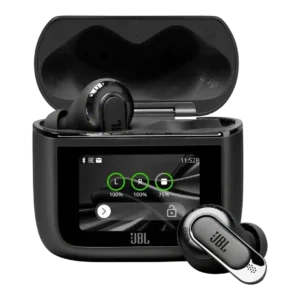
Choose the JBL Tour Pro 3 if you want feature-packed earbuds with strong sound, ANC, LDAC and a genuinely useful smart case. Skip them if you have smaller ears, want...
Pros: Codec support, Dongle
Cons: Sound leakage, Find My
Choose the Technics EAH-AZ100 if sound quality, bass, ANC, battery life, and multipoint matter most. Skip them if you need flawless calls, Bose-level ANC, the most natural transparency, or a...
Pros: Volume output, Maximum volume clarity
Cons: aptX, Auracast support
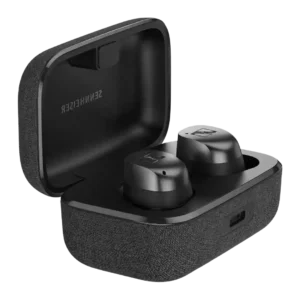
Choose these for excellent sound, deep app control, strong codec support, and a premium true-wireless package. Skip them if call quality, best-in-class ANC, iPhone integration, or a compact case matters...
Pros: Maximum volume clarity, Stability
Cons: Spatial audio, Microphone noise reduction
Choose the Sennheiser CX 80U for detailed, comfortable USB-C wired listening at a low price. Skip them if you need deep sub-bass, waterproofing, wireless features, volume buttons, or a cleaner...
Pros: Comfort during long use, USB-C
Cons: Microphone noise reduction, Water/sweat resistance rating