Reviewers consistently mention useful included extras such as the cup, scoop, brush, case, and optional Barista Kit, which broaden storage or brewing options.
Included extras are modest but useful: reviewers commonly mention an included measuring scoop, some paper filters, and a manual, with few or no additional accessories.
The reviews generally agree the Nanopresso does deliver crema and espresso-like results on the go, but several also say it stops short of matching true coffee-shop espresso.
Most claims around precision-style brewing, convenience features, and heat retention are supported by hands-on testing, but ultra-strong claims like perfect results for everyone depend heavily on dialing in ratio and taste preference.
Most reviewers describe setup as easy or straightforward once you learn the basic steps, though it still involves manual prep like filling, tamping, and pumping.
Setup is generally quick: wash removable parts, run a water-only cycle, set the clock, and brew. The main friction point is learning the dial-and-button interface for auto-brew programming the first time.
A standout strength: auto-brew scheduling, automatic bloom or pre-infusion behavior, batch-size logic (2-4 vs 5-9), pause-and-pour with carafe detection, no-water warnings, freshness timer, and descale reminders are repeatedly praised.
The pressurized system is repeatedly described as forgiving and capable of good extractions, but some reviewers say it takes experimentation or careful dialing-in for the best results.
Across sources, it produces consistently strong drip coffee with generally even saturation and good temperature management. A common nuance is that top-tier competitors may produce more complexity, and small batches can be less impressive than the best single-serve-focused designs.
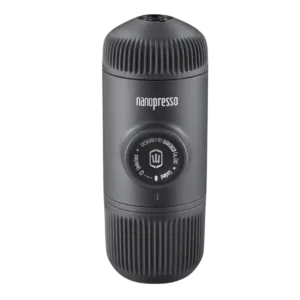
Across written and video reviews, the Nanopresso is regularly described as sturdy, durable, and solid despite its plastic construction.
Build quality is often described as premium and well-made, including long-term owner reports of solid performance years later. Some note cosmetic annoyances like fingerprints on stainless surfaces.
Cable routing options help placement in different layouts, though at least one owner notes the cord can feel short depending on outlet location.
Reviewers repeatedly note the base unit is a small single-shot brewer with roughly 8 grams of coffee and around 80 ml of water, making output modest unless you add the Barista Kit.
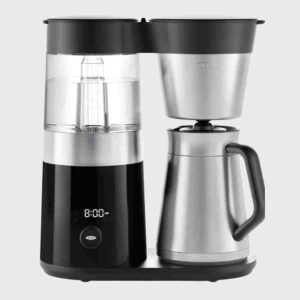
Nominal 9-cup capacity is commonly framed as around 45 ounces of brewed coffee, which aligns more with about 4 to 5 large mugs. Reviews also highlight workable brewing from roughly 2 cups up through a full carafe.
Multiple reviewers praise the optional pod adapters for making the Nanopresso more convenient, easier to clean, and simpler to use while traveling.
One reviewer specifically highlights the integrated espresso cup attached to the water tank as an efficient, space-saving design detail.
Thermal carafe heat retention and generally clean pouring are frequent positives. Common drawbacks include a narrow opening that complicates hand-cleaning and mixed experiences with the final pour or occasional splashing depending on technique and lid design.
The Nanopresso is widely praised for its compact size, packable form, and clean industrial design, with several reviewers highlighting how neatly the parts store together.
Aesthetics are widely praised as sleek and modern with a simple dial control, but usability is impacted by size: it can feel wide or tall and may require extra headroom to fill the reservoir in tight cabinet setups.
The main negatives mentioned across reviews are stray grounds, leakage or spillage, small-part fuss, thin texture, and the limited volume of each shot.
Recurring pain points: larger or taller footprint, no end-of-brew beep, programming not instantly intuitive, and carafe-lid or mixing-tube drips. A few reports mention dribbling that may resolve with cleaning the stop valve area.
Reviewers generally find the coffee enjoyable, crema-topped, and impressive for a portable manual brewer, though several note it is lighter or less authentic than café-quality espresso.
The pressurized filter/head is repeatedly described as forgiving and central to the machine's performance, while reviewers who discuss removing or bypassing it report different or less ideal results.
It uses #4 cone paper filters and a cone basket. Some reviewers like the cone approach for smaller batches, while comparisons note flat-bed designs can be more consistently bold across batch sizes.
At least one review emphasizes using a scale and paying attention to grind selection, reinforcing that dosing and grind choice still matter even with the forgiving pressurized design.
The included scoop-tamper is seen as workable and convenient, though one reviewer explicitly says it functions better as a tamper than as a scoop.
The reviews are clear that the Nanopresso has no built-in heater, so users must bring their own hot water or external heating method.
Power and heat performance are generally strong, with multiple measurements indicating hot water delivery in the proper brewing range, though some lab testing reports average brew temperatures that can run slightly below ideal depending on method and batch size.
Cleanup is usually manageable, but used-puck handling is not perfectly tidy; one reviewer says compacted grounds are only reasonably easy to remove, while another says the puck can come out in one piece.
The overall experience is usually positive, especially for travel and outdoor use, with reviewers calling it convenient, enjoyable, and easy to recommend within its niche.
Once dialed in, owners and testers frequently describe a low-effort, high-reward routine: prep the night before, wake to coffee, and rely on clear indicators. The biggest user-experience costs are cleaning, counter-space demands, and the initial learning curve for controls and ratio.
One review explicitly describes the Nanopresso as one of the most popular manual espresso makers available.
The model is repeatedly featured as a top pick in major buying guides and review roundups, though comparisons sometimes note the 8-cup sibling enjoys broader popularity for consistency and better small-batch or single-cup behavior.
Portability is the product's strongest recurring theme: reviewers repeatedly describe it as small, lightweight, bag-friendly, and especially useful for travel, hiking, camping, and hotels.
It avoids a hot plate and instead relies on a thermal carafe to keep coffee hot for hours, reducing risk of scorched flavors. A freshness timer is commonly used as the cue for how recently coffee was brewed.
Several reviewers cite the stable-feeling manual pump and repeated pressure-building cycle as a core strength, with the machine commonly described as capable of producing crema and espresso-like extraction.
SCA or Gold Cup-style certification is repeatedly cited as a key credibility signal, alongside mention of meeting standard safety expectations. Reviewers often treat certification as a shorthand for proper temperature and brew-time behavior.
A couple of reviews call out that small tools like the measure and cleaning brush store inside the unit, helping keep the kit self-contained.
Once prepped, reviewers describe the Nanopresso as fairly quick, with shots typically arriving after a short pumping sequence and often within about 1 to 2 minutes.
Speed is commonly described as fast for a premium brewer: many tests land around 6 to 8 minutes for a full pot, while some real-world demos show closer to about 9 minutes at maximum volume.
Most reviewers frame the Nanopresso as reasonably priced for portable espresso, though one review notes that accessories can raise the real-world total cost.
Pricing is premium for drip, and several reviewers call it expensive. Most still justify the cost when buyers value SCA-style performance plus programmability and a thermal carafe, but it is a tougher sell for budget shoppers or minimal-cleaning priorities.
One reviewer mentions a one-year warranty and expresses confidence in the company's support based on prior experience.
Warranty is commonly cited as two years. Some sources highlight a strong service reputation, including responsive help and replacement parts, though it is still shorter than the longest-warranty competitors.
The machine is generally described as easy to rinse and maintain, but reviewers also recommend drying parts carefully and, in one case, regular descaling in hard-water areas.
Maintenance is usually considered manageable: removable parts are rinsed regularly, a descale reminder appears around every 90 cycles, and the cycle itself is largely guided. The most consistent complaint is that the thermal carafe often needs a bottle brush and careful lid cleaning.