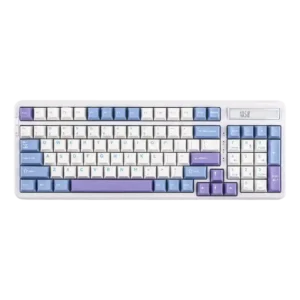
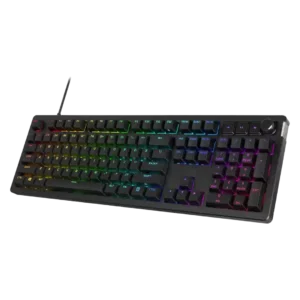
Compare Epomaker Cypher96 Keyboard vs HyperX Alloy Rise

P1 Epomaker Cypher96 Keyboard
P2 HyperX Alloy Rise

Comparison Takeaways

Epomaker Cypher96 Keyboard

Where It Has the Edge

  • ease of switch replacement is 4.5 vs 2.8. Switch replacement is easy because the board is hot-swappable and supports common 3-pin and 5-pin MX-style switches.
  • portability is 3.9 vs 2.8. Portability is decent for a 96-key board because reviewers cite a lightweight portable form and use while commuting,...
  • value for money is 4.3 vs 3.3. Value for money is strong, with reviewers repeatedly framing the Cypher96 as affordable or well priced for its...
  • software quality is 4.2 vs 3.5. Software quality is generally good and easy to use, though one review says it is less customizable than...

HyperX Alloy Rise

Where It Has the Edge

  • key spacing is 4.4 vs 2.6. Key spacing and reach were praised on the 75% model, with reviewers noting accessible keys and spacing that...
  • legend visibility is 4.8 vs 3.3. Legend visibility was positively supported by clean, easy-to-read keycap fonts and backlit legends.
  • materials quality is 4.8 vs 3.5. Materials quality was praised where directly discussed, especially the metal body/top-plate feel and PBT keycaps.
  • switch options is 4.4 vs 3.1. Switch options were good, with linear and tactile choices plus broad compatibility through hot-swap sockets.
Average score
Product 1: Epomaker Cypher96 Keyboard
4.1
Product 2: HyperX Alloy Rise
4.1
acoustics
Product 1: Epomaker Cypher96 Keyboard
4.3

Reviewers describe the Cypher96 as pleasingly clacky or thocky, with strong overall sound quality, though one review notes pinging can spoil the profile.

Product 2: HyperX Alloy Rise
4.0

Reviewers generally liked the damped sound profile, though one reviewer found the wireless model sharper and more metallic than ideal.

actuation consistency
Product 1: Epomaker Cypher96 Keyboard
4.4

Actuation is supported by one review that describes keypresses as consistent and smooth, helped by the gasket-mounted design.

Product 2: HyperX Alloy Rise
3.8

Switch actuation was usually described as smooth and consistent, but very sensitive switches caused misinputs for one reviewer.

backlight brightness
Product 1: Epomaker Cypher96 Keyboard
4.1

Lighting brightness is generally viewed positively, with several reviewers calling it vibrant or bright, while one found the side underglow weak.

Product 2: HyperX Alloy Rise
4.3

Brightness was viewed positively, with strong saturation and auto-adjusting backlighting noted in multiple reviews.

battery life
Product 1: Epomaker Cypher96 Keyboard
4.6

Battery life is a strength thanks to the dual 4,000mAh packs, with reviewers repeatedly noting the large 8,000mAh total capacity.

Product 2: HyperX Alloy Rise
4.7

Wireless battery life was a clear strength, with reviewers citing long runtimes from 80 hours with lighting to 1,500 hours without lighting.

build quality
Product 1: Epomaker Cypher96 Keyboard
3.9

Build quality is mostly solid for a plastic budget board, though opinions differ because some reviewers report flex while others found no creaks or wobble.

Product 2: HyperX Alloy Rise
4.5

Build quality was broadly praised, especially the sturdy chassis, aluminum/top-plate feel, and robust construction.

cable quality
Product 1: Epomaker Cypher96 Keyboard
3.9

Cable feedback is mixed: one review praises the braided USB-C cable, while another calls the included cable generic but usable.

Product 2: HyperX Alloy Rise
3.4

Cable impressions were mixed: the cable is detachable and flexible, but one review disliked the USB cable and mounting area.

compatibility
Product 1: Epomaker Cypher96 Keyboard
4.1

Compatibility is good for Windows and Mac users, though one review notes the lack of dedicated Mac-specific keycaps or hotkeys.

Product 2: HyperX Alloy Rise
4.3

Compatibility evidence was positive for PC, console, and Windows software support, though deeper software support was Windows-limited.

connectivity
Product 1: Epomaker Cypher96 Keyboard
4.5

Connectivity is a major strength, with reviewers consistently pointing to wired, 2.4GHz, and Bluetooth modes, plus multi-device pairing.

Product 2: HyperX Alloy Rise
3.9

Connectivity depends on model: wireless versions earned praise for tri-mode options, while wired-only models were criticized for lacking wireless.

customization options
Product 1: Epomaker Cypher96 Keyboard
4.4

Customization options are strong, covering key remapping, RGB adjustments, macros, programmable inputs, and shared configurations.

Product 2: HyperX Alloy Rise
4.2

Customization was one of the strongest themes, covering top plates, badges, keycaps, switches, macros, lighting, and profiles, though some reviewers found the accessory concept premature.

desk space efficiency
Product 1: Epomaker Cypher96 Keyboard
4.4

The 96-key layout keeps a numpad while saving desk space, making it more compact than a typical full-size keyboard.

Product 2: HyperX Alloy Rise
3.7

The 75% model was praised for saving desk space, while the full-size version was criticized for limiting mouse room.

durability
Product 1: Epomaker Cypher96 Keyboard
4.4

Durability evidence centers on double-shot PBT keycaps, which reviewers say resist shine and should last well over time.

Product 2: HyperX Alloy Rise
4.1

Durability evidence centered on PBT keycaps, rubber grips, and reviewers describing the board as built to last.

ease of switch replacement
Product 1: Epomaker Cypher96 Keyboard
4.5

Switch replacement is easy because the board is hot-swappable and supports common 3-pin and 5-pin MX-style switches.

Product 2: HyperX Alloy Rise
2.8

Switch replacement is functionally supported, but one reviewer found the removal process stiff and challenging.

ergonomics
Product 1: Epomaker Cypher96 Keyboard
4.1

Ergonomics are helped by adjustable feet and multiple resting positions, though the evidence is limited to setup angle rather than wrist support.

Product 2: HyperX Alloy Rise
3.6

Ergonomics were split: gasket feel and adjustable feet helped, but the tall chassis and missing wrist rest caused discomfort in some reviews.

extra gaming features
Product 1: Epomaker Cypher96 Keyboard
4.4

Gaming extras are present but basic, with reviews citing anti-ghosting, N-key rollover, and a 1,000Hz polling rate rather than advanced analog features.

Product 2: HyperX Alloy Rise
4.3

Gaming extras include Fn shortcuts, key lock/game mode, anti-ghosting, and onboard settings, but reviewers did not treat them as unusually advanced.

frame rigidity
Product 1: Epomaker Cypher96 Keyboard
3.3

Frame rigidity is mixed: some reviewers report flex and twisting, while another found no flex when pressing down.

Product 2: HyperX Alloy Rise
3.5

Frame rigidity was mostly solid, but the magnetic top plate could feel loose or come off too easily when handled one-handed.

gaming performance
Product 1: Epomaker Cypher96 Keyboard
4.4

Gaming performance is solid for conventional play thanks to responsive switches, anti-ghosting, N-key rollover, and 1,000Hz polling.

Product 2: HyperX Alloy Rise
4.1

Gaming performance was consistently good to excellent, with reviewers calling it responsive and suitable for competitive play even when not class-leading.

hot-swappable switches
Product 1: Epomaker Cypher96 Keyboard
4.6

Hot-swappable switch support is consistently praised, with reviewers noting easy replacement and broad 3-pin or 5-pin compatibility.

Product 2: HyperX Alloy Rise
4.7

Hot-swap support was strongly covered, including 3-pin and 5-pin switch compatibility and easy mechanical switch changes in most reviews.

keycap quality
Product 1: Epomaker Cypher96 Keyboard
4.2

Keycap quality is mostly strong because of double-shot PBT caps, although one reviewer disliked inconsistent thin legends.

Product 2: HyperX Alloy Rise
4.4

Keycap quality was consistently strong, with PBT, double-shot construction, thickness, texture, and durability praised.

key responsiveness
Product 1: Epomaker Cypher96 Keyboard
4.4

Key responsiveness is rated highly, with reviewers calling the switches responsive, fast enough, and light to actuate.

Product 2: HyperX Alloy Rise
4.0

Responsiveness was praised in most reviews thanks to fast actuation and minimal effort, though some reviewers disliked the deeper or overly sensitive press feel.

key spacing
Product 1: Epomaker Cypher96 Keyboard
2.6

Key spacing is a weakness for one reviewer, who found the 96% layout harder to navigate without looking.

Product 2: HyperX Alloy Rise
4.4

Key spacing and reach were praised on the 75% model, with reviewers noting accessible keys and spacing that did not feel cramped.

key stability
Product 1: Epomaker Cypher96 Keyboard
3.9

Key stability is mostly good on large keys, but stabilizer looseness appears as a caveat for rattle-sensitive users.

Product 2: HyperX Alloy Rise
4.4

Key stability was strong where discussed, with box stems and stable keys reducing wobble.

latency
Product 1: Epomaker Cypher96 Keyboard
4.5

Latency is strong in 2.4GHz and wired modes, with low-latency wireless and minimal-latency wired performance cited; Bluetooth is a slight caveat.

Product 2: HyperX Alloy Rise
4.8

Latency was strong in the wired high-polling model and wireless reviews that found no noticeable input delay.

layout options
Product 1: Epomaker Cypher96 Keyboard
3.5

Layout options are somewhat mixed: the board supports Mac/Windows layout modes, but one reviewer preferred a true full-size layout.

Product 2: HyperX Alloy Rise
4.5

Reviewers valued the availability of both full-size and 75% layouts, with the 75% version balancing compactness and function.

legend visibility
Product 1: Epomaker Cypher96 Keyboard
3.3

Legend visibility is mixed, with one review praising sharp visible legends while another criticizes inconsistent thin lettering.

Product 2: HyperX Alloy Rise
4.8

Legend visibility was positively supported by clean, easy-to-read keycap fonts and backlit legends.

macro customization
Product 1: Epomaker Cypher96 Keyboard
4.4

Macro customization is a clear software strength, with reviews citing macro recording, mouse-click detection, and easy setup.

Product 2: HyperX Alloy Rise
4.3

Macro customization was supported through NGENUITY, including macro recording, key remapping, and function assignment.

materials quality
Product 1: Epomaker Cypher96 Keyboard
3.5

Materials quality is acceptable rather than premium: reviewers repeatedly identify an ABS plastic build that feels sturdy but not aluminum-like.

Product 2: HyperX Alloy Rise
4.8

Materials quality was praised where directly discussed, especially the metal body/top-plate feel and PBT keycaps.

media controls
Product 1: Epomaker Cypher96 Keyboard
No score yet
Product 2: HyperX Alloy Rise
3.9

Media controls were mostly liked for tactile dedicated keys, though one review thought the full-size media buttons felt cheap.

noise level
Product 1: Epomaker Cypher96 Keyboard
4.3

Noise level is generally well controlled by dampening, with reviewers saying it avoids obnoxious noise and keeps rattles down.

Product 2: HyperX Alloy Rise
3.9

Noise was mostly quieter or clean for a mechanical board, but one review found the 75 model louder than typical linear-switch keyboards.

onboard memory
Product 1: Epomaker Cypher96 Keyboard
No score yet
Product 2: HyperX Alloy Rise
4.3

Onboard memory and profile storage were well supported, with reviewers noting saved configurations and multiple profiles on the keyboard.

per-key lighting control
Product 1: Epomaker Cypher96 Keyboard
4.2

Per-key lighting evidence is limited but positive, with references to per-key RGB underglow and zone-based effects.

Product 2: HyperX Alloy Rise
4.6

Per-key lighting control was strong, with individual key programming and per-key RGB noted in several reviews.

polling rate
Product 1: Epomaker Cypher96 Keyboard
4.8

Polling rate is strong, with multiple reviewers citing a 1,000Hz rate in wired and wireless modes.

Product 2: HyperX Alloy Rise
4.7

Polling rate was a standout spec on wired models at 8,000Hz, though reviewers differed on how meaningful that is for keyboards.

portability
Product 1: Epomaker Cypher96 Keyboard
3.9

Portability is decent for a 96-key board because reviewers cite a lightweight portable form and use while commuting, though it is not tiny.

Product 2: HyperX Alloy Rise
2.8

Portability was limited by weight; one wireless review noted the 75% board still weighed more than a kilogram.

profile management
Product 1: Epomaker Cypher96 Keyboard
4.1

Profile management has limited but positive evidence through shareable configurations for keymaps, macros, and lighting profiles.

Product 2: HyperX Alloy Rise
4.4

Profile management was supported through onboard profiles and profile switching for games or custom setups.

reliability
Product 1: Epomaker Cypher96 Keyboard
3.7

Reliability is mixed: some evidence praises reliable switches and daily dependability, but one review warns PCB bending may be a long-term risk.

Product 2: HyperX Alloy Rise
3.9

Reliability was mixed: several reviews saw stable performance, while Windows Central reported disconnects and inconsistency.

RGB customization
Product 1: Epomaker Cypher96 Keyboard
4.4

RGB customization is consistently strong, with software controls for effects, colors, brightness, zones, and multiple lighting modes.

Product 2: HyperX Alloy Rise
4.4

RGB customization was broad, covering layered effects, presets, side lighting, per-key colors, and user-created patterns.

RGB lighting quality
Product 1: Epomaker Cypher96 Keyboard
4.3

RGB lighting quality is generally praised as vibrant, bright, and attractive, though the lack of shine-through legends limits visibility through keycaps.

Product 2: HyperX Alloy Rise
4.4

RGB lighting quality was widely praised as bright, vibrant, evenly distributed, and visually impressive.

size and form factor
Product 1: Epomaker Cypher96 Keyboard
4.2

The compact 96%/96-key form factor is widely recognized as useful because it retains a numpad in a smaller footprint.

Product 2: HyperX Alloy Rise
4.4

Size and form factor were strengths for the 75% model and a mixed point for the full-size model depending on numpad needs.

software quality
Product 1: Epomaker Cypher96 Keyboard
4.2

Software quality is generally good and easy to use, though one review says it is less customizable than deeper enthusiast platforms.

Product 2: HyperX Alloy Rise
3.5

Software quality was the most mixed area, ranging from easy and lightweight to basic, limited, buggy, or unreliable.

sound dampening
Product 1: Epomaker Cypher96 Keyboard
4.5

Sound dampening is one of the clearest strengths, with reviews repeatedly citing foam, silicone pads, gasket mounting, and reduced vibration.

Product 2: HyperX Alloy Rise
4.4

Sound dampening was a strength, with foam/gasket construction and dual-layer dampening repeatedly tied to cleaner sound and softer typing.

stabilizer quality
Product 1: Epomaker Cypher96 Keyboard
4.0

Stabilizer quality is mixed: several reviews say large keys are rattle-free or solid, while others recommend tuning or relubing.

Product 2: HyperX Alloy Rise
4.4

Stabilizer quality was positive where addressed, with well-tuned stabilizers and reduced rattle noted.

switch feel
Product 1: Epomaker Cypher96 Keyboard
4.1

Switch feel is mostly positive, with smooth pre-lubed linear switches praised, though some reviewers found them generic or too light.

Product 2: HyperX Alloy Rise
4.1

Switch feel was usually smooth, responsive, and pre-lubed, though one reviewer disliked the harsher overall keystroke.

switch options
Product 1: Epomaker Cypher96 Keyboard
3.1

Switch options are limited because stock choices are basically Wisteria or Flamingo, though hot-swap support lets users change them later.

Product 2: HyperX Alloy Rise
4.4

Switch options were good, with linear and tactile choices plus broad compatibility through hot-swap sockets.

typing comfort
Product 1: Epomaker Cypher96 Keyboard
4.5

Typing comfort is a highlight, with reviewers describing long sessions as comfortable, cushioned, and easy on the fingers.

Product 2: HyperX Alloy Rise
4.1

Typing comfort was generally positive on the 75% model and damped gasket design, but harsh keystrokes or missing wrist support hurt comfort for some.

typing feel
Product 1: Epomaker Cypher96 Keyboard
4.6

Typing feel is one of the strongest attributes, repeatedly described as smooth, cushioned, pleasant, and premium for the price.

Product 2: HyperX Alloy Rise
4.3

Typing feel was one of the product's strongest areas, with many reviewers calling it smooth, premium, comfortable, or satisfying.

value for money
Product 1: Epomaker Cypher96 Keyboard
4.3

Value for money is strong, with reviewers repeatedly framing the Cypher96 as affordable or well priced for its features.

Product 2: HyperX Alloy Rise
3.3

Value for money was the weakest consensus point: full price often felt high, but sale pricing and feature depth improved the equation.

volume control
Product 1: Epomaker Cypher96 Keyboard
No score yet
Product 2: HyperX Alloy Rise
4.1

Volume control was praised for the notched rotary knob and mute function, though one reviewer wanted smoother rotation.

wireless performance
Product 1: Epomaker Cypher96 Keyboard
4.4

Wireless performance is strong overall, with low-latency 2.4GHz, multi-device Bluetooth, and usable range, though Bluetooth response rates can dip slightly.

Product 2: HyperX Alloy Rise
4.2

Wireless performance was strong in positive wireless reviews, but one reviewer reported occasional disconnections.

wrist rest quality
Product 1: Epomaker Cypher96 Keyboard
No score yet
Product 2: HyperX Alloy Rise
2.1

Wrist rest quality scored poorly because reviewers repeatedly noted that a wrist rest was needed or not included.