activity auto-detection
P1
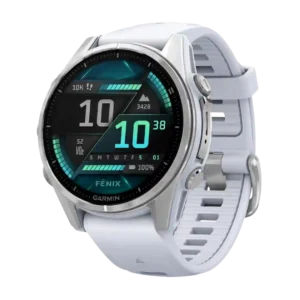
Product 1: Garmin Fenix 8
2.5
The only opinionated auto-detection evidence was negative: Move IQ-style automatic tracking was described as convenient but not accurate enough to rely on.
P2
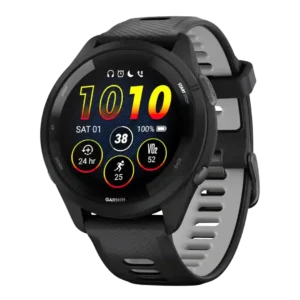
Product 2: Garmin Forerunner 265
1.8
Auto-detection was a weak point because reviewers noted that runs and walks must be started manually.
app ecosystem
P1
Product 1: Garmin Fenix 8
3.3
Reviewers saw Garmin’s ecosystem as deep enough to offer extra software, but weaker than Apple or Samsung for broader third-party app depth.
P2
Product 2: Garmin Forerunner 265
3.8
The Garmin ecosystem was powerful for data, apps, and customization, but some reviewers wanted stronger smartwatch-style apps or killer AMOLED use cases.
band quality
P1
Product 1: Garmin Fenix 8
3.8
Band quality was generally acceptable to good, with silicone described as comfortable and cleanable but improved by aftermarket nylon options.
P2
Product 2: Garmin Forerunner 265
4.3
Band quality was mostly positive for comfort, stretch, cleaning, and adjustability, with one caveat about band length on larger wrists.
battery life
P1
Product 1: Garmin Fenix 8
4.6
Battery life was one of the clearest strengths, repeatedly meeting specs or lasting many days to weeks depending on model and settings.
P2
Product 2: Garmin Forerunner 265
4.3
Battery life was broadly strong for an AMOLED sports watch, though ultra runners and users coming from MIP or solar watches wanted more.
Bluetooth connectivity
P1
Product 1: Garmin Fenix 8
4.3
Bluetooth sensor and headphone connections were described as easy during workouts, with no noted pairing problems in the supporting review.
P2
Product 2: Garmin Forerunner 265
5.0
Bluetooth performance was positive in the one detailed account, where earbuds connected quickly.
brightness
P1
Product 1: Garmin Fenix 8
4.3
Brightness was generally strong on AMOLED, though one reviewer tied always-on use to noticeably higher battery drain.
P2
Product 2: Garmin Forerunner 265
5.0
Brightness was strongly praised, with reviewers finding the AMOLED display vivid, clear, and easy to read.
build quality
P1
Product 1: Garmin Fenix 8
4.5
Build quality was consistently praised as rugged, tank-like, premium, and improved over prior generations.
P2
Product 2: Garmin Forerunner 265
3.5
Build quality was mixed: plastic felt cheap to one reviewer, while another long-term test found the watch still looked new.
button controls
P1
Product 1: Garmin Fenix 8
4.0
Button controls remain useful and reliable, but the new leakproof/inductive feel drew mixed reactions compared with older mechanical buttons.
P2
Product 2: Garmin Forerunner 265
4.2
Button controls were widely praised for workout reliability, tactile feedback, and the larger Run button, though one reviewer disliked squishy secondary buttons.
call handling
P1
Product 1: Garmin Fenix 8
2.8
Call handling was mixed to weak: reviewers liked having calls on-wrist, but repeatedly criticized quiet speakers or poor call sound.
P2
Product 2: Garmin Forerunner 265
1.7
Call handling was consistently limited because reviewers could accept or reject calls only with a paired phone and could not talk through the watch.
charging convenience
P1
Product 1: Garmin Fenix 8
3.7
Charging convenience was mixed: the proprietary cable was less convenient than magnetic charging but viewed as reliable.
P2
Product 2: Garmin Forerunner 265
3.3
Charging convenience was mixed: one reviewer disliked the USB-C plug situation, while another appreciated faster USB-C charging.
charging speed
P1
Product 1: Garmin Fenix 8
4.3
Charging speed was positively judged in the one opinionated mention, with a full charge taking around an hour.
P2
Product 2: Garmin Forerunner 265
4.7
Charging speed was praised across reviews, with top-offs and full charges described as quick.
coaching features
P1
Product 1: Garmin Fenix 8
4.6
Coaching features were praised for training, racing, recovery, and training-load guidance rather than just raw data.
P2
Product 2: Garmin Forerunner 265
4.2
Coaching features were strong for runners through audio prompts, suggested workouts, plans, and workout-building, but one reviewer disliked the limited training-plan choice.
comfort
P1
Product 1: Garmin Fenix 8
3.5
Comfort was mixed: straps and some sizes felt comfortable, but larger or heavier models could become obtrusive over long wear.
P2
Product 2: Garmin Forerunner 265
4.5
Comfort was a major strength, with reviewers repeatedly praising the light weight, silicone strap, sleepability, and all-day wear, despite one longer-wear caveat.
companion app quality
P1
Product 1: Garmin Fenix 8
4.4
Garmin Connect and related companion tools were praised for depth, customization, maturity, and usefulness, though not every customization task has moved to the phone.
P2
Product 2: Garmin Forerunner 265
3.9
The companion app was powerful and fast, but reviewers also found Garmin Connect overwhelming or less intuitive than ideal.
contactless payments
P1
Product 1: Garmin Fenix 8
4.0
Contactless payments were counted as part of Garmin’s complete smartwatch-tool package in the supporting review.
P2
Product 2: Garmin Forerunner 265
2.8
Garmin Pay was useful when supported, but bank compatibility could make contactless payments worthless for some users.
cross-platform compatibility
P1
Product 1: Garmin Fenix 8
3.0
Cross-platform support is mixed: Android gets fuller text-response options, while iPhone limitations still restrict what Garmin can do.
P2
Product 2: Garmin Forerunner 265
3.5
Cross-platform support was mixed because Android users get quick replies while iPhone users are more limited.
customization options
P1
Product 1: Garmin Fenix 8
4.4
Customization remains a strength, with reviewers praising deep options for watch faces, text size, widgets, and overall functionality.
P2
Product 2: Garmin Forerunner 265
4.8
Customization was a major strength, spanning watch faces, shortcuts, data screens, workouts, and Garmin Connect settings.
display quality
P1
Product 1: Garmin Fenix 8
4.5
Display quality was widely praised, especially the AMOLED option’s bright, sharp, colorful presentation and more attractive daily experience.
P2
Product 2: Garmin Forerunner 265
4.9
Display quality was one of the strongest consensus positives, with reviewers repeatedly praising the AMOLED screen as crisp, bright, vivid, and modern.
durability
P1
Product 1: Garmin Fenix 8
4.6
Durability evidence was strong, with reviewers noting element resistance, clean sapphire condition, and minimal visible wear after extended use.
P2
Product 2: Garmin Forerunner 265
3.3
Durability evidence was mixed, with scratch concerns in one review, a pristine long-term sample in another, and a caution about plastic and Gorilla Glass.
fit
P1
Product 1: Garmin Fenix 8
3.1
Fit depended heavily on wrist size, with wide fit adjustability offset by reports of twisting or too-large sizing for smaller wrists.
P2
Product 2: Garmin Forerunner 265
3.8
Fit was positive for running access and sleeve clearance, but one review warned the watch could feel bulky during sleep.
fitness tracking accuracy
P1
Product 1: Garmin Fenix 8
4.7
Fitness tracking accuracy was praised as among the best available, with strong activity, movement, and output tracking across reviewers.
P2
Product 2: Garmin Forerunner 265
4.6
Fitness tracking accuracy was broadly praised for runs, rides, swims, and general workouts, with only running-dynamics precision described as approximate.
GPS accuracy
P1
Product 1: Garmin Fenix 8
4.6
GPS accuracy was one of the strongest areas, with repeated praise for industry-leading tracks in cities, mountains, open water, and workouts.
P2
Product 2: Garmin Forerunner 265
4.9
GPS accuracy received very strong agreement, with reviewers repeatedly calling tracks fast, consistent, spot-on, or close to perfect.
heart rate accuracy
P1
Product 1: Garmin Fenix 8
4.3
Heart-rate accuracy was usually strong and often close to chest straps, though interval, ultra, and wrist-optical limitations created some mixed results.
P2
Product 2: Garmin Forerunner 265
4.4
Heart-rate accuracy was one of the strongest areas across reviews, with several chest-strap comparisons looking very close, though one reviewer had serious tattoo-related read failures.
LTE connectivity
P1
Product 1: Garmin Fenix 8
1.7
LTE connectivity was a repeated weakness: reviewers specifically called out the lack of cellular/LTE as disappointing or missing.
P2
Product 2: Garmin Forerunner 265
1.2
LTE was repeatedly called out as missing, limiting phone-free connected use.
mapping and navigation
P1
Product 1: Garmin Fenix 8
4.5
Mapping and navigation were strongly praised overall for topo maps, routing, rerouting, on-watch navigation, and backcountry usefulness despite some lag.
P2
Product 2: Garmin Forerunner 265
2.6
Mapping and navigation were the most consistent weakness for trail and ultra use; breadcrumb routing was useful for some, but missing full maps and failed TracBack frustrated others.
materials quality
P1
Product 1: Garmin Fenix 8
4.5
Materials quality was praised where mentioned, especially the combination of accurate sensors and premium materials.
P2
Product 2: Garmin Forerunner 265
2.5
Materials quality was a recurring caveat because the polymer/plastic construction felt cheaper than metal or sapphire rivals.
menu navigation
P1
Product 1: Garmin Fenix 8
3.8
Menu navigation split reviewers: some found the settings redesign logical and easier, while others found the watch slow to learn or cumbersome.
P2
Product 2: Garmin Forerunner 265
3.8
Menu navigation was mixed: Garmin's depth brought a learning curve, though workout data screens were easy to move through once learned.
onboard music storage
P1
Product 1: Garmin Fenix 8
4.7
Onboard music storage performed well in the supporting review, with playlist downloads described as much faster than older watches.
P2
Product 2: Garmin Forerunner 265
4.4
Onboard music was a recurring strength, letting runners store or download playlists and leave the phone behind.
operating system experience
P1
Product 1: Garmin Fenix 8
3.5
Operating system experience was mixed: Garmin’s system is powerful and improving but remains less fluid and less app-rich than rivals.
P2
Product 2: Garmin Forerunner 265
2.8
The operating-system experience was functional but not very modern, and one reviewer criticized Garmin's software segmentation.
outdoor visibility
P1
Product 1: Garmin Fenix 8
3.9
Outdoor visibility was mixed: AMOLED and solar improvements helped readability, but reflection and glare remained concerns for some outdoor-focused users.
P2
Product 2: Garmin Forerunner 265
4.2
Outdoor visibility was mostly strong in bright conditions, though one reviewer had trouble on sunny days and another noted polarized-sunglasses caveats.
pairing reliability
P1
Product 1: Garmin Fenix 8
4.6
Pairing and service setup looked reliable in testing, with Strava and Spotify syncing immediately for an existing Garmin user.
P2
Product 2: Garmin Forerunner 265
4.5
Pairing was easy and seamless in the reviews that discussed phone setup.
recovery insights
P1
Product 1: Garmin Fenix 8
4.5
Recovery insights were praised as useful and well aligned with perceived energy, training readiness, and recovery needs.
P2
Product 2: Garmin Forerunner 265
4.9
Recovery insights were widely praised, especially Training Readiness, HRV, Body Battery, and overtraining guidance, though usefulness depends on reliable heart-rate data.
reliability
P1
Product 1: Garmin Fenix 8
4.4
Reliability improved after firmware updates, and reviewers also praised the watch’s broader premium build reliability.
P2
Product 2: Garmin Forerunner 265
2.5
Reliability concerns centered on LiveTrack/messages, which came through sporadically in one review.
safety features
P1
Product 1: Garmin Fenix 8
4.6
Safety features scored strongly, driven mainly by the repeatedly praised flashlight and outdoor safety usefulness.
P2
Product 2: Garmin Forerunner 265
3.0
Safety features had limited evidence, with LiveTrack working well for a time but showing signal-dependent issues.
size options
P1
Product 1: Garmin Fenix 8
3.4
Size options were mixed: reviewers liked the three sizes, but criticized confusing choices and limitations for smaller wrists or the 43mm version.
P2
Product 2: Garmin Forerunner 265
4.5
Size options were appreciated, especially the smaller 265S for small wrists and the large display for those who want more screen.
sleep tracking accuracy
P1
Product 1: Garmin Fenix 8
4.5
Sleep tracking was positively judged for accurately capturing sleep and wake times and matching day-to-day energy impressions.
P2
Product 2: Garmin Forerunner 265
3.9
Sleep tracking drew mixed-to-positive feedback: several reviewers liked the sleep summaries, while one found sleep stages and scores inconsistent across Garmin watches.
smartphone notifications
P1
Product 1: Garmin Fenix 8
4.1
Smartphone notifications were viewed positively where tested, with orderly display and useful rich/photo notification support.
P2
Product 2: Garmin Forerunner 265
3.3
Smartphone notifications were useful but basic; Android quick replies helped, while iPhone limitations and lack of full interaction held the feature back.
smartwatch features
P1
Product 1: Garmin Fenix 8
4.3
Smartwatch features were broad and improving, but reviewers still framed Garmin as fitness-first rather than a true mini-phone replacement.
P2
Product 2: Garmin Forerunner 265
2.7
Smartwatch features were mixed: the AMOLED screen made the watch feel more modern, but missing mic, speaker, LTE, ECG, and richer apps kept it fitness-first.
software smoothness
P1
Product 1: Garmin Fenix 8
3.5
Software smoothness was inconsistent: firmware improved the experience for some reviewers, but others still reported lag, slower MIP response, or an unsmooth UI.
P2
Product 2: Garmin Forerunner 265
3.5
Software smoothness was generally acceptable, but reviewers noted stutter, motion blur, and that Garmin software is improving rather than flawless.
stress tracking
P1Product 1: Garmin Fenix 8
No score yet
P2
Product 2: Garmin Forerunner 265
4.5
Stress tracking was generally useful, especially for breathing prompts, body-battery context, and reminders to take breaks.
style and design
P1
Product 1: Garmin Fenix 8
4.1
Style and design were generally praised as premium or compliment-worthy, though one reviewer disliked the rugged/puck-like look.
P2
Product 2: Garmin Forerunner 265
3.7
Style and design were mixed: reviewers liked the modern AMOLED look, colors, and premium feel, but several still saw a sporty or plasticky watch.
third-party app support
P1
Product 1: Garmin Fenix 8
2.2
Third-party app support was a weakness compared with Apple, Samsung, watchOS, or Wear OS options.
P2
Product 2: Garmin Forerunner 265
5.0
Third-party workout syncing was praised as very easy, especially for sending activities to external services.
touchscreen responsiveness
P1
Product 1: Garmin Fenix 8
4.1
Touchscreen responsiveness ranged from excellent to frustrating: reviewers liked touch unlock and responsive AMOLED use, but one MIP tester reported repeated taps.
P2
Product 2: Garmin Forerunner 265
4.4
Touchscreen responsiveness was generally good, including in rain and sweat, but several reviewers still preferred buttons during workouts.
user interface
P1
Product 1: Garmin Fenix 8
2.9
The user interface was the most divisive area, with some useful modernization but repeated frustration around complexity, lag, and unintuitive changes.
P2
Product 2: Garmin Forerunner 265
4.4
The user interface was mostly praised as intuitive, easy to use, and rich with on-watch data.
value for money
P1
Product 1: Garmin Fenix 8
2.1
Value for money was the main concern: nearly every reviewer flagged the very high price, especially versus older Garmin models or narrower feature needs.
P2
Product 2: Garmin Forerunner 265
3.6
Value depended on use case: many reviewers found the 265 worth it for serious runners, while others balked at the price, plastic build, or missing maps.
voice assistant quality
P1
Product 1: Garmin Fenix 8
4.1
Voice assistant quality was mostly positive for timers, activity starts, and off-grid commands, though it still requires a button and is not always faster.
P2
Product 2: Garmin Forerunner 265
1.5
Voice-assistant support was essentially absent because the watch lacks the mic/speaker hardware needed for assistant interaction.
watch face quality
P1
Product 1: Garmin Fenix 8
3.9
Watch faces were seen as highly customizable, but one reviewer still found the built-in variety limited.
P2
Product 2: Garmin Forerunner 265
4.6
Watch faces were praised for AMOLED color, variety, stock quality, and Connect IQ options.
water resistance
P1
Product 1: Garmin Fenix 8
4.4
Water resistance and dive readiness were viewed positively, especially the 40m dive certification, leakproof buttons, and no-subscription dive tools.
P2
Product 2: Garmin Forerunner 265
5.0
Water resistance performed well in hands-on use, including showering, submersion, pool, and ocean exposure.
wellness insights
P1
Product 1: Garmin Fenix 8
4.6
Wellness insights were praised as comprehensive and useful, especially Body Battery, Training Readiness, and Garmin’s broader fitness-optimization data.
P2
Product 2: Garmin Forerunner 265
3.3
Wellness insights split reviewers: Body Battery and stress metrics helped some users, while another found sleep and Body Battery more descriptive than actionable.
workout tracking variety
P1
Product 1: Garmin Fenix 8
5.0
Workout tracking variety was a standout strength, with reviewers repeatedly saying the Fenix 8 covers nearly every sport or training scenario.
P2
Product 2: Garmin Forerunner 265
4.6
Workout variety was seen as deep and runner-focused, with extensive sport profiles, though one reviewer felt Garmin trailed Polar on sheer profile count.