- More expensive: price alternative The reviewer framed the Enduro 3 as a lower-priced Garmin alternative for battery-focused buyers.
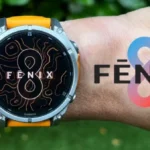
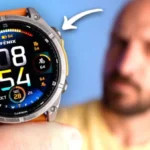
- Compared: display and route following Runner's World compared the Enduro 3 display side by side with the Fenix 8 during an ultra.
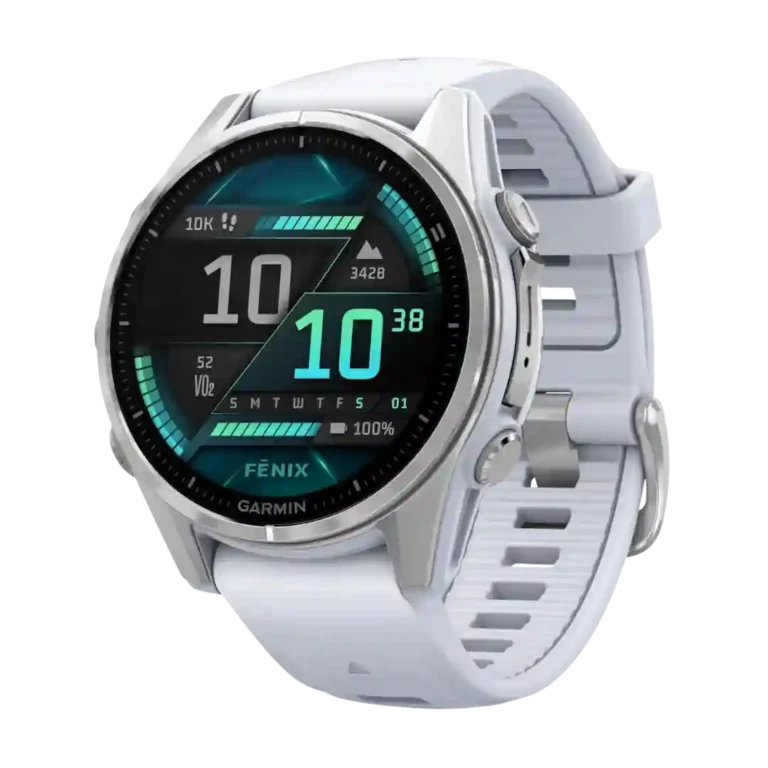
Garmin Fenix 8 Review
Bottom Line
Choose the Garmin Fenix 8 if you need elite GPS, maps, long battery, and serious multisport tools. Skip it if price, bulk, richer apps, LTE, or simpler daily smartwatch use matter more.
Best for serious runners, triathletes, hikers, divers, skiers, and backcountry users who will use advanced GPS, maps, training metrics, rugged hardware, and long battery life.
Not ideal for buyers who mainly want a lighter daily smartwatch, stronger third-party apps, cellular/LTE independence, lower pricing, or a simpler interface.
The Garmin Fenix 8 lands as a premium outdoor sports watch with standout GPS accuracy, rich mapping, deep workout coverage, and battery life that reviewers repeatedly praised. Its AMOLED models add a brighter, more modern feel, while the dive rating, leakproof buttons, speaker, microphone, and voice commands broaden the feature set. The tradeoff is clear: the watch is expensive, sometimes bulky, and its smartwatch experience still trails Apple and Samsung for apps, LTE, and assistant polish. Several reviewers also found the redesigned interface imperfect, with learning-curve and smoothness concerns. Overall, the evidence supports it as a powerful multisport tool whose value depends on using its advanced outdoor, training, mapping, and durability features.
Compared in Reviews
Products reviewers directly compared with this model, grouped into quick takeaways.
- Similar: GPS accuracy in a city test The Fenix 8 was described as roughly even with the Apple Watch Ultra 2 in that GPS test.
- More expensive: value for less demanding users Business Insider pointed less demanding runners and hikers toward Garmin’s cheaper Forerunner 965.
Feature Scorecards
Pros
-
Workout tracking variety was exceptional, spanning 80 activity modes, running, cycling, swimming, diving, hiking, gym, and niche sport profiles.
-
Durability was a major strength, with reviewers citing sapphire, titanium, rugged construction, scratch resistance, and survival-oriented testing.
-
GPS accuracy was one of the strongest reviewed attributes, with multiple reviewers describing fast locks, crisp tracks, and highly accurate performance.
-
Materials quality was considered premium, especially titanium, sapphire, steel, Gorilla glass, and the general high-end hardware package.
-
Build quality was consistently viewed as premium and rugged, with reviewers calling out sturdy construction and a tank-like feel.
-
Sleep tracking was generally positive for sleep/wake detection and detailed sleep feedback, while sleep-stage accuracy was treated more cautiously.
-
Charging speed received limited direct attention, with one reviewer saying a full charge takes roughly an hour.
-
Contactless payments were confirmed as part of Garmin’s fuller smartwatch toolset, though they were not a major focus of the reviews.
-
Pairing reliability was directly supported for heart-rate straps and headphones, with one reviewer reporting easy accessory connection.
-
Mapping and navigation were standout strengths, with praise for offline maps, topo detail, dynamic routing, ClimbPro, and backcountry usefulness.
-
Battery life was one of the strongest points, with reviewers reporting multi-day to multi-week endurance depending on model, display mode, and GPS use.
-
Garmin Connect was praised as deep, stellar, and useful for reviewing metrics, though some customization still happens on the watch.
-
Size options were a strength overall, with 43mm, 47mm, and 51mm AMOLED choices, though solar and LTE-related options skewed larger.
-
The AMOLED display was widely praised as bright, sharp, vibrant, and easier to use than older or MIP-style displays for many daily scenarios.
-
Fitness tracking accuracy was generally strong across runs, rides, and workouts, though high-intensity or vibration-heavy efforts could introduce variance.
-
Outdoor visibility was mostly positive for AMOLED and improved solar clarity, but reflective sapphire and glare could make outdoor readability context-dependent.
-
Recovery insights were a strength through Training Readiness, recovery status, Body Battery, HRV, and training-oriented readiness tools.
-
Water resistance and dive support were major upgrades, with 100m water resistance and recreational dive functionality down to 40m.
-
Customization is a clear strength, spanning watch faces, data, glances, settings, Focus modes, and Connect IQ options.
-
Onboard/offline music support was well supported through Spotify, Amazon Music, YouTube Music, MP3s, and playlist downloads.
-
Reliability improved after updates and was tied to premium build quality, but early bugs and lag kept it from being flawless.
-
Wellness insights were broad and useful through Morning Report, Body Battery, sleep, stress, health scores, and Garmin’s daily guidance.
-
Reviewers liked auto-start style behavior where it existed, especially dive triggering and ski ascent/descent detection, though it was discussed as sport-specific rather than universal.
-
Display and flashlight brightness drew praise, especially AMOLED readability, though one reviewer found outdoor glare could require higher brightness.
-
Heart rate accuracy was mostly strong for steady efforts, with mixed results during intervals, climbs, cycling vibration, or longer variable activities.
-
The five-button setup remains useful for workouts and wet conditions, but the new inductive/leakproof buttons felt different and sometimes less satisfying.
-
Blood oxygen and SpO2 support were confirmed by multiple reviewers, mostly as part of the broader health-sensor suite rather than a deeply tested standout.
-
Bluetooth-related features worked for calls, headphones, straps, and phone-dependent audio, with reviewers generally finding connection support functional.
-
Watch face quality and customization were strong overall, with more faces, Connect IQ options, and improved face customization.
-
Safety features were valued through course alerts, dive safety information, flashlight use, and backcountry routing, though missing LTE limited safety potential.
-
Smartphone notifications are supported and redesigned, with reviewers noting phone notifications, optional notification center behavior, and reply workarounds.
-
Smartwatch features improved with mic, speaker, calls, voice, notifications, music, Messenger, and payments, but remained less complete than Apple/Samsung.
-
Stress tracking was repeatedly included among the health and wellness metrics, but it was not deeply validated by reviewers.
-
Coaching and training-plan support was viewed positively, including Garmin Coach, daily suggestions, and strength-training programs.
-
Fit depends heavily on size and strap choice; reviewers liked available sizing but warned that larger cases can be cumbersome on smaller wrists.
-
Health tracking was portrayed as broad and useful, especially through sleep, HR, Body Battery, wellness metrics, and the sensor suite.
-
One review directly noted calorie tracking as part of the daily activity metrics, supporting basic usefulness rather than detailed calorie accuracy.
-
Music controls were available during activity and through the interface, although reviewers did not treat them as a headline feature.
-
Step tracking was directly supported as a basic metric, though the reviews did not deeply benchmark step-count accuracy.
-
ECG support was confirmed through the Elevate sensor, with availability depending on region or approval status.
-
Voice assistant and voice commands were useful for timers, activities, and offline commands, though hands-free limitations and phone dependence reduced appeal.
-
Bands and straps were generally described as practical, comfortable, and easy to clean, with some reviewers preferring nylon options for better fit.
-
Touchscreen responsiveness ranged from bright and responsive AMOLED praise to complaints about taps needing repeated attempts on some models.
-
Wi-Fi was lightly covered; reviewers mentioned phone Wi-Fi setup convenience and offline navigation without relying on data or Wi-Fi.
-
Style and design were mixed-positive: some liked the premium rugged look, while others found it more tool-like than elegant.
-
Menu navigation is improved in places but still has a learning curve; some reviewers found it intuitive while others found it overwhelming or laggy.
-
The user interface was modernized and sometimes more logical, but reviewers were split on whether the redesign improved real everyday use.
-
The app ecosystem is broad through Garmin and Connect IQ, but reviewers repeatedly noted it still trails Apple and Samsung for full smartwatch app depth.
-
Cross-platform use is functional, but reviewers noted differences between Android and iPhone, especially around text replies and Apple restrictions.
-
Charging is infrequent because of long battery life, but the proprietary Garmin connector was seen as less convenient than magnetic charging.
Cons
-
Comfort was mixed: smaller/lighter configurations and straps were acceptable, but larger Fenix 8 models could feel bulky for continuous wear.
-
Software smoothness was mixed: some reviews saw fast layouts or post-update improvement, while others reported lag, bugs, and not-yet-smooth UI behavior.
-
Call handling is useful in a pinch, but reviewers often criticized the speaker volume or described phone calls as limited rather than a flagship-grade experience.
-
The operating system remains powerful and efficient, but reviewers saw it as less smart and less app-rich than watchOS or Wear OS.
-
Third-party app support is mixed: Connect IQ and glances are useful, but Garmin’s broader third-party app story trails Apple and Samsung.
-
Value for money was the main concern, with reviewers praising capability but repeatedly questioning the high price and upgrade justification.
-
LTE connectivity was a repeated weakness: standard Fenix 8 reviews noted no cellular/LTE support and wanted it for safety or independent calls.
Compared With Category Average
Compared with other Smart Watch, this product is above average in ECG functionality, contactless payments, onboard music storage, below average in value for money, comfort, LTE connectivity.
| Attribute | This product | Category average | Difference |
|---|---|---|---|
| value for money | 2.3 | 3.8 | -1.6 |
| ECG functionality | 3.9 | 2.3 | +1.6 |
| contactless payments | 4.5 | 2.8 | +1.7 |
| onboard music storage | 4.3 | 2.8 | +1.4 |
| voice assistant quality | 3.9 | 2.6 | +1.2 |
| size options | 4.4 | 3.1 | +1.3 |
| comfort | 3.3 | 4.2 | -0.9 |
| LTE connectivity | 1.0 | 1.9 | -0.9 |
FAQ
Is the Garmin Fenix 8 accurate for GPS?
Yes. Reviewers repeatedly praised its GPS, with evidence ranging from dense-city runs to mountain routes and open-water swims.
How good is the battery life?
Battery life is a major strength. Reviewers reported about a week on AMOLED models with heavier use and much longer endurance on larger or solar configurations.
Is the Fenix 8 comfortable enough for all-day wear?
Comfort depends on wrist size, case size, and strap choice. Some reviewers wore it continuously without issues, while others found larger models bulky or obtrusive.
Does the Garmin Fenix 8 have LTE?
The standard Fenix 8 reviewed here does not have LTE or cellular connectivity, and multiple reviewers called that a notable limitation.
Are the new voice and call features useful?
Voice commands can be useful for timers, activities, and quick actions, but call quality and speaker loudness were mixed across reviews.
Is the Garmin Fenix 8 worth the price?
It is most defensible for users who need its advanced maps, rugged build, dive features, GPS, and training tools. Reviewers often questioned the value for casual users or recent Fenix owners.
Consider This Instead
If you want better value for money
Choose Amazfit T-Rex 3. It scores 4.9 vs 2.3 for value for money, with a 3.6 overall score.
If you want better third-party app support
Choose Samsung Galaxy Watch 8. It scores 4.8 vs 2.7 for third-party app support, with a 4.0 overall score.
If you want better call handling
Choose Apple Watch Series 10. It scores 4.6 vs 3.0 for call handling, with a 4.2 overall score.
If you want better software smoothness
Choose Amazfit Active 3 Premium. It scores 4.8 vs 3.3 for software smoothness, with a 4.1 overall score.
Overall Top Smart Watch Alternatives
Good if you want the most rugged Apple Watch, brighter outdoor screen, better battery, LTE, and top apps. Skip it if you need Garmin-like mapping, recovery analytics, smaller sizing, or...
Pros: display quality, heart rate accuracy
Cons: cross-platform compatibility, recovery insights
Choose the Galaxy Watch 6 for a polished Android smartwatch with a bright screen, strong apps, and broad health tracking. Skip it if battery life, iPhone support, or full non-Samsung...
Pros: outdoor visibility, workout tracking variety
Cons: cross-platform compatibility, battery life
Good if you need a rugged Garmin with deep outdoor, tactical, GPS, training, and battery features. Skip it if you want a cheaper lifestyle watch or do not need the...
Pros: materials quality, durability
Cons: LTE connectivity, value for money
Good if you want premium golf maps, virtual caddie tools, health metrics, music, notifications, and long battery life in one watch. Skip it if you only need basic yardages or...
Pros: pairing reliability, brightness
Cons: software smoothness, user interface