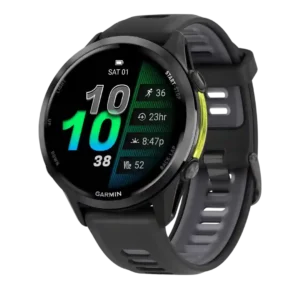
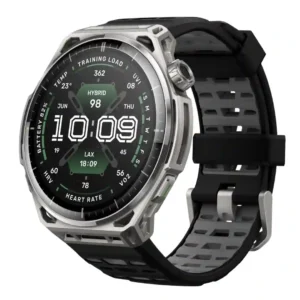
Compare Garmin Forerunner 970 vs Amazfit Balance 3

P1 Garmin Forerunner 970
P2 Amazfit Balance 3

Comparison Takeaways

Garmin Forerunner 970

Where It Has the Edge

  • ECG functionality is 4.0 vs 2.0. ECG was generally seen as a meaningful premium health addition, though reviewers stressed it is manual, sometimes a...
  • stress tracking is 5.0 vs 3.2. Stress tracking received strong praise from the one reviewer who directly evaluated it, especially for reflecting migraine-related strain...
  • app ecosystem is 4.5 vs 3.0. The app ecosystem scored well where reviewers discussed Connect IQ, especially because Garmin’s marketplace is much larger than...
  • fit is 4.3 vs 3.1. Fit was mostly praised, including on slim wrists, though the single 47mm format constrained some users.

Amazfit Balance 3

Where It Has the Edge

  • battery life is 4.9 vs 3.1. Battery life is a standout strength across the board. Reviewers routinely went well over a week with heavy...
  • software smoothness is 4.7 vs 3.1. Menus and the interface ran smoothly in testing, reinforcing the watch’s polished everyday feel.
  • companion app quality is 4.1 vs 2.5. The Zepp app offers detailed, useful health and training data and was often described as easy to use....
  • water resistance is 4.7 vs 3.3. The 10 ATM rating and recreational dive support were viewed as a meaningful step beyond ordinary splash protection....
Average score
Product 1: Garmin Forerunner 970
4.0
Product 2: Amazfit Balance 3
4.2
activity auto-detection
Product 1: Garmin Forerunner 970
No score yet
Product 2: Amazfit Balance 3
1.3

Strength-training auto-detection was the clearest failure: pauses within a rep were repeatedly mistaken for completed sets, cutting rep counts short. Manual logging is the safer choice for lifts with holds or hinges.

app ecosystem
Product 1: Garmin Forerunner 970
4.5

The app ecosystem scored well where reviewers discussed Connect IQ, especially because Garmin’s marketplace is much larger than rival sports-watch ecosystems.

Product 2: Amazfit Balance 3
3.0

The watch covers core everyday tools, but its app experience is much shallower than Apple Watch or Wear OS. Fitness is the priority; buyers wanting a rich wrist-app catalog may feel constrained.

band quality
Product 1: Garmin Forerunner 970
4.5

Band quality had limited but positive evidence, with the strap’s subtle stretch helping stability without cutting circulation.

Product 2: Amazfit Balance 3
3.8

Most testers found the standard 22mm silicone band comfortable, ventilated, and easy to swap. One reviewer developed itching during extended wear, making the stock strap a possible weak point for sensitive skin or overnight use.

battery life
Product 1: Garmin Forerunner 970
3.1

Battery life produced the most mixed feedback: GPS endurance was acceptable or strong, but always-on and general smartwatch use often disappointed reviewers.

Product 2: Amazfit Balance 3
4.9

Battery life is a standout strength across the board. Reviewers routinely went well over a week with heavy use, while typical-use and GPS endurance sharply reduce charging anxiety.

blood oxygen tracking
Product 1: Garmin Forerunner 970
4.0

PulseOx-related evidence centered on improved practicality, with one reviewer finding breathing-variation tracking no longer caused a notable overnight battery penalty.

Product 2: Amazfit Balance 3
No score yet
Bluetooth connectivity
Product 1: Garmin Forerunner 970
4.5

Bluetooth evidence was narrow but positive, with one reviewer reporting AirPods pairing and use without dropouts on multiple runs.

Product 2: Amazfit Balance 3
3.8

Bluetooth was broadly capable, including external-sensor support, but one setup had annoying initial pairing trouble. Once connected, that reviewer reported stable operation.

brightness
Product 1: Garmin Forerunner 970
4.6

Brightness was a standout improvement across reviews, making the display easy to read in tough conditions but contributing to battery tradeoffs.

Product 2: Amazfit Balance 3
4.7

The 3,000-nit AMOLED was repeatedly praised as exceptionally bright. Workout data remained easy to read in strong sunlight, making the screen a major outdoor advantage.

build quality
Product 1: Garmin Forerunner 970
4.2

Build quality was strong overall, with reviewers valuing the light polymer body, titanium bezel, sapphire lens, and durable feel.

Product 2: Amazfit Balance 3
4.7

Sapphire glass, stainless-steel construction, and substantial heft gave the watch a convincingly premium feel. Reviewers described it as robust and well made rather than plasticky.

button controls
Product 1: Garmin Forerunner 970
4.3

Button controls were useful and reliable, preserving full control when touch is unavailable, though one reviewer wanted a more tactile click.

Product 2: Amazfit Balance 3
4.0

The expanded physical controls generally worked well, especially with sweaty hands or gloves. Caveats included accidental workout pauses, a slightly recessed button, and one crown that required slower, deliberate turns.

call handling
Product 1: Garmin Forerunner 970
3.6

Call handling was mixed: reviewers liked the convenience and improved speaker, but some found the volume or sound quality unimpressive.

Product 2: Amazfit Balance 3
3.9

Bluetooth calling is handy for brief conversations and quick responses, with adequate call quality. It is not a phone replacement because the paired handset must remain nearby.

charging convenience
Product 1: Garmin Forerunner 970
2.8

Charging convenience was criticized by one reviewer who wanted wireless charging instead of Garmin’s proprietary cable.

Product 2: Amazfit Balance 3
3.0

The magnetic USB-C charging head is straightforward, but the box omits the cable. Reviewers viewed that as mildly inconvenient even if it reduces packaging.

coaching features
Product 1: Garmin Forerunner 970
4.4

Coaching features were praised for adaptive training, race guidance, running tolerance, and triathlon plans, though some advanced metrics were better suited to serious users.

Product 2: Amazfit Balance 3
4.7

Training analytics and coaching were praised as mature, accessible, and useful rather than overly technical. Recovery guidance, plans, and advanced metrics make the watch approachable for serious but non-elite athletes.

comfort
Product 1: Garmin Forerunner 970
4.3

Comfort was consistently positive because the watch is lighter and thinner than rugged alternatives, making it easier to wear all day.

Product 2: Amazfit Balance 3
3.6

Comfort depends heavily on wrist size and strap tolerance. The thin case sits flatter than its diameter suggests, but the weight and one itchy-band report make sleep wear and smaller wrists less certain.

companion app quality
Product 1: Garmin Forerunner 970
2.5

Companion app quality was mixed: Garmin Connect offered comprehensive data, but layout, workouts, and pairing friction drew criticism.

Product 2: Amazfit Balance 3
4.1

The Zepp app offers detailed, useful health and training data and was often described as easy to use. Its crowded layout and rough edges still need polish as more readiness metrics are added.

contactless payments
Product 1: Garmin Forerunner 970
4.3

Contactless payments were valued, especially by reviewers who rely on Garmin Pay, though bank support was described as solid in the US and mixed elsewhere.

Product 2: Amazfit Balance 3
3.1

Zepp Pay is present, but regional and bank support limits its usefulness. European users may need Curve, and not every German bank is directly supported.

cross-platform compatibility
Product 1: Garmin Forerunner 970
3.0

Cross-platform compatibility was limited by iOS restrictions, especially the inability to reply to messages or view photos from the watch.

Product 2: Amazfit Balance 3
3.8

Both iPhone and Android are supported, but the feature balance is not identical. Android gains quick replies, while iPhone gets camera control, leaving Android slightly ahead overall.

customization options
Product 1: Garmin Forerunner 970
5.0

Customization options were a clear strength, with settings, touchscreen behavior, sport profiles, data fields, and watch faces described as highly adjustable.

Product 2: Amazfit Balance 3
4.0

Cards, shortcuts, controls, and layouts can be rearranged extensively. That flexibility helps offset interface changes such as the removal of the older widget presentation.

display quality
Product 1: Garmin Forerunner 970
4.8

Display quality was widely praised for its bright, clear AMOLED panel, vibrant color, sapphire lens, and premium feel.

Product 2: Amazfit Balance 3
4.7

The large 1.5-inch AMOLED is one of the watch’s strongest features. It is sharp, spacious, bright, and especially effective for maps and workout fields viewed while moving.

durability
Product 1: Garmin Forerunner 970
4.7

Durability received broad praise, especially the sapphire screen’s scratch resistance after months of wear, gym use, and daily abuse.

Product 2: Amazfit Balance 3
4.5

Sapphire protection and the metal case held up well to knocks, travel, bags, and demanding daily use. The slightly raised glass creates a small theoretical exposure, but real-world wear was excellent.

ECG functionality
Product 1: Garmin Forerunner 970
4.0

ECG was generally seen as a meaningful premium health addition, though reviewers stressed it is manual, sometimes a hassle to enable, and not continuous monitoring.

Product 2: Amazfit Balance 3
2.0

ECG remains absent because the watch retains the older BioTracker sensor generation. One reviewer considered this an overdue omission for the Balance line.

fit
Product 1: Garmin Forerunner 970
4.3

Fit was mostly praised, including on slim wrists, though the single 47mm format constrained some users.

Product 2: Amazfit Balance 3
3.1

The thin profile helps the 51.4mm case sit flatter and steadier than expected, but it is still an enormous watch. Larger wrists are the natural fit; smaller wrists may find it bulky or impractical.

fitness tracking accuracy
Product 1: Garmin Forerunner 970
4.4

Fitness tracking accuracy was praised in real workouts, including indoor gym sessions, long runs, routes, elevation, and wrist heart-rate behavior during structured training.

Product 2: Amazfit Balance 3
4.7

General sports tracking earned strong praise, including running and unusually good strength-session heart-rate performance. Testers found the data dependable enough to compete with substantially more expensive watches.

flashlight usefulness
Product 1: Garmin Forerunner 970
4.8

Reviewers repeatedly treated the LED flashlight as a major practical upgrade, useful for night runs, hotels, errands, and everyday visibility.

Product 2: Amazfit Balance 3
4.7

The white-and-red LED flashlight became a surprisingly valued daily feature. Reviewers used it around the house, on early runs, and for visibility, with several saying they missed it on other watches.

GPS accuracy
Product 1: Garmin Forerunner 970
4.6

GPS accuracy was one of the strongest consensus points, with reviewers repeatedly calling tracks excellent, impeccable, highly accurate, or industry-leading on land.

Product 2: Amazfit Balance 3
4.5

Dual-band GPS consistently tracked close to Garmin and other premium competitors across roads, forests, buildings, and underpasses. Small deviations appeared in dense cover, but overall accuracy was one of the strongest points.

health tracking accuracy
Product 1: Garmin Forerunner 970
4.5

Health tracking evidence was limited but positive, with one reviewer saying the watch accurately reflected stress, temperature, heart-rate changes, and period timing.

Product 2: Amazfit Balance 3
No score yet
heart rate accuracy
Product 1: Garmin Forerunner 970
4.4

Heart-rate accuracy drew broad praise across reviews, with optical readings often matching straps closely; caveats focused on wrist-sensor limits in fast-changing or gym efforts.

Product 2: Amazfit Balance 3
4.3

Heart-rate tracking was excellent for steady running and often closely matched chest straps or premium watches. Results were more mixed during rapid intensity changes and one reference test, so external sensors remain preferable for maximum precision.

LTE connectivity
Product 1: Garmin Forerunner 970
No score yet
Product 2: Amazfit Balance 3
1.8

There is no LTE or cellular version. Calls, notifications, and connected features depend on a nearby paired phone, limiting true phone-free use.

mapping and navigation
Product 1: Garmin Forerunner 970
4.0

Mapping and navigation were powerful and detailed, but reviewer sentiment was split by laggy map rendering and failed round-trip rerouting in some tests.

Product 2: Amazfit Balance 3
4.6

Offline maps, route creation, POI search, turn-by-turn guidance, and automatic rerouting form a genuinely strong navigation package. The large display makes routes usable, though one first-look reviewer still found phone maps easier.

materials quality
Product 1: Garmin Forerunner 970
4.5

Materials quality was praised for the premium titanium bezel, sapphire crystal protection, and lightweight durable body.

Product 2: Amazfit Balance 3
4.7

Sapphire glass, stainless steel, and carefully finished metalwork make the Balance 3 feel more premium than earlier models. The heavier build is the tradeoff for that upscale impression.

menu navigation
Product 1: Garmin Forerunner 970
2.5

Menu navigation was mixed, with voice helping reduce menu diving but daily use sometimes requiring too many clicks or feeling overwhelming.

Product 2: Amazfit Balance 3
3.4

The crown can feel excellent when well weighted and used deliberately, but experiences varied. One unit lagged badly during fast scrolling, while another reviewer found crown navigation easy and controlled.

music controls
Product 1: Garmin Forerunner 970
No score yet
Product 2: Amazfit Balance 3
4.3

Basic wrist controls for pausing, resuming, and skipping phone tracks worked well during runs.

onboard music storage
Product 1: Garmin Forerunner 970
4.1

Onboard music was positively received for offline storage and improved GPS-plus-music endurance, making music more practical on longer activities.

Product 2: Amazfit Balance 3
4.1

The 64GB capacity leaves ample room for offline music alongside maps. Phone-free playback is useful, but music must be loaded as local files because streaming apps such as Spotify are unavailable.

operating system experience
Product 1: Garmin Forerunner 970
4.8

The operating system experience was praised as best-in-class among sports watches by one reviewer, reinforcing Garmin’s software depth.

Product 2: Amazfit Balance 3
3.9

Zepp OS 6 is generally smooth and capable, but reactions to the redesign were mixed. Some appreciated the reorganized cards and depth, while others preferred the previous layout and saw only a modest upgrade.

outdoor visibility
Product 1: Garmin Forerunner 970
5.0

Outdoor visibility was excellent, with reviewers emphasizing readability at noon, in indirect sunlight, and on bright sunny days.

Product 2: Amazfit Balance 3
4.6

Direct-sun readability is excellent. The combination of high brightness and a large panel keeps workout fields and maps legible outdoors.

pairing reliability
Product 1: Garmin Forerunner 970
3.0

Pairing reliability had limited evidence, with one reviewer noting the Garmin Connect pairing process took several attempts.

Product 2: Amazfit Balance 3
3.5

Initial setup produced Bluetooth pairing frustration for one tester, but the connection remained stable after it finally completed.

recovery insights
Product 1: Garmin Forerunner 970
4.4

Recovery insights were a major strength: reviewers found impact load, training readiness, running tolerance, and daily reports useful for pacing workload and avoiding overtraining.

Product 2: Amazfit Balance 3
4.2

HybridCharge’s blend of sleep, stress, training load, and self-reported life factors was widely seen as useful. Reviewers treated it as a practical nudge rather than an unquestionable prescription, and long-term differentiation is still unproven.

reliability
Product 1: Garmin Forerunner 970
2.5

Reliability concerns centered on crashes and buggy round-trip routing rather than the core tracking system.

Product 2: Amazfit Balance 3
No score yet
safety features
Product 1: Garmin Forerunner 970
4.2

Safety features were viewed positively where discussed, with emergency alerts, incident detection, LiveTrack, and the flashlight improving confidence.

Product 2: Amazfit Balance 3
No score yet
score tracking
Product 1: Garmin Forerunner 970
No score yet
Product 2: Amazfit Balance 3
3.2

PAI encourages consistent activity and clearly explains what it measures, but one reviewer felt the score also serves product engagement more than meaningful health guidance.

size options
Product 1: Garmin Forerunner 970
2.5

Size options were a repeated weakness because the Forerunner 970 only comes in one 47mm case size.

Product 2: Amazfit Balance 3
2.0

The watch comes in only one 51.4mm case size. That lack of a smaller option excludes many slim-wristed buyers.

sleep tracking accuracy
Product 1: Garmin Forerunner 970
3.6

Sleep tracking was viewed as useful but imperfect: reviewers praised sleep timing or overall sleep ratings while noting uncertain stages, missed wakeful moments, or bulky overnight wear.

Product 2: Amazfit Balance 3
4.2

Sleep duration and restlessness usually aligned well with competing wearables and personal experience. One rough night received an overly mild label, and the watch’s size or strap may discourage overnight wear.

smartphone notifications
Product 1: Garmin Forerunner 970
No score yet
Product 2: Amazfit Balance 3
4.6

Notifications were reliable and easy to read on the large screen. Reply capabilities vary by phone platform.

smartwatch features
Product 1: Garmin Forerunner 970
4.1

Smartwatch features were strong for a sports watch, with calls, voice, music, payments, reports, and notifications adding daily usefulness without matching cellular smartwatches.

Product 2: Amazfit Balance 3
4.4

Calls, notifications, voice controls, alarms, timers, weather, music tools, and everyday utilities are well covered. The watch succeeds as a fitness-first smartwatch, not as a full Apple Watch or Wear OS substitute.

software smoothness
Product 1: Garmin Forerunner 970
3.1

Software smoothness was a common caveat: saving workouts, loading activities, widgets, and maps could lag, though some reviewers still found normal scrolling responsive.

Product 2: Amazfit Balance 3
4.7

Menus and the interface ran smoothly in testing, reinforcing the watch’s polished everyday feel.

stress tracking
Product 1: Garmin Forerunner 970
5.0

Stress tracking received strong praise from the one reviewer who directly evaluated it, especially for reflecting migraine-related strain and adjusting recovery guidance.

Product 2: Amazfit Balance 3
3.2

Automatic stress tracking and breathing reminders can be helpful, but the actual stress scores inspired skepticism. The guided breathing nudge was valued more than the numerical reading.

style and design
Product 1: Garmin Forerunner 970
4.5

Style and design were generally praised as sleek, good-looking, sporty, and refined, though some found it less subtle than lifestyle watches.

Product 2: Amazfit Balance 3
4.3

Most reviewers liked the distinctive, premium, industrial look, especially in person. The large rugged styling is deliberately bold, however, and some people may find it tacky or insufficiently subtle.

third-party app support
Product 1: Garmin Forerunner 970
4.2

Third-party app support was useful for watch faces, data fields, and niche apps, though reviewers did not equate it with a full smartwatch app store.

Product 2: Amazfit Balance 3
3.4

Fitness-service connectivity and data export are useful, but wrist-app support is limited. The absence of Spotify and the shallow app catalog keep it behind Apple Watch and Wear OS for extensibility.

touchscreen responsiveness
Product 1: Garmin Forerunner 970
4.3

Touchscreen responsiveness was mostly positive, with one reviewer calling it snappy and responsive while another flagged sensitivity quirks.

Product 2: Amazfit Balance 3
4.8

Touch input was consistently described as smooth, fast, and highly responsive, with a premium feel comparable to modern phone displays.

user interface
Product 1: Garmin Forerunner 970
4.3

The user interface was generally considered easy or improved, but more complex reviewers still found parts of the layout overwhelming.

Product 2: Amazfit Balance 3
4.0

The interface is clear and polished for some users, but the redesigned navigation divided opinion. Several testers missed the older widget flow, while others praised the structured menus and quick controls.

value for money
Product 1: Garmin Forerunner 970
3.4

Value for money was divisive: reviewers saw top-tier capability for serious runners but repeatedly questioned the high price versus the 965 or Fenix alternatives.

Product 2: Amazfit Balance 3
4.5

Most reviewers considered the feature set, accuracy, battery, sapphire glass, and navigation excellent value around $370. The higher price versus earlier Balance models makes the upgrade case less convincing for existing Balance 2 owners.

voice assistant quality
Product 1: Garmin Forerunner 970
3.9

Voice assistant quality was helpful for timers, commands, and reducing menu use, but reviewers noted delays, limited personal appeal, or mediocre speaker quality.

Product 2: Amazfit Balance 3
4.0

Zepp Flow handles basic commands and replies efficiently and was considered useful in daily use. It remains a convenience rather than a reason to buy the watch.

voice note usefulness
Product 1: Garmin Forerunner 970
No score yet
Product 2: Amazfit Balance 3
3.9

Post-workout voice memos work as advertised and can capture quick reminders without a phone. Reviewers saw them as a nice, somewhat niche addition.

watch face quality
Product 1: Garmin Forerunner 970
4.5

Watch-face quality was praised through customization and the large Connect IQ selection, including many free third-party options.

Product 2: Amazfit Balance 3
4.8

The available watch faces made a strong first impression, with especially positive comments about their design.

water resistance
Product 1: Garmin Forerunner 970
3.3

Water resistance was adequate for swimming and wet use, but reviewers noted the 5ATM rating is not dive-ready like the Fenix line.

Product 2: Amazfit Balance 3
4.7

The 10 ATM rating and recreational dive support were viewed as a meaningful step beyond ordinary splash protection. Reviewers considered it suitable for swimming and diving.

wellness insights
Product 1: Garmin Forerunner 970
4.2

Wellness insights were useful when they translated daily data into practical advice, especially Evening Report, recovery prompts, and broader health context.

Product 2: Amazfit Balance 3
4.7

The combined wellness and readiness system became one reviewer’s most frequently checked feature because its warnings repeatedly matched real fatigue.

workout tracking variety
Product 1: Garmin Forerunner 970
4.4

Workout variety was considered very broad, with reviewers highlighting multisport plans, many sport modes, and enough detail for runners, cyclists, triathletes, and data-focused athletes.

Product 2: Amazfit Balance 3
4.7

More than 180 modes cover running, strength, swimming, cycling, HYROX, golf, diving, and many niche activities. Reviewers valued the depth of the core sport tools more than the raw mode count.