- Review score
- 4.5
Amazfit Balance 3 Review
Bottom Line
Choose it for outstanding battery life, bright maps, accurate GPS and heart-rate tracking, and serious training tools at a competitive price. Skip it if you have a small wrist, need LTE, ECG, deep apps, or dependable strength auto-detection.
Best for runners, hybrid athletes, hikers, HYROX users, and fitness-focused buyers who want long battery life, accurate tracking, and excellent maps without paying flagship Garmin prices.
Skip it if you have a small wrist, prioritize a deep smartwatch app ecosystem, need LTE or ECG, rely on streaming music, or expect flawless automatic strength-set detection.
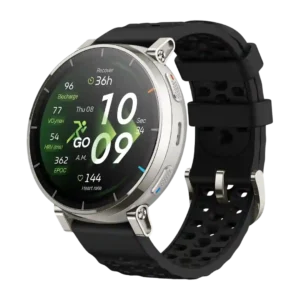
The Amazfit Balance 3 succeeds by delivering the parts serious fitness users notice every day: excellent battery endurance, a large and exceptionally bright AMOLED screen, dependable dual-band GPS, strong heart-rate results, useful offline navigation, and increasingly mature recovery tools. Its sapphire glass and stainless-steel build also feel convincingly premium for the price. The compromises are equally clear. The single 51.4mm case is unsuitable for many smaller wrists, the stock band may irritate some users, and strength-training auto-detection can misread paused movements. Zepp OS covers practical smartwatch basics, but LTE, ECG, streaming music, and a deep app catalog are missing. Existing Balance 2 owners may not gain enough to justify the higher price, but newcomers wanting a fitness-first Garmin alternative get an unusually complete package.
Feature Scorecards
Summary
52 reviewed features- Very positive 4.5-5.0 38% 20 features
- Positive 3.5-4.4 38% 20 features
- Neutral 2.5-3.4 15% 8 features
- Negative 1.5-2.4 6% 3 features
- Very negative below 1.5 2% 1 feature
Pros
-
Battery life is a standout strength across the board. Reviewers routinely went well over a week with heavy use, while typical-use and GPS endurance sharply reduce charging anxiety.
-
Touch input was consistently described as smooth, fast, and highly responsive, with a premium feel comparable to modern phone displays.
-
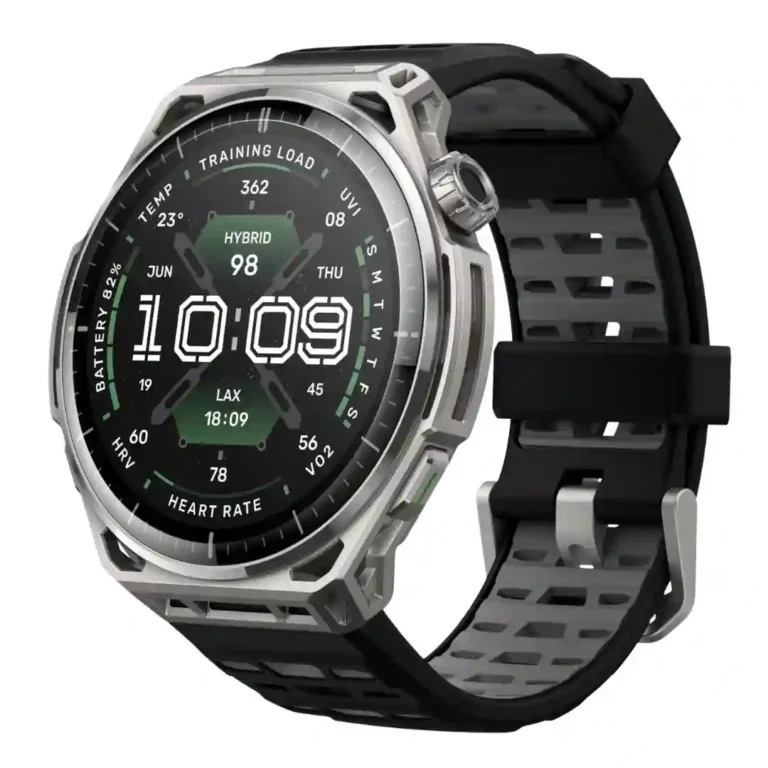
The available watch faces made a strong first impression, with especially positive comments about their design.
-
The 3,000-nit AMOLED was repeatedly praised as exceptionally bright. Workout data remained easy to read in strong sunlight, making the screen a major outdoor advantage.
-
The large 1.5-inch AMOLED is one of the watch’s strongest features. It is sharp, spacious, bright, and especially effective for maps and workout fields viewed while moving.
-
Sapphire glass, stainless-steel construction, and substantial heft gave the watch a convincingly premium feel. Reviewers described it as robust and well made rather than plasticky.
-
The white-and-red LED flashlight became a surprisingly valued daily feature. Reviewers used it around the house, on early runs, and for visibility, with several saying they missed it on other watches.
-
More than 180 modes cover running, strength, swimming, cycling, HYROX, golf, diving, and many niche activities. Reviewers valued the depth of the core sport tools more than the raw mode count.
-
General sports tracking earned strong praise, including running and unusually good strength-session heart-rate performance. Testers found the data dependable enough to compete with substantially more expensive watches.
-
Sapphire glass, stainless steel, and carefully finished metalwork make the Balance 3 feel more premium than earlier models. The heavier build is the tradeoff for that upscale impression.
-
Training analytics and coaching were praised as mature, accessible, and useful rather than overly technical. Recovery guidance, plans, and advanced metrics make the watch approachable for serious but non-elite athletes.
-
The 10 ATM rating and recreational dive support were viewed as a meaningful step beyond ordinary splash protection. Reviewers considered it suitable for swimming and diving.
-
Menus and the interface ran smoothly in testing, reinforcing the watch’s polished everyday feel.
-
The combined wellness and readiness system became one reviewer’s most frequently checked feature because its warnings repeatedly matched real fatigue.
-
Offline maps, route creation, POI search, turn-by-turn guidance, and automatic rerouting form a genuinely strong navigation package. The large display makes routes usable, though one first-look reviewer still found phone maps easier.
-
Direct-sun readability is excellent. The combination of high brightness and a large panel keeps workout fields and maps legible outdoors.
-
Notifications were reliable and easy to read on the large screen. Reply capabilities vary by phone platform.
-
Dual-band GPS consistently tracked close to Garmin and other premium competitors across roads, forests, buildings, and underpasses. Small deviations appeared in dense cover, but overall accuracy was one of the strongest points.
-
Most reviewers considered the feature set, accuracy, battery, sapphire glass, and navigation excellent value around $370. The higher price versus earlier Balance models makes the upgrade case less convincing for existing Balance 2 owners.
-
Sapphire protection and the metal case held up well to knocks, travel, bags, and demanding daily use. The slightly raised glass creates a small theoretical exposure, but real-world wear was excellent.
-
Calls, notifications, voice controls, alarms, timers, weather, music tools, and everyday utilities are well covered. The watch succeeds as a fitness-first smartwatch, not as a full Apple Watch or Wear OS substitute.
-
Most reviewers liked the distinctive, premium, industrial look, especially in person. The large rugged styling is deliberately bold, however, and some people may find it tacky or insufficiently subtle.
-
Heart-rate tracking was excellent for steady running and often closely matched chest straps or premium watches. Results were more mixed during rapid intensity changes and one reference test, so external sensors remain preferable for maximum precision.
-
Basic wrist controls for pausing, resuming, and skipping phone tracks worked well during runs.
-
HybridCharge’s blend of sleep, stress, training load, and self-reported life factors was widely seen as useful. Reviewers treated it as a practical nudge rather than an unquestionable prescription, and long-term differentiation is still unproven.
-
Sleep duration and restlessness usually aligned well with competing wearables and personal experience. One rough night received an overly mild label, and the watch’s size or strap may discourage overnight wear.
-
The Zepp app offers detailed, useful health and training data and was often described as easy to use. Its crowded layout and rough edges still need polish as more readiness metrics are added.
-
The 64GB capacity leaves ample room for offline music alongside maps. Phone-free playback is useful, but music must be loaded as local files because streaming apps such as Spotify are unavailable.
-
The expanded physical controls generally worked well, especially with sweaty hands or gloves. Caveats included accidental workout pauses, a slightly recessed button, and one crown that required slower, deliberate turns.
-
The interface is clear and polished for some users, but the redesigned navigation divided opinion. Several testers missed the older widget flow, while others praised the structured menus and quick controls.
-
Cards, shortcuts, controls, and layouts can be rearranged extensively. That flexibility helps offset interface changes such as the removal of the older widget presentation.
-
Zepp Flow handles basic commands and replies efficiently and was considered useful in daily use. It remains a convenience rather than a reason to buy the watch.
-
Bluetooth calling is handy for brief conversations and quick responses, with adequate call quality. It is not a phone replacement because the paired handset must remain nearby.
-
Zepp OS 6 is generally smooth and capable, but reactions to the redesign were mixed. Some appreciated the reorganized cards and depth, while others preferred the previous layout and saw only a modest upgrade.
-
Post-workout voice memos work as advertised and can capture quick reminders without a phone. Reviewers saw them as a nice, somewhat niche addition.
-
Most testers found the standard 22mm silicone band comfortable, ventilated, and easy to swap. One reviewer developed itching during extended wear, making the stock strap a possible weak point for sensitive skin or overnight use.
-
Bluetooth was broadly capable, including external-sensor support, but one setup had annoying initial pairing trouble. Once connected, that reviewer reported stable operation.
-
Both iPhone and Android are supported, but the feature balance is not identical. Android gains quick replies, while iPhone gets camera control, leaving Android slightly ahead overall.
-
Comfort depends heavily on wrist size and strap tolerance. The thin case sits flatter than its diameter suggests, but the weight and one itchy-band report make sleep wear and smaller wrists less certain.
-
Initial setup produced Bluetooth pairing frustration for one tester, but the connection remained stable after it finally completed.
Cons
-
Fitness-service connectivity and data export are useful, but wrist-app support is limited. The absence of Spotify and the shallow app catalog keep it behind Apple Watch and Wear OS for extensibility.
-
The crown can feel excellent when well weighted and used deliberately, but experiences varied. One unit lagged badly during fast scrolling, while another reviewer found crown navigation easy and controlled.
-
PAI encourages consistent activity and clearly explains what it measures, but one reviewer felt the score also serves product engagement more than meaningful health guidance.
-
Automatic stress tracking and breathing reminders can be helpful, but the actual stress scores inspired skepticism. The guided breathing nudge was valued more than the numerical reading.
-
The thin profile helps the 51.4mm case sit flatter and steadier than expected, but it is still an enormous watch. Larger wrists are the natural fit; smaller wrists may find it bulky or impractical.
-
Zepp Pay is present, but regional and bank support limits its usefulness. European users may need Curve, and not every German bank is directly supported.
-
The magnetic USB-C charging head is straightforward, but the box omits the cable. Reviewers viewed that as mildly inconvenient even if it reduces packaging.
-
The watch covers core everyday tools, but its app experience is much shallower than Apple Watch or Wear OS. Fitness is the priority; buyers wanting a rich wrist-app catalog may feel constrained.
-
ECG remains absent because the watch retains the older BioTracker sensor generation. One reviewer considered this an overdue omission for the Balance line.
-
The watch comes in only one 51.4mm case size. That lack of a smaller option excludes many slim-wristed buyers.
-
There is no LTE or cellular version. Calls, notifications, and connected features depend on a nearby paired phone, limiting true phone-free use.
-
Strength-training auto-detection was the clearest failure: pauses within a rep were repeatedly mistaken for completed sets, cutting rep counts short. Manual logging is the safer choice for lifts with holds or hinges.
Compared With Category Average
Compared with other Smartwatches, this product is above average in mapping and navigation, onboard music storage, smartphone notifications, below average in activity auto-detection, size options.
Summary
8 compared features- Above average 0.4+ pts higher 75% 6 features
- Same as average within 0.3 pts 0% 0 features
- Below average 0.4+ pts lower 25% 2 features
| Attribute | This product | Category average | Difference |
|---|---|---|---|
| activity auto-detection | 1.3 | 3.7 | -2.4 |
| mapping and navigation | 4.6 | 3.4 | +1.1 |
| onboard music storage | 4.1 | 2.8 | +1.2 |
| size options | 2.0 | 3.2 | -1.2 |
| smartphone notifications | 4.6 | 3.5 | +1.1 |
| flashlight usefulness | 4.7 | 3.8 | +0.9 |
| watch face quality | 4.8 | 3.8 | +1.0 |
| smartwatch features | 4.4 | 3.5 | +0.9 |
FAQ
How long does the Amazfit Balance 3 battery last?
Reviewers consistently got well over a week with demanding use, while Amazfit rates typical use at up to 21 days. GPS endurance was also praised, with about 41 hours in accurate mode.
Is the Amazfit Balance 3 accurate for running?
Yes. Dual-band GPS and heart-rate tracking usually stayed close to Garmin, Apple, Suunto, Coros, and chest-strap references, especially during steady runs.
Is the Amazfit Balance 3 comfortable on small wrists?
Probably not for many users. The single 51.4mm case is very large, although its relatively thin profile helps it sit flatter than the diameter suggests.
Does the Amazfit Balance 3 have offline maps?
Yes. It supports offline maps, turn-by-turn directions, route creation, POI search, and automatic rerouting, and the large screen makes routes easy to read.
Is the Amazfit Balance 3 good for sleep tracking?
Sleep duration and restlessness generally matched competing wearables, but one reviewer found the scoring too mild after a poor night. The watch's size and stock strap may also make overnight wear uncomfortable.
Does the Amazfit Balance 3 support LTE or ECG?
No. It has neither LTE nor ECG, so connected calls and notifications require a nearby phone, and ECG-focused buyers need another device.
Should Balance 2 owners upgrade?
The upgrade is less compelling for existing Balance 2 owners because battery and sensors are similar and some software features overlap. The stronger reasons are the premium case, brighter display, extra controls, flashlight, storage, and improved navigation.
Sample Expert Reviews We Analyzed
These are a few of the reviews included in our analysis.
Video Reviews
- Review score
- 4.0
- Review score
- 4.6
- Review score
- 4.3
- Review score
- 3.7
Article Reviews
The Amazfit Balance 3 is for the kind of person who resents charging a smartwatch every night, who wants accurate GPS and heart-rate data...
- Review score
- 3.7
Amazfit Balance 3 review with real-world testing, specs, battery life, GPS accuracy and how it compares with the Balance 2.
- Review score
- 4.2
I've been wearing the Amazfit Balance 3 for a few weeks now, and somewhere along the way it developed an annoying habit.
- Review score
- 4.7
Amazfit's Balance 3 packs up to 21 days of battery, sapphire glass, a 3,000-nit AMOLED, and HYROX tools. Get pricing, specs, and release timing.
- Review score
- 4.3
A graveyard, a misread lake, and a chance run with a sleep tech CEO. First impressions of the Amazfit Balance 3 on a lumpy Stockholm trail...
- Review score
- 4.4
Compared in Reviews
Products reviewers directly compared with this model, grouped into quick takeaways.
- Similar: running GPS and heart-rate accuracy The Balance 3 delivered run data comparable to the Garmin Forerunner 970 at roughly half the price.
- Similar: GPS accuracy GPS performance remained close to the Forerunner 970, which only narrowly led the route test.
- Similar: strength-training heart-rate accuracy Strength-training heart-rate performance was roughly on par with the Apple Watch benchmark.
- Similar: sleep duration tracking Overnight duration estimates stayed close to the Apple Watch Ultra and other competing watches.
Consider This Instead
If you want better fit
Choose Huawei Watch Fit 4 Pro. It scores 4.8 vs 3.1 for fit, with a 4.0 overall score.
If you want better button controls
Choose Amazfit Active 3 Premium. It scores 4.6 vs 4.0 for button controls, with a 4.1 overall score.
If you want better contactless payments
Choose TicWatch Pro 5. It scores 5.0 vs 3.1 for contactless payments, with a 3.9 overall score.
If you want better size options
Choose Garmin Venu 3. It scores 4.8 vs 2.0 for size options, with a 4.0 overall score.
Top Smartwatches to Consider
Best for rugged outdoor training, long battery life, accurate GPS, maps, calls, and a genuinely useful flashlight. Skip it if the high price, tactical extras, proprietary charging cable, or mixed...
Pros: wellness insights, build quality
Cons: LTE connectivity, band quality
Best for accurate training, excellent coaching, easy controls, and phone-free Spotify runs. Skip it if you need Apple Music, offline maps, maximum battery life, or the best pure-running value.
Pros: music controls, pairing reliability
Cons: LTE connectivity, ECG functionality
Good if you want the best balanced Apple Watch for an older upgrade, stronger battery, comfort, and health tools. Skip it if you own Series 10, need week-long battery, or...
Pros: ECG functionality, app ecosystem
Cons: cross-platform compatibility, recovery insights
Best for accurate running metrics, excellent coaching tools, a bright AMOLED display, and dependable battery life. Skip it if you need offline maps, music storage, contactless payments, multi-band GPS, or...
Pros: step counting accuracy, app ecosystem
Cons: Bluetooth connectivity, pairing reliability