- Alternative: smartwatch-like features The 970 is positioned as a stronger Garmin-style alternative to Apple Watch Ultra.
- Worse: race-day battery The reviewer found the 970 outlasted a race day better than their Apple Watch Ultra.
Garmin Forerunner 970 Review
Bottom Line
Choose the Forerunner 970 if you want Garmin’s deepest running, triathlon, mapping, safety, and recovery toolkit in a lighter watch. Skip it if price, shorter AMOLED battery life, software lag, or needing an HRM 600 for some metrics bothers you.
Best for serious runners, triathletes, and endurance athletes who want accurate GPS, strong heart-rate tracking, offline maps, coaching, safety tools, and deep recovery metrics in a lighter Garmin body.
Not for buyers who mainly want a cheaper smartwatch, maximum multi-week battery life, LTE, a small case option, or simple metrics without Garmin’s menu depth and HRM 600 upsell.
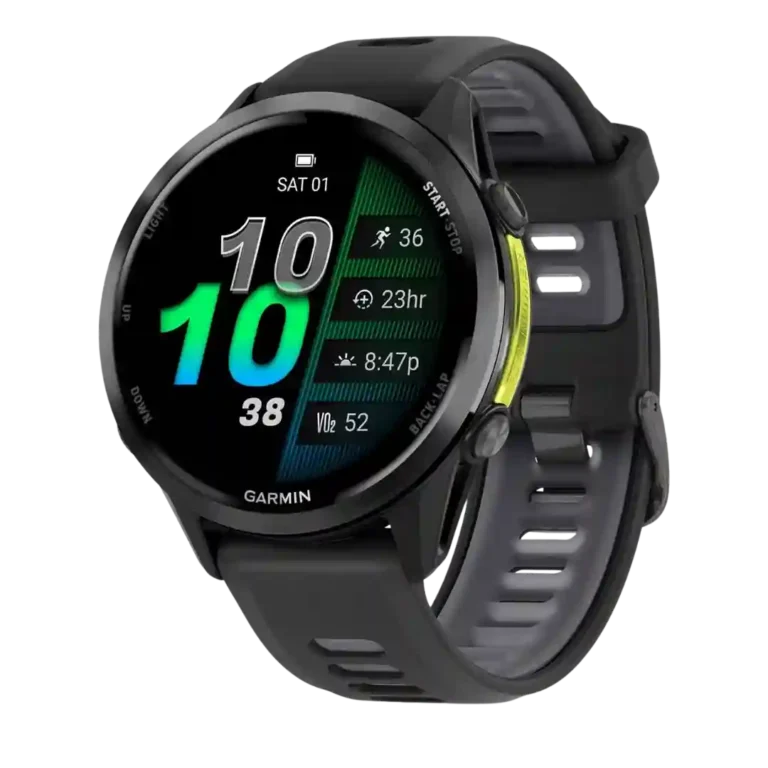
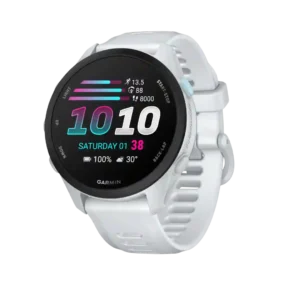
The Forerunner 970 lands as a premium runner and triathlete watch with standout GPS accuracy, strong wrist heart-rate tracking, a brighter AMOLED display, detailed maps, and Garmin’s deepest training and recovery toolkit. Reviewers repeatedly liked running tolerance, impact load, coaching, safety features, music storage, Garmin Pay, and the lighter feel compared with bulkier adventure watches. The tradeoff is clear: the brighter display and always-on use hurt everyday battery life, the price is steep, and some advanced metrics need the HRM 600 chest strap. Several reviewers also found map panning, saving activities, or rerouting laggy or buggy. It is most convincing for athletes who will actually use the depth of data rather than shoppers who just need basic GPS and health stats.
Compared in Reviews
Products reviewers directly compared with this model, grouped into quick takeaways.
- Better: value The 970 improves on the 965, but the 965 is judged better for value.
- Older model: successor positioning The review frames the 970 as the direct successor to the 965.
- Alternative: budget running watch The Coros Pace 4 is mentioned as a cheaper running-watch alternative.
Feature Scorecards
Pros
-
Button controls were a strength, with the five-button layout and dedicated buttons preserving reliable control when touch is not ideal.
-
GPS accuracy received broad agreement as excellent or top-tier on land, including road, trail, city, and race testing, with only some open-water caveats elsewhere.
-
Brightness was one of the most consistent upgrades, with reviewers calling the AMOLED display substantially brighter or Garmin’s brightest yet.
-
Durability was broadly positive due to sapphire scratch resistance and long-term mark-free use, though one review reported bezel scrapes.
-
Watch face quality was supported by multiple stock faces and many Connect IQ options, though only one review directly discussed it.
-
Display quality was widely praised for the bright, crisp, clear AMOLED touchscreen, with several reviewers calling it vibrant or readable.
-
Customization options were strong, including customizable watch faces, widgets, data pages, focus modes, and battery profiles.
-
Workout tracking variety was very strong, with reviews citing large sport libraries, new sport profiles, multisport tools, swimming, cycling, strength, and running modes.
-
Safety features were strong, with flashlight strobe, Incident Detection, LiveTrack, emergency alerts, and nighttime visibility cited.
-
Comfort was a major strength, with reviewers finding the lighter, slimmer body comfortable for 24/7 wear despite occasional sleep bulk concerns.
-
Heart-rate accuracy was one of the clearest strengths, with many reviewers finding the Elevate Gen5 sensor close to chest straps or reliable in running and workouts.
-
The app ecosystem was a clear Garmin advantage, with Connect IQ, downloadable faces, apps, and extensive sports-watch software repeatedly mentioned.
-
User interface evidence was positive where reviewers highlighted quicker menus and an easy-to-use widget/glance structure.
-
Fitness tracking accuracy was strongly supported in one detailed review that found near-perfect land-based workout tracks and solid optical heart-rate accuracy.
-
Onboard music storage was strongly supported, with 32GB storage and offline music or streaming-service downloads mentioned across reviews.
-
Build quality was strong overall, supported by sapphire, titanium, polymer construction, and a premium feel.
-
Recovery insights were consistently praised, especially impact load, running tolerance, training readiness, recovery time, and load guidance for managing training.
-
Materials quality was strong, with titanium and sapphire repeatedly cited as premium upgrades while keeping the watch light.
-
Outdoor visibility was strong, with multiple reviewers reporting good readability in sunlight or bright conditions.
-
Third-party app support was strong through Connect IQ and integrations or services such as Strava, Komoot, RideWithGPS, and useful extra apps.
-
Bluetooth connectivity was supported for headphones and external sensors, including Bluetooth and ANT+ pairings.
-
Stress tracking drew positive evidence, especially when reviewers saw stress feed into recovery, daily training, or Body Battery style insights.
-
Wellness insights were a strength, with Evening and Morning reports, Body Battery, sleep coaching, health status, and day-planning guidance repeatedly cited.
-
Coaching features were broad and useful, with Garmin Coach, triathlon plans, daily suggested workouts, race planning, and structured training repeatedly supported.
-
Style and design were generally praised as sleek, good-looking, premium, and less intimidating than rugged adventure watches, though not everyone loved the rubber-band look.
-
Smartwatch features were solid for a sports watch, covering notifications, calls, voice assistant, music storage, NFC payments, and general daily smarts.
-
Contactless payments were consistently confirmed through Garmin Pay or NFC payments, with caveats around bank support.
-
ECG functionality was widely confirmed as a major health upgrade, usually described as manual or snapshot-based rather than passive continuous monitoring.
-
Band quality had limited evidence but one review praised the strap’s subtle stretch and stabilizing micro-adjustment effect.
-
Operating system experience was mostly positive for Garmin’s depth, but reviewers also found the feature set overwhelming or less polished in some areas.
-
Mapping and navigation were major strengths for offline maps, routes, ClimbPro, and route tools, but map lag and rerouting bugs were repeated caveats.
-
Fit was positive for reviewers who liked the 47mm balance and wrist feel, though sleep fit and one-size limitations created caveats.
-
Music controls were supported through direct wrist playback and standard Garmin music features, though audio quality was not a central strength.
-
Health tracking evidence was mostly positive for derived health signals, including heart-related data and cycle/temperature-related observations, but one review noted Garmin can overestimate sleep.
-
Blood oxygen support is present through PulseOx or SpO2, and reviewers also tied it to breathing disturbance and broader sensor tracking.
-
Auto-detection evidence was limited but positive, with support for automatic sport-specific counts and lap auto-detection during swim testing.
-
Smartphone notifications were supported directly, including notifications, weather, calendar alerts, and phone-range message handling.
-
Voice assistant quality was useful for commands, timers, phone assistant access, and watch controls, though reviewers noted it is not always immediate or broad.
-
Water resistance was adequate for swimming and 50-meter or 5ATM use, but reviewers emphasized it is not diveproof like some Fenix models.
-
Touchscreen responsiveness was mixed: some found it snappy and useful, while others noticed scrolling lag, sensitivity quirks, or overwhelming touch interactions.
-
Cross-platform compatibility was functional but limited by phone platform, especially Apple restrictions on replies and media in notifications.
-
Call handling was useful but mixed: reviewers liked wrist calls and speaker/mic additions, while some found call volume or wrist talking less compelling.
-
Menu navigation was powerful but mixed: buttons and touchscreen offer control, while some reviewers found menu depth and clicks cumbersome.
-
Companion app quality was mixed: Garmin Connect was comprehensive and synced well, but one reviewer criticized app layout and built-in workouts.
-
Sleep tracking was useful and often consistent for sleep timing or ratings, though reviewers were cautious about stages and noted misses or comfort issues overnight.
Cons
-
Value for money was mixed: reviewers called it capable and sometimes worth it, but repeatedly emphasized the high price and stronger value from alternatives.
-
Battery life was the most mixed repeated theme: GPS endurance was usable or improved, but AMOLED smartwatch endurance and always-on use were frequent concerns.
-
Reliability evidence was mixed: some long-term use was reassuring, while route crashes and map glitches appeared in several reviews.
-
Charging convenience was mixed, with the familiar cable supported but reviewers still wanting wireless charging or noting the watch must be removed to extend recording.
-
Pairing reliability had limited direct evidence and was mixed, with one reviewer needing several attempts to pair the watch with the app.
-
Software smoothness was a recurring caveat, with reviewers citing lag, slow saves, map delays, route crashes, and unclear guidance in some advanced metrics.
-
Size options were weak because the 970 comes only in a 47mm size, which reviewers noted may not suit smaller wrists.
-
LTE connectivity was a clear weakness because reviews explicitly said the 970 lacks cellular or LTE functionality.
Compared With Category Average
Compared with other Smart Watch, this product is above average in ECG functionality, onboard music storage, contactless payments, below average in software smoothness, battery life, pairing reliability.
| Attribute | This product | Category average | Difference |
|---|---|---|---|
| ECG functionality | 4.2 | 2.3 | +2.0 |
| onboard music storage | 4.5 | 2.8 | +1.7 |
| contactless payments | 4.3 | 2.8 | +1.4 |
| voice assistant quality | 4.0 | 2.6 | +1.3 |
| software smoothness | 2.6 | 3.9 | -1.3 |
| battery life | 3.3 | 4.2 | -1.0 |
| third-party app support | 4.4 | 3.1 | +1.3 |
| pairing reliability | 2.7 | 4.0 | -1.3 |
FAQ
Is the Garmin Forerunner 970 GPS accurate?
Yes. Reviewers repeatedly described land-based GPS as excellent, impeccable, top-tier, or spot-on across road, city, trail, and race testing, though one detailed review saw some open-water swim track wobble.
How is the battery life?
Battery life is mixed. GPS endurance is generally strong enough for race days and long events, but always-on AMOLED use and high brightness made several reviewers charge every few days.
Do you need the HRM 600 chest strap?
Not for core GPS, optical heart-rate tracking, running tolerance, or most Garmin features. You do need it for running economy and step speed loss, and several reviewers disliked that extra cost.
Is it good for triathletes and ultra runners?
Yes, especially for athletes who use multisport tracking, triathlon coaching, maps, ClimbPro, recovery data, and long GPS activities. For the longest ultras or wilderness use, reviewers often pointed toward Fenix or MIP-display models for better battery life.
How good are the smartwatch features?
For a sports watch, they are strong: calls, smartphone notifications, voice commands, onboard music, Garmin Pay, watch faces, and Connect IQ apps appear throughout the reviews. The big limitation is no cellular or LTE.
Is it worth upgrading from the Forerunner 965?
The 970 adds sapphire glass, a brighter display, flashlight, ECG, speaker/mic, new running metrics, and updated software. Multiple reviewers still said the 965 remains a better value if those upgrades are not essential.
Consider This Instead
If you want better size options
Choose Google Pixel Watch 3. It scores 4.7 vs 2.3 for size options, with a 4.2 overall score.
If you want better battery life
Choose Suunto Vertical. It scores 4.9 vs 3.3 for battery life, with a 3.8 overall score.
If you want better software smoothness
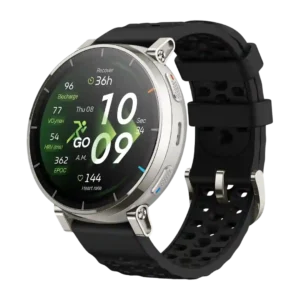
Choose Amazfit Active 3 Premium. It scores 4.8 vs 2.6 for software smoothness, with a 4.1 overall score.
If you want better pairing reliability
Choose Garmin Approach S70. It scores 5.0 vs 2.7 for pairing reliability, with a 4.3 overall score.
Overall Top Smart Watch Alternatives
Good if you want the most rugged Apple Watch, brighter outdoor screen, better battery, LTE, and top apps. Skip it if you need Garmin-like mapping, recovery analytics, smaller sizing, or...
Pros: display quality, heart rate accuracy
Cons: cross-platform compatibility, recovery insights
Choose the Galaxy Watch 6 for a polished Android smartwatch with a bright screen, strong apps, and broad health tracking. Skip it if battery life, iPhone support, or full non-Samsung...
Pros: outdoor visibility, workout tracking variety
Cons: cross-platform compatibility, battery life
Good if you need a rugged Garmin with deep outdoor, tactical, GPS, training, and battery features. Skip it if you want a cheaper lifestyle watch or do not need the...
Pros: materials quality, durability
Cons: LTE connectivity, value for money
Good if you want premium golf maps, virtual caddie tools, health metrics, music, notifications, and long battery life in one watch. Skip it if you only need basic yardages or...
Pros: pairing reliability, brightness
Cons: software smoothness, user interface