app ecosystem
P1
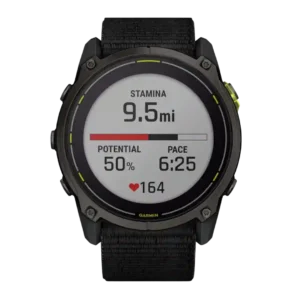
Product 1: Garmin Enduro 3
4.0
The app ecosystem gets some credit for a large library of watch faces, but the broader smartwatch-app story is not the product’s main strength.
P2
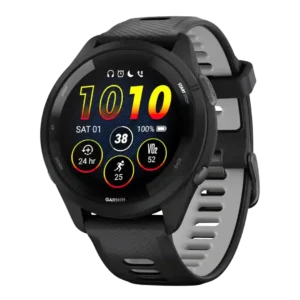
Product 2: Garmin Forerunner 265
3.8
The Garmin ecosystem was powerful for data, apps, and customization, but some reviewers wanted stronger smartwatch-style apps or killer AMOLED use cases.
band quality
P1
Product 1: Garmin Enduro 3
4.0
Band quality was mostly praised for comfort and lightness, but sweat retention and wet fabric were recurring drawbacks.
P2
Product 2: Garmin Forerunner 265
4.3
Band quality was mostly positive for comfort, stretch, cleaning, and adjustability, with one caveat about band length on larger wrists.
battery life
P1
Product 1: Garmin Enduro 3
4.9
Battery life was the strongest consensus point, with reviewers repeatedly describing weeks of use and endurance-event confidence.
P2
Product 2: Garmin Forerunner 265
4.3
Battery life was broadly strong for an AMOLED sports watch, though ultra runners and users coming from MIP or solar watches wanted more.
brightness
P1
Product 1: Garmin Enduro 3
4.0
Brightness was improved, especially versus older solar MIP designs, though AMOLED displays remained brighter in many conditions.
P2
Product 2: Garmin Forerunner 265
5.0
Brightness was strongly praised, with reviewers finding the AMOLED display vivid, clear, and easy to read.
build quality
P1
Product 1: Garmin Enduro 3
3.0
Build quality took a hit for one reviewer because replacing some metal with plastic made it feel less robust than the predecessor.
P2
Product 2: Garmin Forerunner 265
3.5
Build quality was mixed: plastic felt cheap to one reviewer, while another long-term test found the watch still looked new.
button controls
P1
Product 1: Garmin Enduro 3
4.8
Physical button controls were praised as reliable and satisfying, with the touchscreen-button blend described as the best of both worlds.
P2
Product 2: Garmin Forerunner 265
4.2
Button controls were widely praised for workout reliability, tactile feedback, and the larger Run button, though one reviewer disliked squishy secondary buttons.
call handling
P1
Product 1: Garmin Enduro 3
2.5
Call handling is limited because the Enduro 3 lacks mic and speaker hardware; one reviewer did not miss it, while another missed wrist-call support.
P2
Product 2: Garmin Forerunner 265
1.7
Call handling was consistently limited because reviewers could accept or reject calls only with a paired phone and could not talk through the watch.
charging convenience
P1
Product 1: Garmin Enduro 3
2.5
Charging convenience was criticized because the proprietary four-pin cable remains a hassle despite the long intervals between charges.
P2
Product 2: Garmin Forerunner 265
3.3
Charging convenience was mixed: one reviewer disliked the USB-C plug situation, while another appreciated faster USB-C charging.
charging speed
P1
Product 1: Garmin Enduro 3
3.0
Charging speed was only directly judged in one long-term review, where the slow full charge was a minor nitpick because charging was rare.
P2
Product 2: Garmin Forerunner 265
4.7
Charging speed was praised across reviews, with top-offs and full charges described as quick.
coaching features
P1
Product 1: Garmin Enduro 3
4.6
Coaching and training-plan features were praised for actionable strength plans, readiness guidance, and useful endurance-focused training support.
P2
Product 2: Garmin Forerunner 265
4.2
Coaching features were strong for runners through audio prompts, suggested workouts, plans, and workout-building, but one reviewer disliked the limited training-plan choice.
comfort
P1
Product 1: Garmin Enduro 3
4.2
Comfort was better than expected for a 51mm watch thanks to low weight and nylon straps, though sleep comfort and bulk remained caveats.
P2
Product 2: Garmin Forerunner 265
4.5
Comfort was a major strength, with reviewers repeatedly praising the light weight, silicone strap, sleepability, and all-day wear, despite one longer-wear caveat.
companion app quality
P1
Product 1: Garmin Enduro 3
4.0
The companion app and Garmin Share workflow were praised for saving time when distributing routes and workouts.
P2
Product 2: Garmin Forerunner 265
3.9
The companion app was powerful and fast, but reviewers also found Garmin Connect overwhelming or less intuitive than ideal.
contactless payments
P1
Product 1: Garmin Enduro 3
5.0
Contactless payments were strongly praised by reviewers who used Garmin Pay frequently and treated it as part of daily use.
P2
Product 2: Garmin Forerunner 265
2.8
Garmin Pay was useful when supported, but bank compatibility could make contactless payments worthless for some users.
cross-platform compatibility
P1
Product 1: Garmin Enduro 3
3.0
Cross-platform compatibility is mixed because Android users can reply with presets, while iPhone users lose reply functionality.
P2
Product 2: Garmin Forerunner 265
3.5
Cross-platform support was mixed because Android users get quick replies while iPhone users are more limited.
customization options
P1
Product 1: Garmin Enduro 3
4.5
Customization remains a Garmin strength, especially customizable data fields, stat widgets, and quick-access tools.
P2
Product 2: Garmin Forerunner 265
4.8
Customization was a major strength, spanning watch faces, shortcuts, data screens, workouts, and Garmin Connect settings.
display quality
P1
Product 1: Garmin Enduro 3
4.0
Display quality improved over prior solar Garmins and is clear outdoors, but several reviewers still preferred AMOLED sharpness and color.
P2
Product 2: Garmin Forerunner 265
4.9
Display quality was one of the strongest consensus positives, with reviewers repeatedly praising the AMOLED screen as crisp, bright, vivid, and modern.
durability
P1
Product 1: Garmin Enduro 3
4.5
Durability was strong in the reviewed evidence, with praise for the long-lasting body and a six-month report of no visible screen scratches.
P2
Product 2: Garmin Forerunner 265
3.3
Durability evidence was mixed, with scratch concerns in one review, a pristine long-term sample in another, and a caution about plastic and Gorilla Glass.
fit
P1
Product 1: Garmin Enduro 3
4.0
Fit was secure and wearable for some reviewers, but the large case still looked or felt oversized on smaller wrists.
P2
Product 2: Garmin Forerunner 265
3.8
Fit was positive for running access and sleeve clearance, but one review warned the watch could feel bulky during sleep.
fitness tracking accuracy
P1
Product 1: Garmin Enduro 3
4.5
Fitness tracking was broadly viewed as accurate and dependable across real workouts, runs, hikes, and multisport use.
P2
Product 2: Garmin Forerunner 265
4.6
Fitness tracking accuracy was broadly praised for runs, rides, swims, and general workouts, with only running-dynamics precision described as approximate.
flashlight usefulness
P1
Product 1: Garmin Enduro 3
4.9
The flashlight was one of the most consistently loved extras, described as handy, underrated, and hard to live without.
P2Product 2: Garmin Forerunner 265
No score yetGPS accuracy
P1
Product 1: Garmin Enduro 3
4.7
GPS accuracy drew strong agreement, with reviewers reporting precise tracks, solid distance totals, and reliable performance even in challenging terrain.
P2
Product 2: Garmin Forerunner 265
4.9
GPS accuracy received very strong agreement, with reviewers repeatedly calling tracks fast, consistent, spot-on, or close to perfect.
health tracking accuracy
P1
Product 1: Garmin Enduro 3
4.6
Reviewers found the Enduro 3’s health metrics credible and useful, with one noting it flagged underlying illness signs before the reviewer noticed them.
P2
Product 2: Garmin Forerunner 265
3.7
Reviewers found the health metrics strong when heart-rate readings worked, but tattooed skin could undermine the whole health-tracking stack.
heart rate accuracy
P1
Product 1: Garmin Enduro 3
4.1
Heart-rate accuracy was usually strong, especially for steady running and baseline tests, but several reviewers saw misses during intervals, climbs, strength work, or fast intensity changes.
P2
Product 2: Garmin Forerunner 265
4.4
Heart-rate accuracy was one of the strongest areas across reviews, with several chest-strap comparisons looking very close, though one reviewer had serious tattoo-related read failures.
mapping and navigation
P1
Product 1: Garmin Enduro 3
4.4
Mapping and navigation were a major strength, especially route following, off-course alerts, ClimbPro, and backcountry use, though some UI flow remains clunky.
P2
Product 2: Garmin Forerunner 265
2.6
Mapping and navigation were the most consistent weakness for trail and ultra use; breadcrumb routing was useful for some, but missing full maps and failed TracBack frustrated others.
materials quality
P1
Product 1: Garmin Enduro 3
3.8
Materials quality was mixed: reviewers liked the practical comfort and price effects of plastic, but one initially felt it seemed cheap.
P2
Product 2: Garmin Forerunner 265
2.5
Materials quality was a recurring caveat because the polymer/plastic construction felt cheaper than metal or sapphire rivals.
menu navigation
P1
Product 1: Garmin Enduro 3
3.8
Menu navigation improved overall, but added button presses and a learning curve kept it from feeling completely effortless.
P2
Product 2: Garmin Forerunner 265
3.8
Menu navigation was mixed: Garmin's depth brought a learning curve, though workout data screens were easy to move through once learned.
onboard music storage
P1
Product 1: Garmin Enduro 3
2.0
Onboard music storage is supported, but one reviewer had repeated Spotify download failures, hurting confidence in the feature.
P2
Product 2: Garmin Forerunner 265
4.4
Onboard music was a recurring strength, letting runners store or download playlists and leave the phone behind.
operating system experience
P1
Product 1: Garmin Enduro 3
4.0
The updated software experience makes the Enduro 3 feel closer to a smartwatch while keeping its sports-watch focus.
P2
Product 2: Garmin Forerunner 265
2.8
The operating-system experience was functional but not very modern, and one reviewer criticized Garmin's software segmentation.
outdoor visibility
P1
Product 1: Garmin Enduro 3
4.3
Outdoor visibility was mostly praised in sun and bright conditions, but one reviewer found the map hard to see in dim forest without backlight.
P2
Product 2: Garmin Forerunner 265
4.2
Outdoor visibility was mostly strong in bright conditions, though one reviewer had trouble on sunny days and another noted polarized-sunglasses caveats.
recovery insights
P1
Product 1: Garmin Enduro 3
4.7
Recovery and training-readiness insights were repeatedly praised as useful for pacing training, race preparation, and deciding when to push or rest.
P2
Product 2: Garmin Forerunner 265
4.9
Recovery insights were widely praised, especially Training Readiness, HRV, Body Battery, and overtraining guidance, though usefulness depends on reliable heart-rate data.
reliability
P1
Product 1: Garmin Enduro 3
5.0
Long-term reliability was praised in one six-month review, where the watch lived up to expectations through demanding use.
P2
Product 2: Garmin Forerunner 265
2.5
Reliability concerns centered on LiveTrack/messages, which came through sporadically in one review.
safety features
P1
Product 1: Garmin Enduro 3
4.5
Safety features received positive evidence through off-course alerts that prevented extra race mileage.
P2
Product 2: Garmin Forerunner 265
3.0
Safety features had limited evidence, with LiveTrack working well for a time but showing signal-dependent issues.
size options
P1
Product 1: Garmin Enduro 3
2.1
Size options were the clearest weakness because the Enduro 3 only comes in one large 51mm case.
P2
Product 2: Garmin Forerunner 265
4.5
Size options were appreciated, especially the smaller 265S for small wrists and the large display for those who want more screen.
sleep tracking accuracy
P1
Product 1: Garmin Enduro 3
4.0
Sleep tracking was described as solid, though comfort and size may limit how many users want to wear it overnight.
P2
Product 2: Garmin Forerunner 265
3.9
Sleep tracking drew mixed-to-positive feedback: several reviewers liked the sleep summaries, while one found sleep stages and scores inconsistent across Garmin watches.
smartphone notifications
P1
Product 1: Garmin Enduro 3
3.5
Notifications work, and Android replies are useful, but the evidence also points to platform limits rather than a rich messaging experience.
P2
Product 2: Garmin Forerunner 265
3.3
Smartphone notifications were useful but basic; Android quick replies helped, while iPhone limitations and lack of full interaction held the feature back.
smartwatch features
P1
Product 1: Garmin Enduro 3
3.1
Smartwatch features are adequate for essentials but limited versus Apple, Samsung, or Garmin’s own Fenix 8 voice-enabled models.
P2
Product 2: Garmin Forerunner 265
2.7
Smartwatch features were mixed: the AMOLED screen made the watch feel more modern, but missing mic, speaker, LTE, ECG, and richer apps kept it fitness-first.
software smoothness
P1
Product 1: Garmin Enduro 3
3.4
Software smoothness was mixed, with reviewers liking the direction but noting sluggishness, laggy post-run stats, and polish still needed.
P2
Product 2: Garmin Forerunner 265
3.5
Software smoothness was generally acceptable, but reviewers noted stutter, motion blur, and that Garmin software is improving rather than flawless.
stress tracking
P1Product 1: Garmin Enduro 3
No score yet
P2
Product 2: Garmin Forerunner 265
4.5
Stress tracking was generally useful, especially for breathing prompts, body-battery context, and reminders to take breaks.
style and design
P1
Product 1: Garmin Enduro 3
3.8
Design reactions were mixed: some liked the sleek rugged look, while another found the changes polarizing and subjective.
P2
Product 2: Garmin Forerunner 265
3.7
Style and design were mixed: reviewers liked the modern AMOLED look, colors, and premium feel, but several still saw a sporty or plasticky watch.
third-party app support
P1
Product 1: Garmin Enduro 3
2.5
Third-party app support was judged weak compared with Apple’s ecosystem, with reviewers saying the Connect IQ offering does not rival fuller smartwatches.
P2
Product 2: Garmin Forerunner 265
5.0
Third-party workout syncing was praised as very easy, especially for sending activities to external services.
touchscreen responsiveness
P1
Product 1: Garmin Enduro 3
4.5
Touchscreen responsiveness was viewed positively, with reviewers praising touch unlock, responsiveness, and the touchscreen/buttons mix.
P2
Product 2: Garmin Forerunner 265
4.4
Touchscreen responsiveness was generally good, including in rain and sweat, but several reviewers still preferred buttons during workouts.
user interface
P1
Product 1: Garmin Enduro 3
4.0
The revised interface was generally seen as easier and more coherent, though not perfectly polished across all reviewers.
P2
Product 2: Garmin Forerunner 265
4.4
The user interface was mostly praised as intuitive, easy to use, and rich with on-watch data.
value for money
P1
Product 1: Garmin Enduro 3
4.6
Value for money was repeatedly praised because the Enduro 3 costs less than several Fenix alternatives while keeping key sports features.
P2
Product 2: Garmin Forerunner 265
3.6
Value depended on use case: many reviewers found the 265 worth it for serious runners, while others balked at the price, plastic build, or missing maps.
watch face quality
P1
Product 1: Garmin Enduro 3
2.0
Watch face quality was criticized by one reviewer as visually weak compared with Apple or Samsung options.
P2
Product 2: Garmin Forerunner 265
4.6
Watch faces were praised for AMOLED color, variety, stock quality, and Connect IQ options.
water resistance
P1
Product 1: Garmin Enduro 3
3.5
Water resistance is good for swimming and snorkeling, but reviewers noted it is not intended for diving.
P2
Product 2: Garmin Forerunner 265
5.0
Water resistance performed well in hands-on use, including showering, submersion, pool, and ocean exposure.
wellness insights
P1
Product 1: Garmin Enduro 3
4.7
Wellness metrics such as Body Battery, Training Readiness, sleep, and health trends were seen as genuinely helpful rather than just decorative data.
P2
Product 2: Garmin Forerunner 265
3.3
Wellness insights split reviewers: Body Battery and stress metrics helped some users, while another found sleep and Body Battery more descriptive than actionable.
workout tracking variety
P1
Product 1: Garmin Enduro 3
4.8
Reviewers consistently praised the wide sport coverage, describing the Enduro 3 as capable across nearly every activity and especially strong for endurance athletes.
P2
Product 2: Garmin Forerunner 265
4.6
Workout variety was seen as deep and runner-focused, with extensive sport profiles, though one reviewer felt Garmin trailed Polar on sheer profile count.