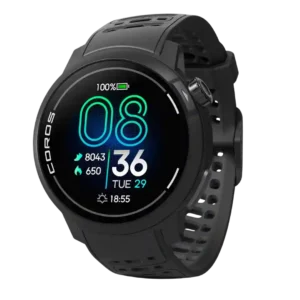
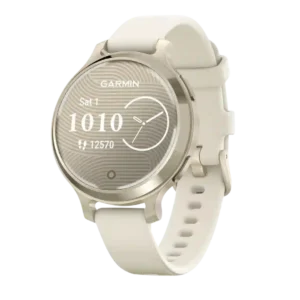
The Pace Pro plugs into a healthy training ecosystem, with reviewers highlighting broad third-party integrations rather than a closed, watch-only experience.
One review describes Garmin’s wellness ecosystem as comprehensive, especially for turning health data into useful summaries.
Band impressions are mostly positive for comfort and practicality, though the silicone option is not ideal for everyone and the nylon strap gets stronger praise.
The silicone band is described positively for comfort and feel.
Battery life is one of the Pace Pro’s biggest advantages, though always-on use and certain GPS scenarios can trim real-world results versus the headline specs.
Battery life is widely praised, with most reviews citing around nine days and some testers stretching well beyond a week.
SpO2 support is present, but reviewers treated it as a secondary, mostly on-demand wellness feature rather than a major reason to buy the watch.
Pulse Ox is present and generally viewed positively, with one reviewer calling the SpO2 readings spot-on.
Bluetooth support is useful for syncing and accessories, and reviewers generally found it competent even when other wireless options were less consistent.
Bluetooth support is consistently mentioned for sensor links, heart-rate broadcasting, and phone connectivity.
Brightness is a standout strength, with reviewers repeatedly calling the AMOLED screen easy to see in harsh sunlight and at night.
One reviewer said the screen can be hard to read in very bright conditions, even at maximum brightness.
Build quality is respectable for a lightweight sports watch, but it does not consistently feel as premium as pricier rivals.
The move from a plastic case to a metal case is presented as a quality upgrade.
The physical controls are generally easy to use, though the crown-first setup is not universally loved.
The new physical buttons are one of the most praised upgrades, especially for workouts and easier navigation.
Calorie data is available, but one review said calories burned ran slightly off compared with another watch.
The USB-C dongle/keyring charger is convenient for travel, but it is still a proprietary piece you have to keep track of.
Charging is improved by the standard Garmin cable or simple magnetic setup, and reviewers call the new approach more convenient.
Charging is reasonably quick in testing, with reviewers generally reporting a full charge in roughly one to two hours.
Charging speed is good, with reviewers reporting roughly a full charge in about an hour.
Training tools are a clear strength, with plans, pacing, recovery, and structured workout support covering most runner-focused coaching needs.
Garmin Coach and structured workouts are widely praised for offering guided plans and flexible goal-based training.
Comfort is usually excellent thanks to the low weight, but the 46mm case and stock silicone strap can be less agreeable on smaller wrists.
Comfort is a standout strength, with reviewers repeatedly saying the watch is light, easy to sleep in, and easy to forget on the wrist.
The companion app is consistently described as clear, focused, and easy to understand without feeling overwhelming.
Garmin Connect gets mixed marks: reviewers praised setup and data usefulness, but one found the app less clear than it could be.
Contactless payments are simply missing, which remains one of the clearest smartwatch gaps versus Garmin and Apple.
Garmin Pay is repeatedly noted as convenient and easy for on-the-go payments.
One review explicitly says the watch works with both iOS and Android phones.
There is meaningful customization for data screens and setup, but reviewers still found the watch less flexible than some rivals.
Reviews note good customization for watch faces, widgets, data pages, training plans, and notifications, even if flexibility is not unlimited everywhere.
Display quality is excellent overall, combining sharp visuals, rich color, and a polished AMOLED presentation.
The hidden monochrome display earns praise for clarity and contrast, though it remains intentionally simple rather than rich or colorful.
Durability looks adequate for everyday training, but the plastic/mineral-glass build is not viewed as especially rugged for tougher adventures.
Durability impressions are mixed, with Gorilla Glass noted positively but aluminum scratch resistance called out as a weakness.
ECG is available, but it is limited in scope and not positioned as a certified medical feature or AFib tool.
Reviews explicitly note that the Lily 2 Active does not include ECG support.
Fit can be very good, especially on average wrists, but the single 46mm size and strap choice do not suit everyone equally well.
The compact size and lightweight build earn strong praise for smaller wrists and all-day wear.
General sports tracking is strong across running and multisport use, with reviewers broadly trusting the watch during workouts.
General fitness tracking is reviewed very positively, with performance described as accurate and comparable to pricier Garmin models.
GPS accuracy is a major strength overall, though a few reviewers still noted small offsets or less-polished behavior than top-end competitors in harder scenarios.
GPS is a standout strength, with multiple reviews calling it accurate, fast to connect, and very close to higher-end Garmin devices.
Core health data such as sleep timing and HRV trends comes across as believable, even if reviewers did not treat every wellness metric as lab-grade.
Heart rate tracking is good for many steady efforts, but repeated reviews found it less dependable for hard intervals, cycling, or steep climbs.
Multiple reviews say heart-rate tracking was very solid or spot-on, with only minor lag during quick changes in effort.
Materials clearly prioritize low weight over premium toughness, with polymer and mineral glass trading ruggedness for comfort and price.
Materials get mixed feedback: Gorilla Glass and aluminum are appreciated, but one reviewer still viewed the aluminum as easier to scratch than pricier materials.
Menu navigation is fast and intuitive, and the watch’s simplified layout was repeatedly praised.
Menus and widget navigation are generally viewed as straightforward, with swipes and buttons making the watch easier to move around.
Music controls are a weak point, especially for phone-streamed audio, where reviewers repeatedly noted missing or limited control options.
Phone-based music controls work well for basic playback tasks like volume and track skipping.
Onboard storage is generous, but the music experience is still limited by drag-and-drop local files and no streaming support.
Multiple reviews explicitly say there is no onboard music storage, so you still need your phone for music.
The overall operating experience feels focused and sports-first, favoring clarity and efficiency over feature bloat.
Outdoor visibility is excellent, with the AMOLED screen staying readable in bright daylight and poor light alike.
One review specifically said the screen stayed readable outdoors, even in direct sunlight.
External sensors generally pair reliably, and reviewers who tested accessories reported easy connections.
Pairing is described as easy and dependable for phones and supported external sensors.
Recovery and training-readiness insights are useful, though some reviewers still wanted more polish in how those insights are presented or calculated.
HRV, Body Battery, Training Readiness, and related guidance give useful signals about recovery and when to push or rest.
Day-to-day reliability is mostly solid, but reviews still surfaced a few bugs, quirks, or rough edges that keep it from feeling flawless.
One reviewer explicitly described the watch as very reliable during GPS use.
Navigation safety helpers like off-route alerts and back-to-start support add real value for trail and hiking use.
Incident detection, fall alerts, and emergency contact sharing are repeatedly mentioned as reassuring safety features.
Size choice is limited because the watch comes in a single 46mm case, which several reviewers said will not suit every wrist.
Sleep tracking is generally trusted for timing and nightly consistency, even if reviewers were not focused on validating every stage metric.
Reviewers consistently said the watch nailed sleep and wake timing and caught wake-ups well, though one review still wanted deeper sleep-stage detail.
Notifications are readable and useful, but they remain basic and miss richer handling like full emoji support.
The watch reliably mirrors smartphone notifications, with support for calls, texts, and app alerts.
Smartwatch features cover the basics, but the Pace Pro still trails stronger rivals when it comes to modern everyday conveniences.
Core smartwatch basics are here, including notifications, music control, and Garmin Pay, but the feature set stays focused rather than expansive.
Software smoothness is a clear highlight, with the faster processor making menus and maps feel quick and responsive.
One review says day-to-day swiping and opening apps feels smooth.
One reviewer found step counts close in casual testing, though arm-free walking can still miss steps.
Stress tracking exists and can be informative, but at least one reviewer found workout-related stress handling less convincing.
Stress tracking is included across reviews and is described as useful for understanding energy and daily load.
The design is functional and sporty, but several reviewers felt it looks simpler and less premium than direct rivals.
Style is one of the biggest selling points, with reviewers consistently praising the fashionable, minimalist look.
Third-party app support is a plus, especially for services like Strava, TrainingPeaks, Komoot, and similar training platforms.
Reviews confirm syncing and compatibility with third-party services such as Strava, TrainingPeaks, and similar fitness platforms.
Touch responsiveness is excellent, with multiple reviewers describing the screen as fast, accurate, and easy to use mid-workout.
Touch input is the clearest weakness in the reviews, with repeated complaints about touches not registering cleanly.
The user interface is approachable and well organized, even if it is not the fanciest or most fully featured in the category.
One reviewer describes the interface as very simple to swipe through and interact with.
Value is one of the Pace Pro’s biggest appeals, especially for buyers who want AMOLED, maps, and long battery life without stepping into flagship prices.
Value is mixed but mostly positive: several reviews say the added GPS and upgrades justify the price, while others think rivals offer more for similar money.
Watch faces look good and benefit from the AMOLED screen, though some reviewers still wanted deeper data-field personalization.
Watch face options get mixed feedback: the designs suit the look of the watch, but several reviewers wanted more variety or more color.
Water resistance is fine for rain, pool use, and open water swimming, but it is not built for more demanding water sports or diving.
One review states the watch is water resistant to 5 ATM.
Wellness insights are useful for understanding exertion, recovery, and general trends, even if they are not especially medical or exhaustive.
Body Battery, sleep scores, hormone guidance, and other wellness summaries are a major strength and frequently described as useful.
Wi-Fi is available, but at least one reviewer ran into inconsistent behavior, making it less confidence-inspiring than the rest of the watch.
Workout variety is strong, with plenty of sport modes and enough range for most running, triathlon, hiking, gym, and swim use.
Reviews repeatedly highlight the wide range of sport profiles and workout modes, with the Active adding many more than earlier Lily models.