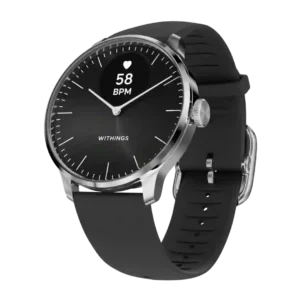
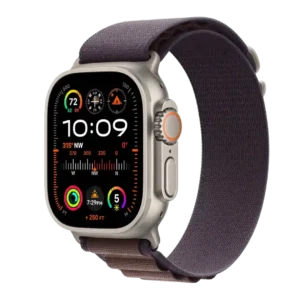
Automatic detection is a real strength for basic activities like walking, running, cycling, and swimming, though one reviewer said auto-tracked sessions sometimes needed manual cleanup.
One review explicitly says brisk walks are logged automatically, suggesting useful basic auto-detection for everyday activity.
Reviewers like the broader Withings ecosystem, especially the ability to collect watch data alongside other Withings health devices in one app.
Reviews consistently highlight a leading app ecosystem with strong native tools and especially broad third-party watch app availability.
Band comfort is strong, with positive notes on all-day wear, soft material, secure fit, and low skin irritation.
Band feedback is positive overall, with the Trail Loop and other stock options praised for comfort, durability, and activity-friendly design.
Battery life is usually a standout, with many reviewers seeing multi-week endurance, but results vary sharply depending on settings like Quicklook, notifications, and workout use.
Battery life is strong by Apple Watch standards and often reaches two to three days, but several reviewers still find it short versus Garmin-style endurance watches.
Reviewers repeatedly note that the ScanWatch Light lacks SpO2 monitoring, leaving blood-oxygen tracking to higher-end alternatives.
Blood oxygen support appears mixed across the review set: later coverage notes its return in the US, while some earlier long-term coverage still flags it as missing.
Bluetooth support is reviewed positively, especially for pairing cycling accessories like power meters and cadence sensors.
Screen brightness is mixed: one reviewer found it too dim in use, while another found wake behavior too bright at night.
Brightness is a standout strength, with repeated praise for the 3,000-nit display and meaningful improvement over prior Apple Watch screens.
Build impressions are strong, with repeated praise for the solid-feeling case and overall hardware execution.
Reviews describe the Ultra 2 as solid and rugged, with a tough case built to handle harsher environments than standard Apple Watches.
Physical controls are the norm here, and reviewers say the crown or dial works well once you adapt to it.
The Action Button, crown, and side controls are widely praised for faster access and better usability, especially with gloves or during workouts.
Call quality is consistently strong, with reviewers noting clear voice pickup and easy on-watch call interactions.
Calorie data is present but basic, and reviewers describe it as more of a simple estimate than a standout training metric.
The proprietary charger is a recurring complaint for feel and convenience, even though some reviewers liked its secure grip or compact shape.
Charging is relatively easy to live with thanks to quick top-ups and even support for charging from an iPhone 15, though the watch still needs regular charging.
Charging speed is consistently reported around two hours for a full top-up, with some reviewers noting meaningful recovery in 30 minutes.
Charging speed is serviceable rather than class-leading; reviewers note useful top-ups, but also point out the Series 10 charges faster.
Coaching is light but present through guided breathing and premium-app guidance rather than deep on-watch training features.
Training Load and related workout guidance add meaningful coaching value, helping users gauge effort and decide when to push harder.
Comfort is a major positive, with reviewers repeatedly calling the watch light, slim, unobtrusive, and easy to wear to bed or during exercise.
Despite its size, reviewers often find the Ultra 2 comfortable for long wear, especially with the right band, though wrist size still matters.
The Health Mate app is generally seen as detailed and easy to navigate, though not every reviewer liked its layout.
Apple’s companion apps are generally praised for polish and usefulness, especially the Watch, Fitness, and Health app experience.
Payments are absent, and reviewers explicitly say to look elsewhere if contactless pay is important.
Apple Pay is treated as a strong smartwatch convenience and part of the Ultra 2’s well-rounded everyday feature set.
The watch is consistently described as working with both Android and iPhone, and reviewers also note app availability across mobile platforms.
Cross-platform compatibility is a clear weakness: the Ultra 2 is tightly tied to iPhone and does not support Android.
Customization is modest but useful, covering screen order, watch behavior, and shortcut setup rather than deep personalization.
Customization is a strength, with flexible watch faces, widgets, buttons, and app-level options highlighted across reviews.
The small monochrome/OLED display is functional for basics, but reviewers repeatedly describe it as tiny and limited for dense information.
Display quality is exceptional, with reviewers calling it one of the brightest, sharpest, and best smartwatch screens available.
Durability looks good in early testing, with scratch resistance and resistance to sweat or rain called out positively.
Durability is a major selling point, with repeated references to rugged certifications, water resistance, and strong real-world wear.
ECG is not included on the ScanWatch Light, and reviewers point to that omission as a clear gap versus pricier models.
ECG support is repeatedly noted as part of the Ultra 2’s premium health feature set.
Fit is best for smaller wrists, and multiple reviewers caution that the 37mm case may feel too small or less ideal for some users.
Fit is secure for many users, but the large 49mm case can feel challenging on smaller wrists.
General fitness tracking is serviceable and often close enough for casual use, but auto-detected sessions can need editing and this is not framed as a serious sports watch.
Fitness tracking is viewed as highly accurate overall, with especially strong comments around workout tracking and GPS-backed activity data.
There is no built-in GPS, but connected GPS through the phone was repeatedly described as accurate enough for distance and pace comparisons against Garmin devices.
Most reviews praise GPS accuracy as excellent, though one in-depth test reported weaker results in a difficult dense-city scenario.
Broader health readings come across as useful and directionally solid, but at least one reviewer found Oura more precise for sleep timing and staging.
Health tracking is generally regarded as strong and trustworthy, with positive remarks on broader health features and longitudinal monitoring.
Heart-rate performance is generally strong, with close comparisons to Garmin and Polar in several tests, though one reviewer found average daily readings ran too high.
Heart-rate accuracy is one of the Ultra 2’s strongest areas, with multiple comparisons showing close agreement with chest straps.
LTE support is a useful standard feature that helps keep the Ultra 2 connected away from the phone.
Materials are consistently framed as premium for the price, especially the stainless steel and Gorilla Glass construction.
Material quality earns strong marks thanks to the titanium build, premium feel, and confidence-inspiring finish.
Crown-based navigation takes adjustment but is generally easy once learned, and several reviewers say scrolling through screens becomes natural.
Navigation is generally easy and well thought out, with reviewers liking the quick menus, crown behavior, and widget access.
Music control is a clear omission, with reviewers calling out the inability to manage playback from the wrist.
Music control support is solid, with Double Tap and on-watch controls helping with playback management.
Storage is strong for music and offline media, helped by 64GB capacity and support for downloadable content.
One reviewer found the overall system experience less seamless than a Pixel Watch because watch and phone settings are not deeply synchronized.
watchOS is broadly praised for polish and feature depth, even if some reviewers still want deeper outdoor and athletic tools.
Outdoor readability is a weakness, with direct-sun visibility called out as poor.
Outdoor visibility is excellent, with the screen remaining easy to read in bright sun and other demanding conditions.
Phone pairing and syncing were described as smooth and stress-free in the reviews that directly discussed setup reliability.
Recovery insights are a notable weak spot, with several reviewers saying the Ultra 2 still lacks the deeper readiness and recovery analysis rivals offer.
Core functionality is generally reliable, with one reviewer explicitly calling it solid and another praising battery endurance as dependable.
Reliability feedback is positive overall, with reviewers describing the watch as dependable in day-to-day use and workouts.
Safety-oriented features are mixed: high and low heart-rate alerts are included, but reviewers criticize the lack of AFib detection.
Safety features are a standout, including siren, crash and fall detection, last-cell waypoint tools, and other emergency-focused functions.
Size flexibility is limited because the ScanWatch Light comes only in a single 37mm case.
Size choice is limited; multiple reviews call out the lack of alternatives beyond the single large 49mm case.
Sleep duration, stages, and scores were often similar to Garmin, Oura, or other reference devices, but some reviewers saw less precise wake or sleep-time detection.
Sleep tracking is considered accurate by several reviewers, including comparisons that track closely with rival wearables.
Phone notifications work, but the tiny screen makes longer messages slower to read and the experience varies from acceptable to genuinely good depending on expectations.
Notification handling is strong, with reviewers highlighting clear message alerts and easy wrist-based replies.
As a smartwatch, the ScanWatch Light is intentionally basic: notifications, timers, and alarms are present, but richer smart features are limited.
As a smartwatch, the Ultra 2 is repeatedly described as best-in-class, with few compromises relative to dedicated outdoor watches.
Performance feels very smooth, with reviewers repeatedly describing the interface as fast, zippy, and responsive.
Step counts were directionally useful, but several reviewers saw daily totals run about 1,000 steps away from comparison devices.
Style is one of the clearest strengths: reviewers repeatedly praise the analog look, elegant feel, and ability to pass as a real watch.
The Ultra 2’s design is widely admired for its premium, bold, rugged look, though it is undeniably large and attention-grabbing.
Third-party syncing is a plus, with repeated mentions of Apple Health, Google Fit, Strava, and Samsung Health integration.
Third-party app support is a major advantage, with multiple reviewers calling the watchOS app selection best-in-class.
There is no touchscreen at all, so touch responsiveness is effectively absent by design.
Touch response is excellent, with taps, swipes, and on-watch interactions described as fast and hassle-free.
Interface impressions are mixed: some reviewers praise a clean, simple UI, while others found the app busy or cluttered.
The interface is polished and approachable, with useful widgets and familiar Apple-style UI patterns making it easy to learn.
Value depends on priorities: reviewers think the price makes sense for the design and battery life, but some still see it as expensive for a basic smartwatch.
Value is mixed: reviewers often like the Ultra 2 a lot, but many also note that its price is hard to justify unless you want its specific rugged and battery advantages.
Siri is noticeably faster and more accurate on-device, though some reviews still mention minor voice-assistant quirks.
The analog face looks elegant and the hands smartly move aside for the display, but readability can suffer in some lighting.
Watch faces are well regarded, especially Modular Ultra and other Ultra-specific options that take advantage of the large screen.
Multiple reviewers treated the 5ATM rating as genuinely useful, reporting normal operation after pools, sea use, showers, and swims.
Water resistance is a standout strength, with 100m protection and recurring praise for diving and other water-sport suitability.
The watch and app add trend views, HRV, respiratory context, cycle tools, and broader wellness insight, though deeper guidance can sit behind a subscription.
Wellness features have improved with Vitals and sleep-related tools, but several reviewers still find Apple’s wellness interpretation shallower than top rivals.
Reviewers consistently highlight broad workout coverage, with roughly 30 to 40-plus activity modes and both manual and some automatic workout support.
Workout coverage is broad, with strong support for running, cycling, strength work, water sports, and other activity types.