- Worse: battery life PCMag says the Ultra 2 lasts almost a full day longer than the Series 10 in its testing.
Apple Watch Ultra 2 Review
Bottom Line
Choose the Apple Watch Ultra 2 if you want the most rugged Apple Watch, brighter outdoor screen, better battery, LTE, and top apps. Skip it if you need Garmin-like mapping, recovery analytics, smaller sizing, or maximum battery per dollar.
Best for iPhone users who want Apple’s most rugged, long-lasting smartwatch with LTE, precise fitness tracking, a bright outdoor display, Apple Pay, apps, and safety features. It especially fits runners, hikers, divers, cyclists, and everyday users who value smartwatch convenience as much as training data.
Not for Android users, small-wristed shoppers who dislike the 49mm case, original Ultra owners expecting a major upgrade, or endurance athletes who need Garmin-level battery life, mapping, recovery, and performance analytics.
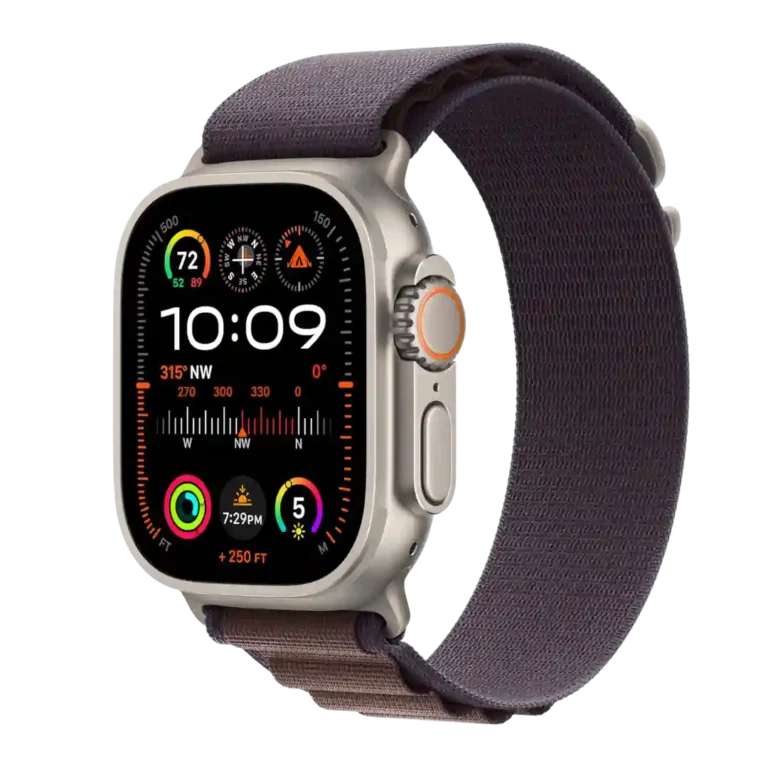
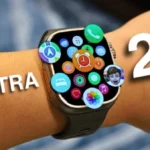
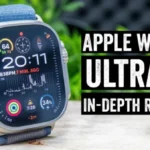
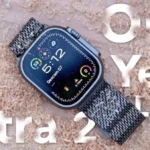
Reviewers consistently frame the Apple Watch Ultra 2 as the most capable Apple Watch, with standout brightness, rugged titanium construction, strong GPS and heart-rate accuracy, LTE, water resistance, and the broadest smartwatch app experience. The main tradeoff is that its adventure branding outruns some native training and navigation tools: mapping, recovery analysis, and multi-day endurance still trail Garmin-style sports watches. Battery life is excellent by Apple Watch standards and often reaches two to three days, but several reviewers note it remains short beside dedicated GPS watches. It is strongest as a premium smartwatch that can handle serious workouts, not as a pure expedition or prosumer training device.
Compared in Reviews
Products reviewers directly compared with this model, grouped into quick takeaways.
- Better: mapping and running-specific depth Runner’s World says the Ultra 2 is not a true replacement for a Garmin Fenix 8 because it lacks deeper native running and navigation tools.
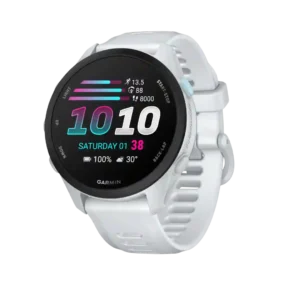
- Better: battery life Tom’s Guide says the Ultra 2 still trails the Garmin Forerunner 265 for mixed-use battery life.
Feature Scorecards
Pros
-
Display quality is one of the best-reviewed attributes, with multiple reviewers calling it among the best smartwatch screens they have tested.
-
Heart-rate accuracy is one of the strongest measured areas, with reviewers reporting close agreement with chest straps and armband monitors.
-
Touchscreen responsiveness is excellent on land, with reviewers praising taps and swipes, though touch does not work underwater.
-
The app ecosystem is one of the clearest strengths, with reviewers praising Apple’s native and third-party app depth over competing watch platforms.
-
Fitness tracking accuracy is excellent overall, with reviewers praising GPS, heart-rate, and overall workout tracking accuracy against reference devices.
-
GPS accuracy is consistently strong, with dual-frequency/multiband tracking matching or approaching Garmin-class performance in several tests.
-
Safety features are a standout Ultra trait, including siren, SOS, fall and crash detection, Backtrack, cellular waypoints, and emergency guidance.
-
Software smoothness is strong, with reviewers describing zippy, quick, responsive, and buttery-smooth operation.
-
Companion app quality is strong, with reviewers praising Apple Watch, Health, and Fitness app integration and easy configuration from the iPhone.
-
LTE is a core feature because cellular support comes standard, enabling calls, streaming, and messaging away from the iPhone when a plan is active.
-
Materials quality is high, with recycled titanium, sapphire protection, and premium band hardware recurring across reviews.
-
Brightness is a major consensus strength, with repeated praise for the 3,000-nit display and flashlight improvement.
-
Durability is a major strength, supported by titanium, sapphire, MIL-STD testing, and reviewers’ reports of wear resistance.
-
Water resistance is a major strength, with 100m/WR100 ratings, diving support, and better water credentials than standard Apple Watches.
-
Style and design are praised for the premium rugged look, especially the black titanium version, though the large look is not for everyone.
-
Call handling gets direct praise for clear and sufficiently loud audio, helped by the Ultra line’s microphone and speaker hardware.
-
Outdoor visibility is excellent, with several reviewers reporting no trouble reading the screen in sunlight or bright reflective conditions.
-
Reviewers consistently describe the build as premium, rugged, and performance-oriented, with titanium, sapphire, and protected controls adding confidence.
-
ECG functionality is well supported and repeatedly mentioned as part of the Ultra 2’s robust health suite, including Afib-related features.
-
Smartwatch features are outstanding overall, with reviewers treating the Ultra 2 as Apple’s most full-featured wearable and a top true smartwatch.
-
Smartphone notifications are handled well, with reviewers praising rich notifications, texting, and responsive notification handling within the Apple ecosystem.
-
Watch face quality is strong, especially Modular Ultra and complication-rich layouts designed for the large screen.
-
Contactless payments are a reliable smartwatch strength, with Apple Pay repeatedly cited as part of the platform’s everyday convenience.
-
Third-party app support is excellent through the watchOS App Store and helps fill gaps in navigation, fitness, and everyday smartwatch use.
-
Bluetooth support is strong for cycling accessories, especially power meters, speed sensors, and cadence sensors, with reviewers treating it as a useful sports upgrade.
-
Workout tracking variety is strong across running, cycling, hiking, swimming, diving, strength training, structured workouts, and third-party sport apps.
-
Voice assistant quality improved with on-device Siri, faster commands, better dictation, and less cloud dependence, though a few minor voice quirks remain.
-
Customization is strong across watch faces, complications, utility slots, action button choices, and app-driven personalization.
-
Onboard storage is improved to 64GB, giving reviewers more confidence for offline music, podcasts, apps, and media downloads.
-
The user interface is generally easy and polished, especially for iPhone users, Smart Stack, and redesigned watchOS apps.
-
The operating system experience is polished, especially with watchOS 10 and 11 updates adding new watch faces, cycling features, Smart Stack, and Ultra features.
-
Battery life is excellent for an Apple Watch, often lasting two to three days, but dedicated GPS watches still make it look short for endurance use.
-
Menu navigation is helped by the crown, complications, Modular Ultra, and Smart Stack, which reviewers generally find useful for quick glanceable information.
-
Pairing evidence is limited but positive, with one setup transcript saying the familiar Apple pairing flow completed cleanly.
-
Button controls are a practical Ultra advantage, especially the Action Button and gloved-use crown, though one long-term reviewer admits the Action Button never became a habit.
-
Health tracking accuracy is viewed positively for sleep apnea, ECG-adjacent accuracy, and broad health tracking, though some insights still need manual interpretation.
-
Reliability is broadly positive in long-term and battery-use impressions, with reviewers describing stable every-other-day charging and dependable use.
-
Band impressions are mostly positive, especially for comfort and material quality, though one reviewer found the Alpine Loop slow to dry after sweat or water.
-
Sleep tracking is generally accurate but simpler than rival platforms; newer sleep apnea detection adds more health value.
-
Automatic activity support appears around brisk-walk logging, running-track recognition, and contextual auto-marking, though reviewers do not dwell on broad workout auto-detection.
-
Value is mixed: the Ultra 2 can justify its price for users who exploit its rugged, cellular, and battery advantages, but reviewers repeatedly note cheaper or more specialized alternatives.
-
Wi-Fi is present as part of the core connectivity package, though reviews discuss it mostly as availability rather than as a tested performance differentiator.
-
Music controls work well through Double Tap and the Music app, with speaker playback and wrist controls adding everyday convenience.
-
Charging is convenient through familiar magnetic charging and occasional iPhone-powered charging, though reviewers still need to charge more often than with sports watches.
-
Calorie tracking is framed through Apple’s activity rings and standard fitness metrics rather than as a lab-tested calorie measurement system.
-
Comfort is context-dependent: some reviewers find the Ultra 2 comfortable all day, while others note size, tugging, or crown irritation on smaller wrists.
-
Fit is mixed: the rectangular case can feel secure, but the single 49mm size can be challenging for smaller wrists.
-
Charging speed is acceptable, commonly around 0-80% in about an hour and full in roughly 90 minutes, but slower than the faster-charging Series 10.
-
Coaching improved with Training Load and effort context, but several reviewers still find Apple’s coaching and analysis shallower than Garmin, Whoop, or similar platforms.
Cons
-
Wellness insights are broad but uneven: Vitals, Health data, and trends help, but reviewers often want more interpretation and readiness-style guidance.
-
Mapping and navigation are useful but frequently caveated: Compass, waypoints, routes, and maps help, yet native GPX and phone-free offline mapping gaps remain.
-
Blood oxygen coverage is mixed in the review set because some reviews mention the feature’s patent-related absence, while the updated PCMag review says monitoring was restored.
-
Size options are a clear limitation because the Ultra 2 comes only in a large 49mm case.
-
Recovery insights are a recurring weakness; reviewers repeatedly say Apple lacks Garmin/Whoop-style recovery, readiness, and performance analysis.
-
Cross-platform compatibility is poor because the Ultra 2 requires an iPhone and does not work with Android phones.
Compared With Category Average
Compared with other Smart Watch, this product is above average in LTE connectivity, ECG functionality, voice assistant quality, below average in cross-platform compatibility, recovery insights.
| Attribute | This product | Category average | Difference |
|---|---|---|---|
| LTE connectivity | 4.8 | 1.9 | +2.9 |
| ECG functionality | 4.7 | 2.3 | +2.4 |
| voice assistant quality | 4.5 | 2.6 | +1.9 |
| contactless payments | 4.6 | 2.8 | +1.8 |
| cross-platform compatibility | 2.0 | 3.8 | -1.8 |
| recovery insights | 2.2 | 3.9 | -1.7 |
| onboard music storage | 4.5 | 2.8 | +1.7 |
| call handling | 4.7 | 3.1 | +1.6 |
FAQ
Is the Apple Watch Ultra 2 worth upgrading from the original Ultra?
Most reviewers say the upgrade is modest if you already own the first Ultra. The brighter display, S9 features, Double Tap, and software additions are useful, but not usually enough to justify replacing a working original Ultra.
How long does the battery last?
Reviewers commonly report about two to three days of regular use, with some testing around 50 to 60 hours. GPS-heavy use drains it faster, and dedicated Garmin-style watches still last much longer.
Is it good for running and fitness tracking?
Yes. Reviews praise its GPS and heart-rate accuracy, running metrics, custom workouts, cycling sensor support, and Training Load additions, though several say serious athletes may still want deeper recovery and performance analytics.
How good is the display outdoors?
The 3,000-nit display is one of the most praised upgrades. Reviewers repeatedly found it easy to read in bright conditions, with strong clarity for workouts, maps, complications, and flashlight use.
Does it work with Android phones?
No. Reviewers note that recent Apple Watches require an iPhone and do not work with Android, making the Galaxy Watch Ultra the more relevant alternative for Android users.
How does it compare with Garmin sports watches?
The Ultra 2 is generally stronger as an everyday smartwatch, with better apps, calls, payments, and Apple integration. Garmin-style watches are repeatedly favored for longer battery life, deeper recovery metrics, and more complete native navigation.
Consider This Instead
If you want better recovery insights
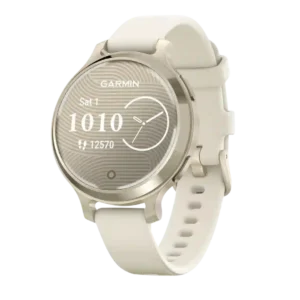
Choose Garmin Venu 4. It scores 4.6 vs 2.2 for recovery insights, with a 4.0 overall score.
If you want better cross-platform compatibility
Choose Garmin Forerunner 255S. It scores 4.5 vs 2.0 for cross-platform compatibility, with a 4.0 overall score.
If you want better size options
Choose Google Pixel Watch 3. It scores 4.7 vs 2.6 for size options, with a 4.2 overall score.
If you want better mapping and navigation
Choose Garmin Epix Pro (Gen 2). It scores 4.8 vs 3.2 for mapping and navigation, with a 4.1 overall score.
Overall Top Smart Watch Alternatives
Good if you want the most rugged Apple Watch, brighter outdoor screen, better battery, LTE, and top apps. Skip it if you need Garmin-like mapping, recovery analytics, smaller sizing, or...
Pros: display quality, heart rate accuracy
Cons: cross-platform compatibility, recovery insights
Choose the Galaxy Watch 6 for a polished Android smartwatch with a bright screen, strong apps, and broad health tracking. Skip it if battery life, iPhone support, or full non-Samsung...
Pros: outdoor visibility, workout tracking variety
Cons: cross-platform compatibility, battery life
Good if you need a rugged Garmin with deep outdoor, tactical, GPS, training, and battery features. Skip it if you want a cheaper lifestyle watch or do not need the...
Pros: materials quality, durability
Cons: LTE connectivity, value for money
Good if you want premium golf maps, virtual caddie tools, health metrics, music, notifications, and long battery life in one watch. Skip it if you only need basic yardages or...
Pros: pairing reliability, brightness
Cons: software smoothness, user interface