Auto track detection is a real upgrade, with reviewers calling it out as a useful addition for track sessions.
Garmin's app ecosystem remains limited, and extra apps still feel less polished than Apple or Google options.
Band quality is polarizing: some reviewers disliked the strap comfort and texture, while others praised later strap improvements.
The included silicone band is soft, stretchy, and comfortable enough for long wear.
Battery life is acceptable multi-day rather than class-leading, with real-world reports ranging from weak to around four or five days.
Battery life is consistently a strength, with most reviewers getting roughly five to ten days depending on display mode and GPS use.
One review notes the watch is less advanced than rivals that offer blood oxygen readings, indicating this feature is absent here.
Pulse Ox/SpO₂ is part of the broader health package and is surfaced alongside sleep and health status metrics.
Bluetooth support is useful for heart-rate broadcasting, headphones, and external sensors.
Screen brightness is a strength, with reviewers noting strong brightness options and a vivid, bright display.
The AMOLED panel is repeatedly described as much brighter than before and easy to read in bright conditions.
Overall build impressions are positive, with several reviews saying the watch feels solid and not cheap.
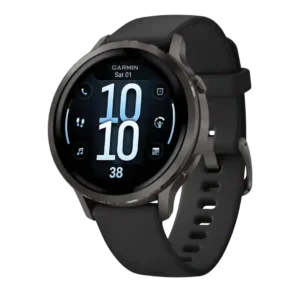
The fuller metal construction makes the watch feel sturdier, more premium, and better finished than the Venu 3.
Single-button control is a common complaint, with reviewers wanting more physical buttons for easier use.
The two-button layout works, but several reviewers miss the extra button and find it less ideal during workouts.
Call handling is effectively absent, with reviews explicitly saying you cannot answer calls or reply from the watch.
On-wrist calling works and is handy in a pinch, though speaker performance is only adequate.
Calorie reporting is seen as useful, with workout calorie totals and energy-source breakdowns highlighted as helpful feedback.
Charging convenience is mixed because the watch charges easily enough but uses proprietary hardware that some found fiddly.
Garmin's proprietary charger remains a notable annoyance for convenience.
Charging speed is positively described, including quick wired top-ups and very fast charging comments.
Charging speed is acceptable rather than class-leading, with useful top-ups in short sessions but slower full charges.
Coaching is a strong area thanks to FitSpark workout suggestions and built-in training guidance features.
Garmin Coach, training plans, and race-readiness tools are widely praised and feel more advanced than past Venu generations.
Comfort is one of the product’s strongest themes, especially for all-day wear and sleep tracking.
Comfort is generally good for all-day wear, but the heavier metal build bothers some users during sleep or extended wear.
Polar Flow offers deep data, but app usability is mixed because some reviews call it busy while others praise it.
Garmin Connect is useful and feature-rich, but some reviewers find newer features tucked away in too many menus.
Contactless payments are repeatedly called out as missing.
Garmin Pay is convenient when supported, but bank compatibility and extra password friction limit the experience.
Cross-platform support is solid, with reviewers explicitly using the watch across both Android and iOS.
The watch works across iPhone and Android, though Android users get more messaging and smart features.
Customization is a clear positive, especially for watch face complications and watch-face setup.
Customizable reports, focus modes, and shortcut settings give the watch a solid level of day-to-day personalization.
Display quality is consistently praised for sharpness, vivid color, and an attractive AMOLED presentation.
The AMOLED display is sharp, colorful, and premium-looking.
Durability feedback is mixed because some reviews saw scratching issues while others reported better scratch resistance.
The upgraded metal build held up well in regular workouts and swimming with no obvious scratches during testing.
One review contrasts the watch with devices that can take EKG readings, indicating ECG is not offered on this model.
ECG support is a meaningful differentiator, with reviewers highlighting it as a welcome feature absent from some Garmin siblings.
Fit is consistently praised for sitting snugly and securely on the wrist.
The two-case approach helps most users find a comfortable size and fit.
General fitness tracking is usually described as reliable and capable for routine workouts and activity monitoring.
Workout tracking is broadly accurate, with especially positive comments around strength logging and general training data.
GPS accuracy is mixed: some reviewers found it solid or reliable, while others saw route drift and poor mapped precision.
GPS is one of the Venu 4's strongest areas, with repeated praise for tight tracks, fast lock, and stable route logging.
Reviews describe the watch as accurate for tracking heart rate, sleep, steps, location, and workouts in day-to-day health use.
Reviewers generally trust the health metrics, especially once the watch has enough baseline data to interpret trends.
Heart rate tracking is generally praised, though a few reviewers report mixed or questionable results in some workouts.
Heart-rate accuracy is strong overall and often close to chest straps, though a few reviewers saw brief dips or lag.
There is no LTE option, which limits standalone use away from the phone.
Materials quality is viewed favorably, especially where titanium and Gorilla Glass are highlighted.
Steel cases and bezels add a noticeably more premium material feel than the prior generation.
Navigating menus and functions is workable but often described as sluggish, fiddly, or less user-friendly than it should be.
Navigation is understandable, but the touch-heavy flow can feel cumbersome during wet or sweaty workouts.
Music controls work well as phone playback controls, including during workouts.
Basic music controls are present, including voice-command shortcuts like skipping songs.
Onboard music storage is missing, so music use depends on your phone.
Offline music storage is useful and well supported, though it costs battery life.
The overall OS-like experience is mixed, with some praise for polish but repeated reminders that it still feels limited.
The new shared Garmin OS feels more modern and should improve feature parity and long-term support.
Outdoor visibility is rated well, including in bright sunlight and other tougher viewing conditions.
Outdoor readability is excellent, with reviewers saying the display stays legible even in direct sun.
Pairing and syncing reliability are recurring weak points, with several reviews mentioning pairing or sync issues.
Recovery features are a clear strength, with Nightly Recharge, Cardio Load, and similar analytics helping interpret training strain and recovery.
Recovery guidance is a standout, with Training Readiness, Body Battery, and related metrics frequently called genuinely useful.
General reliability is a concern due to lag, erratic behavior, and occasional reboot or bug complaints.
Day-to-day reliability is mixed: some testers saw freezes or odd distance glitches, while others expect the unified platform to improve stability.
One review explicitly says onboard safety features are missing.
The built-in flashlight and visibility options are consistently praised as genuinely useful safety and convenience additions.
Size options are limited at the watch level, although one review noted two strap sizes in the box.
Both 41mm and 45mm sizes are available, giving shoppers a real choice between smaller and larger wearables.
Sleep tracking is consistently rated strong, with multiple reviews saying its core sleep results aligned well with comparison devices.
Sleep tracking is generally good and often lines up with other wearables, but it can overcount time spent resting awake.
Phone notifications are available and usable, but several reviews describe them as basic rather than especially interactive.
Notifications are effective and more flexible on Android than on iPhone.
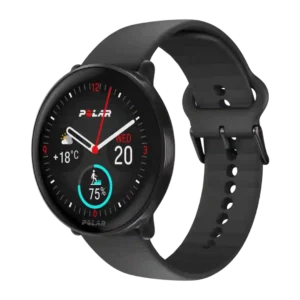
As a smartwatch, the Ignite 3 is repeatedly described as limited or only okay rather than fully featured.
Smartwatch features cover the essentials, but they still trail Apple and Google on depth and seamlessness.
Software smoothness is one of the most divisive areas, ranging from notably laggy to improved and smoother on later variants.
The refreshed software is notably snappier and more responsive than older Garmin implementations.
Step counting draws criticism for overcounts or delayed updates, though at least one review still described step tracking positively.
Step counting looks dependable, with one controlled test hitting exactly 2,000 steps.
Stress-related wellness tools are viewed positively through Nightly Recharge feedback and guided breathing features.
Stress data is part of the broader wellness picture and is useful when paired with sleep, HRV, and lifestyle logging.
Style and design earn consistent praise, with reviewers repeatedly describing the watch as sleek, slim, or attractive.
Style is a major selling point, with reviewers repeatedly calling the Venu 4 one of Garmin's best-looking watches.
Third-party app support is missing, with reviewers pointing to the lack of extra apps or app-store style expansion.
Third-party support exists, but the selection and polish remain modest by mainstream smartwatch standards.
Touch responsiveness is mixed: some reviewers say it works naturally, while others found it laggy and delayed.
The touchscreen is quick and responsive in normal use.
The UI layout is generally liked for its clarity and screen fit, even if some reviews still see room for refinement.
The updated interface is more polished, easier to navigate, and faster than older Garmin UIs.
Value is mixed: some reviewers see good value, while others say the price makes the watch hard to recommend.
The feature set is strong, but the $100 price jump makes value a tougher sell unless you specifically want Garmin's training depth.
Reviews explicitly note the lack of smart or digital assistant support.
Voice features are available and sometimes responsive, but reviewers frequently call them clunky, buggy, or basic.
Watch faces are generally well-liked for looks and information density.
Water resistance is adequate for swimming, with repeated mentions of WR30 or 30-meter water protection.
Water resistance is solid for pool use and showers, with reviewers citing the 5 ATM rating positively.
Wellness insights stand out through SleepWise and related guidance that forecast alertness and day-ahead readiness.
Wellness insights are a key selling point, especially through Health Status, Lifestyle Logging, and daily readiness-style feedback.
Workout variety is a major positive, with repeated mentions of large sport-profile coverage and broad training mode support.
Workout variety is a major strength, with repeated praise for the very broad sport profile list.