One review says the watch does a good job recognizing when a workout starts and logging activity automatically.
The Casio ecosystem is frequently described as messy or not very user-friendly, although one reviewer says the app works fine for their needs.
Reviews mention a relatively large software marketplace and Connect IQ access for apps, widgets, and personalization.
The strap gets consistent praise for being soft, pliable, and easy to adjust.
Band impressions are mixed: the included silicone strap is described as high quality, but one reviewer said the white band gets dirty easily.
Battery life is usually described around a week or five to seven days with regular use, though one reviewer only saw two to three days and solar help was limited.
Battery life is a clear strength, with reviewers reporting long real-world endurance from multi-day always-on use to weeks between charges depending on settings and size.
The watch offers spot blood-oxygen readings, but reviewers describe them as manual and sometimes inconsistent rather than seamless.
The watch includes wrist-based pulse-ox tracking for blood oxygen saturation, with reviews noting altitude and wellness uses.
Bluetooth syncing is generally described as reliable and useful for notifications and app connection.
Bluetooth support is well covered, including sensor pairing and accessory connectivity alongside Garmin’s broader smartwatch radios.
The display tech and backlight are described as easy to see, especially in brighter conditions.
Screen brightness is consistently praised, with reviewers calling it easy to see indoors, outdoors, and even on sunny days.
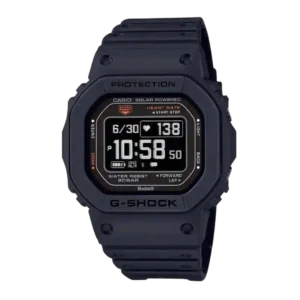
The overall build is described as a tough G-Shock-style package with modern features added cleanly.
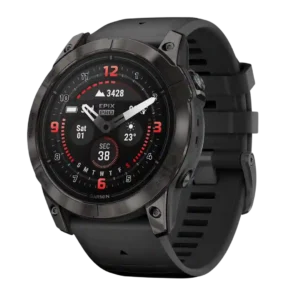
Build quality is described as rugged and tank-like, with premium-feeling construction for a high-end sports watch.
Recessed side buttons are one of the most common complaints and are often described as difficult to press.
The physical controls are a strong point, with dedicated buttons, useful shortcuts, and a more satisfying click than some newer Garmin alternatives.
Calls are handled as watch notifications, but there is no evidence of richer on-watch call control.
Phone integration is limited for calls on some setups, with one review noting you cannot respond to texts or calls in that configuration.
The watch records calories and active time, but one reviewer says bad sensor data can exaggerate energy burn.
Garmin Connect gives clear daily calorie totals, including base and active calories, making calorie data easy to review.
The proprietary clip charger works, but many reviews call it awkward, temperamental, or easy to misalign.
Charging is less convenient than open USB-C freedom because the watch still relies on Garmin’s proprietary charger.
Full charging times are usually reported between roughly 100 minutes and three hours.
Charging speed is improved and widely praised, with reviews citing fast top-ups and roughly an hour to reach full charge.
Training targets and cardio-status style guidance are present, but the coaching layer is limited compared with stronger fitness platforms.
Training guidance is a strong area, with suggested workouts, customizable plans, race support, and coaching-oriented tools called out positively.
Most reviews find the smaller case and softer strap comfortable for all-day wear, though a few mention sensor pressure or wrist irritation.
Comfort is better than the size suggests for at least some users, with one reviewer saying the watch is comfortable enough to mostly disappear on wrist.
The Casio Watches app surfaces useful data, but most reviewers describe it as clunky, slow, or lacking polish.
Garmin Connect is useful and feature-rich, but reviews also say some finer watch settings are still awkward to manage from the phone side.
Reviews explicitly state that the watch does not offer payment features.
Garmin Pay is treated as genuinely useful for runs and outdoor use, with reviewers saying it works in normal tap-to-pay situations.
One review explicitly says the watch works with both Apple and Android phones.
The watch works with both iOS and Android, but reviews note feature differences and a generally better experience on Android.
There is some customization for faces, widgets, and mode order, but the range of options remains limited.
Customization is extensive, with adjustable settings, customizable data pages, widgets, bands, and downloadable extras.
The MIP display is one of the strongest parts of the watch and is repeatedly praised for clarity and readability.
The AMOLED display is one of the product’s standout strengths, repeatedly described as beautiful, vivid, and high resolution.
Multiple reviews emphasize real G-Shock toughness, strong ruggedness, and impressive resistance to wear.
Durability is strong overall, with reports of the watch holding up well in long-term use and the sapphire crystal resisting visible damage.
ECG support is part of the Pro story, with reviews noting the feature arrived via firmware on supported models.
The strap design and extra adjustment holes make it easy to get a secure fit.
Fit varies by wrist size, but the expanded case range helps; some reviewers found good fit on smaller wrists while others still found larger versions bulky.
At least one review found the accelerometer-led workout tracking unreliable without better location support.
Overall fitness tracking accuracy is a major selling point, especially for GPS-based workouts and consistent distance tracking.
Phone-connected GPS is described as usable by some reviewers, but others report undercounting, missed distance, or only good-enough results.
GPS performance is repeatedly described as excellent, with reviews highlighting reliable positioning, accurate routes, and class-leading results.
General health tracking is decent overall, with some metrics doing better than others, but the experience is not consistently polished.
Health tracking is generally viewed positively, with reviewers trusting the data more than before even if not every metric is treated as perfect.
Heart-rate tracking is often called decent for average readings, but several reviewers report inflated max values or larger errors in some situations.
Heart-rate accuracy is broadly praised, especially against chest straps, though some reviews still note occasional limits in harder efforts.
The bio-based resin materials are described positively for feel and construction, with some sustainability appeal.
Material choices look functional and durable, but one review notes the polymer-heavy build is more tool-like than luxurious.
Navigating the watch can feel slow and awkward because of button-driven menus, though one review found the flow intuitive.
Menu navigation can be demanding, with one reviewer saying deeper customization still involves too much fiddling.
Reviews explicitly note that music controls are missing.
Music controls are available and useful, with support for controlling apps like Spotify and integrated music control features.
Reviews explicitly note that music features are missing, and there is no evidence of onboard music storage.
Onboard storage is generous enough for music, with reviews pointing to 32GB capacity and local audio support.
The proprietary software works within the small display, but it does not feel like a full smartwatch platform.
The Garmin software experience is described as robust and feature-rich, though it still expects users to invest time learning it.
Outdoor readability is a standout strength, with the display staying clear in bright conditions.
Outdoor visibility is excellent, with reviewers calling the screen easy to read in strong sun and varied light.
Pairing and syncing are described as frustrating or inconsistent in at least one review.
Polar-derived recovery metrics are included, but reviewers split between useful guidance and confusing presentation.
Recovery tools such as Recovery Time, Acute Load, and related guidance are repeatedly described as useful for planning training.
At least one review frames the software as still needing patches, which points to unfinished polish.
Long-term reliability is a clear positive, with reviewers describing the watch as dependable in day-to-day use.
Safety-oriented tools get positive mentions, including flashlight visibility, strobe options, and location-sharing style features such as LiveTrack.
The three-size lineup is one of the headline upgrades, with multiple reviews praising the better fit options for smaller and larger wrists.
Sleep tracking is often described as reasonably close to trusted devices, though some reviewers still call it inconsistent or confusing.
Sleep tracking is seen as improved but not perfect, with some reviewers praising better results while others still question exact precision.
Notifications work and are readable enough for basics, but they are limited by the display and interface.
Phone notifications are handled well, with reviews highlighting readable alerts and even good emoji support.
The watch covers essential connected basics, but several reviewers stress that it is a hybrid rather than a full smartwatch.
Smartwatch basics are solid rather than dominant, covering notifications, music, payments, weather, and other everyday tools.
At least one review reports slower syncing behavior than competing watches.
General performance is good, but the watch is not universally seen as ultra-smooth; some reviewers praise stability while others note less polished animation or feel.
Step counts can be decent in daily use, but arm-heavy activity and some workouts can inflate totals.
One review explicitly says there is no built-in stress tracking, only breathing-related support.
Stress tracking is part of the broader recovery picture and is used in Garmin’s readiness and Body Battery style insights.
The retro square look and classic G-Shock styling are consistently highlighted as major strengths.
Design is widely praised for balancing rugged outdoor character with an attractive everyday look.
Third-party support is a major weakness, with repeated complaints about limited or missing Apple Health, Google Fit, Strava, and export options.
Third-party support exists through Connect IQ and related downloads, giving users access to extra apps and add-ons.
The watch has no touchscreen at all.
Touch response is strong, with reviewers saying the screen works well even in wet conditions and avoids over-sensitivity.
The interface is workable but often described as cramped, dig-heavy, or not especially clear.
The interface is powerful but mixed in usability: some reviewers find it intuitive enough, while others still call it confusing or busy.
Value is mixed: some reviewers think the hardware earns its price, while many compare it unfavorably with more capable smartwatches.
Value is mixed: reviewers respect the hardware and long-term usefulness, but many still call the price high and note cheaper Garmin alternatives.
The available watch faces are usable but limited in number.
The watch is described as having strong 200-meter water resistance.
Water resistance is a strength, with repeated mentions of 100-meter or 10 ATM capability for swimming and even diving scenarios.
Wellness-style insights are present, but at least one review says the data feels opaque rather than easy to act on.
Wellness features such as HRV, Body Battery, Training Readiness, and similar guidance are frequently highlighted as useful.
One review explicitly says there is no standalone Wi-Fi.
Wi-Fi support is present for tasks like syncing and map downloads, adding convenience beyond Bluetooth-only workflows.
Reviewers repeatedly note that the workout mode selection is narrow compared with rival watches.
Workout and sport coverage is broad, with reviewers repeatedly pointing to a very large activity list and many sport profiles.