- Cheaper: price The tested Epix Pro configuration costs more than Apple Watch Ultra 2.
- Similar: GPS accuracy Apple Watch Ultra is the closest competitor mentioned for similarly high-level GPS tracks.
- Worse: maps and battery life The reviewer says Garmin remains preferable to the Apple Watch Ultra because of maps and battery life.
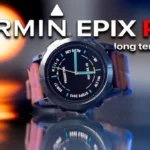
Garmin Epix Pro (Gen 2) Review
Bottom Line
Choose the Garmin Epix Pro (Gen 2) if you want premium outdoor mapping, long battery life, strong GPS and deep training tools. Skip it if you need a simple smartwatch, low price, smooth voice/phone features, or a cycling-only device.
Best for serious runners, hikers, triathletes, cyclists and outdoor users who want maps, GPS precision, long battery life and deep Garmin training data on the wrist. It especially suits Android users and people who value navigation over a simpler smartwatch interface.
Not for budget shoppers, cycling-only users who would be better served by a bike computer, or buyers who mainly want a polished phone companion with voice features and effortless call/text interaction. Small-wrist users should be careful with the larger sizes.
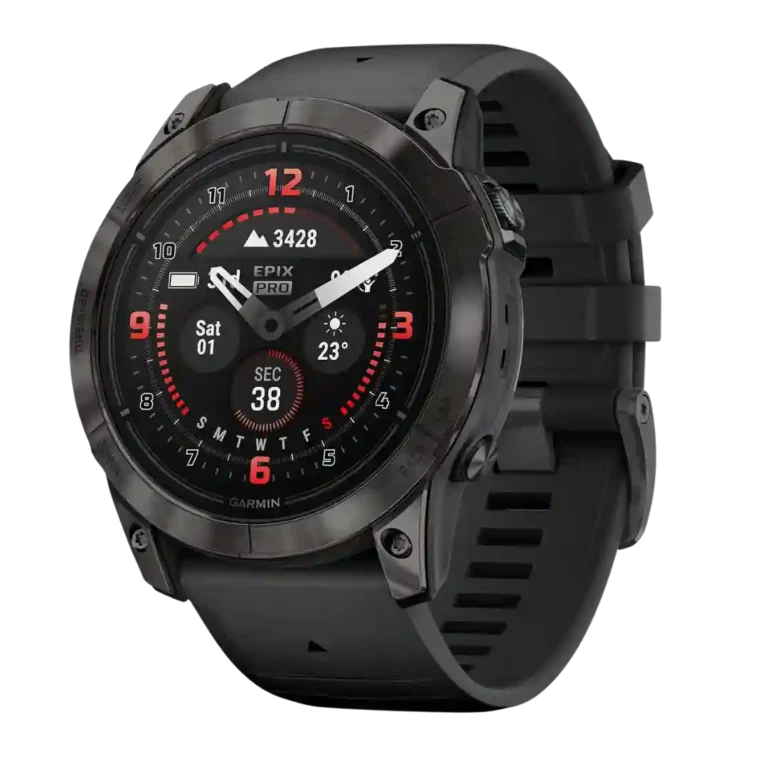
The Garmin Epix Pro (Gen 2) comes through these reviews as a premium outdoor and endurance watch built around standout GPS, rich AMOLED mapping, long battery life, broad sport profiles and deep training data. Its best arguments are practical ones: the display is readable, the maps are genuinely useful, the flashlight earns real praise, and battery life remains strong even with demanding use. The tradeoff is that it behaves more like a powerful wrist tool than a polished phone-first smartwatch. Reviewers repeatedly note the high price, learning curve, limited iPhone interaction, inconsistent wrist heart-rate moments, and mixed value versus cheaper Garmin models.
Compared in Reviews
Products reviewers directly compared with this model, grouped into quick takeaways.
- Worse: fitness tracking The reviewer says the Epix Pro is much better than Apple Watch for fitness tracking.
- Better: value The reviewer says the Forerunner 965 offers better value in many scenarios.
Feature Scorecards
Pros
-
Mapping and navigation are standout strengths, with offline maps, routable navigation, course support, and wrist-based map use repeatedly praised.
-
GPS accuracy is one of the strongest consensus points, repeatedly described as reliable, fast, spot-on, and among the best available.
-
Pairing reliability is only lightly covered, but the AirPods report is positive, describing a simple Bluetooth connection that stayed connected.
-
Charging speed is a clear upgrade, with reviewers citing full charging in about an hour, under-an-hour charging, and meaningful battery gains from short top-ups.
-
Outdoor visibility is excellent overall, with the AMOLED screen praised in sunlight, outdoors, and compared with other displays.
-
Build quality is repeatedly strong, with reviewers describing the watch as price-worthy, rugged, and tank-like.
-
Size options are a broad positive because Epix Pro comes in 42mm, 47mm, and 51mm, finally covering smaller and larger wrists.
-
Water resistance is a clear strength, with 100m/10 ATM-style resistance repeatedly mentioned for swimming, wet rides, and even diving contexts.
-
Fitness tracking accuracy is well regarded overall, with reviewers praising Garmin’s tracking package and repeatable distance measurements.
-
Reliability is strong in the available evidence, with one reviewer calling Garmin devices extremely reliable and another preferring Epix Pro stability over a newer model.
-
The AMOLED display is a highlight across reviews: vivid, crisp, readable, colorful, and a major reason to choose Epix over MIP-display alternatives.
-
Durability is a strong theme, with sapphire glass, rugged construction, and long-term reports of no front-face scratches after heavy use.
-
Onboard storage is a strength, with 32GB available for maps, music, and workout data and enough room for phone-free listening.
-
Battery life is one of the clearest strengths, with reviewers reporting roughly 5-6 days with always-on use, around 10-16 days in many setups, and even multi-week use in lighter scenarios.
-
Touchscreen responsiveness is generally positive, especially for maps and daily use, with one reviewer praising it as responsive without being overly sensitive.
-
Display brightness and the flashlight brightness both score well, with reviewers describing the AMOLED screen as easy to see and the flashlight as adjustable.
-
Workout variety is extensive, with many sport profiles, new activity modes, and broad coverage across running, cycling, swimming, gym, team sports, and more.
-
Wellness insights are engaging and useful, especially Morning Report, HRV, Body Battery, stress, sleep, and health snapshots.
-
Safety features are centered on the LED flashlight, strobe modes, visibility options, and LiveTrack-style use, and reviewers found the flashlight more useful than expected.
-
Bands are generally praised for quality and QuickFit swapping, with long-term evidence that the band holds up, though one white strap got dirty in use.
-
Bluetooth support is well documented for sensors and accessories, with reviewers noting Bluetooth/ANT+ connectivity and phone/accessory support.
-
Recovery insights are a major Garmin strength, including Training Readiness, Acute Load, HRV, Body Battery, Hill Score, and Endurance Score; usefulness varies by metric.
-
Coaching features are strong, spanning suggested workouts, customizable training plans, readiness-based guidance, and training tools, though one reviewer felt newer training features were not fully baked.
-
Style is rugged, serious, and tool-like rather than elegant, which some reviewers loved and others framed as a matter of taste.
-
Materials quality is premium-leaning thanks to titanium, sapphire, and stainless options, though not every case component is luxury metal.
-
Button controls are a major practical advantage for workouts, with multiple reviewers praising tactile operation, though one long-term user found the many buttons confusing.
-
Blood oxygen tracking is present through wrist-based pulse oximetry, with one reviewer reporting readings stayed in the expected 95-100% range.
-
The operating system is deep and feature-rich, with strong built-in software and no required subscription, but it demands learning.
-
Stress tracking feeds Garmin’s Body Battery and readiness-style insights, with one reviewer noting stress clearly depletes the Body Battery estimate.
-
Wi-Fi is useful for uploads, syncing, and map management, though big map downloads can be slower than USB.
-
Garmin Connect is repeatedly valued for depth, training plans, and data, though watch customization from the companion app remains limited.
-
Garmin Pay is useful when supported, with reviewers praising tap-to-pay convenience, but UK bank support was criticized as limited.
-
Customization is broad across bands, apps, watch faces, data pages, and workouts, though some reviewers note it can take work to set up.
-
Smartphone notifications are readable and useful, but interaction depends on phone platform; iPhone users get more limited response options.
-
Sleep tracking accuracy is mixed but improving: some reviewers trust it or find sleep timing accurate, while others still compare it unfavorably with Oura or report occasional misses.
-
Heart rate accuracy is strong for many runs and workouts, especially with the newer sensor, but reviewers still saw latency or errors during cycling, intervals, or odd wrist-based readings.
-
The Garmin ecosystem is described as expandable through a software marketplace and Connect IQ access, though the experience can feel more tool-like than slick.
-
Calorie tracking is useful mainly through Garmin Connect and MyFitnessPal integration, with total, base, and active calories visible.
-
Step tracking is only lightly discussed, but one review says daily steps and sleep tracking serve users well.
-
Third-party support appears through Connect IQ, letting users add watch faces, data fields, widgets, and apps.
-
Smartwatch features are adequate but secondary to sports use, with notifications, music, payments, and widgets present but less polished than Apple or Samsung.
-
Value is divisive: reviewers praise what the watch delivers for serious users, but repeatedly flag cheaper Garmin alternatives and the high price.
-
Reviewers only touched on limited auto-detection behavior: Garmin Connect can automatically assign gear to activities, and strength mode detected exercises like squats, so support is useful but narrow.
-
The watch works with both Android and Apple phones, but reviewers consistently note Android integration is better because iPhone replies and call responses are restricted.
-
Music controls and playback are useful, including offline Spotify and onboard playback, but one review reported patchy playback and headphone disconnects.
-
Health tracking is generally useful but not uniformly trusted; reviewers praised HRV/body feedback while questioning wearable-derived metrics in some contexts.
-
Software smoothness is mixed; one reviewer noticed slower post-workout chart loading, while another wanted faster software-side improvements.
-
Fit depends heavily on size and wrist shape; smaller case options help, but a 47mm unit still felt ungainly on a very small wrist.
Cons
-
ECG evidence is mixed by review timing: one source notes a firmware update enabled ECG, while another earlier review says it was not yet available.
-
Comfort is mixed: some reviewers found the watch unobtrusive or surprisingly comfortable, while smaller-wrist users found it bulky or hard to wear overnight.
-
Watch faces are customizable, but the experience is not flawless; one long-term user forgot how to switch faces.
-
The user interface is capable but polarizing: some reviewers call it slick, while long-term users still find it confusing.
-
Charging convenience is a weakness in the review evidence because Garmin still relies on its proprietary plug-in charger and lacks solar charging on Epix Pro.
-
Menu navigation is powerful but can be overwhelming, with one reviewer saying many options are not explained clearly.
-
Call handling is limited in the available evidence, especially on iPhone, where one reviewer said users cannot respond to texts or calls.
-
Voice assistant quality is weak because reviewers note Garmin does not emphasize assistant features and Venu-style voice functionality is missing.
Compared With Category Average
Compared with other Smart Watch, this product is above average in onboard music storage, size options, mapping and navigation.
| Attribute | This product | Category average | Difference |
|---|---|---|---|
| onboard music storage | 4.6 | 2.8 | +1.8 |
| size options | 4.7 | 3.1 | +1.6 |
| mapping and navigation | 4.8 | 3.6 | +1.2 |
| contactless payments | 4.1 | 2.8 | +1.2 |
| ECG functionality | 3.4 | 2.3 | +1.1 |
| GPS accuracy | 4.8 | 4.0 | +0.8 |
| Wi-Fi connectivity | 4.2 | 3.2 | +1.0 |
| touchscreen responsiveness | 4.6 | 3.6 | +0.9 |
FAQ
Is the Garmin Epix Pro (Gen 2) good for outdoor navigation?
Yes. Reviewers repeatedly praised its offline maps, routable navigation, course support, GPS accuracy and easy-to-read AMOLED map display.
How long does the battery last in real use?
Battery life varies by size, GPS use, music and always-on display settings. Reviewers reported anything from about 5-6 days with heavy always-on use to around 10-16 days or more in less demanding setups.
Is the AMOLED display easy to see outside?
Yes. Multiple reviewers described the screen as bright, crisp, clear and readable outdoors, including in strong sunlight.
Are the health and heart-rate metrics accurate?
The evidence is mixed. GPS and general fitness tracking earn very strong praise, while wrist heart-rate and health-derived metrics are useful but can show latency, cycling errors or questionable conclusions.
Does it work better with Android or iPhone?
It works with both Android and iPhone, but reviewers note Android has better interaction. On iPhone, users can read notifications but cannot respond to texts or calls from the watch.
Is it worth the high price?
For serious outdoor and multisport users, several reviewers found the feature set worth the money. For simpler smartwatch use, single-sport cycling or buyers comparing cheaper Garmin models, value is more debatable.
Consider This Instead
If you want better call handling
Choose Apple Watch Series 10. It scores 4.6 vs 2.5 for call handling, with a 4.2 overall score.
If you want better menu navigation
Choose OnePlus Watch 3. It scores 4.6 vs 2.8 for menu navigation, with a 4.0 overall score.
If you want better charging convenience
Choose Suunto Vertical 2. It scores 4.5 vs 2.8 for charging convenience, with a 3.8 overall score.
If you want better watch face quality
Choose Garmin Venu X1. It scores 4.8 vs 3.3 for watch face quality, with a 3.9 overall score.
Overall Top Smart Watch Alternatives
Good if you want the most rugged Apple Watch, brighter outdoor screen, better battery, LTE, and top apps. Skip it if you need Garmin-like mapping, recovery analytics, smaller sizing, or...
Pros: display quality, heart rate accuracy
Cons: cross-platform compatibility, recovery insights
Choose the Galaxy Watch 6 for a polished Android smartwatch with a bright screen, strong apps, and broad health tracking. Skip it if battery life, iPhone support, or full non-Samsung...
Pros: outdoor visibility, workout tracking variety
Cons: cross-platform compatibility, battery life
Good if you need a rugged Garmin with deep outdoor, tactical, GPS, training, and battery features. Skip it if you want a cheaper lifestyle watch or do not need the...
Pros: materials quality, durability
Cons: LTE connectivity, value for money
Good if you want premium golf maps, virtual caddie tools, health metrics, music, notifications, and long battery life in one watch. Skip it if you only need basic yardages or...
Pros: pairing reliability, brightness
Cons: software smoothness, user interface