Reviews note automatic ski run detection and exercise recognition during strength work, giving the 955 useful but not especially broad auto-detection support.
One review explicitly says brisk walks are logged automatically, suggesting useful basic auto-detection for everyday activity.
Reviewers like Garmin’s broader ecosystem and app selection, though some app and companion experiences feel dated.
Reviews consistently highlight a leading app ecosystem with strong native tools and especially broad third-party watch app availability.
The strap is generally described as soft, removable, and secure, but at least one reviewer found it moisture-trapping.
Band feedback is positive overall, with the Trail Loop and other stock options praised for comfort, durability, and activity-friendly design.
Battery life is repeatedly praised, with reviewers citing roughly 12–16 days in regular use and around 20 hours or more for demanding GPS modes.
Battery life is strong by Apple Watch standards and often reaches two to three days, but several reviewers still find it short versus Garmin-style endurance watches.
Pulse Ox support is present and can give good spot results, but reviewers note technique matters and battery draw rises.
Blood oxygen support appears mixed across the review set: later coverage notes its return in the US, while some earlier long-term coverage still flags it as missing.
The watch readily connects to Bluetooth headphones and sensors in the reviews.
Bluetooth support is reviewed positively, especially for pairing cycling accessories like power meters and cadence sensors.
Screen brightness is serviceable rather than class-leading; reviewers say it stays readable but note muted colors and limited punch.
Brightness is a standout strength, with repeated praise for the 3,000-nit display and meaningful improvement over prior Apple Watch screens.
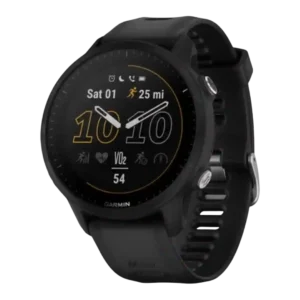
Reviews describe the 955 as light yet solid, with a sturdy sports-watch build.
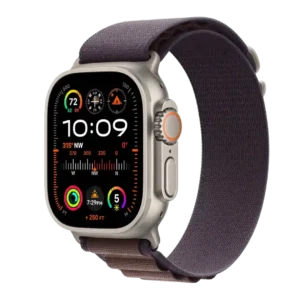
Reviews describe the Ultra 2 as solid and rugged, with a tough case built to handle harsher environments than standard Apple Watches.
The five-button layout is a consistent strength, with reviewers calling it intuitive and reliable during workouts.
The Action Button, crown, and side controls are widely praised for faster access and better usability, especially with gloves or during workouts.
Calling features are largely absent, with reviews specifically noting no Bluetooth calling and no mic or speaker setup.
Call quality is consistently strong, with reviewers noting clear voice pickup and easy on-watch call interactions.
One review found calorie totals lined up well with phone-tracked workout data.
The standard Garmin four-pin charger is easy enough to use, though it remains a proprietary cable.
Charging is relatively easy to live with thanks to quick top-ups and even support for charging from an iPhone 15, though the watch still needs regular charging.
Charging speed is a clear positive, with reviewers citing around 30 minutes for a big top-up and about 10 minutes for a fast boost.
Charging speed is serviceable rather than class-leading; reviewers note useful top-ups, but also point out the Series 10 charges faster.
Garmin Coach, suggested workouts, and guided training plans are repeatedly described as useful and well integrated.
Training Load and related workout guidance add meaningful coaching value, helping users gauge effort and decide when to push harder.
The light case and sports-focused fit are frequently described as comfortable for long wear and long runs.
Despite its size, reviewers often find the Ultra 2 comfortable for long wear, especially with the right band, though wrist size still matters.
Garmin Connect is seen as capable and data-rich, but reviews also call parts of the app dated or overcomplicated.
Apple’s companion apps are generally praised for polish and usefulness, especially the Watch, Fitness, and Health app experience.
Garmin Pay is supported and usable, though its reach still depends on bank support.
Apple Pay is treated as a strong smartwatch convenience and part of the Ultra 2’s well-rounded everyday feature set.
The 955 works with iOS and Android, and reviewers also note Apple Health syncing, though some message features vary by phone.
Cross-platform compatibility is a clear weakness: the Ultra 2 is tightly tied to iPhone and does not support Android.
Customization is extensive, including shortcuts, data fields, watch faces, and Connect IQ downloads.
Customization is a strength, with flexible watch faces, widgets, buttons, and app-level options highlighted across reviews.
The display is clear and easy to read, but reviewers also call it less striking than AMOLED rivals.
Display quality is exceptional, with reviewers calling it one of the brightest, sharpest, and best smartwatch screens available.
Reviews describe the case as tougher than expected and resistant to everyday knocks.
Durability is a major selling point, with repeated references to rugged certifications, water resistance, and strong real-world wear.
Reviews explicitly note that ECG is not available on the 955.
ECG support is repeatedly noted as part of the Ultra 2’s premium health feature set.
The fit is repeatedly described as secure and comfortable, including on smaller wrists and under a wetsuit sleeve.
Fit is secure for many users, but the large 49mm case can feel challenging on smaller wrists.
General activity tracking is described as accurate and dependable, especially for steps and distance.
Fitness tracking is viewed as highly accurate overall, with especially strong comments around workout tracking and GPS-backed activity data.
GPS is a standout strength, with reviewers repeatedly calling it best-in-class or near perfect.
Most reviews praise GPS accuracy as excellent, though one in-depth test reported weaker results in a difficult dense-city scenario.
Health metrics are generally described as precise and useful, though not every sensor is easy for reviewers to independently verify.
Health tracking is generally regarded as strong and trustworthy, with positive remarks on broader health features and longitudinal monitoring.
Heart-rate performance is usually strong, but several reviews note occasional lag or reduced accuracy in tougher conditions.
Heart-rate accuracy is one of the Ultra 2’s strongest areas, with multiple comparisons showing close agreement with chest straps.
Reviews consistently note that there is no LTE version or onboard cellular connection.
LTE support is a useful standard feature that helps keep the Ultra 2 connected away from the phone.
Materials favor lightweight function over luxury, using fiber-reinforced polymer and silicone rather than premium metals.
Material quality earns strong marks thanks to the titanium build, premium feel, and confidence-inspiring finish.
Navigation is described as logical and easy to learn, with quick access to common functions.
Navigation is generally easy and well thought out, with reviewers liking the quick menus, crown behavior, and widget access.
Music controls work well for playback control and quick track changes during workouts.
Music control support is solid, with Double Tap and on-watch controls helping with playback management.
Offline music support is useful, but platform limits and service support keep it from feeling universal.
Storage is strong for music and offline media, helped by 64GB capacity and support for downloadable content.
The overall Garmin UX is familiar and capable, with reviews praising usability more than visual polish.
watchOS is broadly praised for polish and feature depth, even if some reviewers still want deeper outdoor and athletic tools.
Outdoor readability is excellent, with multiple reviews calling the screen easy to read in bright light.
Outdoor visibility is excellent, with the screen remaining easy to read in bright sun and other demanding conditions.
Phone and sensor setup is generally fast and reliable in the reviews.
Training Readiness, recovery time, Morning Report, and related tools are among the product’s most praised features.
Recovery insights are a notable weak spot, with several reviewers saying the Ultra 2 still lacks the deeper readiness and recovery analysis rivals offer.
Across GPS, sensors, and general use, reviewers mostly describe the 955 as dependable.
Reliability feedback is positive overall, with reviewers describing the watch as dependable in day-to-day use and workouts.
Incident detection, assistance, and contact sharing are present and described as genuinely useful.
Safety features are a standout, including siren, crash and fall detection, last-cell waypoint tools, and other emergency-focused functions.
Size choice is limited because reviewers repeatedly note the 955 only comes in one case size.
Size choice is limited; multiple reviews call out the lack of alternatives beyond the single large 49mm case.
Sleep timing is usually described as accurate or close, though not every reviewer fully trusts stage data.
Sleep tracking is considered accurate by several reviewers, including comparisons that track closely with rival wearables.
Notifications are a solid smartwatch extra, though reply options and depth depend on the paired phone.
Notification handling is strong, with reviewers highlighting clear message alerts and easy wrist-based replies.
Smart features are decent but clearly secondary to training; multiple reviews say it trails Apple- or Google-style smartwatches.
As a smartwatch, the Ultra 2 is repeatedly described as best-in-class, with few compromises relative to dedicated outdoor watches.
Reviews describe the 955 as faster and smoother than older Garmin models.
Performance feels very smooth, with reviewers repeatedly describing the interface as fast, zippy, and responsive.
Step counts are described as reliable and reasonably consistent day to day.
Stress tracking and HRV-based stress cues are presented as useful and informative.
The design is functional, light, and understated rather than flashy or premium.
The Ultra 2’s design is widely admired for its premium, bold, rugged look, though it is undeniably large and attention-grabbing.
Connect IQ adds useful third-party apps, faces, and data fields, though some implementations feel basic.
Third-party app support is a major advantage, with multiple reviewers calling the watchOS app selection best-in-class.
The touchscreen is generally responsive and usable, even if many reviewers still prefer buttons.
Touch response is excellent, with taps, swipes, and on-watch interactions described as fast and hassle-free.
The interface is repeatedly described as complex but understandable once learned.
The interface is polished and approachable, with useful widgets and familiar Apple-style UI patterns making it easy to learn.
Despite the premium price, reviewers often frame the 955 as strong value because it delivers high-end Garmin features for less than a Fenix or Epix.
Value is mixed: reviewers often like the Ultra 2 a lot, but many also note that its price is hard to justify unless you want its specific rugged and battery advantages.
Voice assistant support is absent.
Siri is noticeably faster and more accurate on-device, though some reviews still mention minor voice-assistant quirks.
Reviewers like the available watch faces and data-screen options, with Garmin generally seen as strong here.
Watch faces are well regarded, especially Modular Ultra and other Ultra-specific options that take advantage of the large screen.
Water resistance is sufficient for swimming and normal training use.
Water resistance is a standout strength, with 100m protection and recurring praise for diving and other water-sport suitability.
Body Battery, status updates, and other wellness-oriented widgets are considered genuinely useful.
Wellness features have improved with Vitals and sleep-related tools, but several reviewers still find Apple’s wellness interpretation shallower than top rivals.
Wi-Fi support helps with tasks like map downloads, but at least one review says it can be slow.
Sport coverage is exceptionally broad, with reviewers calling out the huge range of modes and depth.
Workout coverage is broad, with strong support for running, cycling, strength work, water sports, and other activity types.