Auto-detection is available for basic activity, but reviewers found it less impressive than the best background trackers and sometimes late to start.
Polar Flow is repeatedly described as a deep and capable ecosystem, with both phone and web tools supporting detailed workout analysis.
Connect IQ adds useful apps, data fields, and watch faces, but multiple reviewers say it is not a true app ecosystem on the level of Apple or Google.
Reviewers praise the strap for airflow and running comfort, highlighting perforation, stretch, and race-friendly wear.
The included silicone band is usually described as soft, breathable, and comfortable, though one reviewer found it basic and less comfortable over long wear.
Battery life usually lands around five to seven days with roughly 35 hours of GPS, useful but commonly described as average rather than class-leading.
Battery life is a standout, with repeated praise for multi-day use that often reaches a week or more and can stretch toward Garmin's longer estimates with lighter settings.
Reviews explicitly note that the watch lacks built-in blood oxygen or oxygen saturation tracking.
The watch supports blood oxygen tracking as part of its broader health suite, though reviewers focus more on availability and breadth than on deep validation of the readings.
Bluetooth setup is straightforward and the watch supports Bluetooth pairing for phones and compatible sensors.
Bluetooth support is broad enough for phones, headphones, and some external sensors, with reviewers noting flexible pairing and general ease of use.
The screen is generally described as bright enough for outdoor use, though it is still not a vivid AMOLED-style display.
Screen brightness is repeatedly praised, with reviewers saying the AMOLED panel stays bright enough for direct sunlight and everyday indoor use.
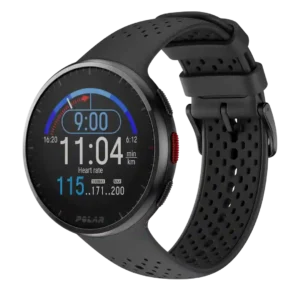
The Pacer Pro is broadly seen as well built for a lightweight sports watch, with a durable and practical construction.
Build quality feels premium from the top down thanks to the stainless steel bezel and sturdy construction, though one reviewer thought the overall feel was less upscale than the price suggests.
Physical controls are a strength, with reviewers liking the button-based layout for training and navigation.
The three-button layout is helpful for workouts and navigation, though some users note a short learning curve compared with Garmin's more traditional five-button watches.
Phone-call handling is limited to one-way call notifications rather than full calling features.
Calling works well enough for quick conversations, with generally clear audio, but reviewers still describe it as smartwatch-grade rather than class-leading.
Calorie and fueling data are seen as useful because Polar breaks effort down into energy-source or workout-fueling insights, not just a raw calorie total.
Charging works, but the new connector is a weak point, with reviewers describing it as less secure or a step back from older Polar chargers.
Charging convenience is a clear strength because the long runtime reduces how often the watch needs to be plugged in or packed with a cable.
Charging speed is mixed in the reviews, with some praise for fast top-ups and others calling full charging slow.
Charging is generally quick, with several reviews highlighting meaningful top-ups in about 30 minutes to an hour.
FitSpark, guided workouts, and training guidance are repeatedly praised as practical coaching tools for runners and general fitness users.
Coaching is strongest around sleep, recovery, guided workouts, and training plans, giving the watch useful guidance without making it a hardcore coaching device.
Comfort is a consistent strength, with the watch frequently described as light, wearable, and easy to keep on day and night.
Comfort is a major plus, with repeated praise for the lightweight case and easy all-day wear during workouts, sleep, and daily use.
Polar Flow offers rich detail and clear metric explanations, though some reviewers still find the companion app less intuitive than rival apps.
Garmin Connect is information-rich and useful, but it can feel overwhelming at first depending on how much detail you want.
Reviews explicitly say payment features are not included.
Garmin Pay is convenient once set up and works quickly, but real-world usefulness depends heavily on bank support.
The watch is presented as working with both Android and iOS through Polar Flow.
The Venu 3 works with both Android and iPhone, although some smartwatch features are fuller on Android.
Customization is solid, especially for sport profiles, exercise screens, and default watch-face choices.
Customization is extensive across watch faces, buttons, swipe actions, data fields, and visible activities.
The display is readable and improved over older Polar models, but reviewers still note that it can look dull or unexciting next to stronger screens.
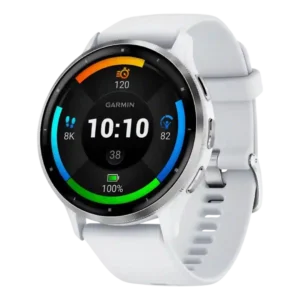
Display quality is excellent, with reviewers repeatedly calling the AMOLED screen vivid, colorful, and easy to read.
Durability is considered good for a lightweight sports watch, with reviewers noting protective materials or ruggedness claims.
Durability looks solid for daily wear and scratch resistance in several reviews, but not everyone found it especially rugged for rougher use.
Reviews explicitly note that ECG hardware is not included.
ECG support is mixed across reviews: some describe the feature working or being available, while others note launch or regional limitations.
Fit is generally good on a wide range of wrists, though at least one reviewer still found it less ideal than other Polar models.
Fit is helped by the two size options, and reviewers with smaller wrists especially liked the more balanced feel of the 3S.
Fitness-test usefulness is mixed: reviewers like the performance-testing tools, but accuracy and interpretation are not universally convincing.
Fitness tracking accuracy is consistently strong for general workouts, with reviewers describing the device as a dependable tool for day-to-day training.
GPS performance is generally good to very good for the price, but several reviews still mention wobble, noise, or results that are not best in class.
GPS accuracy is one of the stronger parts of the package, with repeated praise for fast acquisition and reliable route tracking.
General health tracking is described as useful and often reliable, but not every reviewer was impressed by the scientific accuracy of all wellness metrics.
Health tracking is broadly praised for being comprehensive and accurate enough to support daily wellness and recovery decisions.
Heart-rate tracking is usually rated good for steady efforts, but repeated reviews warn that intensity spikes or tougher conditions can reduce accuracy.
Heart rate tracking is a standout, with several reviewers comparing it favorably to chest straps and other strong wearables, though a few isolated discrepancies still appear.
The Venu 3 does not offer LTE, so calls and related phone features still depend on a nearby phone.
Materials feel appropriate for the price, with the aluminum bezel helping the Pro look and feel more premium than simpler models.
Materials are generally viewed as good, especially the stainless steel bezel and Gorilla Glass, though some reviewers still notice the polymer case.
Menu navigation is commonly described as easy to learn and straightforward once the button layout is familiar.
Menu navigation is usually easy and quick once learned, with responsive swipes and buttons, though a few users mention an adjustment period.
Phone-based music controls work well and are easy to access during workouts, but they rely on a connected phone.
Music controls are easy to reach and cover the basics well, including quick access, playback, skipping, and volume changes.
Reviews repeatedly state that the watch does not offer onboard music storage.
Onboard music support is solid, with room for offline playlists or local tracks and no phone required once music is loaded.
The overall operating experience is seen as faster and more responsive than earlier mid-range Polar watches.
The overall software experience feels more polished than older Venu models, with a cleaner menu structure and easier day-to-day use.
Outdoor visibility is a strong point, with the screen repeatedly described as easy to read in sun and bright conditions.
Outdoor visibility is excellent, and multiple reviewers say the display remains readable in bright sun.
Pairing and syncing are generally dependable, with fast GPS lock and straightforward phone setup mentioned positively.
Pairing and setup are usually straightforward, but a few reviewers still ran into connection issues that prevent it from feeling universally seamless.
Nightly Recharge and related recovery tools are among the most praised parts of the watch, giving usable readiness feedback and training context.
Recovery insight is one of the watch's clearer strengths, with recovery time, Body Battery, nap handling, and sleep-based guidance all called out as useful.
In day-to-day use the watch is generally portrayed as dependable, with few major usability issues once set up.
Reliability is generally strong across daily wear, battery behavior, and tracking consistency, with reviews describing the watch as stable in regular use.
Back to Start and basic route guidance add useful safety-oriented navigation, though the implementation is simpler than full mapping or advanced trackback tools.
Safety features add reassurance through emergency alerts, live tracking, or emergency contact actions when enabled.
Size flexibility is modest: reviewers mention multiple strap lengths or fit ranges, but not multiple watch-case sizes.
Two case sizes make the lineup easier to fit across different wrists without changing the core feature set.
Sleep tracking gets both praise and pushback: some reviews compare it favorably with other wearables, while stricter testing judged it only average.
Sleep tracking is usually seen as useful and directionally accurate for sleep timing and nap handling, though not every reviewer trusted it equally.
Notifications work and are useful for texts and alerts, but they are one-way and not especially advanced.
Notifications are practical for calls, texts, and calendar alerts, but customization and reply behavior still depend on phone platform.
Smartwatch extras are present but limited, with weather, notifications, and music control available while richer smartwatch capabilities are absent.
Smartwatch features are well-rounded for a Garmin, covering calls, music, payments, notifications, and voice assistant access, even if rivals still do more.
Software performance is a clear improvement, with reviewers often calling the watch faster, smoother, and less laggy than older Polar models.
Software smoothness is strong, with reviewers noting responsive touch input, fluid switching, and little noticeable lag.
Step counting looks acceptable in casual comparisons, but more controlled testing found it only average rather than standout.
Step tracking appears solid for everyday use, though reviews spend less time validating it in depth than heart rate or GPS.
Stress-related support is limited: there are breathing or recovery tools, but dedicated stress tracking is absent.
Stress tracking and related HRV-based context are seen as useful, with some reviewers finding the watch's stress feedback surprisingly accurate.
Design opinion is mixed: the watch is light and sporty, but several reviewers call the look plain or criticize the large bezel.
Style is a strength for Garmin here, with repeated praise for the refined look and easy transition from workouts to everyday wear.
Third-party support is a plus, with recurring mentions of Strava, TrainingPeaks, Komoot, and phone-audio apps.
Third-party app support exists for services like Strava and Connect IQ additions, but it remains limited compared with Apple, Google, and Samsung platforms.
The Pacer Pro uses buttons instead of a touchscreen, so touch responsiveness is not part of the experience.
Touch responsiveness is consistently praised, with the screen reacting quickly to taps and swipes in normal dry conditions.
The interface is generally praised for being simple, accessible, and easy to understand once the button scheme is learned.
The user interface is easier to understand than older Garmin software, with a cleaner split between apps, activities, widgets, and shortcuts.
Value is a recurring strength, with reviewers repeatedly saying the Pacer Pro packs high-end Polar features into a more affordable price point.
Value is mixed: many reviewers like what the watch delivers, but the high price keeps it from feeling like an automatic bargain.
Voice-assistant support is explicitly absent.
Voice assistant support is useful and generally works well, but it relies on your phone's assistant rather than a fully independent system.
Watch-face options are functional rather than flashy, offering basic customization without a premium visual experience.
Watch face selection is strong, offering classy, information-dense, and live options with plenty of room for personalization.
Water resistance is consistently described as solid for normal swimming and everyday wet use.
Water resistance is confidently presented for swimming, showers, and daily exposure thanks to the 5ATM/50-meter rating.
Wellness insight features such as Nightly Recharge and daily wellness tracking are considered useful and fairly comprehensive for training-focused users.
Wellness insights are a major appeal, with the watch translating sleep, activity, stress, and recovery data into practical daily guidance.
Workout coverage is a major strength, with multisport support and a broad range of sport profiles repeatedly highlighted.
Workout tracking variety is broad, covering dozens of activities plus guided and animated workout options.