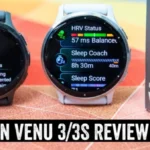
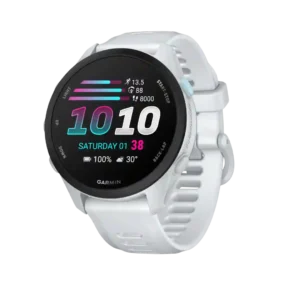
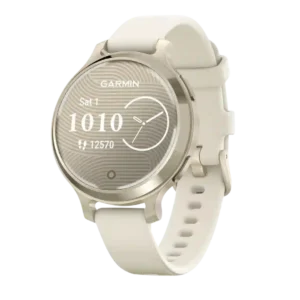
- Alternative: lower-cost Garmin option TechGearLab framed Vivoactive 5 as a pared-down option for buyers who like the Venu 3 but not its price.
- Cheaper: price and feature overlap Wareable saw the Vivoactive 5 as a much cheaper Garmin alternative with many similar features.
Garmin Venu 3 Review
Bottom Line
Choose the Garmin Venu 3 for long battery life, accurate GPS and heart-rate tracking, comfort, and wellness guidance. Skip it if you need richer apps, LTE, top-tier running analytics, or a lower price.
Best for active everyday users who want Garmin-grade fitness, sleep, recovery, and health insights in a comfortable AMOLED smartwatch with multi-day battery life. It especially suits people who value wellness guidance more than a huge app store.
Not for buyers who need LTE, the richest third-party app ecosystem, full iPhone-style messaging, or deep running metrics like Training Readiness and advanced form analysis. Budget-focused shoppers may also find the price hard to justify.
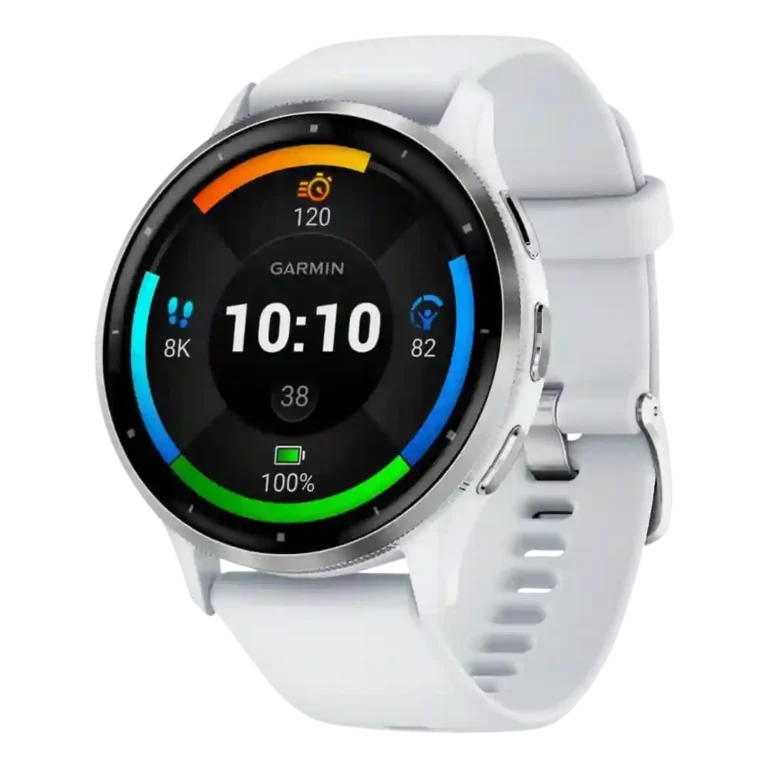
The Garmin Venu 3 comes across as a fitness-first smartwatch with unusually strong battery life, accurate GPS and heart-rate tracking, a bright AMOLED display, and broad wellness tools around sleep, stress, recovery, and Body Battery. Its biggest tradeoff is that it feels more complete as a health and workout companion than as a full smartwatch: reviewers repeatedly mention limited third-party apps, no LTE, uneven iPhone restrictions, and weaker advanced training depth than Garmin’s Forerunner line. For everyday active users who value comfort, recovery guidance, calls, music, payments, and multi-day endurance, the Venu 3 feels polished. For app-heavy smartwatch buyers or serious runners wanting deeper performance metrics, the price is harder to justify.
Compared in Reviews
Products reviewers directly compared with this model, grouped into quick takeaways.
- Better: apps and iPhone lifestyle features The Venu 3 is strong on fitness and battery, but PCMag still preferred Apple Watch Series 10 for iPhone-focused apps and lifestyle features.
- Similar: GPS route accuracy Advnture found the Venu 3S produced the same measured 5K result as Apple Watch Ultra 2.
Feature Scorecards
Pros
-
Heart-rate accuracy was one of the strongest areas, with multiple reviewers comparing it favorably to chest straps or other reference devices.
-
Display quality was consistently praised, with reviewers highlighting the AMOLED screen, color, crispness, and visual appeal.
-
Outdoor visibility was consistently strong, with reviewers reporting easy reading in sunlight and direct outdoor conditions.
-
Fitness tracking accuracy was a major strength, with reviewers praising workout, GPS-distance, and heart-rate tracking in real-world use.
-
GPS accuracy was repeatedly strong, with fast locks, precise routes, and good results even against premium or multiband comparisons.
-
Fit was praised, especially with the return of two case sizes and the 3S fitting smaller wrists well.
-
Wellness insights were a major strength, with reviewers praising Body Battery, sleep reports, stress data, and broader health interpretation.
-
Two size options were consistently presented as useful, covering 41mm and 45mm preferences without changing core features.
-
Battery life was one of the clearest strengths, with reviewers reporting multi-day to 10-day-plus use depending on always-on display, GPS, and sensor settings.
-
Reviewers found the display bright enough for outdoor or direct-sun viewing, with no major complaints about normal brightness.
-
Health tracking accuracy was treated positively overall, especially for heart-rate-derived insights and the broad sensor set.
-
Charging speed received positive marks, with reviewers reporting quick top-ups ranging from over 50% in about 30 minutes to large gains in about an hour.
-
Customization was a strength, covering buttons, widgets, data fields, training plans, and screens.
-
Menu navigation was generally intuitive, with reviewers liking Glances, swipes, activities/apps separation, and quick access to common stats.
-
Comfort was a strong theme, especially for all-day and sleep wear, with the smaller size and lightweight body helping despite some strap criticism.
-
Recovery insights were a standout, especially Body Battery, Recovery Time, Workout Benefit, Daily Summary, and sleep-related recovery recommendations.
-
Software smoothness was praised in modes, menus, and general convenience, with reviewers noting smooth transitions and responsive operation.
-
The user interface was broadly praised as intuitive and easier than older Garmin experiences, especially with the Activities/Apps split and Glances.
-
Onboard music storage and offline playback were valued, with reviewers noting playlists can be downloaded and used without carrying a phone.
-
Workout tracking variety was strong, with many activity modes, sports profiles, built-in workouts, and indoor/outdoor tracking options.
-
Style and design were mostly positive, especially office-friendly and sleek looks, though one reviewer found the design bland.
-
Safety features were a plus, including emergency alerts, wheelchair-related tracking, and general safety tracking mentions.
-
Call handling was a solid convenience overall, with usable wrist calls and clear-enough speaker quality, though not always as polished as phone audio.
-
Blood oxygen support was repeatedly noted as part of the broader health sensor package, including optional all-day tracking in some accounts.
-
Water resistance was clearly adequate for swimming and daily exposure, though it was not positioned as a rugged dive or expedition watch.
-
Garmin's interface updates improved access and usability, although the operating system still varies by phone platform and is not as app-rich as watchOS or Wear OS.
-
Coaching features were useful for sleep, recovery, and wellness guidance, though one reviewer wanted more actionable sleep advice.
-
The three-button layout was useful during workouts and glove use, though one reviewer found the button/touchscreen feature access slightly confusing at first.
-
Stress tracking and HRV-based insights were useful for understanding rest, workload, and daily strain.
-
Watch faces were plentiful and useful, with customization and classy designs, though some reviewers wanted richer complication options.
-
Music controls worked well enough for playback and services, though one reviewer noted controls were limited to downloaded playlists.
-
Sleep tracking was generally useful and often accurate for sleep timing, though some reviewers warned it could misclassify in-bed reading or rest.
-
Step counting and basic activity logging were supported well enough for lifestyle tracking, though detailed evidence was thinner than for GPS or heart rate.
-
Touchscreen responsiveness was generally good, especially dry, but wet conditions, gloves, or workout use could make touch input less reliable.
-
Wi-Fi evidence was limited but supported music syncing and playlist downloads to the watch.
-
Garmin Connect was viewed as information-rich and useful, though sometimes overwhelming or less polished than flashier companion apps.
-
Bluetooth support generally worked well for phone-range features, headphones, and media controls, though some smart features still depend on a nearby phone.
-
Build feedback was mixed: several reviewers liked the solid feel and glass protection, while one raised concerns about plastic feel and overall build quality.
-
Notifications were practical but uneven: Android support was richer, while some reviewers found organization or iPhone restrictions limiting.
-
Garmin Pay and other payment options were useful once configured, but setup friction and patchy bank support limited enthusiasm.
-
Materials quality was mixed: stainless steel and Gorilla Glass were positives, while plastic-feeling case elements drew criticism.
-
Durability evidence was mixed: some reviewers saw scratch resistance, while one reported easier scratching and questioned ruggedness.
-
Smartwatch features were useful for calls, payments, music, notifications, and daily tools, but reviewers agreed they trail Apple, Samsung, or Wear OS for app depth.
-
The watch works with both iPhone and Android, but reviewers repeatedly noted Android users get more messaging and integration features.
-
Reliability was mixed because battery endurance was described as stable, but one reviewer experienced major setup and connection issues.
-
Voice assistant quality was mixed: useful for quick commands and calls, but phone-dependent, sometimes slow, and not a true onboard assistant.
-
Reviewers were split: nap and activity detection are useful when they work, but auto-starting ordinary activities was called inconsistent by some testers.
-
ECG support was a mixed point across reviews because availability changed by region and timing; where available, it added useful heart-rhythm checks.
-
Garmin Connect IQ adds watch faces and apps, but reviewers consistently treated the ecosystem as narrower than Apple or Wear OS stores.
-
Calorie data appeared as a basic workout and activity metric; reviewers treated it as useful context rather than a standout capability.
Cons
-
Value was context-dependent: active users found strong value, while others emphasized the high price and cheaper alternatives.
-
Charging convenience was mixed: the long battery reduced charging hassle, but reviewers disliked the proprietary cable, loose connection, or extra cable burden.
-
Pairing reliability was mixed: one reviewer had an effortless Android setup, while another described serious phone connection problems.
-
The silicone band earned praise for softness in one review, while other reviewers found the stock strap disappointing or less comfortable than Garmin alternatives.
-
Third-party app support was a common limitation, with Connect IQ useful but clearly weaker than major smartwatch app stores.
-
Reviewers consistently noted the lack of LTE or cellular connectivity, making untethered calling and data unavailable.
Compared With Category Average
Compared with other Smart Watch, this product is above average in onboard music storage, size options, ECG functionality, below average in LTE connectivity.
| Attribute | This product | Category average | Difference |
|---|---|---|---|
| onboard music storage | 4.3 | 2.8 | +1.5 |
| size options | 4.5 | 3.1 | +1.4 |
| ECG functionality | 3.6 | 2.3 | +1.3 |
| call handling | 4.2 | 3.1 | +1.1 |
| voice assistant quality | 3.6 | 2.6 | +1.0 |
| contactless payments | 3.9 | 2.8 | +1.0 |
| heart rate accuracy | 4.7 | 3.8 | +0.8 |
| LTE connectivity | 1.1 | 1.9 | -0.8 |
FAQ
Is the Garmin Venu 3 good for fitness tracking?
Yes. Reviewers repeatedly praised its GPS, heart-rate accuracy, workout modes, and post-workout data, especially for general fitness, running, cycling, swimming, strength, and mixed routines.
How good is the battery life?
Battery life was one of the most consistent strengths. Reviewers reported anything from about four days with heavy always-on and GPS use to around a week or more with typical use, with Garmin's longer claims seen as plausible in lighter scenarios.
Does the Venu 3 work well as a smartwatch?
It handles calls, notifications, music, payments, and basic connected features well, but reviewers said it does not match Apple Watch, Galaxy Watch, or Wear OS models for apps, LTE, or deep phone integration.
Is the sleep tracking useful?
Reviewers generally found sleep timing, reports, nap detection, and recovery guidance useful, though some noted that sleep-stage accuracy is hard to verify and that sleep coaching could be more actionable.
Is it better for Android or iPhone users?
It works with both, but reviewers repeatedly noted Android users get more messaging and notification interaction. iPhone users still get core Garmin fitness and wellness features, but fewer phone-style controls.
Is the Garmin Venu 3 worth the price?
It is easiest to justify for users who want accurate tracking, long battery life, comfort, and wellness insights in one watch. It is harder to justify for shoppers focused on budget, LTE, or full smartwatch app depth.
Consider This Instead
If you want better LTE connectivity
Choose Apple Watch Ultra 2. It scores 4.8 vs 1.1 for LTE connectivity, with a 4.3 overall score.
If you want better third-party app support
Choose Samsung Galaxy Watch 8. It scores 4.8 vs 2.8 for third-party app support, with a 4.0 overall score.
If you want better pairing reliability
Choose Garmin Approach S70. It scores 5.0 vs 3.3 for pairing reliability, with a 4.3 overall score.
If you want better value for money
Choose Amazfit Active 2. It scores 4.9 vs 3.4 for value for money, with a 3.8 overall score.
Overall Top Smart Watch Alternatives
Good if you want the most rugged Apple Watch, brighter outdoor screen, better battery, LTE, and top apps. Skip it if you need Garmin-like mapping, recovery analytics, smaller sizing, or...
Pros: display quality, heart rate accuracy
Cons: cross-platform compatibility, recovery insights
Choose the Galaxy Watch 6 for a polished Android smartwatch with a bright screen, strong apps, and broad health tracking. Skip it if battery life, iPhone support, or full non-Samsung...
Pros: outdoor visibility, workout tracking variety
Cons: cross-platform compatibility, battery life
Good if you need a rugged Garmin with deep outdoor, tactical, GPS, training, and battery features. Skip it if you want a cheaper lifestyle watch or do not need the...
Pros: materials quality, durability
Cons: LTE connectivity, value for money
Good if you want premium golf maps, virtual caddie tools, health metrics, music, notifications, and long battery life in one watch. Skip it if you only need basic yardages or...
Pros: pairing reliability, brightness
Cons: software smoothness, user interface