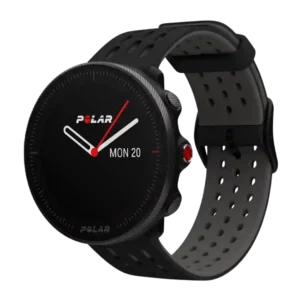
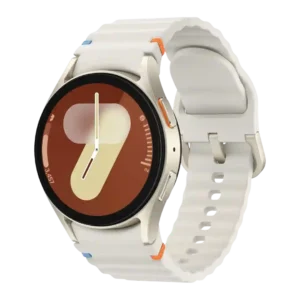
Auto-detection for common activities is a standout convenience, with several reviews praising how quickly the watch starts logging walks and other movement.
Polar Flow is described as a broad athlete ecosystem with useful website tools, exports, community features, and app support beyond the watch itself.
The app ecosystem is a strength, with Samsung, Google, and third-party apps all represented on the watch.
Reviewers consistently like the strap comfort and feel, though one notes the closure can be a bit finicky.
Band quality is generally good and comfortable for exercise, though at least one reviewer found reattachment a bit fiddly.
Battery life is a clear strength, with most reviews landing around five to seven days of normal use and about 30 hours of GPS tracking, plus battery-saving modes.
Battery life remains the biggest tradeoff: some reviewers reached around a day or 1.5 days, but AOD, GPS, and workouts often push it toward daily charging.
One review explicitly notes that blood oxygen tracking is not offered on the M2 and is reserved for a higher-end Polar model.
Blood-oxygen tracking is part of the watch’s broader health and sleep analysis and is presented alongside other overnight health metrics.
Bluetooth support is strong for normal syncing and sensor use, but not every external accessory behaves perfectly.
Brightness is good enough outdoors, but several reviews call the display dim indoors or in lower light.
Brightness is strong on paper and in daily use, though one reviewer still thought Samsung’s brightness tuning could be smarter.
The watch feels solid for the price, with a metal or stainless steel bezel paired to a lightweight plastic body.
Build quality is strong, with the aluminum body and protective ratings giving the watch a sturdy everyday feel.
The five-button control layout is repeatedly praised for sports use and generally works better than a touchscreen-free compromise might suggest.
The hardware buttons are simple and useful, giving quick access to core functions like Home and wallet features.
Call handling is solid, with support for answering calls from the watch and gesture shortcuts that make hands-busy interactions easier.
Post-workout calorie and energy-source data are seen as informative and genuinely useful for understanding sessions.
Charging works, but reviewers mention setup quirks such as lining up the charging marks or relying on a dedicated cable.
Charging itself is straightforward with the included puck, but convenience is held back by limited standard Qi options.
Charging speed is decent rather than class-leading, with most reviews describing full top-ups in roughly an hour or a bit more.
FitSpark, Training Load guidance, guided workouts, and fueling prompts give the M2 unusually strong coaching support for its price.
The watch offers meaningful coaching tools, including wellness tips, health guidance prompts, and access to free workout content.
Comfort is a repeated positive, with reviewers describing the watch and strap as easy to wear all day and during training.
Comfort is one of the watch’s strengths, especially its light feel for all-day and overnight wear.
Polar Flow is consistently described as feature-rich and capable, especially for users who want deeper training and recovery data.
Samsung’s companion apps add a lot of context and value, though the overall setup can feel a bit app-heavy.
Reviews explicitly say the M2 does not offer contactless payments, which limits its smartwatch appeal.
The watch supports NFC-based mobile payments, covering a basic premium-smartwatch convenience.
The watch and app work across Android and iOS, and reviews mention phone-linked features on both platforms.
Compatibility is decent across modern Android phones, but the best experience and some key features remain tied to Samsung phones.
Users can customize sport screens and which watch views appear, though the look-and-feel changes are still fairly limited.
Customization is excellent, from watch faces and tiles to custom workout pages and other configurable on-watch elements.
The display is functional and easy to read outside, but several reviews describe it as plain, dark, or lacking vibrancy compared with true smartwatches.
Display quality is excellent, with sharp, colorful AMOLED panels earning praise across reviews.
Durability is generally good for daily knocks and swim use, though one reviewer warns the PMMA-like cover can scratch fairly easily.
Durability is a major plus thanks to IP68, 5ATM, and MIL-STD protection aimed at real everyday wear.
ECG support is a clear strength, but reviewers repeatedly note that access is limited by Samsung-phone requirements and regional availability.
Fit is secure once tightened properly, and included strap sizing helps it accommodate different wrists.
Fit is mostly good thanks to the two size options, but comfort and sensor shape can still vary depending on wrist size.
Overall fitness tracking is good enough for many users, but review evidence still shows some inconsistency in harder conditions.
General fitness tracking is strong, with reviewers calling activity tracking accurate and highlighting the watch’s fitness focus as a core strength.
GPS performance is mixed but usually competent: several reviews report good everyday tracks, while others document clear misses in tougher scenarios.
GPS is the most divisive fitness metric: some reviewers found it acceptable, while others reported overreporting, wobble, and clearly poor route accuracy.
Health tracking is generally viewed as accurate and useful, especially around sleep and overnight recovery patterns.
Reviewers describe the health-tracking package as strong and feature-rich, with broadly reliable sensor data and lots of contextualized metrics.
Heart rate accuracy is one of the M2's stronger areas for many workouts, but multiple reviews still recommend a chest strap when precision really matters.
Heart-rate tracking is generally very good for daily use and running, though one reviewer found it much less dependable in rougher cycling conditions.
Materials are practical rather than premium, combining plastic or polymer construction with nicer accents like stainless steel or mineral-style elements.
Materials feel premium for the price, with aluminum construction and quality finishing standing out positively.
Menu navigation is learnable and workable, but some actions take too many presses and certain menus feel sluggish.
Menu navigation is workable and familiar, though there are enough screens and settings that the interface can feel dense at times.
Music controls are useful for basic phone playback control, but they remain simple and depend on the phone being nearby.
Music controls are easy to access, including gesture support and smooth control of services like Spotify.
The watch does not store music locally; it only controls audio playing on a connected phone.
The jump to 32GB storage is a real benefit, especially for offline audio, routes, and apps.
The operating experience is straightforward and athlete-focused rather than flashy, prioritizing practical training use over richer smartwatch polish.
Wear OS 5 plus Samsung’s One UI gives the watch a polished operating-system experience with a lot of capability out of the box.
Outdoor visibility is a reliable positive, with multiple reviewers saying the screen is easy to read in bright conditions.
Outdoor visibility is good overall, especially in bright sun, even if niche scenarios like underwater visibility are weaker.
Basic setup and syncing work, but evidence shows slower sync times and occasional sensor-connection frustrations.
Pairing is generally smooth and setup is straightforward, even though non-Samsung phones may need a few extra apps.
Recovery features such as Nightly Recharge and Cardio Load are central strengths and often highlighted as genuinely helpful day to day.
Energy Score and related recovery readouts can be genuinely useful, but several reviews say the scoring logic can feel inconsistent or overly static.
Reliability is mostly solid, but one review still noted occasional battery-burn quirks after GPS use.
Safety and navigation help are minimal, centered mostly on Back to Start rather than fuller route guidance.
Safety features are strong, including fall detection and emergency calling support.
Included wristband sizing options help fit different wrists, though reviews do not mention different watch-case sizes.
Two size choices help the Watch 7 work for more wrists than one-size rivals.
Sleep tracking is one of the most consistently praised features, with reviewers often calling it accurate and reliable.
Sleep tracking is detailed and often close to comparison devices, but some reviewers saw generosity or undercounting depending on the night and setup.
Phone notifications work, but filtering, timing, and workout behavior are limited enough to frustrate some users.
Notifications are generally strong and useful, though not every review loved how consistently alerts surfaced on the watch face.
Smartwatch features are present but basic, covering notifications, weather, simple watch-face options, and music controls without matching richer smartwatch rivals.
As a smartwatch, the Watch 7 feels well-rounded and easy to live with, pairing strong daily convenience with health-focused extras.
Software smoothness is mixed: some reviewers call the interface smooth and responsive, while others notice lag and slower page transitions.
Performance is a clear positive, with reviewers repeatedly describing the Watch 7 as smooth, fast, and less stutter-prone than prior models.
Available evidence suggests step counts are reasonably close to other trackers, though this attribute is less heavily tested than GPS or heart rate.
Step counts seem close enough for casual use, but one review still found differences of several hundred steps versus other trackers.
Design is widely praised as sporty, more stylish than earlier versions, and attractive enough for all-day wear.
Samsung’s familiar circular design still looks attractive and distinctive even without a big visual refresh.
Third-party app support is a plus, with reviews specifically mentioning services like Strava and broader export options.
Third-party app support is good for major apps, but broader platform integrations beyond a few services are still limited.
The M2 has no touchscreen, so responsiveness on that front is simply not part of the experience.
The touchscreen is responsive in normal dry use, but one review warned that it becomes much less pleasant in rain or heavy sweat.
The user interface is usually described as clear and easy to understand, though still somewhat utilitarian and not always fast.
Samsung’s One UI lightly reshapes Wear OS in a way that feels coherent and easy to understand once you start using it.
Value is a major theme in the reviews: the M2 is often framed as a strong sports-and-health buy if you care less about premium smartwatch extras.
At its price, the Watch 7 is widely seen as a strong value thanks to its deep health feature set and polished smartwatch experience.
Google Assistant is a meaningful upgrade over Bixby here, with one review explicitly calling it convenient and more useful on-watch.
Watch-face options and view customization are appreciated, but reviewers still call the selection fairly limited overall.
Watch-face options are a strength, with multiple reviewers highlighting the variety and quality of the available faces.
Water resistance is suitable for swimming and showering, with reviews citing a 30-meter rating.
Water resistance is confidently presented and backed by swim-friendly testing and a 5ATM rating.
The watch delivers strong wellness insight through sleep, recovery, activity, and training-readiness data.
Samsung’s AI-driven wellness insights add useful context around sleep and activity, though some reviewers found the advice more helpful than the scoring behind it.
Workout variety is a standout, with around 130 sport profiles and real multisport support repeatedly called out.
Workout selection is broad, covering common gym and cardio modes and even more advanced sport profiles like multisport tracking.