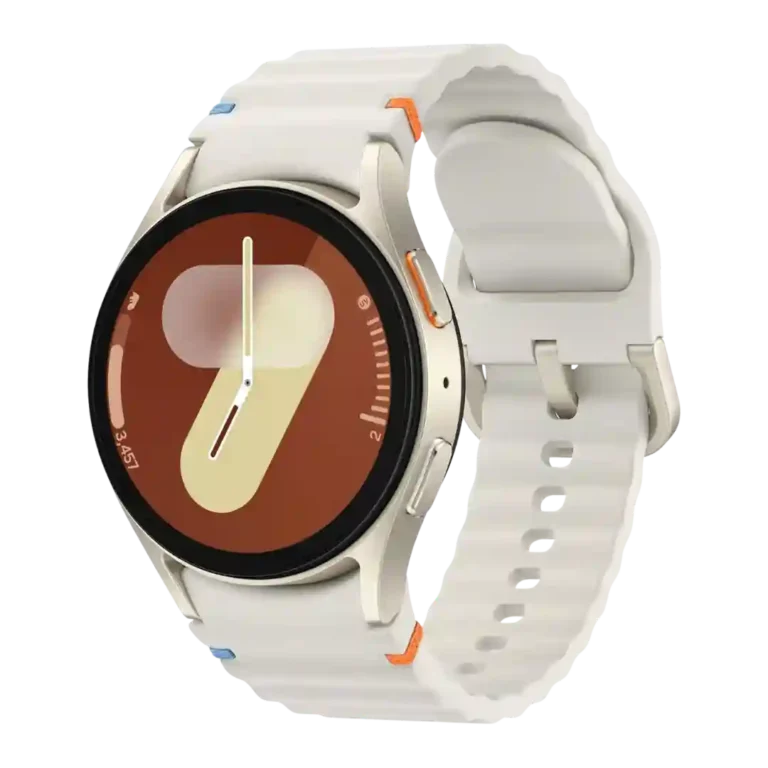
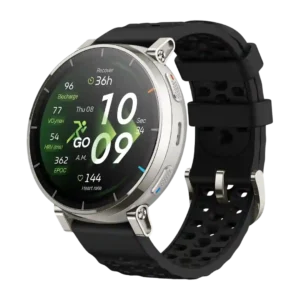
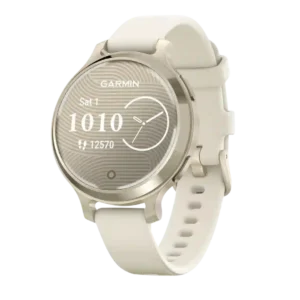
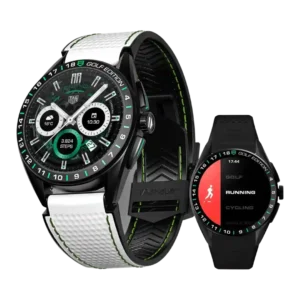
- Alternative: battery life and design preference The OnePlus Watch 2 tempted the reviewer for battery life, but its design was less appealing.
- Better: battery life Wareable says the OnePlus Watch 2 can last significantly longer between charges.
- Better: battery life The Galaxy Watch 7 trails the OnePlus Watch 2 when battery life is the priority.
Samsung Galaxy Watch 7 Review
Bottom Line
Choose the Galaxy Watch 7 if you want a polished Android smartwatch with strong health, sleep, apps, and display quality. Skip it if daily charging, Samsung-only features, or inconsistent GPS accuracy would bother you.
Best for Android users, especially Samsung phone owners, who want a polished smartwatch with strong health tracking, detailed sleep tools, Wear OS apps, and a bright circular display.
Not for users who need multi-day battery life, highly dependable GPS for serious training, iPhone compatibility, or full access to Samsung health features on a non-Samsung phone.
Across the reviews, the Galaxy Watch 7 comes across as a familiar but well-rounded Android smartwatch: bright AMOLED display, fast Wear OS performance, deep Samsung Health tracking, strong sleep tools, and useful smartwatch basics like apps, notifications, calls, music, and payments. Its biggest tradeoff is that the same health-first design depends on daily habits and ecosystem fit: battery life often lands around a day, some AI and medical features work best or only with Samsung phones, and GPS accuracy ranges from solid to notably poor in demanding tests. The result is a strong mainstream watch for Android users who value health insights more than multi-day endurance or sport-watch precision.
Compared in Reviews
Products reviewers directly compared with this model, grouped into quick takeaways.
- Similar: heart rate accuracy Heart-rate readings were close to the Apple Watch Ultra 2 in testing.
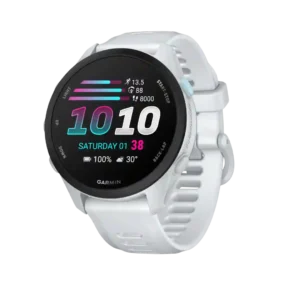
- Worse: GPS connectivity and accuracy Tom's Guide found the Watch 7 beat the Garmin Forerunner 165 on a bike ride.
Feature Scorecards
Pros
-
Build quality was viewed as premium and solid, with reviewers pointing to the lightweight casing and clean hardware finish.
-
The interface was praised as slick, consistent, and easy to learn, though dense settings and a digital bezel kept it from feeling effortless for everyone.
-
Software smoothness was a recurring strength, with reviewers calling the watch fast, zippy, fluid, or smooth under everyday use.
-
Onboard storage was a clear upgrade, with 32GB praised for apps, music, maps, routes, and audio storage.
-
The two case sizes were appreciated because they help the Watch 7 suit different wrist sizes better than the single-size Ultra.
-
Workout variety was broad, with reviewers citing dozens or hundreds of modes plus routine-building and common workout support.
-
Durability looked strong for everyday use, with IP ratings, sapphire glass, MIL-STD claims, and scratch-free experiences appearing across reviews.
-
Coaching was strongest around sleep and wellness, with personalized sleep coaching, Energy Score guidance, and wellness insights called helpful.
-
Display quality was one of the clearest strengths, with reviewers praising the AMOLED panel for readability, sharpness, color, and overall presentation.
-
Wear OS gives the watch a strong app base, with Google Play, Google apps, and downloadable third-party apps repeatedly cited as strengths.
-
Outdoor visibility was generally good, with reviewers reporting no trouble in sunlight or outside use thanks to the bright display.
-
Customization was a strength, with reviewers highlighting editable faces, complications, tiles, and quick-access interface options.
-
Water resistance was strong for swimming and everyday exposure, with 5ATM/IP68 appearing repeatedly, though Ultra models go further.
-
Health tracking was considered feature-rich and usually accurate, supported by the upgraded BioActive sensor and extensive Samsung Health metrics.
-
Fit was generally good across sizes and wrist types, with the smaller model helping sleep-apnea detection and the 40mm case suiting smaller frames.
-
Menu navigation was generally intuitive through swipes, tiles, the digital bezel, and consistent menu behavior, though some missed a physical rotating control.
-
Smartwatch features were comprehensive, spanning health tracking, calls, notifications, apps, payments, music, and gestures.
-
Wellness insights were a major strength, especially Energy Score, Sleep Score, Galaxy AI tips, and the broader health dashboard.
-
Call handling was positively covered, with reviewers noting that calls can be answered from the watch and supported by gestures or direct watch controls.
-
Safety features were meaningful, including fall detection and sleep apnea detection, with medical follow-up still required for serious concerns.
-
Materials were viewed as strong for the price, with aluminum, sapphire glass, and standard strap hardware mentioned as positives.
-
Reliability was mostly positive after updates and in long-term use, though isolated issues like random vibrations and early battery behavior appeared.
-
Heart-rate accuracy improved over prior models and often matched reference watches closely, though some cycling and rough-surface tests still exposed instability.
-
Style and design were widely liked for the familiar circular look, premium feel, muted colors, and ability to pass as a normal watch.
-
Watch faces were praised for variety, customization, and readability, though not every reviewer loved the default designs.
-
Samsung Health and the companion apps were usually described as useful and approachable, though the need to manage multiple apps or settings added friction.
-
Wear OS 5 with Samsung's One UI was mostly praised as slick, expandable, and mature, with later update support also noted.
-
Bands were generally praised as comfortable, sporty, easy to swap, and compatible with older or standard straps, though styling preferences varied.
-
Music controls worked through gestures and smartwatch controls, with reviewers also noting Spotify and media playback support.
-
Comfort was mostly positive because of the light case and wearable size, though one reviewer was bothered by the protruding sensor node at night.
-
Sleep tracking drew strong praise for detail and coaching, but some reviewers found sleep totals generous, low, or affected by quirks.
-
Fitness tracking accuracy was broadly good for everyday exercise, but serious training revealed limits in GPS, cycling heart-rate behavior, and some workout detection.
-
ECG support was available and considered useful or reliable, but access often depends on Samsung's Health Monitor setup and phone ecosystem.
-
Pairing and setup were described as quick or smooth, especially with Samsung phones, though non-Samsung Android setup required more app management.
-
Google Assistant worked better than Bixby in one reviewer's direct comparison, making assistant choice important for best results.
-
Third-party app support was strong through Google Play and Wear OS, but deeper health-data export and external sensor support remained limited.
-
Notifications were a strong smartwatch feature overall, with easy handling and quick replies, though one reviewer wanted alerts to appear more immediately.
-
Blood oxygen tracking is available and tied into sleep and health data, with one reviewer noting fewer random discrepancies than on the prior model.
-
Brightness was generally strong thanks to the 2,000-nit display, though one reviewer found underwater visibility less convincing.
-
Recovery insights centered on Energy Score; several reviewers found it useful or motivating, while others thought it was static or occasionally odd.
-
Bluetooth support was described as standard and useful, including pairing through Bluetooth menus and direct Bluetooth headphone support.
-
Reviewers found auto-detection useful for walks and everyday movement, but gym-machine detection was less dependable and sometimes fragmented workouts.
-
Value was often favorable at $299 or discounted prices, but reviewers disagreed on whether it justifies upgrading from a recent Galaxy Watch.
-
LTE was available as an optional model for phone-free use, usually with a price premium rather than deep performance commentary.
-
Wi-Fi connectivity is standard on the Watch 7 and appears in both core connectivity specs and power-saving tradeoffs.
-
Payments were supported through NFC, Samsung Wallet, or Google Pay, but one reviewer disliked Samsung Wallet being tied to a hardware shortcut.
-
Touch response was usually good and sometimes excellent, but wet use and the digital bezel could be less reliable.
-
Button and gesture controls were useful for shortcuts, calls, timers, workouts, and navigation, but gesture consistency and lack of a physical bezel drew some caveats.
-
Stress tracking is present in Samsung Health and tied into wellness context, though reviewers discussed it less deeply than sleep or Energy Score.
-
Calorie data appeared in daily activity and workout screens, but reviewers mostly treated it as part of broader activity tracking rather than a standout feature.
-
Charging convenience was mixed: the magnetic puck is simple, but reviewers disliked limited charging options and the loss of Wireless PowerShare.
Cons
-
Charging speed ranged from reasonably fast to merely acceptable; some saw quick partial top-ups, while others found full charging too slow for nightly use.
-
GPS accuracy was the most divided tracking area: some reviewers saw good routes, while others found overreported distances, wobble, or poor straight-line tracking.
-
Step counting was acceptable for general activity but not perfectly aligned with rival trackers, with Wareable seeing 700-1,000 step differences.
-
Battery life was the most consistent drawback: several reviewers reported roughly 24 hours or daily charging, while a few saw better results after updates or with lighter settings.
-
Mapping was useful for recorded routes and Google Maps, but the Watch 7 lacks the fuller route-following features of Samsung's higher-end models.
-
The watch works with Android phones, but reviewers repeatedly warned that Samsung phones unlock the smoothest setup and several key health features.
-
AGEs or metabolic index feedback was treated as interesting but underexplained; one reviewer called it potentially promising, while another found it nearly useless.
Compared With Category Average
Compared with other Smart Watch, this product is above average in LTE connectivity, ECG functionality, onboard music storage, below average in battery life.
| Attribute | This product | Category average | Difference |
|---|---|---|---|
| LTE connectivity | 4.0 | 1.9 | +2.1 |
| ECG functionality | 4.2 | 2.3 | +1.9 |
| onboard music storage | 4.5 | 2.8 | +1.7 |
| voice assistant quality | 4.2 | 2.6 | +1.6 |
| battery life | 3.1 | 4.2 | -1.1 |
| size options | 4.5 | 3.1 | +1.4 |
| call handling | 4.3 | 3.1 | +1.2 |
| contactless payments | 4.0 | 2.8 | +1.1 |
FAQ
Is the Galaxy Watch 7 good for battery life?
Battery life is the main caveat. Reviews ranged from roughly 24 hours or daily charging to better 1.5-2 day results with lighter settings or post-update behavior.
Does the Galaxy Watch 7 work best with Samsung phones?
Yes. It works with modern Android phones, but reviewers repeatedly noted that Samsung phones unlock the smoothest setup and features like ECG, sleep apnea tracking, or Galaxy AI health tools.
How accurate is the fitness tracking?
Heart-rate tracking was often praised and looked improved, but GPS accuracy was mixed. Some reviewers saw good routes, while others found wobble, overreported distance, or poor straight-line tracking.
Is the sleep tracking useful?
Most reviewers liked the detailed sleep data, Sleep Score, coaching, and sleep apnea detection. A few found sleep totals too generous, too low, or affected by occasional quirks.
Is it worth upgrading from the Galaxy Watch 6?
Reviewers generally saw the Watch 7 as a better, smoother, more health-focused watch, but not a dramatic upgrade for Watch 6 owners unless storage, sensors, or discounts matter.
Does it have strong smartwatch features?
Yes. Reviews cite Wear OS apps, notifications, calls, music, payments, customizable watch faces, and gestures as part of a complete everyday smartwatch package.
Consider This Instead
If you want better battery life
Choose Suunto Vertical. It scores 4.9 vs 3.1 for battery life, with a 3.8 overall score.
If you want better cross-platform compatibility
Choose Suunto Vertical 2. It scores 5.0 vs 3.0 for cross-platform compatibility, with a 3.8 overall score.
If you want better mapping and navigation
Choose Garmin Epix Pro (Gen 2). It scores 4.8 vs 3.1 for mapping and navigation, with a 4.1 overall score.
If you want better GPS accuracy
Choose Garmin Forerunner 265. It scores 4.8 vs 3.4 for GPS accuracy, with a 3.8 overall score.
Overall Top Smart Watch Alternatives
Good if you want the most rugged Apple Watch, brighter outdoor screen, better battery, LTE, and top apps. Skip it if you need Garmin-like mapping, recovery analytics, smaller sizing, or...
Pros: display quality, heart rate accuracy
Cons: cross-platform compatibility, recovery insights
Choose the Galaxy Watch 6 for a polished Android smartwatch with a bright screen, strong apps, and broad health tracking. Skip it if battery life, iPhone support, or full non-Samsung...
Pros: outdoor visibility, workout tracking variety
Cons: cross-platform compatibility, battery life
Good if you need a rugged Garmin with deep outdoor, tactical, GPS, training, and battery features. Skip it if you want a cheaper lifestyle watch or do not need the...
Pros: materials quality, durability
Cons: LTE connectivity, value for money
Good if you want premium golf maps, virtual caddie tools, health metrics, music, notifications, and long battery life in one watch. Skip it if you only need basic yardages or...
Pros: pairing reliability, brightness
Cons: software smoothness, user interface