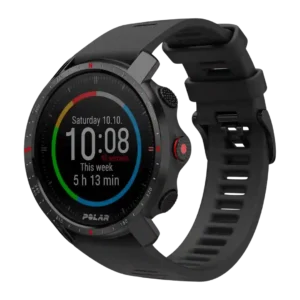
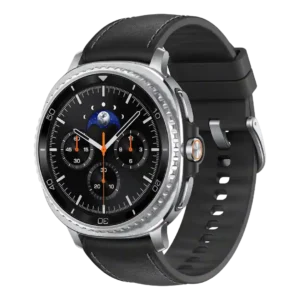
Auto-detection worked well overall, with one reviewer saying it picked up workouts faster than a competing watch, though another noted detection can take a few minutes.
Polar Flow is available on phone and web and syncs with services like Strava, TrainingPeaks, and Komoot, but the ecosystem is selective rather than wide open.
The app ecosystem is a strength, with Google Play access and broad support for major smartwatch apps.
The strap is repeatedly praised for feeling stretchy, secure, and better than many generic silicone-style bands.
Bands were generally praised for comfort and feel, but the new attachment system reduces compatibility with older straps.
Battery life is a real strength for a training watch, usually landing around 4–7 days or about 40 hours GPS, but reviewers repeatedly say it is not class-leading and can drain faster with heavy features enabled.
Battery life is the main compromise, with most reviewers landing around one day to one and a half days depending on use.
Blood oxygen tracking is included and generally useful, with multiple reviewers describing readings as accurate or dependable enough for everyday monitoring.
Bluetooth support is useful for phone syncing, external straps, and heart-rate broadcasting, though the overall connectivity story is limited by the lack of ANT+.
Bluetooth support is present, with one review explicitly calling out Bluetooth 5.3.
Brightness and backlight options are helpful, but the display is clearly tuned more for battery efficiency than punchy brilliance.
Brightness was repeatedly praised, with reviewers highlighting the 3000-nit screen and strong visibility.
Reviewers consistently describe the watch as solid, premium-feeling, and well thought out in its construction.
Build quality was viewed positively overall, with at least one reviewer saying it feels more premium than earlier standard Galaxy Watches.
The physical buttons are a highlight for feel and grip, though some reviewers still experienced lag after pressing them.
Button controls are easy to use and reasonably flexible, with configurable shortcuts and straightforward physical inputs.
Call handling is basic: the watch can surface call-related phone interactions and silence calls, but it is not a full call-management smartwatch.
The watch supports on-wrist calling, including direct phone calls from the watch interface.
Calorie-related features are useful enough for basic tracking and planning, but they were not treated as a standout strength.
The charging setup is easy to connect and practical to use, especially compared with fussier port-based designs.
Charging is simple with the magnetic puck, but convenience is reduced by missing extras like a power brick or reverse wireless charging support.
Charging speed is respectable rather than exceptional, with a full recharge taking about 1 hour 45 minutes.
Charging speed is decent for quick top-ups, though full charges can still take a while depending on the review.
FitSpark and the guided tests are standout strengths, giving users useful workout suggestions and coaching-oriented training guidance.
Running and sleep coaching were frequently highlighted as helpful, though some coaching plans felt basic or beginner-oriented.
Comfort is a clear positive, with reviewers saying it wears well and avoids feeling bulky in normal use.
Comfort is one of the watch’s biggest strengths, with reviewers consistently praising the light, slim design for all-day wear and sleep tracking.
Polar Flow is rich and informative, but several reviews say it can feel intimidating, cluttered, or clunky for newcomers.
Samsung’s companion apps are often informative and polished, but needing multiple apps remains a recurring frustration.
The watch does not offer contactless payments, and reviewers treat that omission as a clear smartwatch limitation.
Contactless payments are supported through NFC and treated as a standard, useful smartwatch feature.
It works across Android, iPhone, and Polar Flow on mobile and desktop, giving it solid cross-platform coverage.
Cross-platform support is acceptable across Android, but the best experience is still reserved for Samsung phones and there is no iPhone support.
Sport profiles, dashboards, watch-face views, and settings are all highly customizable for different preferences and activities.
Customization is strong, with reviewers praising editable tiles, configurable controls, and flexible settings.
The MIP display is functional and efficient, with good utility outdoors, but multiple reviews say it looks dull, low-contrast, or less vibrant indoors.
Display quality is a standout, with reviewers praising sharpness, color, and overall screen presentation.
Durability is one of the strongest recurring themes thanks to sapphire glass, rugged construction, and repeated praise for scratch resistance.
Durability looks good on paper thanks to strong certifications, though some reviewers still worried about the exposed screen design.
ECG functionality is easy to access and was generally described as dependable or straightforward to use.
Fit is consistently described as snug and secure, helped by strap sizing and a wrist-friendly shape.
Fit was widely praised thanks to the slim, flush design that sits close to the wrist.
General fitness tracking is dependable enough for serious training, especially for multisport and power-based use, though no reviewer presents it as flawless.
Fitness tracking accuracy was generally good to solid, though not every reviewer found it class-leading in every workout scenario.
GPS accuracy is generally good and reliable, but it is not the sharpest in class and occasional drift or limitations versus newer dual-band rivals are noted.
GPS accuracy was mostly described as good or fast, but one reviewer said distance could be overestimated and that it trails the best sports watches.
Health-related tracking is strongest around HRV, sleep, and recovery data, which reviewers repeatedly describe as especially accurate and useful.
At least one reviewer explicitly said the watch is more accurate than its predecessor for exercise and sleep tracking.
Heart-rate accuracy is mostly good to very good, but interval sessions and higher-intensity efforts still expose some inconsistency.
Heart-rate accuracy was repeatedly praised and compared well against reference devices and competing watches.
LTE is a useful optional upgrade for phone-free use, but reviewers mostly treated it as an availability feature rather than a defining advantage.
Sapphire glass, stainless steel, and other premium materials noticeably elevate the watch’s perceived quality.
Materials are solid for the price, with sapphire glass and armored aluminum noted positively even if the standard model feels less premium than the Classic.
Navigation through the interface can be simple in concept, but several reviewers say lag makes menus and dashboards slower than they should be.
Menu navigation is generally easier and more organized than before, though some reviewers still disliked the digital bezel behavior.
Music controls work well for controlling phone audio during workouts and are one of the more genuinely useful smartwatch additions.
Music controls are easy to access and part of the normal smartwatch feature set.
There is no onboard music storage or local playback, so audio control depends on having a phone nearby.
Onboard music support is present, with reviewers noting that users can download music and use the available storage for media and apps.
The daily software experience is more competitive than older Polar watches, but it still falls short of the polish offered by top smartwatch rivals.
Wear OS 6 with One UI 8 was broadly liked for its feature set, polish, and smooth daily experience.
Outdoor readability is generally strong, especially in sunlight, though some reviewers wanted more contrast, larger text, or better bike-at-a-glance clarity.
Outdoor visibility is strong thanks to the bright display that reviewers found easy to see outside.
Pairing is mixed: some sensors connect without issue, but finicky broadcasts and unsupported pairings show up often enough to matter.
Pairing and initial setup were described as straightforward, especially inside Samsung’s ecosystem.
Recovery Pro, Nightly Recharge, HRV tracking, and leg-recovery tools are some of the watch’s biggest reasons to buy into Polar’s platform.
Recovery guidance was useful, with bedtime guidance and post-workout drills giving actionable follow-up suggestions.
Overall reliability is viewed positively, with reviewers often calling performance solid or reliable even when they point out individual weaknesses.
Reliability is decent overall, but a few reviewers reported software gremlins or overlapping ways to do the same thing.
Back-to-start routing, TrackBack-style tools, and daylight/navigation aids add real practical value for outdoor safety and getting home.
Safety coverage is solid, with features like SOS, irregular rhythm notifications, water lock, and other protective tools.
Size flexibility comes more from small/large strap sizing and fit options than from multiple case sizes.
Two case sizes give buyers a practical choice between smaller and larger fits.
Sleep tracking is widely praised and regularly singled out as one of the best parts of the Polar experience.
Sleep tracking was often strong and compared well with other wearables, though one reviewer found automatic sleep detection slower than ideal.
Notifications are useful and easy to read, but they remain basic and mostly read-only rather than interactive.
Notifications are easy to access and reply to, but several reviewers wanted stronger or faster alert behavior.
Smartwatch features are decent and improving, but the watch is still clearly a sports-first device rather than a full smartwatch replacement.
Core smartwatch features are comprehensive, covering calls, texts, apps, tiles, payments, and health tools.
Laggy performance is a recurring complaint, affecting screen changes, button responses, and general smoothness.
Day-to-day software performance was usually smooth, quick, and responsive.
Step counts were described as solid, with one reviewer manually validating them well and another seeing only small variance.
Stress tracking is available and useful enough to mention, but it was not always enabled by default and was not treated as a major differentiator.
Style is a major selling point, with multiple reviewers calling it attractive, subtle, rugged, and easy to wear outside workouts.
Design reactions were mixed: many praised the slimmer cushion redesign and stronger identity, while others simply disliked the look.
Third-party support is good enough for key fitness services like Komoot, Strava, and TrainingPeaks, but it is not especially broad or universal.
Third-party app support is a major strength thanks to Google Play access and wide app availability.
Touch response is one of the clearest weak points, with repeated complaints about sluggish or frustrating responsiveness.
Touch responsiveness was repeatedly praised, though one reviewer found the touch bezel overly sensitive.
The interface is relatively simple and approachable, though simplicity does not fully make up for the watch’s slower feel.
The refreshed interface, tiles, and Now Bar were widely praised for making the watch easier and faster to use.
Build, recovery tools, and outdoor features help justify the price for the right buyer, but many reviewers still see the value as only fair unless it is discounted.
Value is good if you want Samsung’s latest smartwatch features without paying Classic prices, but the price increase weakens the bargain.
Gemini is one of the watch’s biggest wins, with several reviewers calling it genuinely useful even if not flawless.
The watch faces and dashboards are useful, especially the outdoor-oriented ones, though some reviewers wanted more visual variety or flair.
Watch faces are plentiful and customizable, with reviewers praising variety more than any single design.
WR100/100-meter water resistance is a clear positive and supports swimming and rough outdoor use.
Water resistance is strong on paper and held up well in casual swim-related testing.
Nightly Recharge, sleep breakdowns, HRV, and related recovery metrics give the watch genuinely useful wellness context beyond raw workout logs.
Wellness insights are broad and often actionable, though some newer metrics still feel experimental.
Wi-Fi support is present, but reviewers focused more on feature availability than on connection quality.
Workout variety is excellent thanks to extensive sport profiles, multisport support, and strong options for customizing training use.
Workout mode coverage is broad, spanning common workouts and more specialized activities.