- Better: all-around health picture The reviewer says Apple Watch is harder to beat for a broad health picture.
- Better: indoor display vibrancy The Grit X Pro display is described as less vibrant indoors than an Apple Watch.
Polar Grit X Pro Review
Bottom Line
Choose the Polar Grit X Pro for rugged build quality, outdoor routing, training load, recovery, and sleep insights. Skip it if you need smooth touchscreen controls, richer apps, payments, onboard music, or class-leading battery.
Best for outdoor athletes, runners, hikers, and triathletes who want durable hardware, Polar recovery insights, structured training, and route/backtrack tools more than full smartwatch extras.
Not for shoppers who prioritize smooth touch performance, payments, voice assistants, onboard music, app-store depth, or the richest mapping and smartwatch experience.
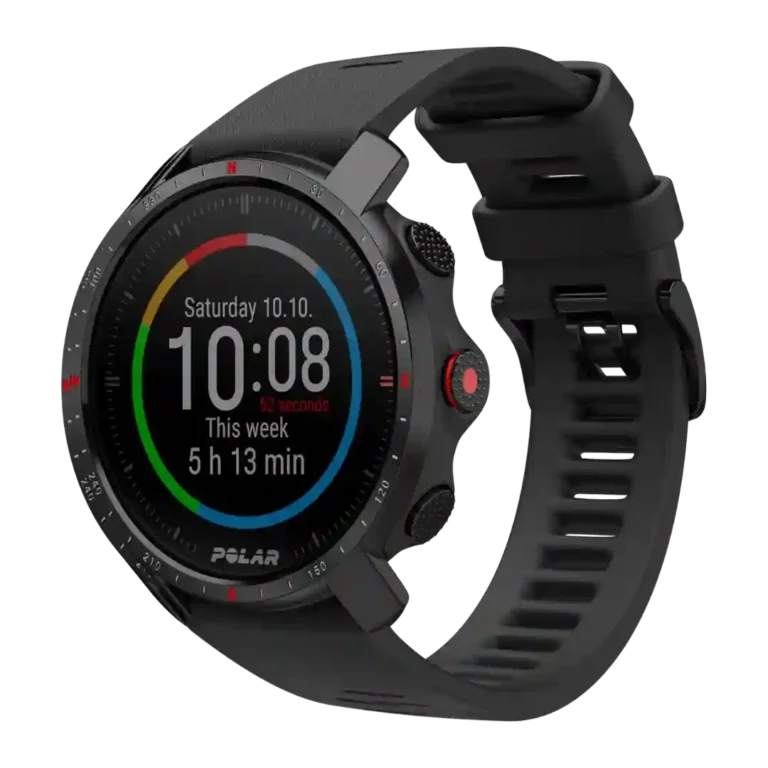
The Polar Grit X Pro comes across as a rugged sports-first watch with unusually rich training, recovery, sleep, and outdoor navigation tools. Reviewers consistently like the durable sapphire construction, secure fit, broad sport profiles, FitSpark-style coaching, and trackback/routing features. The tradeoff is that its smartwatch side remains thin: no payments, no onboard music, limited third-party apps, and basic notifications. Battery impressions also vary sharply depending on usage, and the most repeated frustration is laggy touch/button response. It suits athletes who value Polar’s physiology data more than a polished smartwatch experience.
Compared in Reviews
Products reviewers directly compared with this model, grouped into quick takeaways.
- Better: indoor display color pop The MIP display is contrasted with the brighter-looking Apple Watch Ultra.
- Better: mapping support Wareable says Garmin Fenix models still offer richer detailed mapping.
Feature Scorecards
Pros
-
Durability is one of the clearest strengths, with sapphire glass, rugged design, scratch resistance, military-grade claims, and water-ready construction repeatedly praised.
-
Workout tracking variety is excellent, with reviews citing 100-plus profiles, triathlon/multisport options, custom views, and many sport modes.
-
Materials quality is consistently premium, centered on sapphire glass, stainless steel or titanium versions, and rugged screen protection.
-
Water resistance is consistently strong, with reviews citing WR100, 100-meter waterproofing, and suitability for swimming.
-
Health tracking accuracy is strongest for HRV and sleep, with reviewers especially trusting Polar’s nightly recovery data.
-
Fit is well regarded thanks to secure straps, small/large band options, and repeated comments that it stays snug without feeling restrictive.
-
Style and design are widely praised, from office-friendly looks to rugged outdoor styling and attractive bezels/colorways.
-
Coaching is a major strength, with FitSpark, guided tests, structured workouts, fueling prompts, and physiological analysis appearing repeatedly in reviews.
-
Safety/navigation features are strong for outdoor users, with trackback, back-to-start, reverse route, breadcrumb guidance, and find-your-way-home tools often praised.
-
Build quality receives strong praise across reviews, with reviewers describing the watch as solid, well-built, rugged, and suitable for outdoor use.
-
Sleep tracking is one of the most consistently praised wellness features, described as accurate, robust, useful, and detailed by multiple reviewers.
-
Recovery insights are a standout area, covering Nightly Recharge, Recovery Pro, orthostatic tests, HRV, and workout-readiness guidance.
-
General reliability is mostly positive for rugged outdoor use and performance, though lag and app-sync complaints keep it from being universally strong.
-
Fitness tracking accuracy is mostly good for running power and recorded workout data, though overall sensor performance has some caveats.
-
Wellness insights are strong, especially Nightly Recharge, sleep-quality explanations, breathing exercises, and recovery-oriented guidance.
-
Customization is strong for dashboards, sport views, profiles, and activity settings, with several reviews noting the ability to choose or tailor what appears.
-
Hill Splitter-style automatic hill detection is specifically praised, but reviewers do not describe broad automatic workout start detection.
-
Stress tracking appears through training-load stress rather than general stress sensing, with reviewers focusing on body load and readiness.
-
Band feedback is mostly positive, with reviewers liking the stretchy secure strap and even calling the Polar band superior, though one camo version drew only mild enthusiasm.
-
Charging speed is acceptable to good, with one review timing a full charge under two hours and another praising quick charging behavior.
-
Watch-face quality is better than older Polar models thanks to dashboards for weather, daylight, altimeter, and data, though one review finds the choices plain or limited.
-
Bluetooth works for syncing, heart-rate broadcasting, and common sensor pairing, but cycling sensor limitations and the lack of ANT+ create practical drawbacks.
-
Comfort is generally good for a rugged watch, with reviewers praising wearability and strap feel, though one heavier-model comment is more conditional.
-
Cross-platform use is decent through iOS, Android, desktop, Strava, and phone integration, though evidence focuses on companion access rather than full OS parity.
-
Music controls are useful and widely mentioned for phone playback, volume, and media control, while remaining limited by no onboard playback.
-
Button quality is polarizing: several reviewers love the tactile physical controls, while others report lag that hurts lap timing and workout use.
-
GPS accuracy is generally solid or reliable, but reviewers mention occasional bobbles, laggy early lock-ons, single-band limitations, and brief drift.
-
Size options are modestly supported through strap sizing and the smaller outdoor-watch positioning, but there is little deep discussion of case-size choice.
-
Outdoor visibility is usually good in bright light and rain, but one reviewer strongly criticizes contrast when riding with glare.
-
Brightness and backlight are generally usable, especially outdoors or at night, though reviewers note Polar trades brilliance for battery and indoor readability can need adjustment.
-
Pairing reliability is mixed: chest straps and sensor indicators can work well, but some Bluetooth sensor and cycling power connections are unreliable.
-
Charging convenience is mixed, with one reviewer praising the magnetic-style connector while another notes that only a cable is supplied.
-
Heart-rate accuracy is mixed: several reviewers find it good or excellent, but others report early-lock issues, interval misses, jitter, and intensity-related inaccuracies.
-
Battery feedback is mixed: several reviewers report roughly a week or solid GPS stamina, while others find it weak for the price or closer to three to four days with heavy use.
Cons
-
Smartphone notifications are useful for reading alerts and reducing phone checks, but reviewers repeatedly note limited action or reply options.
-
Call handling is basic, limited to viewing or silencing calls rather than a richer phone-call experience.
-
The ecosystem connects to Polar Flow partners and Komoot/Strava-style routing, but reviewers call the integration limited or clunky compared with fuller platforms.
-
Display quality is mixed: outdoor clarity is often good, but indoor color, contrast, and vibrancy are repeatedly described as mediocre.
-
Smartwatch features have improved with dashboards, notifications, weather, and music controls, yet reviewers still call the watch limited next to fuller smartwatches.
-
Blood oxygen support is only briefly noted through an O2 sensor mention, without meaningful review evidence on accuracy or usefulness.
-
Calorie-related evidence is limited; one reviewer notes sport profiles focus more on calorie burn than exact movement capture.
-
Polar Flow is powerful and feature-rich but divides reviewers because some find it intimidating, awkward, app-limited, or unreliable to sync.
-
Menu navigation can work through buttons, but reviewers also describe split menus and the Flow/data experience as confusing for newcomers.
-
Value for money is mixed to weak at full price because reviewers like the rugged feature set but repeatedly question the price versus battery, apps, music, and competitors.
-
Third-party support is useful for Komoot, Strava-style routes, TCX/GPX imports, and music apps, but reviewers criticize limited apps, no Strava routes in places, and no full app store.
-
The user interface is split: some find it simple or intuitive, while others find lag and dashboard/menu navigation frustrating.
-
The operating-system experience is limited for a modern smartwatch, with reviewers positioning it as a sports watch first and a scaled-back smartwatch second.
-
Touchscreen responsiveness is one of the weakest areas, with repeated complaints that it is slow, unreliable, unnecessary, or less responsive than expected.
-
Software smoothness is a major weakness in critical reviews, especially laggy button response, slow processor behavior, and delayed touch interactions.
-
Onboard music storage is consistently absent, with multiple reviews explicitly saying there is no local or internal music storage/player.
-
Contactless payments are clearly missing; reviewers explicitly state there is no NFC/payment support.
Compared With Category Average
Compared with other Smart Watch, this product is below average in software smoothness, onboard music storage, contactless payments.
| Attribute | This product | Category average | Difference |
|---|---|---|---|
| software smoothness | 1.7 | 3.9 | -2.2 |
| onboard music storage | 1.0 | 2.9 | -1.9 |
| contactless payments | 1.0 | 2.9 | -1.9 |
| touchscreen responsiveness | 2.1 | 3.6 | -1.5 |
| display quality | 3.2 | 4.3 | -1.1 |
| value for money | 2.8 | 3.8 | -1.0 |
| user interface | 2.8 | 3.9 | -1.0 |
| operating system experience | 2.8 | 3.8 | -1.0 |
FAQ
Is the Polar Grit X Pro good for outdoor training?
Yes. Reviewers repeatedly point to rugged materials, GPS, route guidance, trackback, elevation profiles, compass/altimeter dashboards, and many sport profiles as outdoor strengths.
How accurate are the GPS and heart-rate readings?
The evidence is mostly positive but not flawless. Reviewers describe GPS as good or reliable while noting occasional drift or single-band limitations, and heart rate as good in many workouts but weaker during intervals or high intensity.
Does it work well as a smartwatch?
Only in a limited way. It supports notifications, weather dashboards, watch-face data, and phone music controls, but reviewers note no payments, no onboard music, limited apps, and basic notification interaction.
How is the battery life?
Battery impressions are mixed. Some reviewers report about a week or strong GPS endurance, while others say heavy training, sleep tracking, dashboards, and daily workouts bring it closer to three or four days.
Is the touchscreen good?
No, not according to several reviewers. The touchscreen is often described as slow, unreliable, or unnecessary, and some reviewers prefer the physical buttons despite reports of button lag in critical moments.
Who should consider buying it?
It fits athletes who value Polar Flow data, FitSpark, Training Load, Recovery Pro or Nightly Recharge, sleep analysis, and rugged outdoor navigation over a polished smartwatch ecosystem.
Consider This Instead
If you want better onboard music storage
Choose Huawei Watch Fit 4. It scores 4.7 vs 1.0 for onboard music storage, with a 4.1 overall score.
If you want better contactless payments
Choose Apple Watch SE 3. It scores 4.8 vs 1.0 for contactless payments, with a 4.1 overall score.
If you want better software smoothness
Choose Amazfit Active 3 Premium. It scores 4.8 vs 1.7 for software smoothness, with a 4.1 overall score.
If you want better touchscreen responsiveness
Choose Fitbit Sense 2. It scores 4.9 vs 2.1 for touchscreen responsiveness, with a 3.5 overall score.
Overall Top Smart Watch Alternatives
Good if you want the most rugged Apple Watch, brighter outdoor screen, better battery, LTE, and top apps. Skip it if you need Garmin-like mapping, recovery analytics, smaller sizing, or...
Pros: display quality, heart rate accuracy
Cons: cross-platform compatibility, recovery insights
Choose the Galaxy Watch 6 for a polished Android smartwatch with a bright screen, strong apps, and broad health tracking. Skip it if battery life, iPhone support, or full non-Samsung...
Pros: outdoor visibility, workout tracking variety
Cons: cross-platform compatibility, battery life
Good if you need a rugged Garmin with deep outdoor, tactical, GPS, training, and battery features. Skip it if you want a cheaper lifestyle watch or do not need the...
Pros: materials quality, durability
Cons: LTE connectivity, value for money
Good if you want premium golf maps, virtual caddie tools, health metrics, music, notifications, and long battery life in one watch. Skip it if you only need basic yardages or...
Pros: pairing reliability, brightness
Cons: software smoothness, user interface