If you want better battery life
Choose Suunto 9 Peak Pro. It scores 4.7 vs 2.9 for battery life, with a 3.6 overall score.
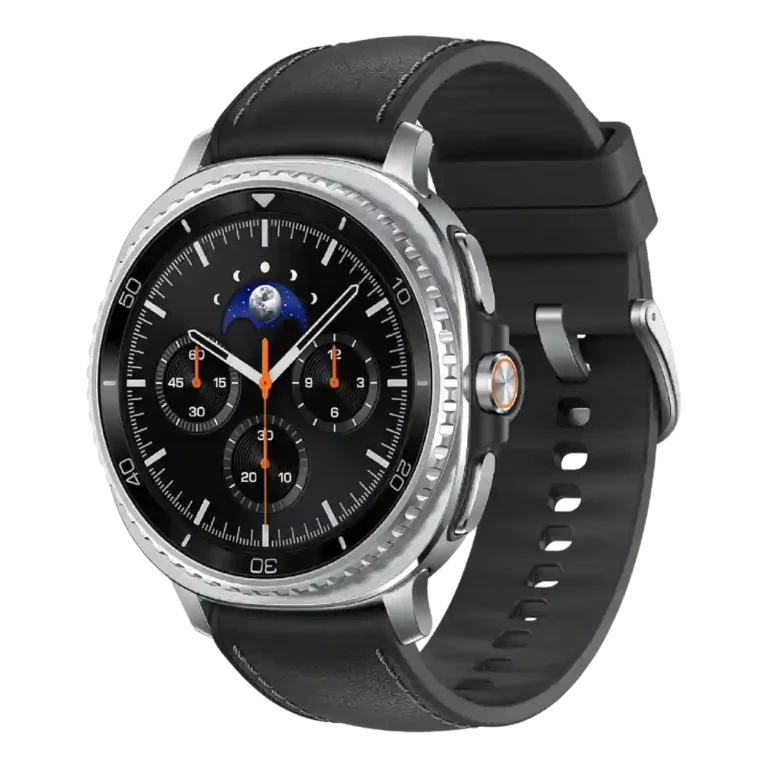
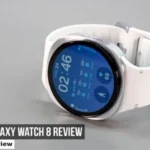
Choose the Galaxy Watch 8 if you want a very comfortable Samsung-first smartwatch with a bright display, strong AI, and rich health insights. Skip it if daily charging, limited non-Samsung features, or the polarizing cushion design will bother you.
Best for Samsung phone users who want a thin, comfortable smartwatch with a bright AMOLED screen, Gemini voice help, strong sleep tracking, and broad health and fitness features. It also suits users who value daily wellness coaching more than multi-day battery life.
Not for shoppers who want Garmin- or OnePlus-style battery life, full feature parity on non-Samsung phones, or a traditional round-watch look. It is also less ideal if you already own a recent Galaxy Watch and only want a major battery upgrade.
Reviewers describe the Galaxy Watch 8 as Samsung’s most compelling standard smartwatch in years because it is thinner, lighter, more comfortable, brighter, and much smarter with Gemini on the wrist. The strongest evidence clusters around comfort, display quality, smooth One UI/Wear OS performance, sleep tracking, activity auto-detection, and practical wellness insights. The tradeoff is that Samsung’s new health experiments are uneven: Running Coach and vascular-load guidance can feel useful, while Antioxidant Index often seemed inconsistent or only mildly helpful. Battery life remains the biggest compromise, usually landing around daily charging, and the design is divisive. It works best inside Samsung’s ecosystem, where more health and AI features are available.
Compared with other Smartwatches, this product is above average in ECG functionality, voice assistant quality, third-party app support, near average in comfort, value for money, below average in battery life, materials quality, cross-platform compatibility.
| Attribute | This product | Category average | Difference |
|---|---|---|---|
| ECG functionality | 4.4 | 2.5 | +1.8 |
| battery life | 2.9 | 4.2 | -1.3 |
| voice assistant quality | 4.4 | 3.0 | +1.4 |
| third-party app support | 4.8 | 3.2 | +1.6 |
| materials quality | 2.5 | 4.0 | -1.5 |
| onboard music storage | 4.2 | 2.8 | +1.4 |
| contactless payments | 4.0 | 2.7 | +1.3 |
| cross-platform compatibility | 2.5 | 3.6 | -1.1 |
Choose Suunto 9 Peak Pro. It scores 4.7 vs 2.9 for battery life, with a 3.6 overall score.
Choose Garmin Instinct 3. It scores 4.7 vs 3.7 for charging speed, with a 3.9 overall score.
Choose Garmin Venu 3. It scores 4.7 vs 3.6 for fitness tracking accuracy, with a 4.1 overall score.
Choose Samsung Galaxy Watch Ultra (2024). It scores 4.7 vs 3.1 for smartphone notifications, with a 3.7 overall score.
Products reviewers directly compared with this model, grouped into quick takeaways.
Yes. Comfort was one of the strongest points across reviews, with several reviewers saying the thinner, lighter design made it easy to wear for sleep tracking and workouts.
Battery life was the most common complaint. Some reviewers got roughly a day and a half in lighter use, but many still described it as a daily-charge smartwatch.
Reviewers generally found Gemini more useful than older watch assistants. It was praised for quick answers, messages, reminders, follow-up questions, and simple cross-app tasks, though navigation and deeper fitness requests were not always perfect.
The evidence is mixed. Running Coach, vascular load, Energy Score, and sleep coaching often felt useful, while Antioxidant Index was frequently described as inconsistent, only mildly helpful, or still needing refinement.
It works with Android phones, but reviewers repeatedly noted Samsung-only limitations for some advanced health, AI, and ecosystem features. Non-Samsung users should expect a less complete experience.
Mostly yes for smartwatch-level tracking. Reviewers praised broad workout modes, quick auto-detection, heart-rate accuracy, and useful coaching, but GPS and treadmill accuracy were not consistently best-in-class.
These are a few of the reviews included in our analysis.

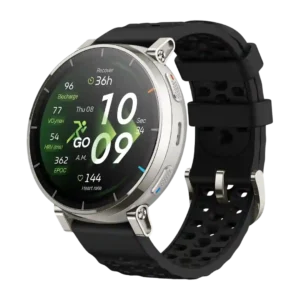
Good if you want premium running features, long battery life, and maps for under $200. Skip it if you need flawless heart-rate data, multiband GPS, LTE, or richer app support.
Pros: pairing reliability, brightness
Cons: Wi-Fi connectivity, Bluetooth connectivity
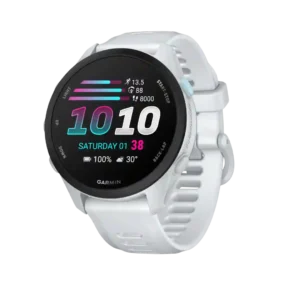
Best for accurate running metrics, excellent coaching tools, a bright AMOLED display, and dependable battery life. Skip it if you need offline maps, music storage, contactless payments, multi-band GPS, or...
Pros: step counting accuracy, app ecosystem
Cons: Bluetooth connectivity, pairing reliability
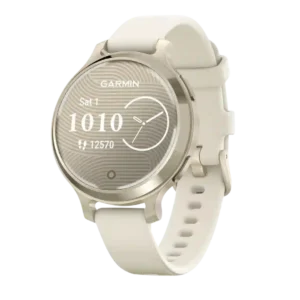
Good if you want a compact, stylish Garmin with strong GPS, comfort, and week-plus battery life. Skip it if you need richer smartwatch apps, onboard music, bright always-on display, or...
Pros: health tracking accuracy, blood oxygen tracking
Cons: ECG functionality, onboard music storage
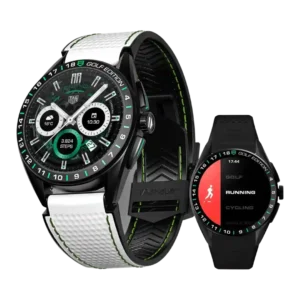
Best for luxury-watch styling, vivid TAG faces, solid build, and casual smartwatch use. Skip it if you need top fitness accuracy, call handling, LTE, or strong value.
Pros: contactless payments, pairing reliability
Cons: LTE connectivity, call handling