Reviews describe automatic run, walk, stand, and exercise detection as a useful training aid, especially for interval and mixed workouts.
The app ecosystem is broad enough for podcasts, Spotify, maps, watch faces, and other add-ons without feeling as deep as a phone-first smartwatch.
The app ecosystem is decent rather than huge, with Connect IQ watch faces and apps available but at least one review calling the app selection modest.
The supplied band is well executed, with a quick-release design that makes swaps simple.
The strap is consistently praised for stretch, hole spacing, and buckle security, giving it a secure, adjustable feel.
Battery life is a major strength, with multi-week smartwatch claims and strong real-world endurance under regular training use.
Battery life is one of the watch’s clearest strengths, with multiple reviewers reporting week-plus endurance and strong GPS runtimes.
Pulse Ox/SpO2 is part of the watch’s health stack and is used alongside other recovery-related metrics.
Pulse Ox support is present and integrated into the broader health stack, though reviewers treat it more as a useful metric than a headline feature.
Bluetooth connectivity is dependable for phone-linked notifications and everyday smartwatch functions.
Bluetooth support is strong for phone pairing, headphones, and audio accessories, helping the watch work well for music and sync tasks.
Display brightness is improved and easy to glance at, especially compared with weaker older MIP implementations.
Brightness is serviceable but not a standout, with reviewers noting the screen is functional yet less vivid than brighter AMOLED alternatives.
The physical build is rugged and purpose-built for hard outdoor use.
Build quality comes across as solid and practical, with reviewers calling the watch tough, robust, and durable in daily use.
Button controls are a genuine asset, offering intuitive navigation when touch is less convenient.
The five-button control scheme is widely seen as dependable and practical, especially during workouts or bad weather.
Call handling is limited: reviewers note that the watch can surface phone activity and messages but does not support actual calling.
At least one long-term user found calorie estimates weak for weightlifting, saying the watch did not calculate burn properly for that use.
Charging is straightforward, but convenience is held back by Garmin’s proprietary cable even if the connector fits securely.
Charging speed is merely adequate, with one reviewer specifically calling out nearly two-hour charge times.
Charging speed is good, with reviews mentioning a full charge in a couple of hours and a quick 50% top-up.
Training guidance is robust, from guided sessions to adaptive recommendations that can ease off when sleep or load looks poor.
Coaching features are a major strength thanks to Garmin Coach, suggested workouts, and race-focused guidance.
Comfort is very good for a feature-heavy watch, helped by soft straps and balanced daily wear.
Comfort is consistently excellent, with reviewers repeatedly calling the watch lightweight and easy to wear all day and overnight.
Garmin Connect is powerful and information-rich, even if some reviewers find it less modern than top rivals.
Garmin Connect is highly rated, with reviewers calling it easy to navigate, powerful, and among the best GPS-watch companion apps.
Garmin Pay is available and practical for everyday tap-to-pay use where supported.
Garmin Pay is a useful addition that makes quick wrist payments practical during commutes and workouts.
The watch works across phone ecosystems, but the experience is better on Android than iPhone because reply features are more limited on iOS.
The watch works across both Android and iOS, though some notification behavior varies by phone platform.
Customization is a major strength, from data pages and widgets to flexible screens and activity layouts.
Customization is extensive, covering data screens, watch settings, faces, and other interface elements.
The MIP display is crisp and highly readable, with strong data presentation even if it is less flashy than AMOLED alternatives.
Display quality is good for readability and sport use, though the MIP screen is less flashy than premium AMOLED rivals.
Durability is a strong point, with reviewers noting very good resistance to scratches and hard outdoor handling.
Durability is strong overall, with reviews describing the watch as tough and reporting good long-term wear.
Reviews note ECG-capable hardware on the Pro, but the feature was not enabled or certified at review time.
Fit is easy to dial in thanks to close buckle spacing and multiple case-size choices.
Fit is easy to dial in thanks to the strap design and multiple size choices, and reviewers found it secure on wrist.
The watch combines reliable heart-rate and VO2 max reporting for solid workout feedback, especially for endurance use.
Fitness tracking is broadly praised for delivering accurate workout data and useful performance detail across core sports.
GPS is a standout, with fast locks, stable tracking, and repeated praise for industry-leading accuracy in races and tough terrain.
GPS accuracy is outstanding and one of the watch’s biggest selling points, with multiple reviews calling it excellent or best-in-class.
Across health metrics, testing stayed consistent, though reviewers still noted the occasional false nap in sleep logs.
Health tracking is generally strong, with sleep and overall wellness data lining up well with other devices in several reviews.
Heart-rate performance is strong for a wrist sensor, with minimized spikes and Garmin’s newer sensor showing clearly improved workout accuracy.
Heart rate accuracy is a major strength, with several reviewers finding results close to or matching chest straps in many workouts.
Materials feel appropriately premium for the price, with titanium/polymer construction helping keep weight in check.
Materials are functional rather than premium: reviewers like the low weight but often note the plastic or resin construction feels less luxurious.
Navigation through menus and maps is easy with either touch or buttons, which helps on the move.
Menu navigation is easy to learn and dependable, particularly for users who prefer physical controls over touch input.
Music controls are present and useful, fitting the watch’s strong but not ultra-deep smartwatch feature set.
Music controls are useful even on the non-music version, letting users control phone playback from the wrist.
Onboard music support is there for storing music and pairing it with the rest of the watch’s workout-friendly smart features.
Music storage is handy on supported models, with room for about 500 songs and the option to go phone-free.
The overall software experience is polished and feature-rich, with one of the better user experiences in the GPS watch category.
The operating system experience is feature-rich and flexible, though some reviewers think Garmin’s software can feel a bit involved.
Outdoor readability is excellent, with map and data legibility holding up well when conditions get bright.
Outdoor visibility is excellent, with multiple reviews highlighting how easy the screen is to read in bright light.
Pairing and syncing were stable in testing, including crowded multi-device setups.
Pairing and syncing are reliable for phones, audio gear, and settings changes, helping the watch feel low-friction in daily use.
Recovery tools are a clear strength, with recovery time and Training Readiness repeatedly described as useful day-to-day guidance.
Recovery insights are useful, with Morning Report, HRV, and recovery-oriented tools helping frame rest and training decisions.
Longer-use testing describes the watch as dependable enough for serious routes and bigger outdoor days.
Reliability is a recurring theme, with reviewers describing the watch as a dependable tracker and long-term training companion.
Safety features are meaningful, combining the built-in flashlight with sharing and alert tools that add practical utility.
Safety features are a meaningful extra, including personal safety tools, emergency assistance options, and incident detection.
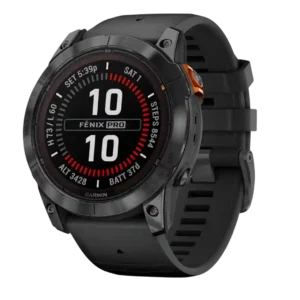
Three case sizes make it easier to match the fenix 7 Pro to different wrists and priorities.
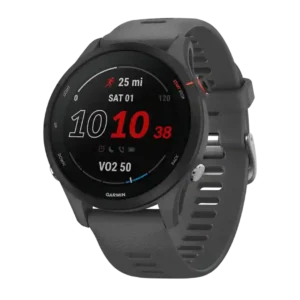
Two case sizes make the watch easier to match to different wrist sizes without giving up core features.
Sleep timing is generally accurate and improved, but one reviewer still caught a couple of false nap detections.
Sleep tracking is generally accurate for sleep timing and performs well enough to support recovery features, though it is not flawless.
Phone notifications work well on-wrist for quick awareness, though the experience is closer to glanceable alerts than a full smartwatch reply hub.
Smartphone notifications work well for viewing and dismissing alerts, but replies and controls remain limited.
Smartwatch basics are well covered with notifications, music, payments, and everyday tools, but the watch remains sports-first rather than app-first.
Smartwatch features are decent for a sports watch, with notifications, payments, music, and widgets, but they are not as deep as full smartwatches.
Menu and settings movement generally feels natural, though the software still reads as functional more than flashy.
Software performance is smooth, with reviewers praising lag-free menus and quick syncing behavior.
Stress tracking is present as one of Garmin’s always-on wellness metrics, though reviewers discuss it more as supporting data than a headline feature.
Stress tracking is available and tied into Garmin’s broader wellness data, though not every reviewer found it equally useful.
Design impressions are positive overall, though the look skews technical and rugged rather than minimalist.
The design is practical and sporty rather than luxurious, balancing comfort and function over visual flair.
Third-party support is solid, with integrations spanning Strava, TrainingPeaks, Komoot, GPX workflows, and Connect IQ add-ons.
Third-party support is solid through Connect IQ, with downloadable faces, apps, and related add-ons available.
The touchscreen is responsive and remains usable even in wet conditions.
Touch interaction is effectively absent because the watch does not use a touchscreen at all.
The user interface is easy to understand and well suited to a data-dense sports watch.
The user interface is clear and useful once learned, though the depth of features can make some items harder to find at first.
Value is strongest for serious outdoor or endurance users; the high price is easier to justify there than for casual buyers.
Most reviews see the watch as strong value because it brings high-end training and GPS features into a cheaper tier.
Watch-face support is strong thanks to customizable stock faces and a healthy set of additional options.
Watch face support is strong, with stock options, custom faces, and third-party downloads available.
Water protection is strong enough for swimming and rough use, backed by explicit ruggedness and resistance claims.
Water resistance is solid for swimming and everyday water exposure, with repeated mentions of 5ATM or 50-meter protection.
Garmin’s wellness layer is broad, spanning sleep, stress, energy, and acclimation insights that reviewers found genuinely useful.
Wellness insights are one of the more compelling parts of the watch, especially through Morning Report, Body Battery, and related recovery data.
Wi‑Fi adds practical convenience for maps and syncing, even if it is more of a support feature than a headline one.
Wi-Fi support is available on supported music models and is useful for syncing and downloads.
Reviewers repeatedly describe the fenix 7 Pro as covering an enormous range of sports, with new profiles adding even more breadth.
Workout tracking variety is excellent, spanning running, triathlon, swimming, cycling, and many other profiles.