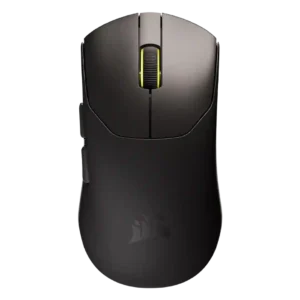
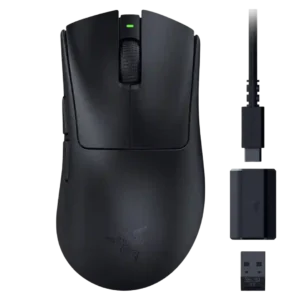
Compare Corsair Sabre V2 Pro vs Razer DeathAdder V3 HyperSpeed

P1 Corsair Sabre V2 Pro
P2 Razer DeathAdder V3 HyperSpeed

Comparison Takeaways

Corsair Sabre V2 Pro

Where It Has the Edge

  • click noise is 3.8 vs 2.4. Click noise is generally controlled or crisp rather than harsh, with one reviewer specifically praising the muted sound.
  • handedness options is 2.5 vs 1.5. Handedness options appear limited: reviewers describe a symmetrical shell, but the side buttons are on the left.
  • fingertip grip comfort is 4.0 vs 3.1. Fingertip grip is specifically supported for larger hands and for users who prefer small-to-medium mice.
  • polling rate is 4.3 vs 3.8. Polling rate is a standout spec at up to true 8K, though high polling drains battery and can...

Razer DeathAdder V3 HyperSpeed

Where It Has the Edge

  • click latency is 4.9 vs 1.8. Click latency is excellent in the reviews that measured or discussed it, with wireless latency described as extremely...
  • portability is 4.6 vs 2.2. Portability is helped by the very low weight, excellent battery life, and built-in dongle storage.
  • profile switching is 4.3 vs 2.1. Profile switching is available through Synapse and onboard/profile controls, but the evidence suggests it is functional rather than...
  • ecosystem integration is 4.0 vs 1.8. Ecosystem integration is mostly about Razer accessories and Synapse support, especially HyperPolling compatibility across Razer mouse families.
Average score
Product 1: Corsair Sabre V2 Pro
3.4
Product 2: Razer DeathAdder V3 HyperSpeed
4.1
2.4GHz connectivity
Product 1: Corsair Sabre V2 Pro
4.0

Reviewers confirmed 2.4GHz dongle wireless support; the connection works, but the receiver design is less convenient for travel.

Product 2: Razer DeathAdder V3 HyperSpeed
4.6

Reviewers consistently describe the included dongle and HyperSpeed link as a solid 2.4GHz wireless setup, with no major signal complaints.

acceleration control
Product 1: Corsair Sabre V2 Pro
4.5

Acceleration capability is strong at 50G, discussed as part of the sensor specification rather than a rich user-tunable control.

Product 2: Razer DeathAdder V3 HyperSpeed
4.3

Dynamic Sensitivity is repeatedly highlighted as a meaningful acceleration-style tool for low-sensitivity FPS play, though a few reviewers found it niche or unnatural.

Accuracy and tracking precision
Product 1: Corsair Sabre V2 Pro
4.6

Accuracy and tracking are repeatedly praised, especially for flicks, slow tracking, and micro-adjustments in shooters.

Product 2: Razer DeathAdder V3 HyperSpeed
4.8

Accuracy is one of the strongest themes: reviewers repeatedly report precise tracking, headshot control, and reliable fast-flick performance.

balance and weight distribution
Product 1: Corsair Sabre V2 Pro
No score yet
Product 2: Razer DeathAdder V3 HyperSpeed
4.7

Where discussed, weight balance is praised as unusually well controlled for a very light wireless mouse.

battery life
Product 1: Corsair Sabre V2 Pro
2.8

Battery life is usable at 1kHz but repeatedly described as compromised, much worse at 8kHz, and sometimes below claims.

Product 2: Razer DeathAdder V3 HyperSpeed
4.6

Battery life receives broad agreement: the 100-hour 1KHz claim is generally considered believable or excellent in real testing.

Bluetooth support
Product 1: Corsair Sabre V2 Pro
1.2

Bluetooth is consistently absent; reviewers treat that as an intentional weight-saving tradeoff and a portability limitation.

Product 2: Razer DeathAdder V3 HyperSpeed
1.0

Bluetooth is a clear weakness because multiple reviewers note that the mouse relies on the 2.4GHz dongle and lacks Bluetooth versatility.

build quality
Product 1: Corsair Sabre V2 Pro
4.0

Build quality ranges from surprisingly rigid to visibly flimsy depending on pressure tests, with many normal-use reports still positive.

Product 2: Razer DeathAdder V3 HyperSpeed
4.8

Build quality is strongly praised, with reviewers repeatedly noting a solid shell, little or no flex, and premium-feeling construction.

button customization
Product 1: Corsair Sabre V2 Pro
4.0

Button remapping and DPI/key settings are available through Web Hub, though the five-button layout limits assignment flexibility.

Product 2: Razer DeathAdder V3 HyperSpeed
4.4

Button customization is good through Synapse, with reviewers mentioning rebinding, DPI controls, lift-off settings, and profile-related options.

button responsiveness
Product 1: Corsair Sabre V2 Pro
3.8

Main button response is mostly acceptable to good, but several reviewers note mushiness or softer travel.

Product 2: Razer DeathAdder V3 HyperSpeed
4.6

Button responsiveness is rated highly, especially for fast gaming inputs and snappy main clicks.

cable flexibility
Product 1: Corsair Sabre V2 Pro
2.2

The included cable and cable-style dongle setup draw criticism for stiffness, weight, tugging, or desk clutter.

Product 2: Razer DeathAdder V3 HyperSpeed
2.1

Cable flexibility is a recurring compromise: reviewers describe the included cable as short, stiff, heavy, rubbery, or poor for wired play.

charging convenience
Product 1: Corsair Sabre V2 Pro
3.8

Charging is acceptable for lighter use, but frequent charging and the stiff cable make it less convenient for heavy sessions.

Product 2: Razer DeathAdder V3 HyperSpeed
3.9

Charging convenience is helped by USB-C and long battery life, but the awkward cable makes charging while playing less pleasant.

claw grip comfort
Product 1: Corsair Sabre V2 Pro
3.5

Claw comfort works for some small and medium hands, but larger-hand users may be forced into clawing the mouse.

Product 2: Razer DeathAdder V3 HyperSpeed
4.4

Claw grip comfort is broadly positive, especially for small-to-medium hands that benefit from the reduced DeathAdder size.

click latency
Product 1: Corsair Sabre V2 Pro
1.8

Click latency is the biggest technical dispute, with measurement-focused reviewers flagging high debounce-related latency.

Product 2: Razer DeathAdder V3 HyperSpeed
4.9

Click latency is excellent in the reviews that measured or discussed it, with wireless latency described as extremely low or imperceptible.

click noise
Product 1: Corsair Sabre V2 Pro
3.8

Click noise is generally controlled or crisp rather than harsh, with one reviewer specifically praising the muted sound.

Product 2: Razer DeathAdder V3 HyperSpeed
2.4

Click noise is one of the few repeated comfort drawbacks, with several reviewers describing the clicks as loud or clacky.

connection stability
Product 1: Corsair Sabre V2 Pro
3.8

Wireless and connection stability are generally good, though one technical review reports missed polls at high wireless polling rates.

Product 2: Razer DeathAdder V3 HyperSpeed
4.8

Connection stability is praised, with reviewers reporting consistent wireless connectivity and no meaningful lag or signal problems.

cross-platform compatibility
Product 1: Corsair Sabre V2 Pro
2.3

Cross-platform support is limited by Windows-only firmware updating and Chromium/WebHID requirements.

Product 2: Razer DeathAdder V3 HyperSpeed
No score yet
debounce customization
Product 1: Corsair Sabre V2 Pro
1.2

Debounce adjustment is missing or not publicly exposed, leaving concerns about the fixed 8ms debounce behavior.

Product 2: Razer DeathAdder V3 HyperSpeed
No score yet
DPI range
Product 1: Corsair Sabre V2 Pro
4.4

DPI range is high at 33K with fine adjustment, viewed as competitive even if not always class-leading.

Product 2: Razer DeathAdder V3 HyperSpeed
4.1

The 26K DPI range is viewed as more than sufficient for most gamers even though it is lower than Razer's flagship sensors.

durability over time
Product 1: Corsair Sabre V2 Pro
2.8

Durability impressions are mixed: clean/wear resistance and switch ratings are good, but the thin shell raises concerns.

Product 2: Razer DeathAdder V3 HyperSpeed
No score yet
ecosystem integration
Product 1: Corsair Sabre V2 Pro
1.8

Ecosystem integration is weak because the mouse uses Web Hub rather than iCUE and can conflict with other Corsair setups.

Product 2: Razer DeathAdder V3 HyperSpeed
4.0

Ecosystem integration is mostly about Razer accessories and Synapse support, especially HyperPolling compatibility across Razer mouse families.

ergonomic design
Product 1: Corsair Sabre V2 Pro
4.1

Ergonomics are broadly comfortable for work and play, especially for users who like a small, safe symmetrical form.

Product 2: Razer DeathAdder V3 HyperSpeed
4.6

The ergonomic right-handed design is a major strength, though hand size strongly affects the fit.

fingertip grip comfort
Product 1: Corsair Sabre V2 Pro
4.0

Fingertip grip is specifically supported for larger hands and for users who prefer small-to-medium mice.

Product 2: Razer DeathAdder V3 HyperSpeed
3.1

Fingertip comfort is mixed: some reviewers say it can work for larger hands, while others discourage fingertip use because of the ergo shape.

FPS gaming suitability
Product 1: Corsair Sabre V2 Pro
4.6

FPS suitability is the clearest strength, with repeated praise for fast-paced and competitive shooter use.

Product 2: Razer DeathAdder V3 HyperSpeed
4.6

FPS suitability is excellent thanks to low weight, accurate tracking, Dynamic Sensitivity, low latency, and easy flick control.

glide smoothness
Product 1: Corsair Sabre V2 Pro
4.2

Glide is smooth overall, especially with included larger skates, but UPE feet can feel slower or rougher than PTFE/glass-pad options.

Product 2: Razer DeathAdder V3 HyperSpeed
4.6

Glide smoothness is repeatedly praised because of the large PTFE feet and low weight, usually across pads and several surfaces.

grip texture
Product 1: Corsair Sabre V2 Pro
3.8

Grip is mostly good from the matte/textured surface or tape, though some reviewers find the raw plastic slippery or dust-prone.

Product 2: Razer DeathAdder V3 HyperSpeed
3.9

Grip texture is mixed-positive: many like the smooth-touch coating, but sweaty hands, oils, and lack of grip tape are repeated caveats.

handedness options
Product 1: Corsair Sabre V2 Pro
2.5

Handedness options appear limited: reviewers describe a symmetrical shell, but the side buttons are on the left.

Product 2: Razer DeathAdder V3 HyperSpeed
1.5

Handedness options are poor because the mouse is repeatedly described as right-handed only.

left and right click quality
Product 1: Corsair Sabre V2 Pro
3.6

Left/right click quality is decent to strong, with easy spam-clicking in some reviews and mushier or less crisp feel in others.

Product 2: Razer DeathAdder V3 HyperSpeed
4.8

Left and right click quality is strong, with reviewers praising crisp, tactile, solid, and consistent primary clicks.

lift-off distance
Product 1: Corsair Sabre V2 Pro
1.8

Lift-off distance customization is missing, which matters to reviewers who expected more flagship-level sensor settings.

Product 2: Razer DeathAdder V3 HyperSpeed
3.9

Lift-off support is present through Synapse and Smart Tracking, but some reviewers note limited options or missing advanced lift-off controls.

long-session comfort
Product 1: Corsair Sabre V2 Pro
4.8

Long-session comfort is strong because the low weight reduces wrist tension and fatigue.

Product 2: Razer DeathAdder V3 HyperSpeed
4.6

Long-session comfort is generally positive, with reviewers citing comfortable gaming sessions, reduced wrist stress, and effortless multi-hour use.

macro support
Product 1: Corsair Sabre V2 Pro
4.1

Macro support exists in Web Hub despite the mouse's limited number of buttons.

Product 2: Razer DeathAdder V3 HyperSpeed
3.7

Macro support exists through Synapse and Hypershift-style customization, but it is not a central strength of the mouse.

materials quality
Product 1: Corsair Sabre V2 Pro
4.5

Materials are generally praised by technical reviewers, though other reviewers describe raw plastic or compromised rigidity.

Product 2: Razer DeathAdder V3 HyperSpeed
4.6

Materials quality is mostly praised for premium or grippy coating and solid plastics, with some concern over oil and sweat buildup.

MMO gaming suitability
Product 1: Corsair Sabre V2 Pro
2.0

MMO suitability is poor because the mouse lacks the many programmable buttons needed for complex inputs.

Product 2: Razer DeathAdder V3 HyperSpeed
3.8

MMO suitability is limited but supported by one reviewer using it comfortably in Final Fantasy XIV raids with useful side buttons.

MOBA gaming suitability
Product 1: Corsair Sabre V2 Pro
2.0

MOBA suitability is limited for the same reason: few buttons and minimal on-device controls.

Product 2: Razer DeathAdder V3 HyperSpeed
No score yet
motion consistency
Product 1: Corsair Sabre V2 Pro
4.5

Motion consistency and tracking are strong overall, with no sensor issues noted despite some high-polling caveats.

Product 2: Razer DeathAdder V3 HyperSpeed
4.7

Motion consistency is strong, with reviewers describing smooth, consistent tracking and useful rotation compensation for angled grip styles.

onboard memory
Product 1: Corsair Sabre V2 Pro
2.5

Onboard memory is limited, especially the single-profile limitation noted across software reviews.

Product 2: Razer DeathAdder V3 HyperSpeed
2.8

Onboard memory is limited, with reviewers specifically noting just one onboard profile or relying on Synapse for deeper settings.

palm grip comfort
Product 1: Corsair Sabre V2 Pro
4.2

Palm comfort is surprisingly good for some reviewers, including larger hands, though fit depends on hand size.

Product 2: Razer DeathAdder V3 HyperSpeed
4.4

Palm grip comfort is broadly good for small-to-medium hands, though some larger-hand reviewers prefer the bigger DeathAdder V3 Pro.

polling rate
Product 1: Corsair Sabre V2 Pro
4.3

Polling rate is a standout spec at up to true 8K, though high polling drains battery and can show some instability.

Product 2: Razer DeathAdder V3 HyperSpeed
3.8

Polling rate is capable but controversial: it is 1,000Hz out of the box and up to 8,000Hz only with a separately purchased dongle.

portability
Product 1: Corsair Sabre V2 Pro
2.2

Portability is mixed: the 36g body is easy to carry, but lack of Bluetooth and the cable-style receiver hurt travel use.

Product 2: Razer DeathAdder V3 HyperSpeed
4.6

Portability is helped by the very low weight, excellent battery life, and built-in dongle storage.

premium feel
Product 1: Corsair Sabre V2 Pro
3.2

Premium feel is divisive: some call it premium and sturdy, while others say raw plastic, flimsy, or less substantial.

Product 2: Razer DeathAdder V3 HyperSpeed
4.7

Premium feel is mostly positive despite the lower price, with reviewers calling out robust materials and a capable, high-quality package.

profile switching
Product 1: Corsair Sabre V2 Pro
2.1

Profile switching is weak because there is no dedicated DPI/profile button and only limited onboard profile support.

Product 2: Razer DeathAdder V3 HyperSpeed
4.3

Profile switching is available through Synapse and onboard/profile controls, but the evidence suggests it is functional rather than exceptional.

programmable buttons
Product 1: Corsair Sabre V2 Pro
2.2

Programmable-button capacity is minimal: the five-button layout suits FPS play but not feature-heavy use.

Product 2: Razer DeathAdder V3 HyperSpeed
3.9

Programmable buttons are supported, though reviewers sometimes debate the real count because Razer includes wheel and bottom-button functions.

RGB features
Product 1: Corsair Sabre V2 Pro
1.5

RGB is essentially absent except for small indicator lighting, an intentional weight-saving tradeoff.

Product 2: Razer DeathAdder V3 HyperSpeed
1.5

RGB features are minimal to absent; reviewers repeatedly note the no-RGB, understated design.

scroll wheel quality
Product 1: Corsair Sabre V2 Pro
3.9

Scroll wheel quality is mostly good or acceptable, with notes ranging from smooth/rasterized to stiff or noisy.

Product 2: Razer DeathAdder V3 HyperSpeed
4.3

Scroll wheel quality is generally solid and tactile, but a few reviewers found it loud, low, tedious, or awkward for middle click use.

sensor performance
Product 1: Corsair Sabre V2 Pro
4.5

Sensor performance is consistently praised as precise, snappy, consistent, and competitive.

Product 2: Razer DeathAdder V3 HyperSpeed
4.6

Sensor performance is excellent for real gaming despite lower flagship specs, with reviewers rarely noticing any practical downgrade.

shape comfort
Product 1: Corsair Sabre V2 Pro
4.2

Shape comfort is a safe symmetrical strength, though not universally ideal for large hands or comfort-groove preferences.

Product 2: Razer DeathAdder V3 HyperSpeed
4.3

Shape comfort is one of the most context-dependent traits: many love the smaller ergonomic shell, while some dislike the flares or smaller fit.

side button quality
Product 1: Corsair Sabre V2 Pro
2.7

Side button quality is one of the weaker physical areas, with repeated notes of post-travel, mushiness, or travel into the shell.

Product 2: Razer DeathAdder V3 HyperSpeed
4.6

Side button quality is mostly strong, with praise for access, spacing, size, and fast response, though one review found them mushier than the mains.

skate durability
Product 1: Corsair Sabre V2 Pro
4.0

Skate durability is helped by UPE material and included replacements, but the material trades some glide speed for wear resistance.

Product 2: Razer DeathAdder V3 HyperSpeed
No score yet
software stability
Product 1: Corsair Sabre V2 Pro
3.5

Software stability is acceptable when Web Hub works, but server dependence creates a reliability caveat.

Product 2: Razer DeathAdder V3 HyperSpeed
3.0

Software stability is mixed: some praise newer Synapse reliability, while others call it erratic, heavy, or update-prone.

software usability
Product 1: Corsair Sabre V2 Pro
3.2

Software usability is split: simple, web-based, and lightweight, but sparse, online-dependent, and sometimes awkward with iCUE.

Product 2: Razer DeathAdder V3 HyperSpeed
4.2

Software usability is capable and feature-rich, but Synapse remains a recurring tradeoff for users who dislike heavy peripheral software.

surface compatibility
Product 1: Corsair Sabre V2 Pro
3.5

Surface compatibility is usable across surfaces, but reviewers preferred cloth pads and found glass rougher.

Product 2: Razer DeathAdder V3 HyperSpeed
4.7

Surface compatibility is positive where tested, with reviewers reporting good glide across several mousepads or surfaces.

switch durability
Product 1: Corsair Sabre V2 Pro
4.2

Switch durability is promising from 100M mechanical switch ratings, though optical alternatives may last longer.

Product 2: Razer DeathAdder V3 HyperSpeed
4.6

Switch durability is a strength on paper because reviewers cite optical switches and high click ratings.

switch feel
Product 1: Corsair Sabre V2 Pro
4.2

Switch feel is generally positive for the main switches but not uniformly crisp.

Product 2: Razer DeathAdder V3 HyperSpeed
4.6

Switch feel is strongly praised for crisp, tactile, snappy, satisfying Gen-3 optical clicks.

value for money
Product 1: Corsair Sabre V2 Pro
3.7

Value is split: many find $100 competitive for the weight and specs, while latency-focused reviewers prefer alternatives.

Product 2: Razer DeathAdder V3 HyperSpeed
4.6

Value is one of the strongest consensus points: reviewers repeatedly describe the mouse as high-performing for its $100 class despite dongle caveats.

weight
Product 1: Corsair Sabre V2 Pro
5.0

Weight is the standout advantage, with reviewers repeatedly emphasizing the 36g shell as exceptionally light and defining.

Product 2: Razer DeathAdder V3 HyperSpeed
4.8

Weight is a standout strength, with most reviews emphasizing the roughly 53-55g shell as light, nimble, and easy to flick.

wireless latency
Product 1: Corsair Sabre V2 Pro
3.9

Wireless latency is mixed: tracking latency can be solid, but click-latency measurements raise concerns for esports claims.

Product 2: Razer DeathAdder V3 HyperSpeed
4.8

Wireless latency is excellent in tests and subjective impressions, often described as very low, imperceptible, or competitive.

wireless performance
Product 1: Corsair Sabre V2 Pro
4.4

Wireless performance is generally reliable with no stuttering and solid gaming/task performance.

Product 2: Razer DeathAdder V3 HyperSpeed
4.7

Wireless performance is broadly excellent, with reviewers describing the HyperSpeed connection as low-latency, glitch-free, stable, and close to wired.