Reviews note an easy mode, summon help, and an arachnophobia toggle, giving players several ways to soften the challenge.
One review called the game fully accessible with remappable controls and subtitles, but also noted the lack of colorblind modes.
A reviewed accessibility/parents section described the game as ESRB Teen with language, suggestive themes, and violence.
One review found the AI frustratingly reactive in arcade-style play, saying many moves were blocked and countered immediately.
Enemy and combat animations are repeatedly praised as smooth, expressive, and satisfying in motion.
Reviews praised the smooth animation work, linking it to the game’s flashy, readable presentation.
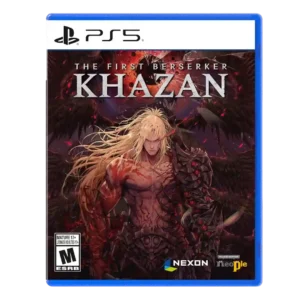
The cel-shaded, hand-drawn-inspired presentation stands out as one of the game’s clearest strengths.
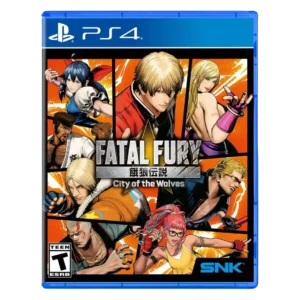
The comic book-inspired art style was highlighted as a standout part of the package.
A bleak palette and tense environmental presentation reinforce the revenge story’s grim mood.
One review said each location had its own unique look and feel, helping the stages avoid sameness.
Bosses are widely seen as the highlight—demanding, readable, and memorable—though a few reviews still call out frustrating mechanics.
A review noted Campaign+ culminates in a brutal final boss, suggesting a strong challenge spike.
Technical issues seem limited overall, with one review seeing no glitches and another reporting only a few minor bugs.
Camera impressions are mixed: some found it solid and helpful, while others mention occasional trouble in specific situations.
Khazan and the broader cast are often seen as underdeveloped, with arcs and growth that do not fully capitalize on the setup.
Arcade mode was praised for delivering nice character-building moments and long-awaited payoffs for fans.
Checkpoints placed right before bosses are a major quality-of-life win and sharply reduce runback frustration.
Combat is the game’s defining strength, consistently praised for its speed, depth, and rewarding parry-dodge interplay.
The core fighting was described as excellent, with the actual moment-to-moment combat standing out most.
Summoned allies can help as distractions, but their AI is often described as unreliable and sometimes wasteful.
One review said the defensive and aggressive systems work together to create more balanced fights.
The package was repeatedly framed as content-rich, with plenty of single-player and multiplayer ways to play.
Movement and combat inputs are consistently described as smooth, responsive, and precise.
Controls were praised as smooth and responsive in motion.
The mission-to-boss structure successfully recreates a satisfying soulslike loop even when it feels familiar.
The loop of strategy, mind games, and explosive damage was singled out as especially satisfying.
Crafting is straightforward and easier to understand than some genre peers, though its full utility opens up a bit later.
One long-play review reports a couple of crashes across roughly 60 hours, suggesting minor but real instability.
Cross-play was explicitly praised for making it easier to find opponents across platforms.
Dialogue drew criticism in one review for feeling random at times.
The difficulty is rewarding for many, but boss balance is one of the most divisive parts of the game.
One review said campaign fights felt evenly matched for most of the run, aside from bosses.
A review praised the first season DLC being included free for owners, boosting perceived value.
Meter management and REV decisions were described as important tactical tradeoffs during matches.
Enemy variety is generally strong, though some later impressions say repetition can creep in over long play sessions.
Levels and locales are repeatedly described as detailed, attractive, and enjoyable to move through.
Stages were praised for animated background elements and lively scene detail.
Exploration offers worthwhile secrets and shortcuts, but several reviews still say stages are fairly linear or limited in optional discovery.
Episodes of South Town was credited with letting players explore the city district by district.
One review said the presentation modernizes the game while staying true to the series.
Returning to checkpoints or missions is convenient, and the hub structure makes travel between objectives fairly painless.
Performance is usually steady, with little to no frame-rate trouble outside occasional rare drops.
Performance was praised as flawless, with no stutters or drops during flashy moments.
Even skeptical or genre-weary reviewers say the game is consistently exciting and hard to put down.
Multiple reviews describe the game as simply fun, with one explicitly saying they had a lot of fun throughout.
The REV system was praised as a fantastic new layer that deepens the broader mechanics.
Raw fidelity is seen as good rather than best-in-class, with visual appeal driven more by style than technical showmanship.
Visuals were strongly praised in at least one review, especially character detail and lighting.
One review criticized Episodes of South Town for feeling more like grinding in an RPG than pure skill growth.
The one Steam Deck-focused review says the game is verified and plays very well on the device.
A review said the stage variety made fights feel like a city-wide tour through town, strengthening immersion.
Khazan adds some smart twists, but most reviews still see it as heavily derivative rather than especially original.
The quest-led campaign concept was described as moving the needle for the fighting genre.
Early bosses and systems can be harsh, and several reviewers say the game teaches its ideas abruptly.
Reviews frequently positioned the game as accessible at first touch but demanding to truly master.
Level design trends positive overall, especially once the game opens up later, though some mission layouts can feel samey.
Free season-one DLC was cited as a reason the game should stay engaging over the long haul.
Loot is plentiful but generally manageable, with enough gear and sets to support build tinkering without becoming overwhelming.
Supplemental tools like the relationship map help flesh out the setting and backstory for players who want more context.
One review felt the game digs deeper into story and lore than expected after the long wait.
Mission maps and shortcut-heavy layouts are helpful, but backtracking and mission-reset behavior can be clunky.
Matchmaking impressions were mixed: one review reported long waits in betas, while another praised quick matchmaking and smooth online performance.
Room-match navigation was criticized for relying on a slow-moving cursor and feeling awkward.
The campaign was praised for presenting different fighting scenarios instead of repeating the same setup.
Mission variety was supported by examples like gauntlets and multi-opponent encounters.
Monetization impressions were mixed, with one review praising free included DLC and another objecting to paying extra for fan-favorite content.
One review praised the game’s excellent flow in matches, suggesting strong movement feel once systems click.
A review described the overall multiplayer offering as valuable within a sizable package.
The revenge premise and setting are engaging enough to keep players moving, but the story rarely matches the strength of the gameplay.
Narrative coverage praised the quest-led story structure and the amount of campaign content.
Tutorials help, but the opening hours and early bosses do not always showcase or teach the game cleanly.
One review said the game was easier to pick up than expected, even for someone worried about complexity.
Online stability drew split impressions: one review said rollback play was stable, while another encountered disconnects and poor signal.
A review described the combat as feeling both familiar and fresh rather than derivative.
The main complaint in one otherwise positive review was that the PvE side ends too quickly.
Across platforms, reviewers frequently describe performance as polished, stable, and well-optimized.
Optimization was praised thanks to flawless performance and no noticeable stutter during supers.
Reviews consistently present Khazan as a notably polished release with strong presentation and solid overall finish.
A review described the overall package as complete and rewarding, pointing to solid polish despite smaller rough edges elsewhere.
Lacrima rewards, skill growth, and multiple advancement layers make repeated attempts feel productive instead of wasted.
Episodes of South Town uses battle-earned experience and leveling as its main progression structure.
Khazan’s setup is strong, but some reviewers still find him flat or emotionally distant as a lead.
Replay value is decent thanks to NG+, weapon differences, and build experimentation, though customization limits cap long-term variety.
One review said the content and upcoming support should keep players engaged for the long haul.
Autosaving appears dependable, with one reviewer specifically noting that crashes did not cost meaningful progress.
Supporting characters are often described as underused or too slight to leave much of an impression.
Weapon-specific trees are a major strength, offering meaningful abilities, combos, and build direction.
RPG-lite progression includes new skills and abilities as characters level up.
Weapon impacts, combat audio, and environmental sound all earn strong praise for adding weight to fights.
Sound effects were described as strong and impactful overall.
The soundtrack is well-liked and effective at supporting bosses and dramatic moments.
The soundtrack was praised for its diversity, ranging from funk-inspired tracks to heavier material.
The tutorials are clear, helpful, and generally unobtrusive.
Tutorial impressions were positive but mixed in strength: one review called it passable, while another called it really good.
Gear and character upgrades are broad and useful, though some reviewers note they come online a bit later than ideal.
Reference tools like the compendium and encyclopedia make systems easier to parse and support experimentation.
UI design was criticized as ugly and frustrating even when the game itself was strong.
Reviews that address price directly frame the game as worth buying at full cost.
One review flatly said the game is definitely worth checking out.
Combat and boss effects are repeatedly highlighted as a good match for the game’s stylized presentation.
Lighting effects and visual flourishes were explicitly praised.
Voice acting is a consistent positive, with several reviews singling it out as strong or believable.
Voice acting impressions were mixed: one review praised the English cast, while another disliked the lack of voice acting in part of Episodes of South Town.
The DNF setting, factions, and supernatural backdrop help the world feel broader than the revenge plot alone.
The game’s lore and setting inspired enough interest that one reviewer emphasized being invested in South Town and Fatal Fury history.
Writing impressions are mixed, landing between entertainingly edgy and formulaic.
Writing received a lukewarm read in one review, which called it nothing special.