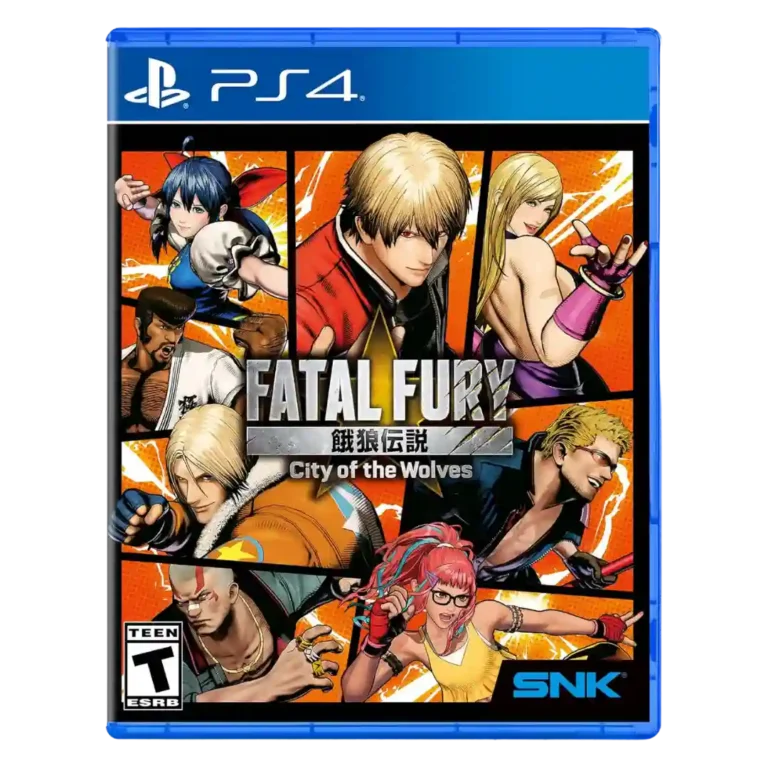
- Better: technical polish Noisy Pixel says City of the Wolves lacks Street Fighter 6's technical polish.
- Alternative: fighting game choice GamingBolt recommends it for players burned out on Street Fighter 6.
- Better: single-player RPG mode The reviewer says Street Fighter 6's comparable mode is better.
Fatal Fury: City of the Wolves Review
Bottom Line
Choose Fatal Fury: City of the Wolves if you want deep, stylish fighting with strong solo content. Skip it if awkward guest characters, rough menus, or launch-online concerns matter most.
Best for fighting game fans who want deep one-on-one combat, strong meter-management decisions, a varied roster, and meaningful solo content alongside online play.
Not for players who want a highly polished UI, simple casual onboarding, flawless launch servers, or a roster without distracting real-world guest characters.
Fatal Fury: City of the Wolves lands hardest where reviewers say a fighting game matters most: the combat. Across the reviews, its REV/SPG systems, responsive feel, and varied roster create deep, expressive matches with strong appeal for genre fans. The tradeoff is that this depth can be intimidating, and the teaching tools do not always explain advanced techniques well enough. Solo content is stronger than expected thanks to Episodes of South Town, arcade stories, customization, and unlocks, but presentation, writing, and some mission conditions are uneven. The comic-book look and soundtrack earn frequent praise, while real-world guest characters, weak menus, and inconsistent online/server impressions keep the package from feeling fully polished.
Compared in Reviews
Products reviewers directly compared with this model, grouped into quick takeaways.
Tekken 8
- Alternative: fighting game choice GamingBolt frames it as an option for players avoiding Tekken 8.
- Better: graphical fidelity The reviewer prefers the look but says Tekken 8 is more accomplished in fidelity.
- Better: visual fidelity The reviewer says the visuals are less detailed than Tekken 8.
Guilty Gear Strive
- Better: technical polish Noisy Pixel says City of the Wolves lacks Guilty Gear Strive's technical polish.
- Better: netcode IGN says the netcode is close but not on Guilty Gear Strive's level.
- Compared: genre competition The reviewer places City of the Wolves alongside Guilty Gear Strive as a modern competitor.
Feature Scorecards
Summary
59 reviewed features- Very positive 4.5-5.0 15% 9 features
- Positive 3.5-4.4 49% 29 features
- Neutral 2.5-3.4 24% 14 features
- Negative 1.5-2.4 12% 7 features
- Very negative below 1.5 0% 0 features
Pros
-
One reviewer reports a strong nostalgic emotional response to the visuals and overall presentation.
-
Animation is praised for fluid movement and lively characters.
-
Visual effects receive praise for lighting, clarity, explosive action, and comic-styled impact.
-
Reviewers broadly praise the REV/SPG mechanics, meter management, and strategic depth, though a few note that the system can become dense or uneven around Rev Blows.
-
DLC value is supported by praise for the free Season 1 additions, described as a welcome sweetener.
-
Onboarding is helped by shared command layouts, smart controls, and quick-to-learn basics, though advanced mechanics still demand study.
-
Faithfulness to franchise is mostly strong, with repeated praise for honoring Fatal Fury/Garou, though some disagree because of guest characters or lane-system changes.
-
Replay value is helped by multiple characters, unlocks, online play, and extra modes, with several reviewers saying they wanted to keep returning.
-
Fun factor is one of the strongest positives, with many reviewers calling the game enjoyable, addictive, or deeply satisfying.
-
Most reviewers find the combat deep, satisfying, and well considered, while a minority feel it is watered down or clunky compared with other fighters.
-
Sound design is praised for crisp effects, vicious attacks, and useful audio feedback.
-
The core loop is described as excellent, grounded, and depth-rich when the fighting itself is the focus.
-
Competitive balance gets praise for balancing offensive and defensive options.
-
Cross-play support is viewed positively because it can make finding opponents easier across consoles.
-
World-building is supported by Episodes of South Town's character/world focus and city context, though it is not presented as a full exploration game.
-
Environmental detail is often praised through distinct stages and backgrounds, though a few reviewers note visual dissonance or background mismatch.
-
Value for money is mixed-positive: some call it a must-buy, while others warn about paying extra or only recommend it for genre/SNK fans.
-
Graphics are colorful and often praised, but several reviewers say fidelity trails bigger-budget fighting games or suffers inconsistencies.
-
Accessibility impressions are positive where smart inputs, remappable controls, and subtitles are noted, though simplified controls can limit advanced options.
-
Mission variety is praised where quests add conditions and structure, but not every special condition lands well.
-
Lore depth is a positive for franchise fans, with reviewers noting more story, backstory, and South Town lore than expected.
-
Multiplayer design is considered solid overall, with ranked, casual, room matches, and online basics, though it depends on players gelling with the systems.
-
Soundtrack quality is mostly positive, with praise for music, jukebox depth, and energetic tracks, although one review strongly dislikes the stage music.
-
Voice acting is generally liked, especially English/Japanese performances, though one reviewer prefers Japanese voices and wants more switching flexibility.
-
Character development receives praise where arcade stories provide nice character-building moments and payoffs.
-
Art direction is often praised for comic-book/cel-shaded style and franchise continuity, but some reviewers criticize aesthetic inconsistency.
-
Content variety is usually viewed as generous, with arcade, Episodes of South Town, training, online, gallery, jukebox, and customization, though some call the package basic or less impressive.
-
Episodes of South Town and related missions are often praised as fun or useful for learning systems, though some special conditions are criticized as frustrating.
-
Matchmaking quality ranges from slow beta searches to quick or stable matchmaking in later impressions.
-
Online stability is mixed: many praise rollback and smooth matches, while others experienced lag, disconnects, sludge-like delay, or launch server uncertainty.
-
Originality is mixed: reviewers like distinctive flavor and legacy touches, but some feel it resembles other SNK fighters too closely.
-
Tutorials range from well laid out and deep to too barebones for explaining advanced context such as Rev Blow defense, feints, and brakes.
-
Controls are often called smooth, responsive, and scalable for different skill levels, but some reviewers criticize awkward button combinations, reduced precision, or input issues.
-
The roster is praised for diversity, balance, and personality, but real-world guest characters are a repeated sticking point.
-
Frame-rate stability is mostly strong in direct performance comments, but some reviewers complain about lower-frame-rate or visually distracting background elements.
-
Immersion is helped by the city-tour feel of stages but hurt in one review by visual dissonance that breaks immersion.
-
Boss design is mainly discussed through difficulty, with one review calling a major boss fight tough as nails.
-
Map and navigation design gets mild praise for a stylish map-screen approach, even though exploration remains limited.
Cons
-
The learning curve is divisive: reviewers praise approachable basics and smart controls, but many stress that advanced play is demanding.
-
Light RPG progression is welcomed by several reviewers, but others say it becomes shallow or grind-driven.
-
Difficulty is mixed: some reviewers say progression feels fair, while others flag Rev Blow answers and balance at low-to-mid levels.
-
Grind level is mixed: one reviewer sees Episodes of South Town as grindy, while another praises it for cutting down grind.
-
Innovation is limited; reviewers say it is not reinventing the genre even when the core is enjoyable.
-
Polish is mixed, with reviewers noting rough edges, missing quality-of-life features, and visual/story inconsistencies despite strong combat.
-
Narrative quality is mixed: some enjoy character stories and unique storylines, while others find presentation lifeless or underdeveloped.
-
The two-line stage concept is treated as a nostalgic extra, but one reviewer says swapping planes feels odd rather than core to the experience.
-
Pacing receives a campaign-side caveat from one review that says the PvE side ends too quickly.
-
User interface design is divisive: some like the comic-book styling, while others criticize small text, weak UI, or barebones menus.
-
AI behavior draws criticism where arcade opponents appear to block and counter nearly everything immediately.
-
Exploration quality is limited in Episodes of South Town because players use map navigation rather than walking around the city.
-
Movement feel receives isolated criticism from a reviewer who found the game clunky compared with faster fighters.
-
Writing quality receives criticism in one review for being nothing special.
-
Dialogue quality is criticized as random or odd in at least one story-focused review.
-
Social features are criticized through awkward friend/invite systems in online play.
-
Menu usability is one of the clearest weak spots, especially online room menus and organization.
-
Atmosphere is criticized in one review for lacking a cohesive vibe across menus, characters, music, and stages.
-
Enemy variety is a weakness in one review, which complains about repeating the same NPCs between key fights.
-
Monetization fairness is criticized where fan-favorite characters are framed as paid early DLC pressure.
-
Server reliability is a concern in launch-period PS5 testing, where one review reports servers being mostly a mess.
Compared With Category Average
Compared with other Video Games, this product is above average in competitive balance, below average in atmosphere, social features, enemy variety.
Summary
8 compared features- Above average 0.4+ pts higher 13% 1 feature
- Same as average within 0.3 pts 0% 0 features
- Below average 0.4+ pts lower 88% 7 features
| Attribute | This product | Category average | Difference |
|---|---|---|---|
| atmosphere | 2.0 | 4.6 | -2.6 |
| social features | 2.2 | 4.2 | -2.0 |
| enemy variety | 2.0 | 3.7 | -1.7 |
| exploration quality | 2.5 | 4.0 | -1.5 |
| movement feel | 2.5 | 3.9 | -1.4 |
| menu usability | 2.1 | 3.3 | -1.2 |
| dialogue quality | 2.2 | 3.4 | -1.2 |
| competitive balance | 4.2 | 3.0 | +1.2 |
FAQ
Is Fatal Fury: City of the Wolves good for fighting game fans?
Yes. Reviewers repeatedly praise the combat system, REV/SPG mechanics, responsive feel, and strategic depth, especially for players who enjoy learning systems.
Is it beginner friendly?
Partly. Smart controls and shared command layouts help newcomers, but several reviewers say advanced techniques, Rev Blows, feints, and brakes need better explanation.
How is the single-player content?
Most reviewers like having Arcade mode and Episodes of South Town, with RPG-lite progression, unlocks, and character stories. Some still call the presentation basic, shallow, or uneven.
How is online play?
The evidence is mixed. Several reviewers praise rollback, cross-play, and smooth matches, while others report lag, disconnects, server problems, or uncertain launch stability.
What are the biggest complaints?
The most common complaints are awkward real-world guest characters, weak or ugly menus, inconsistent presentation, and tutorial gaps around advanced mechanics.
Does it respect the Fatal Fury franchise?
Mostly yes. Many reviewers call it a strong return that honors Fatal Fury and Garou, though a few feel the guest characters and some design choices hurt the franchise identity.
How are the graphics and sound?
Reviewers often praise the colorful comic-book look, animations, sound effects, and music. The main caveat is that visual fidelity and background polish can trail bigger-budget rivals.
Consider This Instead
If you want better menu usability
Choose Absolum. It scores 5.0 vs 2.1 for menu usability, with a 4.3 overall score.
If you want better monetization fairness
Choose Clair Obscur: Expedition 33. It scores 5.0 vs 2.0 for monetization fairness, with a 4.3 overall score.
If you want better atmosphere
Choose Hollow Knight: Silksong. It scores 5.0 vs 2.0 for atmosphere, with a 4.3 overall score.
If you want better dialogue quality
Choose Hades II. It scores 5.0 vs 2.2 for dialogue quality, with a 4.5 overall score.
Overall Top Video Games Alternatives
Good if you want fast, tactical roguelite combat with huge progression depth, striking art, and standout music. Skip it if repetition, resource micromanagement, or a less emotionally satisfying sequel story...
Pros: skill tree depth, dialogue quality
Cons: emotional impact, economy and resource balance
Best for joyful destruction, dense exploration, and a charming DK-Pauline adventure. Skip it if camera quirks, frame-rate dips, easy bosses, or premium Switch 2 pricing are dealbreakers.
Pros: gameplay mechanics, world interactivity
Cons: economy and resource balance, enemy variety
Choose Death Stranding 2 if you want a gorgeous, stranger, more action-friendly delivery epic with powerful performances. Skip it if fetch quests, Kojima exposition, reduced tension, or easier traversal undercut...
Pros: animation quality, facial animations
Cons: quest design, AI behavior
Choose it if you want classic turn-based Dragon Quest modernized with richer stories, gorgeous HD-2D visuals, and helpful quality-of-life options. Skip it if random encounters, grinding, or occasional difficulty spikes...
Pros: visual effects quality, environmental detail
Cons: AI behavior, level design