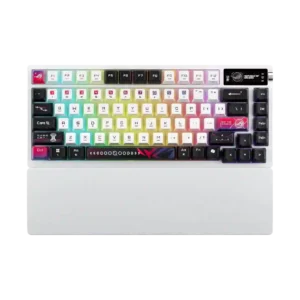
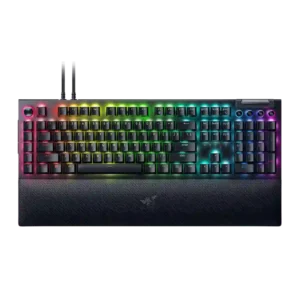
Compare ASUS ROG Azoth X vs Razer BlackWidow V4 Pro

P1 ASUS ROG Azoth X
P2 Razer BlackWidow V4 Pro

Comparison Takeaways

ASUS ROG Azoth X

Where It Has the Edge

  • compatibility is 4.6 vs 2.0. Compatibility was strong thanks to Mac support, PC/Mac switching, MX-style switch compatibility, and south-facing PCB keycap compatibility.
  • battery life is 4.9 vs 2.3. Battery life drew near-universal praise, with many reviewers calling it impressive even when RGB or OLED reduced rated...
  • size and form factor is 4.8 vs 2.5. The 75% size was praised as practical, with reviewers calling it a useful and near-perfect form factor for...
  • connectivity is 4.8 vs 2.9. Connectivity was highly praised: reviewers liked tri-mode support, dongle convenience, and smooth switching between wireless modes or devices.

Razer BlackWidow V4 Pro

Where It Has the Edge

  • materials quality is 4.8 vs 3.2. Materials quality was praised through aluminum, premium finishes, and strong material choices across several full-size reviews.
  • value for money is 3.5 vs 2.7. Value was divided: many full-size reviewers felt the $230 price was justified by features, while 75% Pro reviewers...
  • key spacing is 4.3 vs 3.5. Key spacing evidence was positive, with reviewers saying the spacing reduced errors and let them play without looking...
  • gaming performance is 4.8 vs 4.2. Gaming performance was consistently strong, with reviewers reporting smooth play, no stutter or delay, top-tier responsiveness, and macro...
Average score
Product 1: ASUS ROG Azoth X
4.2
Product 2: Razer BlackWidow V4 Pro
3.8
acoustics
Product 1: ASUS ROG Azoth X
4.2

Acoustics were usually praised as crisp, deep, creamy, or fantastic, although the spacebar inconsistency kept this from being universally excellent.

Product 2: Razer BlackWidow V4 Pro
3.6

Reviewers varied by switch and model: some praised muted, clacky or lower-pitched sound, while others heard plasticky clicks, dinging, or a weaker stock sound.

actuation consistency
Product 1: ASUS ROG Azoth X
4.5

Actuation consistency was praised where discussed, with reviewers noting consistent switch feel and minimal friction across keypresses.

Product 2: Razer BlackWidow V4 Pro
4.3

Actuation balance was described positively where reviewers noted accidental strokes were avoided and productivity work was not littered with misinputs.

analog input support
Product 1: ASUS ROG Azoth X
2.1

Analog input support was consistently marked down because reviewers repeatedly called out the absence of Hall-effect or analog switch features.

Product 2: Razer BlackWidow V4 Pro
No score yet
backlight brightness
Product 1: ASUS ROG Azoth X
4.3

Backlight brightness split reviewers: several found it exceptional or very bright, while one reviewer felt the lighting was underwhelming.

Product 2: Razer BlackWidow V4 Pro
4.0

Backlighting was generally viewed as focused and granular, with reviewers noticing improved brightness control and stronger LED presentation.

battery life
Product 1: ASUS ROG Azoth X
4.9

Battery life drew near-universal praise, with many reviewers calling it impressive even when RGB or OLED reduced rated endurance.

Product 2: Razer BlackWidow V4 Pro
2.3

Battery evidence was split by model and settings, ranging from good light-use results to severe drain when RGB, OLED or wireless polling were active.

build quality
Product 1: ASUS ROG Azoth X
4.3

Build quality was generally sturdy and solid, but the plastic base, premium-price expectations, and scratch-prone finish produced mixed marks.

Product 2: Razer BlackWidow V4 Pro
4.4

Build quality was broadly praised on the full-size model for solidity and premium feel, though one 75% Pro reviewer criticized the case quality for the price.

cable quality
Product 1: ASUS ROG Azoth X
4.0

Cable quality had limited positive evidence: reviewers liked the sleeved/braided cable, though one noted its gray color did not match the white board.

Product 2: Razer BlackWidow V4 Pro
2.8

Cabling drew mixed reactions: braided or detachable hardware felt solid, but two cables, non-coiled cabling, and a chunky dongle hurt desk neatness.

compatibility
Product 1: ASUS ROG Azoth X
4.6

Compatibility was strong thanks to Mac support, PC/Mac switching, MX-style switch compatibility, and south-facing PCB keycap compatibility.

Product 2: Razer BlackWidow V4 Pro
2.0

Compatibility evidence was limited but negative where Mac support was described as lacking for the keyboard.

connectivity
Product 1: ASUS ROG Azoth X
4.8

Connectivity was highly praised: reviewers liked tri-mode support, dongle convenience, and smooth switching between wireless modes or devices.

Product 2: Razer BlackWidow V4 Pro
2.9

Connectivity was a recurring tradeoff: wired operation helped latency and passthrough, but reviewers missed wireless or noted cable-dependent clutter.

customization options
Product 1: ASUS ROG Azoth X
4.6

Customization options were a major strength, covering disassembly, OLED settings, RGB, macros, web tools, and component tinkering.

Product 2: Razer BlackWidow V4 Pro
4.5

Customization was one of the strongest themes, especially around remapping, the Command Dial, Chroma, and multi-layer programmability, with some Synapse limits.

design aesthetics
Product 1: ASUS ROG Azoth X
4.3

Design aesthetics were divisive but mostly positive: reviewers often liked the bold sci-fi white theme, while acknowledging it will not suit every desk setup.

Product 2: Razer BlackWidow V4 Pro
4.3

Design reactions were mostly positive for premium, high-end styling and RGB-heavy looks, though one reviewer found the shine-through gamer look tacky.

desk space efficiency
Product 1: ASUS ROG Azoth X
4.5

Desk space efficiency was praised because the keyboard stayed compact without feeling cramped and saved space versus larger layouts.

Product 2: Razer BlackWidow V4 Pro
2.6

Desk-space efficiency was weak on the full-size board because its macro column and wrist rest make it huge, while the 75% variants earned better space praise.

durability
Product 1: ASUS ROG Azoth X
4.1

Durability evidence was positive but limited, mainly tied to durable dye-sub legends and premium construction.

Product 2: Razer BlackWidow V4 Pro
3.3

Durability evidence centered on a sturdy frame and repair/mod potential, offset by one reviewer’s concern about keycap wear from a prior BlackWidow generation.

ease of switch replacement
Product 1: ASUS ROG Azoth X
4.7

Switch replacement was praised as straightforward, with reviewers describing access or removal as quick and easy.

Product 2: Razer BlackWidow V4 Pro
5.0

Switch replacement was excellent on hot-swap 75% variants, where reviewers found swapping solid or easy, but it was not a strength of the full-size board.

ergonomics
Product 1: ASUS ROG Azoth X
4.8

Ergonomics were positive where covered, mainly due to the wrist rest and FR4/typing changes that improved comfort.

Product 2: Razer BlackWidow V4 Pro
2.9

Ergonomics were mixed: wrist comfort and long-use ergonomics could be excellent, but side buttons and the extra left column caused accidental presses or reach issues.

extra gaming features
Product 1: ASUS ROG Azoth X
3.7

Extra gaming features were mixed: Speed Tap and the OLED were useful or fun, but reviewers questioned the OLED’s value and noted missing Hall-effect features.

Product 2: Razer BlackWidow V4 Pro
4.3

Extra gaming features were praised most by macro-heavy and Snap Tap users, with reviewers highlighting benefits for tinkerers, strafing, and command-heavy games.

frame rigidity
Product 1: ASUS ROG Azoth X
4.6

Frame rigidity was a strength, with reviewers repeatedly noting no deck flex, no rattle, and a stable body.

Product 2: Razer BlackWidow V4 Pro
4.5

Frame rigidity was praised where reviewers described the chassis and top plate as robust, solid, and free of noticeable creaking.

gaming performance
Product 1: ASUS ROG Azoth X
4.2

Gaming performance was positive for casual and mainstream play, but reviewers noted it is less compelling for players seeking Hall-effect or esports-focused features.

Product 2: Razer BlackWidow V4 Pro
4.8

Gaming performance was consistently strong, with reviewers reporting smooth play, no stutter or delay, top-tier responsiveness, and macro advantages in games.

hot-swappable switches
Product 1: ASUS ROG Azoth X
4.2

Hot-swappable switches were seen as a meaningful enthusiast-friendly advantage, especially for users who want to experiment or replace switches.

Product 2: Razer BlackWidow V4 Pro
3.6

Hot-swap support depended on variant: 75% boards were praised for easy switch changes, while full-size models were criticized for locking users into one switch choice.

keycap quality
Product 1: ASUS ROG Azoth X
3.9

Keycap quality was mixed-positive: many liked the texture, printing, durability, and RGB diffusion, while some disliked the smooth or tacky feel.

Product 2: Razer BlackWidow V4 Pro
3.7

Keycap quality was mixed: texture, shine-through and feel earned praise, but ABS material, PBT comparisons, sound, and wear concerns lowered confidence.

key responsiveness
Product 1: ASUS ROG Azoth X
4.6

Key response was consistently praised as snappy, fast, and responsive across typing and gaming, especially with the light linear switches.

Product 2: Razer BlackWidow V4 Pro
4.7

Key responsiveness was a major strength, with reviewers citing instant, smooth, accurate, and sensitive keypresses across gaming and productivity.

key spacing
Product 1: ASUS ROG Azoth X
3.5

Key spacing had limited mixed evidence, with one first-impression review noting the smaller-feeling keys may require adjustment.

Product 2: Razer BlackWidow V4 Pro
4.3

Key spacing evidence was positive, with reviewers saying the spacing reduced errors and let them play without looking down.

key stability
Product 1: ASUS ROG Azoth X
4.8

Key stability was praised through minimal stem wobble, stable keypresses, and no wobble or echo in typing tests.

Product 2: Razer BlackWidow V4 Pro
5.0

Key stability evidence was positive but limited, with one reviewer praising the switches for practically zero wobble.

latency
Product 1: ASUS ROG Azoth X
5.0

Latency evidence was strongly positive, with reviewers reporting delay-free input and no wireless latency problems in testing.

Product 2: Razer BlackWidow V4 Pro
4.7

Latency was praised on the wired full-size board, especially alongside high polling, where reviewers reported zero lag, smoothness, and low-latency gaming.

layout options
Product 1: ASUS ROG Azoth X
4.5

Layout evidence was limited but positive, with one reviewer saying the layout made sense and was clearly labeled.

Product 2: Razer BlackWidow V4 Pro
4.5

Layout evidence favored the 75% layout as a useful, welcome middle ground while the full-size layout drew space and adjustment complaints.

legend visibility
Product 1: ASUS ROG Azoth X
4.4

Legend visibility was mostly praised thanks to clear labeling, visible lettering, and sharper printing, though small display icons and stylized legends had caveats.

Product 2: Razer BlackWidow V4 Pro
2.6

Legend visibility was mixed: keycap shine-through could be clean and even, but media-key legends were criticized as hard to read or unlit.

macro customization
Product 1: ASUS ROG Azoth X
4.5

Macro customization was positive where discussed, with reviewers noting easy macro creation and broad remapping support.

Product 2: Razer BlackWidow V4 Pro
4.6

Macro customization was one of the best-supported positives, with reviewers praising the eight macros, creative freedom, productivity shortcuts, and game advantages.

materials quality
Product 1: ASUS ROG Azoth X
3.2

Materials quality was mixed: PBT caps and metal elements helped, while plastic construction and finish complaints hurt the premium impression.

Product 2: Razer BlackWidow V4 Pro
4.8

Materials quality was praised through aluminum, premium finishes, and strong material choices across several full-size reviews.

media controls
Product 1: ASUS ROG Azoth X
4.1

Media controls were generally useful through the OLED and knob, but some reviewers wanted a more conventional or more satisfying control.

Product 2: Razer BlackWidow V4 Pro
4.3

Media controls were mostly liked for convenience and productivity, though some reviewers disliked the awkward height or difficult-to-see legends.

noise level
Product 1: ASUS ROG Azoth X
3.2

Noise level was mixed: dampening helped keep the board acceptable, but several reviewers complained about a loud or thunky spacebar and higher overall volume.

Product 2: Razer BlackWidow V4 Pro
3.2

Noise level varied heavily by switch: Green switches were often loud, while Yellow or damped variants were quieter or satisfying rather than distracting.

onboard memory
Product 1: ASUS ROG Azoth X
No score yet
Product 2: Razer BlackWidow V4 Pro
3.0

Onboard memory was useful for profiles but limited by Synapse dependency, especially where custom dial modes did not carry over.

passthrough features
Product 1: ASUS ROG Azoth X
No score yet
Product 2: Razer BlackWidow V4 Pro
3.2

Passthrough was viewed as useful but limited, especially by USB 2.0 speeds, voltage constraints, and the need for a second cable.

polling rate
Product 1: ASUS ROG Azoth X
3.7

Most reviewers found the 1,000Hz polling rate adequate, but several treated the paid 8,000Hz booster requirement as a caveat.

Product 2: Razer BlackWidow V4 Pro
3.5

Polling rate impressed some reviewers with speed or snappiness, while others considered 8,000Hz niche or hard to notice on a keyboard.

portability
Product 1: ASUS ROG Azoth X
4.5

Portability had limited positive support, mainly from long battery life making the board better for LAN parties or mobile work.

Product 2: Razer BlackWidow V4 Pro
3.0

Portability was variant-dependent: the 75% board was bag-friendly, while the full-size board was problematic for transport and mouse space.

profile management
Product 1: ASUS ROG Azoth X
4.5

Profile management had limited positive evidence, with one reviewer saying profile switching was quick and easy.

Product 2: Razer BlackWidow V4 Pro
4.0

Profile management was useful for switching setups and game-linked profiles, though some functions still depended on Synapse or required manual management.

rapid trigger support
Product 1: ASUS ROG Azoth X
2.0

Rapid trigger support was a repeated weakness because reviewers noted the Azoth X lacks true rapid trigger or relies on Speed Tap instead.

Product 2: Razer BlackWidow V4 Pro
No score yet
reliability
Product 1: ASUS ROG Azoth X
4.4

Reliability was mixed: wireless operation was stable, but software instability and finish scratching hurt confidence.

Product 2: Razer BlackWidow V4 Pro
2.6

Reliability concerns included one LED hiccup, app binding failures, an OLED darkening issue, and reported orange-switch problems on one 75% Pro review.

RGB customization
Product 1: ASUS ROG Azoth X
4.5

RGB customization had limited but positive support, with one reviewer highlighting bold color behavior and preset variety.

Product 2: Razer BlackWidow V4 Pro
4.3

RGB customization was a consistent Razer strength, with reviewers praising complex-to-simple controls, Chroma syncing, and game-reactive lighting.

RGB lighting quality
Product 1: ASUS ROG Azoth X
4.3

RGB lighting quality was widely praised for its soft glow, strong brightness, and distinctive translucent-side effect, despite a few muted-lighting complaints.

Product 2: Razer BlackWidow V4 Pro
4.6

RGB lighting quality was heavily praised for brightness, underglow, flawless implementation, and desk-filling visual impact, with minor visibility caveats.

size and form factor
Product 1: ASUS ROG Azoth X
4.8

The 75% size was praised as practical, with reviewers calling it a useful and near-perfect form factor for gaming desks.

Product 2: Razer BlackWidow V4 Pro
2.5

Size and form factor were a frequent concern on the full-size version, which reviewers called very large, while compact variants helped portability.

software quality
Product 1: ASUS ROG Azoth X
3.9

Software quality was sharply mixed: Gear Link was praised as lightweight and easy, while Armoury Crate drew complaints about bloat, crashes, and setup friction.

Product 2: Razer BlackWidow V4 Pro
3.4

Software quality was polarizing: Synapse could be intuitive and reliable, but reviewers often disliked needing it open for advanced functions.

sound dampening
Product 1: ASUS ROG Azoth X
4.4

Sound dampening was a clear strength, with reviewers crediting the foam stack and damping layers for reducing ping and improving sound.

Product 2: Razer BlackWidow V4 Pro
4.6

Sound dampening was generally effective, with reviewers crediting foam, tape mods, and damping for reduced ping, reverb, and a more refined sound.

stabilizer quality
Product 1: ASUS ROG Azoth X
4.5

Stabilizers were consistently praised, with reviewers noting no rattle, tuned large keys, and clatter-free stability.

Product 2: Razer BlackWidow V4 Pro
3.6

Stabilizer quality ranged from peaceful and low-rattle to merely acceptable or needing work, especially on some 75% and Yellow-switch units.

switch feel
Product 1: ASUS ROG Azoth X
4.6

Reviewers generally liked the ROG NX Snow V2 switches, describing them as smooth, consistent, and pleasant, with a few noting they still lack Hall-effect gaming behavior.

Product 2: Razer BlackWidow V4 Pro
4.5

Switch feel was broadly strong, with praise for Yellow, Green, and Orange variants, though some reviewers wanted more checkout options or different stock switches.

switch options
Product 1: ASUS ROG Azoth X
4.0

Switch choice received limited but positive coverage, with reviewers noting the option between tactile/clicky and smooth linear ROG NX V2 switches.

Product 2: Razer BlackWidow V4 Pro
2.5

Switch options were a recurring weakness where reviewers wanted tactile, linear, or more checkout choices, especially on expensive or Pro models.

typing comfort
Product 1: ASUS ROG Azoth X
4.6

Typing comfort was strong, with reviewers describing long sessions as comfortable, pleasant, and easy.

Product 2: Razer BlackWidow V4 Pro
4.2

Typing comfort was generally strong when switches and wrist rest suited the reviewer, though one Green-switch reviewer wanted more cushioning for long writing.

typing feel
Product 1: ASUS ROG Azoth X
4.4

Typing feel was the product’s strongest attribute: most reviewers found it smooth, satisfying, comfortable, and close to custom-keyboard quality, though one found it clunkier.

Product 2: Razer BlackWidow V4 Pro
4.7

Typing feel was one of the clearest positives, with several reviewers calling the board satisfying, fast, or fantastic to type on.

value for money
Product 1: ASUS ROG Azoth X
2.7

Value for money was the most common concern, with many reviewers calling the high price hard to justify despite the strong typing and wireless experience.

Product 2: Razer BlackWidow V4 Pro
3.5

Value was divided: many full-size reviewers felt the $230 price was justified by features, while 75% Pro reviewers objected strongly to $300 pricing.

volume control
Product 1: ASUS ROG Azoth X
4.0

Volume control was useful for most reviewers, though the toggle implementation was less satisfying to some than a dedicated knob or roller.

Product 2: Razer BlackWidow V4 Pro
3.9

Volume control was usually convenient and tactile, though some reviewers wanted a press-to-mute wheel or found dial-based volume less convenient.

wireless performance
Product 1: ASUS ROG Azoth X
5.0

Wireless performance was one of the strongest areas, with reviewers repeatedly reporting stable, drop-free, low-latency operation.

Product 2: Razer BlackWidow V4 Pro
3.4

Wireless performance evidence came from 75% Pro reviews and was mixed: wireless controls and performance were useful, but battery tradeoffs reduced appeal.

wrist rest quality
Product 1: ASUS ROG Azoth X
4.3

The wrist rest was broadly welcomed as comfortable and useful, though some disliked the lack of magnets or found it harder than alternatives.

Product 2: Razer BlackWidow V4 Pro
4.5

Wrist rest quality was a consistent highlight on full-size reviews for plushness, comfort and RGB integration, with a few fit or height complaints.